• KGS/USD = 0.01143 0%
  • KZT/USD = 0.00205 0%
  • TJS/USD = 0.10724 0.09%
  • UZS/USD = 0.00008 0%
  • TMT/USD = 0.28571 0%
  • KGS/USD = 0.01143 0%
  • KZT/USD = 0.00205 0%
  • TJS/USD = 0.10724 0.09%
  • UZS/USD = 0.00008 0%
  • TMT/USD = 0.28571 0%
  • KGS/USD = 0.01143 0%
  • KZT/USD = 0.00205 0%
  • TJS/USD = 0.10724 0.09%
  • UZS/USD = 0.00008 0%
  • TMT/USD = 0.28571 0%
  • KGS/USD = 0.01143 0%
  • KZT/USD = 0.00205 0%
  • TJS/USD = 0.10724 0.09%
  • UZS/USD = 0.00008 0%
  • TMT/USD = 0.28571 0%
  • KGS/USD = 0.01143 0%
  • KZT/USD = 0.00205 0%
  • TJS/USD = 0.10724 0.09%
  • UZS/USD = 0.00008 0%
  • TMT/USD = 0.28571 0%
  • KGS/USD = 0.01143 0%
  • KZT/USD = 0.00205 0%
  • TJS/USD = 0.10724 0.09%
  • UZS/USD = 0.00008 0%
  • TMT/USD = 0.28571 0%
  • KGS/USD = 0.01143 0%
  • KZT/USD = 0.00205 0%
  • TJS/USD = 0.10724 0.09%
  • UZS/USD = 0.00008 0%
  • TMT/USD = 0.28571 0%
  • KGS/USD = 0.01143 0%
  • KZT/USD = 0.00205 0%
  • TJS/USD = 0.10724 0.09%
  • UZS/USD = 0.00008 0%
  • TMT/USD = 0.28571 0%

Viewing results 1 - 6 of 145

Russian MP Blames Central Asians for Ruble Depreciation

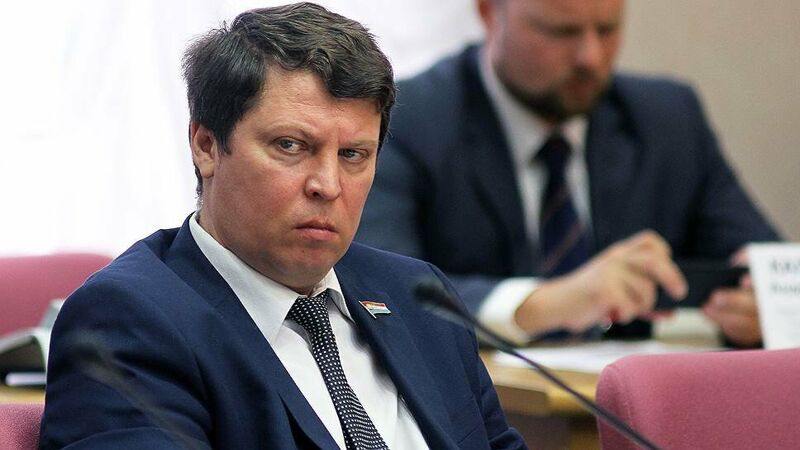
Mikhail Matveyev, a member of Russia’s State Duma, has attributed the depreciation of the Russian ruble in part to remittances by labor migrants from Central Asia and the Caucasus. In a statement on his Telegram channel, Matveyev argued that millions of migrants working in Russia transfer their earnings abroad, removing significant sums from the Russian economy. According to him, these remittances fuel demand for foreign currencies, such as the dollar, thereby weakening the ruble. Citing statistics, Matveyev claimed that in 2023, labor migrants sent $5.7 billion from Russia to Tajikistan - nearly half of Tajikistan’s GDP. Kyrgyzstan received remittances equal to about one-third of its GDP, while Uzbekistan received over $14.5 billion, accounting for 12-15% of its GDP. Other significant recipients included Georgia (over $2 billion), Armenia (over $3 billion), and Kazakhstan. Matveyev also criticized some of these countries for their stance on Western sanctions against Russia. He noted that several countries in the Eurasia region have joined sanctions targeting Russian banks and refuse to process transactions using the Russian Mir payment system. This, he said, forces migrants to withdraw cash dollars from Russia to transfer home, exacerbating the pressure on the ruble exchange rate. The MP’s remarks came amid a sharp drop in the ruble’s value against the dollar last week. For more than 30 years, millions of Central Asian citizens have migrated to Russia for work. However, recent trends indicate an increase in return migration, driven by Russia’s deteriorating economic conditions, stricter immigration rules, worsening attitudes toward Central Asian workers, and attempts by Russian authorities to recruit immigrants - both with and without Russian citizenship - for military service in Ukraine.
Uzbekistan Enacts Law on “Undesirable” Foreigners

On November 15 a new law regulating foreign citizens deemed "undesirable" came into effect in Uzbekistan. The government claims that the strict measures, previously reported on by The Times of Central Asia in June, are aimed at safeguarding the country’s "sovereignty, security, and unity". The legislative process began on June 25 when Uzbekistan’s Legislative Chamber of the Oliy Majlis (parliament) approved amendments to the law on the legal status of foreign citizens and stateless persons. These amendments introduced the concept of “undesirable elements” among foreign nationals. The Senate subsequently approved the legislation on September 21, paving the way for its implementation. Under the new law, foreign citizens and stateless persons can be classified as undesirable if they can be said to: • Threaten Uzbekistan’s sovereignty, security, or unity; • Incite enmity or hostility; or • Disrespect the honor, dignity, or history of the Uzbek people. Those designated as undesirable face a five-year ban on entering Uzbekistan, opening bank accounts, purchasing property, participating in privatizations, or engaging in financial and contractual transactions. They are, however, permitted to sell or transfer any property they own within the country. If the grounds for being deemed undesirable are not addressed during the five-year ban, the restriction is automatically extended for another five years. Conversely, individuals may apply for early removal from the list if they resolve the identified issues or if the government recommends their delisting. Individuals deemed undesirable must leave Uzbekistan voluntarily within 10 days of receiving notification. Failure to comply will result in forcible deportation.

Kyrgyz Politician Irina Karamushkina Detained on Suspicion of Offering Cash for Votes

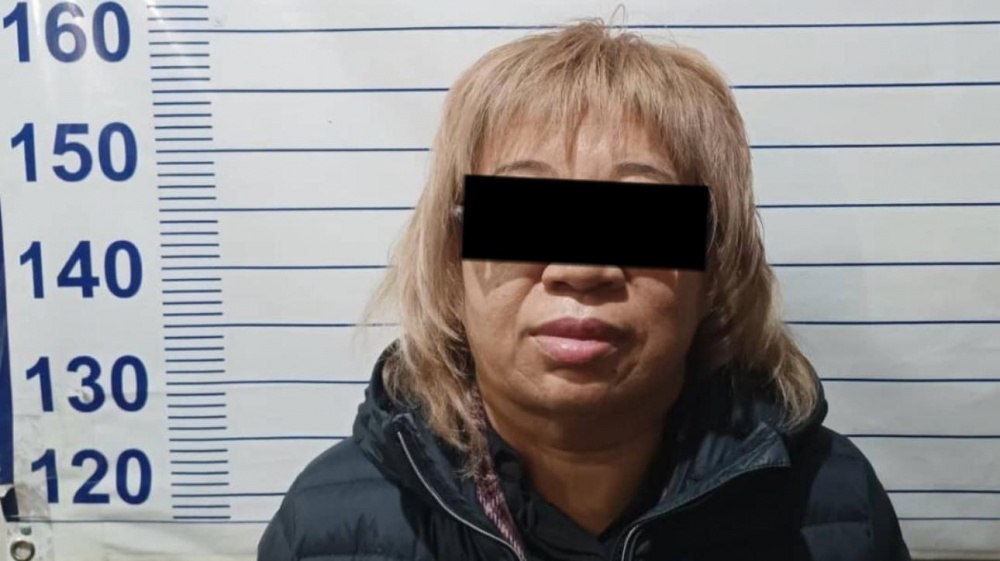
Irina Karamushkina, a senior member of the Social Democrats party and a former deputy of Kyrgyzstan's Parliament, the Jogorku Kenesh, has been detained in Bishkek on suspicion of buying votes ahead of local elections on November 17. The Social Democrats are one of about 20 parties whose candidates are registered in the elections. According to the press service of the city's police department, on November 13 an audio recording surfaced on social media in Kyrgyzstan, in which the chief of staff of the Social Democrats party, identified as "I.K.", allegedly discussed vote buying with a person named "D.C." ahead of Sunday's elections. In response, Bishkek police investigators launched a criminal case under Article 196 of the Kyrgyz Criminal Code, addressing election bribery. Later, the police distributed an audio recording allegedly capturing a conversation between Karamushkina and Daniyar Cholponbaev -- the party's candidate for deputy -- where they appear to discuss offering bribes for votes. The investigation found that "T.R.", a trustee of the Social Democrats, and "I.K." were involved in voter bribery, offering 1,000 Kyrgyz som ($12) per vote. During a search of the party headquarters, authorities seized lists indicating payments of 15,000 to 30,000 som ($175 to $350) to over 40 individuals, along with 28,300 som ($330) in cash, believed to be intended for offering bribes to voters. "T.R." and "I.K." were detained as suspects and are being held in a temporary detention facility. The investigation is ongoing. On November 13, police and special forces raided the Social Democrats’ headquarters, evacuating everyone from the premises. Party leader Temirlan Sultanbekov was taken in for questioning, and Karamushkina’s residence was also searched as part of the investigation.

Government Reports Steady Economic Growth in Kyrgyzstan

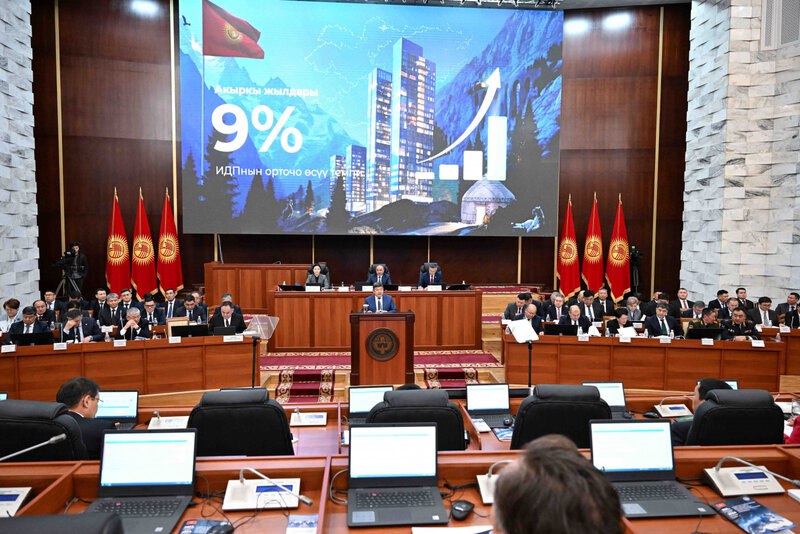
Chairman of the Cabinet of Ministers Akylbek Japarov announced in parliament on November 14 that Kyrgyzstan's GDP exceeded a historical high of 1.3 trillion KGS in 2023 and is projected to reach 1.5 trillion KGS ($17.35 billion) by the end of the year. Presenting the state budget execution for 2023 and the draft budget for 2025, Japarov reported a 9% real GDP growth rate for 2023, consistent with the growth rate in 2022. For context, Kyrgyzstan’s GDP growth was 7% in 2021. Japarov offered a conservative forecast for 2024, predicting 9.2% GDP growth. “If we divide GDP per capita, then in 2020, this figure was $1,200, and in 2024, it will exceed $2,500,” he noted. The average monthly wage in Kyrgyzstan has risen steadily from $239 (20,249 KGS) in 2021 to $316 (26,620 KGS) in 2022 and $376 in 2023. By the end of 2024, it is expected to reach $415 (35,791 KGS). From January to September 2024, Kyrgyzstan’s foreign trade volume was $12.1 billion, an 8.4% increase. Exports grew by 28.2%, totaling $2.8 billion, while imports rose by 3.7%, amounting to $9.3 billion. Inflation has significantly decreased, dropping from 14.7% in 2022 to 7.3% in 2023, and reaching 4.2% from January to October 2024. Japarov also highlighted the growth of Kyrgyzstan’s industrial sector, attributing it to investments and government support. By the end of 2024, more than 150 new enterprises are expected to open, with total investment projected at $2.2 billion and an estimated 19,000 jobs created. Further, for the first time since independence, Kyrgyzstan has started producing cars, standard gold bars, and new types of medicines. In the energy sector, Japarov reported that small hydroelectric power plants with a combined capacity of 48.3 MW were brought online in 2024. Additionally, solar and wind power projects are underway, alongside the reconstruction of the Toktogul hydroelectric power plant, the country’s largest.

Kazakhstan Working On a Bill to Ban Quadrobers

Mazhilis deputy Daulet Mukayev has said Kazakhstan is working on a bill to ban quadrobers. The spread of this hobby, where young people imitate animals, could have a detrimental effect on the younger generation, he stated. “In 2024, quadrobics has undergone a major change. While it used to be more like a sporting challenge, now quadrobers wear animal masks, tails, and paws. If we don't take action, we risk losing a whole generation,” Mukayev said in response to journalists' inquiries to the Telegram channel, Buzyq. Mukayev emphasized that the problem is also a concern in other countries, and parents, society, and the state should work together to solve it. The deputy added that the development of legislative measures and strengthening control over social networks has already begun. However, the deputy did not give precise information about the agencies that initiated this bill. A request for a comment was sent to the Mazhilis press service, which replied that they had not yet received such a piece of legislation. Earlier, Mukayev had characterized quadrobers as a potentially dangerous social phenomenon and called for a study into the phenomenon, stating that the Mazhilis would develop laws against quadrobing if necessary. However, Kazakhstan's Ministry of Culture considers quadrobics a temporary fad and stated that its main task remains to ensure the safety of teenagers who participate in this trend. Quadrobics is an unofficial sport in which participants move on all fours and imitate the habits of animals in costumes. The movement has already been seen in Kazakhstan, Russia, Kyrgyzstan, and Ukraine. Recent cases of this behavior have also been reported in Tashkent, Uzbekistan, where a teenager wearing an animal mask scared passersby on October 10. The next day, another quadrober imitating a dog attacked passengers on public transport, scaring children. The Times of Central Asia previously reported that the Kyrgyz authorities are trying to curb the growing interest of teenagers in quadrobics. Uzbekistan is also taking steps to control the issue, where parents are being warned of fines for inappropriate behavior by teenagers. In Russia, the issue of administrative responsibility for parents who do not take responsibility for the upbringing of their children who become overtly interested in quadrobics has also been raised. The problem has not yet been resolved, but a request to the State Duma has requested fines and criminal liability for such actions. In addition, Gennady Shkil, a priest of the Russian Orthodox Church, suggested in a sermon that fathers and mothers of quadrobers should be deprived of parental rights. Shkil stated that “tough measures” are needed “for the salvation of mankind.”

Casinos in Kyrgyzstan To Open in State Buildings

The Kyrgyz parliament has passed legislation permitting gambling in state-owned facilities. This new law allows for casino activities within buildings owned by the state or enterprises with government stakes, and aims to attract investment, generate employment, and boost tax revenues. Developed by the Ministry of Economy and Commerce and presented to the Cabinet of Ministers, the law overturns previous restrictions by permitting casinos in state-owned hotels to enhance tourism and global competitiveness. Revenues from these casinos will support the development of tourist infrastructure. Historically, gambling was banned entirely in Kyrgyzstan in 2012, but a 2022 law reintroduced it under strict conditions, allowing only foreign nationals to participate. Kyrgyz citizens remain barred from casino entry, and the State Service for Regulation and Supervision of the Financial Market closely oversees operations to ensure compliance.