• KGS/USD = 0.01144 0%
  • KZT/USD = 0.00205 0%
  • TJS/USD = 0.10784 0%
  • UZS/USD = 0.00008 0%
  • TMT/USD = 0.28490 0%
  • KGS/USD = 0.01144 0%
  • KZT/USD = 0.00205 0%
  • TJS/USD = 0.10784 0%
  • UZS/USD = 0.00008 0%
  • TMT/USD = 0.28490 0%
  • KGS/USD = 0.01144 0%
  • KZT/USD = 0.00205 0%
  • TJS/USD = 0.10784 0%
  • UZS/USD = 0.00008 0%
  • TMT/USD = 0.28490 0%
  • KGS/USD = 0.01144 0%
  • KZT/USD = 0.00205 0%
  • TJS/USD = 0.10784 0%
  • UZS/USD = 0.00008 0%
  • TMT/USD = 0.28490 0%
  • KGS/USD = 0.01144 0%
  • KZT/USD = 0.00205 0%
  • TJS/USD = 0.10784 0%
  • UZS/USD = 0.00008 0%
  • TMT/USD = 0.28490 0%
  • KGS/USD = 0.01144 0%
  • KZT/USD = 0.00205 0%
  • TJS/USD = 0.10784 0%
  • UZS/USD = 0.00008 0%
  • TMT/USD = 0.28490 0%
  • KGS/USD = 0.01144 0%
  • KZT/USD = 0.00205 0%
  • TJS/USD = 0.10784 0%
  • UZS/USD = 0.00008 0%
  • TMT/USD = 0.28490 0%
  • KGS/USD = 0.01144 0%
  • KZT/USD = 0.00205 0%
  • TJS/USD = 0.10784 0%
  • UZS/USD = 0.00008 0%
  • TMT/USD = 0.28490 0%

Viewing results 1 - 6 of 145

Kyrgyzstan’s First President Akayev Wants to Restore His “Former President” Status

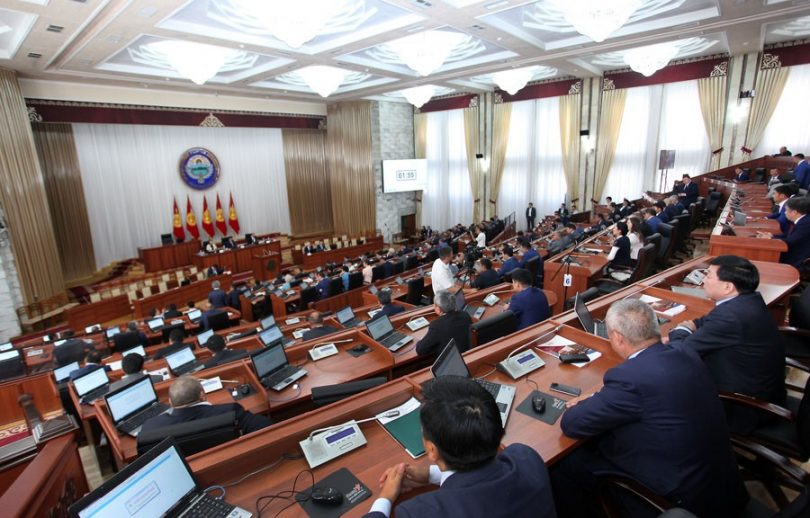
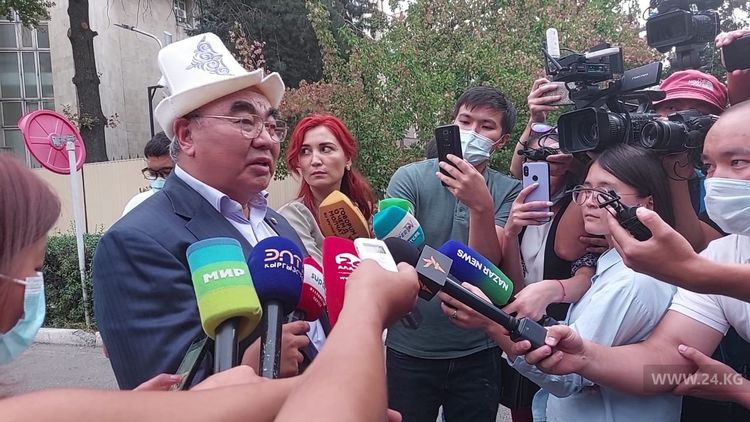
Kyrgyzstan's first president, Askar Akayev, has sent a letter to the country's parliament (Jogurku Kenesh) asking for his status as a former leader of the republic to be restored. Having served as president from 1991 until 2005, this title was removed from Akayev in 2010. According to law, the status of former president gives a citizen several social and legal guarantees. The ex-president is granted state protection on the republic's territory, a state dacha for life, and a monthly allowance equal to three-quarters of the Kyrgyz president's salary. The head of the country's parliamentary committee on constitutional legislation, Cholpon Sultanbekova, has said that Akayev's appeal had already sparked discussions in society. According to Sultanbekova, Akayev wrote a letter on July 30 to the speaker of the Jogorku Kenesh, but only now has the letter been sent to the deputies for consideration. “The issue will not be immediately put on the agenda. First, it will be considered by the factions and deputies. It will be put on the agenda only after that,” Sultanbekova said. On March 24, 2005, after the coup d'état (Tulip Revolution), Akayev fled to Moscow, fearing for his life. In 2010, after the April Revolution, when Kyrgyzstan's second president, Kurmanbek Bakiyev, was overthrown, Akayev was stripped of his presidential status by a decree of the interim government. Edil Baisalov, deputy head of Kyrgyzstan's cabinet of ministers, has commented that Akayev has ex-presidential status from a legal standpoint. “There is no doubt that Askar Akayev continues to possess the title of ex-president of the Kyrgyz Republic. If anyone wants to deprive him of this status, there should be a full impeachment procedure, which so far has only taken place against Atambayev in 2019 (the third President of Kyrgyzstan),” Baisalov wrote. Kyrgyzstan's current president, Sadyr Japarov, also spoke out about the matter. He noted that he had not discussed the issue with Akayev. “This is a matter for the parliament. How the Jogorku Kenesh will decide whether it will or will not give its consent is the legal right of the parliament. Whether to deprive the status of 'ex' or to restore it is also decided by parliament. Of course, there were many negatives during Akayev's rule. But along with that, there were positive moments in the years when the country gained independence,” the president said. Japarov said Askar Akayev could make such a request to parliament, unlike other fugitive presidents, Bakeev and Atambayev, who have criminal cases pending in Kyrgyzstan. “There were human casualties in the cases of Atambayev and Bakiyev. Therefore, I think it is wrong if the parliament restores them to the status of ex-president,” Japarov said.
Uzbek Politician Calls for Ban on Soviet Symbols

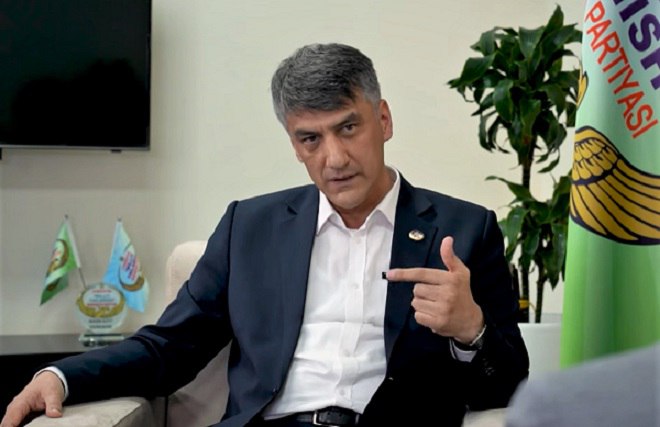
Alisher Qodirov, the deputy speaker of the legislative chamber of Uzbekistan's Parliament (Oliy Majlis) and leader of the Milliy Tiklanish (National Revival) Party, has proposed an initiative to ban the promotion of Soviet ideology and symbols in the country. The idea emerged after the high-profile case of a Samarkand pensioner who expressed a desire to restore the Soviet Union, for which he was sentenced to three years of restricted freedom under an article on encroachment on Uzbekistan's constitutional order. Qodirov supported the court's decision, noting that he considered Soviet ideology harmful and hostile to national values. In his statement, he emphasized that the Soviet regime had harmed not only Uzbekistan but the whole world, undermining the cultural and spiritual foundations of the people. He recalled the discrimination suffered by the Uzbek people during the Soviet period and emphasized the need to analyze this period. He stands firmly against its justification and promotion. “The Uzbek people were discriminated against and humiliated by the Soviet authorities and are still healing the wounds of the past. The Soviet ideology, which rejected nations, values, and faith, harmed not only our people but also the entire humanity, and these phenomena continue to be a misfortune,” Qodirov said. The politician also called the promotion of Soviet ideas a crime against the constitutional order and a betrayal of the people and ancestors who were victims of the regime. Qodirov has repeatedly spoken out against symbols relating to the USSR. In May 2021, he called the raising of the red flag at a concert in Tashkent a provocation and an insult to the people, explaining that the symbol of the Soviet occupier state was soaked in the blood of Uzbek intellectuals who had been repressed by the regime.

Kazakhstan: The Role of the Constitutional Court in Upholding the Rule of Law

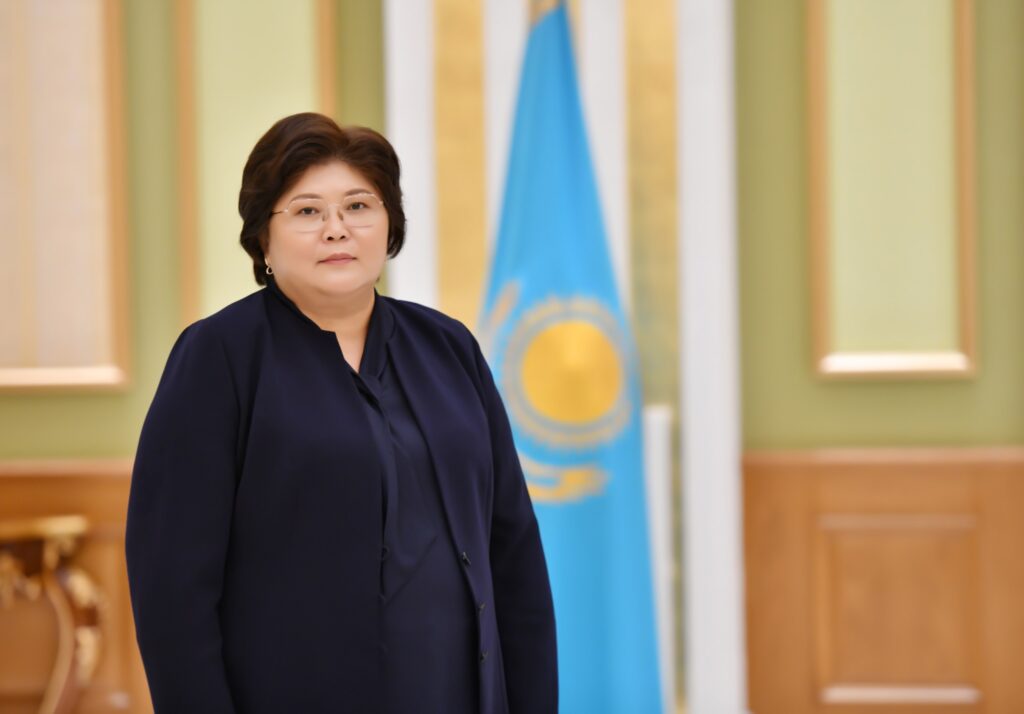
This year marks 30 years since the adoption of the current Constitution of Kazakhstan, which was approved by a popular referendum. Over the years, several changes have been made to the country's basic laws to expand citizens' rights, support political modernization, and strengthen the protection of human rights. The last referendum demonstrated the people's will and became an important milestone in the country's history. As a result, the powers of the president were reduced, and the role of parliament and local self-government bodies was significantly strengthened. An important step was the introduction of the Ombudsman for the Human Rights institution, the abolition of the death penalty, and the restoration of the Constitutional Court, Elvira Azimova, Chairperson of the Constitutional Court of Kazakhstan, has told the Asian Legal Portal. As Azimova explained, the Constitutional Court plays a critical role in ensuring the supremacy of the Constitution and protecting citizens' rights. At the same time, she noted that regulations should not only comply with the Constitution, but also be organically linked to it, creating a legal basis for the law and the state's sustainable development. Azimova also highlighted the fact that more than 120 countries worldwide have established constitutional courts or similar bodies performing constitutional oversight functions. In Kazakhstan, as in other states, citizens have the right to apply to the Constitutional Court to verify the constitutionality of laws, acts of the executive branch, and international treaties. International experience shows that such courts not only resolve legal disputes, but also improve the legal culture and continuity of constitutional processes. The revival of the Constitutional Court in Kazakhstan was an essential stage of the constitutional reform of 2022. Azimova emphasized that this body, independent of the legislative, executive, and judicial branches of government, strengthens the state's system of checks and balances. Citizens, the prosecutor general, and the Human Rights Ombudsman can now appeal to the Constitutional Court to uphold constitutional legality. Since January 2023, according to Azimova, the Constitutional Court has received over 7,500 appeals from citizens. In her opinion, such appeals do not indicate mass rights violations, but rather reflect citizens' dissatisfaction with the legal decisions made by state bodies. Citizens, she said, go to court when they believe their rights have been violated and there is either no response or an insufficient response from government agencies. The Azimova-led Constitutional Court has already issued 252 rulings, including 49 final decisions on the constitutionality of legal norms and acts. These decisions directly impact laws and regulations, which can be repealed or revised if found unconstitutional. Azimova also notes that the president, the Supreme Court, and members of parliament have already submitted requests to the Constitutional Court to check the constitutionality of laws. The prosecutor general and other state bodies have repeatedly requested an official interpretation of the provisions of the Constitution. For example, the prosecutor general's request included an interpretation of the prosecutor's competence in court and legal provisions on housing deprivation. In June 2023, Azimova presented an annual message to Parliament on...

Kyrgyzstan Parliamentarian in Brawl with Security Guard

In Bishkek, Chyngyz Azhibayev, a deputy of the Kyrgyz Republic's Jogorku Kenesh (Parliament), almost ran over an employee of the Asia Mall shopping and entertainment center, after which he got into a fight with him, 24.kg has reported. The incident occurred on June 21, but has only just been acknowledged. According to a source in law enforcement agencies, at about 3PM, whilst driving his car out of the shopping mall's parking lot, Azhibayev narrowly avoided hitting a security guard. The deputy then reacted aggressively to the security guard's remarks, exited his vehicle, and proceeded to start a fight with him. The pair were separated by bystanders, but the deputy then called the police and filed a complaint against the guard. The press service of the Leninsky district police department said that the call came in at 15:50. Law enforcement officers who arrived on the scene took Azhibayev's statement, which he later withdrew, meaning the case was terminated.

Kyrgyzstan Introduces Temporary Ban on Deputies’ International Travel

Deputies of the Jogorku Kenesh have been restricted from taking foreign trips until the summer vacation. Speaker Nurlanbek Shakiev announced this at a parliamentary session, 24.kg reports. According to him, the deputies must hold five more plenary sessions before the recess. "There are many bills important for the fate of the country and the population. We must have time to consider them. Therefore, I ask you to participate in the Parliament sessions actively. Foreign travel has been restricted since Monday, except for several important events. We will not go anywhere. We are actively working for three weeks,” Shakiev said. The Kyrgyz parliament goes on summer vacation on July 1st, and deputies will return to work on September 1st.

New round of talks in Georgia

TBILISI (TCA) — On December 20, 2019 Georgian authorities made a new proposal to the opposition on the electoral reform, in order to stabilize the situation. But opposition has rejected this proposal as too rigid. "Georgia is going to fall into an international isolation if the government would not agree to the principle of fair elections," declared the statement by the so called United Opposition. The authorities have proposed the system that would have 100 members of the parliament elected on the proportional system and 50 members on the majoritarian system. So the system would be changed — with two thirds elected by proportionate system, while maintaining the mixed system with one third majoritarians. According to this proposal these constitutional changes would be made not just for the year of 2020, but for good. And this proposal is absolutely unacceptable for the opposition at this point. The initiative by the ruling coalition was voiced by Chairman of the Parliament, Archil Talakvadze. Continue reading