
• KGS/USD = 0.01143 -0%
  • KZT/USD = 0.00198 -0%
  • TJS/USD = 0.10899 0.65%
  • UZS/USD = 0.00008 -0%
  • TMT/USD = 0.28490 -0.28%
  • KGS/USD = 0.01143 -0%
  • KZT/USD = 0.00198 -0%
  • TJS/USD = 0.10899 0.65%
  • UZS/USD = 0.00008 -0%
  • TMT/USD = 0.28490 -0.28%
  • KGS/USD = 0.01143 -0%
  • KZT/USD = 0.00198 -0%
  • TJS/USD = 0.10899 0.65%
  • UZS/USD = 0.00008 -0%
  • TMT/USD = 0.28490 -0.28%
  • KGS/USD = 0.01143 -0%
  • KZT/USD = 0.00198 -0%
  • TJS/USD = 0.10899 0.65%
  • UZS/USD = 0.00008 -0%
  • TMT/USD = 0.28490 -0.28%
  • KGS/USD = 0.01143 -0%
  • KZT/USD = 0.00198 -0%
  • TJS/USD = 0.10899 0.65%
  • UZS/USD = 0.00008 -0%
  • TMT/USD = 0.28490 -0.28%
  • KGS/USD = 0.01143 -0%
  • KZT/USD = 0.00198 -0%
  • TJS/USD = 0.10899 0.65%
  • UZS/USD = 0.00008 -0%
  • TMT/USD = 0.28490 -0.28%
  • KGS/USD = 0.01143 -0%
  • KZT/USD = 0.00198 -0%
  • TJS/USD = 0.10899 0.65%
  • UZS/USD = 0.00008 -0%
  • TMT/USD = 0.28490 -0.28%
  • KGS/USD = 0.01143 -0%
  • KZT/USD = 0.00198 -0%
  • TJS/USD = 0.10899 0.65%
  • UZS/USD = 0.00008 -0%
  • TMT/USD = 0.28490 -0.28%
07 December 2025

Viewing results 1 - 6 of 6

Tajikistan Authorities Step Up Crackdown on Illegal Mining and Electricity Theft

Tajikistan’s Prosecutor General Khabibullo Vokhidzoda has reported a rise in illegal cryptocurrency mining operations and electricity theft across the country. Illegal Cryptocurrency Mining In the first half of 2025, authorities identified and recovered 32 million somoni ($3.52 million) in damages linked to stolen electricity used to power cryptocurrency mining equipment. “There are individuals who import mining equipment from abroad and operate cryptocurrency farms illegally,” Vokhidzoda said. Currently, 4-5 criminal cases are under investigation involving the installation and operation of such devices. Cryptocurrency, he noted, is a digital currency maintained through a decentralized payment system, with mining requiring high-powered computers, stable internet, and substantial electricity consumption. Although Tajikistan does not have a legal framework regulating cryptocurrency mining, law enforcement regularly shuts down illegal farms. Recently, the Sughd Region Prosecutor’s Office uncovered seven cases in which 135 mining devices were found operating inside residential buildings, causing an estimated 287,939 somoni ($31,673) in damages. Widespread Electricity Theft Illegal electricity use remains a major problem. Since January, 3,988 individuals have faced administrative or disciplinary action, while 190 criminal cases have been opened. The total damages recovered so far amount to 38.7 million somoni ($4.26 million). Electricity debts are also mounting: subscribers accumulated 273 million somoni ($30 million) in unpaid bills in the first half of 2025. Nationwide, total arrears stand at 4.6 billion somoni ($506 million), with 1.6 billion somoni ($176 million) owed by households and the rest by enterprises and organizations. Tougher Penalties Introduced This year, Tajikistan increased fines for electricity theft and non-payment. Under the Criminal Code, violations can now result in fines from 27,000 to 90,000 somoni ($2,970-$9,900) or imprisonment for three to ten years. The Administrative Offenses Code also provides for fines ranging from 1,500 to 22,500 somoni ($165-$2,475) for misuse of electricity and heat.
Kyrgyzstan Proposes Controversial Criminal Code Changes Targeting Recidivism, Limiting Official Liability

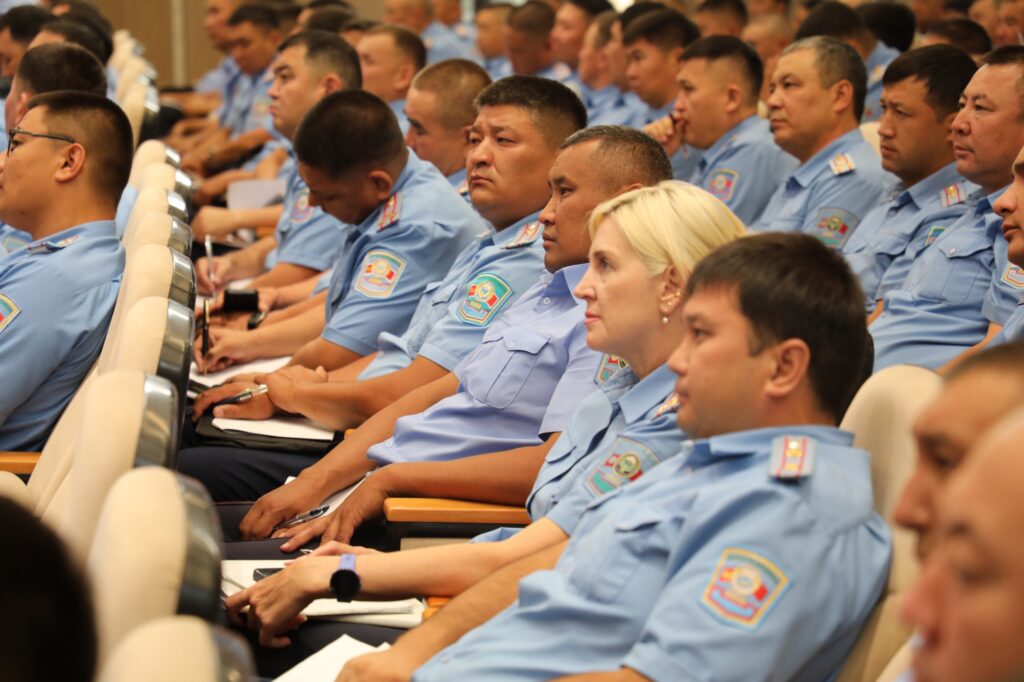
Kyrgyzstan’s Interior Ministry has submitted a bill aimed at restoring the concept of recidivism to the Criminal Code and limiting the liability of civil servants if their actions are deemed to protect national security. The proposal has sparked heated debate in both parliament and the public. Proposed Changes The draft law would reintroduce harsher penalties for repeat offenders. Recidivism, abolished in 2019 to ensure fairer treatment of convicted criminals, would once again become a legal category. According to the explanatory note, the earlier reform failed to yield the desired outcomes. "The abolition of the concept of recidivism did not have the expected effect," the note states. "Excluding harsher liability for members of organized criminal groups, who are often repeat offenders, has enabled them to consolidate and expand their influence." According to the bill's proponents, nearly 90% of inmates in Kyrgyzstan have prior convictions. They argue that current parole and probation policies treat repeat offenders too leniently. Combating organized crime has been a major priority in recent years. Dozens of so-called 'thieves-in-law' have been detained or neutralized, and suspects are now publicly compelled to renounce their criminal status. President Sadyr Japarov has already signed a law criminalizing the support or financing of criminal organizations. "Organized crime poses a serious threat to national security and affects virtually all sectors of society," the Cabinet said. Under the proposed legislation, penalties for recidivism would be no less than half the maximum sentence for a given crime. In cases of “particularly dangerous recidivism,” the minimum would be two-thirds. Moreover, reconciliation between victim and perpetrator would no longer be grounds for dismissal of charges. Authorities claim the measures will deter crime and diminish the appeal of criminal subcultures, particularly among young people. Public Criticism The most controversial element of the bill, however, is a provision that would exempt individuals from criminal liability if their actions were taken in defense of national sovereignty, the constitutional order, or environmental, economic, informational, or other forms of security. Former MP Felix Kulov criticized the vague language of the proposal on social media, warning it could lead to legal abuse. He cited a hypothetical case in which an environmental activist seriously injures or kills a litterer, arguing the act could be wrongly justified as "defending environmental security." "Such additions clearly do not belong in Article 18 of the Criminal Code," Kulov wrote. "The code already includes provisions for exceeding the limits of necessary defense and abuse of authority, and these new clauses would contradict them." Current MP Dastan Bekeshev reacted more bluntly: "This is crazy. If the law is passed, what is the point of justice at all?" The draft law is now under review in the parliament. If adopted, it would represent one of the most significant overhauls of Kyrgyzstan’s criminal legislation in recent years.

Kazakhstan to Increase Penalties for Attacks on Medical Workers

Kazakhstan is preparing legislative amendments that will significantly increase criminal liability for violence against medical personnel, equating such offenses with attacks on law enforcement officers. The initiative follows a directive from President Kassym-Jomart Tokayev, who urged the government to take stronger action to protect medical staff amid a growing number of violent incidents. At a recent meeting, Prime Minister Olzhas Bektenov reviewed proposals presented by Health Minister Akmaral Alnazarova. The Ministry of Health is drafting legislation that would classify attacks on healthcare workers in the same legal category as assaults on police officers. Proposed measures also include equipping staff with smart video badges, installing comprehensive security systems in hospitals, and deploying permanent police posts in emergency departments. Under the current Criminal Code, an attack on a law enforcement officer is punishable by up to 10 years in prison, while attempted murder carries a sentence of 10 to 15 years with property confiscation. Speaking at a briefing, Minister Alnazarova announced the introduction of a new article in the Criminal Code addressing threats and violence against medical workers. Threats alone could result in up to two years' restriction of liberty. Violence against a single medical worker may carry a sentence of 1 to 10 years, while attacks involving multiple perpetrators or targeting groups of workers could lead to up to 15 years of imprisonment. “These are adequate and necessary measures to protect our medical workers,” Alnazarova said, adding that the bill would be submitted to the Mazhilis, the lower house of parliament, in September. According to the Health Ministry, over 170 cases of violence against doctors, nurses, paramedics, and other healthcare staff have been recorded in Kazakhstan since 2019. “Such incidents must be resolutely suppressed by legal means,” Bektenov emphasized. “I instruct the ministries of health, internal affairs, and justice to develop and submit the necessary legislative amendments to parliament within ten days.” As previously reported by The Times of Central Asia, two recent assaults on medical personnel in Kazakhstan resulted in hospitalizations. In response, the health minister issued a public appeal urging an end to violence against medical staff.

Kyrgyzstan to Enforce Mandatory Car Insurance in July 2025

Beginning July 1, 2025, all vehicle owners in Kyrgyzstan will be subject to fines if they fail to obtain mandatory car insurance. Individuals found without coverage will face a penalty of 3,000 Kyrgyz soms (approximately $35), while foreigners and legal entities will be fined 13,000 soms (around $150), according to the State Insurance Organization (SIO). The introduction of penalties is expected to promote greater discipline among drivers and boost overall insurance coverage nationwide. “Compulsory car insurance protects not only car owners but also other road users. It helps reduce social tensions, lowers the number of legal disputes, and eases the financial burden on citizens,” the SIO stated in comments to The Times of Central Asia. Although the law on compulsory Motor Third-Party Liability (MTPL) insurance was passed in 2016, widespread public opposition and a lack of supporting infrastructure led to multiple delays in its enforcement. The most recent postponement, in January 2025, deferred fines for individuals once again. Authorities now affirm that no further delays will be made. The SIO emphasized that the measure aligns Kyrgyzstan with international norms. "In countries with a high culture of insurance, compulsory MTPL insurance is an integral part of road safety systems. Kyrgyzstan is moving steadily in this direction,” representatives said. Data from the National Statistical Committee shows that 7,100 traffic accidents were recorded in Kyrgyzstan in 2024, continuing a yearly upward trend. Some experts have expressed skepticism about the law’s effectiveness, citing the country’s large and growing vehicle fleet. However, the SIO remains confident in its capacity to manage the increased demand. “Our financial model includes calculating potential risks and setting aside funds for payments. This means that even if the accident rate rises, the SIO can still meet its obligations to insured drivers on time and in full,” the organization assured. As enforcement looms, authorities and insurers are urging the public to prepare and comply with the law to help foster a safer and more financially secure road environment in Kyrgyzstan.

Kyrgyzstan Bans Plastic Bags at Lake Issyk-Kul

As of March 1, Kyrgyzstan has banned the use and sale of plastic bags and other plastic products in the resort and recreational areas of the Issyk-Kul region, including the beaches of Lake Issyk-Kul, the country’s main tourist destination. The Ministry of Natural Resources, Ecology, and Technical Supervision announced that fines will be imposed for violations, as part of efforts to protect the lake’s unique ecosystem and maintain cleanliness in the region. Penalties for Violations First offense: Warning Repeated violation within one year:  Individuals - 3,000 KGS ($34) Legal entities - 10,000 KGS ($114) The ban and fines apply to both local residents and tourists. [caption id="attachment_29619" align="aligncenter" width="2560"] Beach at Cholpon Ata; image: TCA, Stephen M. Bland[/caption] "It is not enough to hold only manufacturers or sellers accountable. All citizens must stop using plastic at Issyk-Kul. When visiting the lake, people should bring paper bags or reusable shopping bags," said Almaz Oskonbayev, an official with the ministry. This regional restriction is a precursor to a nationwide ban on plastic bags, set to take effect on January 1, 2027.

Uzbekistan Strengthens Intellectual Property Protection

Uzbekistan is taking significant steps to enhance intellectual property (IP) protection with a new draft law, which was approved in its first reading by the Legislative Chamber of the Oliy Majlis on February 18. The proposed legislation introduces amendments to multiple legal codes, strengthening penalties for copyright violations and industrial property rights infringements. Key changes include: Increased fines for copyright infringement Administrative penalties for violating rights to selection achievements Confiscation of items used in patent-related offenses Expanded judicial powers to inspect and seize counterfeit goods Stricter criminal liability for intellectual property violations Criminal penalties for unauthorized use of trademarks, software, and inventions Mandatory destruction of counterfeit goods at the offender’s expense The law aims to curb counterfeit production, attract foreign investment, and support Uzbekistan’s efforts to join the World Trade Organization. Under Uzbekistan’s Copyright Law, intellectual property rights apply to works by Uzbek citizens, residents, and those first published in the country. Currently, fines for copyright violations range from UZS 375,000 (USD 28.95) to UZS 1.87 million (USD 144.36) for individuals and up to UZS 3.75 million (USD 289.48) for officials. Additionally, the Code of Administrative Responsibility imposes various fines for violations of personal non-property rights related to intellectual property. In neighboring Kazakhstan, copyright or related rights violations under the Criminal Code carry a minimum fine of KZT 295,360 (USD 588.17) as of 2024. More severe offenses can result in imprisonment for three to six years.
