• KGS/USD = 0.01144 0%
  • KZT/USD = 0.00214 0%
  • TJS/USD = 0.10874 0.37%
  • UZS/USD = 0.00008 0%
  • TMT/USD = 0.28571 0%
  • KGS/USD = 0.01144 0%
  • KZT/USD = 0.00214 0%
  • TJS/USD = 0.10874 0.37%
  • UZS/USD = 0.00008 0%
  • TMT/USD = 0.28571 0%
  • KGS/USD = 0.01144 0%
  • KZT/USD = 0.00214 0%
  • TJS/USD = 0.10874 0.37%
  • UZS/USD = 0.00008 0%
  • TMT/USD = 0.28571 0%
  • KGS/USD = 0.01144 0%
  • KZT/USD = 0.00214 0%
  • TJS/USD = 0.10874 0.37%
  • UZS/USD = 0.00008 0%
  • TMT/USD = 0.28571 0%
  • KGS/USD = 0.01144 0%
  • KZT/USD = 0.00214 0%
  • TJS/USD = 0.10874 0.37%
  • UZS/USD = 0.00008 0%
  • TMT/USD = 0.28571 0%
  • KGS/USD = 0.01144 0%
  • KZT/USD = 0.00214 0%
  • TJS/USD = 0.10874 0.37%
  • UZS/USD = 0.00008 0%
  • TMT/USD = 0.28571 0%
  • KGS/USD = 0.01144 0%
  • KZT/USD = 0.00214 0%
  • TJS/USD = 0.10874 0.37%
  • UZS/USD = 0.00008 0%
  • TMT/USD = 0.28571 0%
  • KGS/USD = 0.01144 0%
  • KZT/USD = 0.00214 0%
  • TJS/USD = 0.10874 0.37%
  • UZS/USD = 0.00008 0%
  • TMT/USD = 0.28571 0%

Viewing results 1 - 6 of 284

Kazakh MP Sarym Proposes Legal Measures Over Social Media Posts on Pipeline Strike

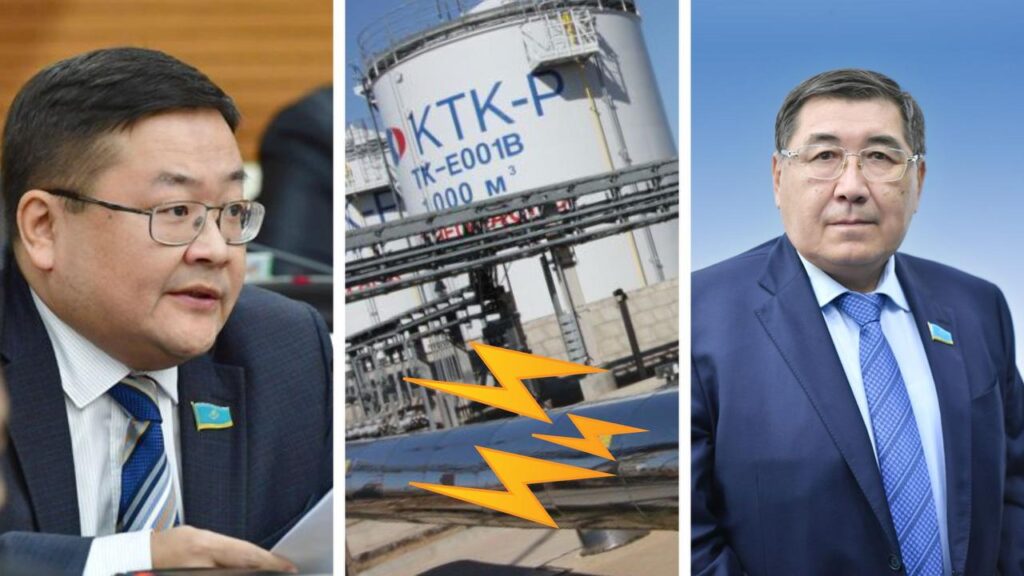
A Kazakhstani lawmaker has proposed criminal liability for social media posts that express support for attacks on the country’s energy infrastructure. During a recent session of the Mazhilis (lower house of parliament), MP Aidos Sarym called for posts endorsing Ukrainian military strikes on oil infrastructure to be examined under existing laws on terrorism and high treason. The proposal follows a November 29 incident in which Ukraine’s armed forces reportedly targeted the Caspian Pipeline Consortium (CPC) terminal in Novorossiysk, Russia. The attack damaged the CPC’s VPU-2 offshore loading terminal and temporarily halted operations. Addressing Prosecutor General Berik Asylov and Deputy Prime Minister and Minister of Culture and Information Aida Balaeva, Sarym said the incident had sparked public commentary online that he believes exceeds the boundaries of protected speech. He called for investigations into such posts and suggested they may warrant legal action. “Such actions clearly go beyond the constitutional right to freedom of speech and directly harm national interests,” Sarym said, proposing that the government also launch an information campaign to discourage rhetoric supporting violence against critical infrastructure. The initiative coincides with broader debates in Kazakhstan over how to manage public discourse surrounding the war in Ukraine, amid concerns that expressions of support for either side could have diplomatic implications. Kazakhstan maintains relations with both Ukraine and Russia and has sought to preserve a neutral stance throughout the conflict. Sarym’s remarks were interpreted by some political analysts as a broader signal to members of parliament, following earlier comments by fellow deputy Yermurat Bapi. Bapi had previously characterized Ukrainian strikes on CPC facilities as part of a legitimate military strategy, a position that Sarym suggested could fall under legal review. Energy Minister Yerlan Akkenzhenov noted that approximately 80% of Kazakhstan’s oil exports transit through the CPC. While the pipeline includes Russian ownership, most shares belong to companies based in Kazakhstan, Europe, and the U.S., he said, countering claims that the CPC is solely a Russian asset. Kazakhstan is accelerating the repair of the VPU-2 terminal, now aiming for completion by January 2026. The Ministry of National Economy is currently assessing the economic impact of the disruption. Oil and gas analyst Olzhas Baidildinov estimated the production loss at 480,000 tons, equating to about $210 million in revenue over two weeks. He forecast monthly losses exceeding $400 million, including an estimated $150 million shortfall in budgetary revenue. Baidildinov expressed support for Sarym’s proposal, describing it as part of efforts to safeguard internal stability amid external geopolitical uncertainty. The proposal has not yet led to formal legislative action, and no prosecutions have been reported. Further discussion on the issue is expected as part of Kazakhstan’s broader approach to managing public discourse and national security in the context of the ongoing conflict between Russia and Ukraine.

Ashgabat Hosts Forum Marking International Year of Peace and Trust

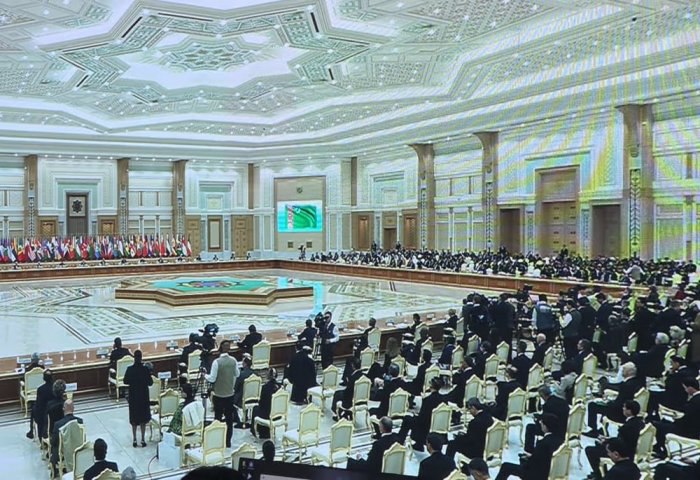
An international forum marking the 30th anniversary of Turkmenistan’s permanent neutrality has opened at the Maslahat Köşgi Palace in Ashgabat. The event has drawn high-level delegations and representatives of international organizations. Among those attending are President of Turkmenistan Serdar Berdimuhamedov, President of Russia Vladimir Putin, and the presidents of Turkey and Iran, Recep Tayyip Erdogan and Masoud Pezeshkian. The forum has also brought together the presidents of the Central Asian states, including President of Kazakhstan Kassym-Jomart Tokayev, President of Kyrgyzstan Sadyr Japarov, President of Uzbekistan Shavkat Mirziyoyev, and President of Tajikistan Emomali Rahmon. Other participants include Prime Minister of Pakistan Mian Muhammad Shehbaz Sharif, Prime Minister of Georgia Irakli Kobakhidze, and Prime Minister of Azerbaijan Ali Asadov, along with other heads of state and government. In his opening address, President Berdimuhamedov said neutrality has provided a strong foundation for Turkmenistan’s sustainable development. He noted that the country’s foreign policy is guided by principles of peace, trust, and mutual respect, and that Turkmenistan’s approach to neutrality reflects long-standing traditions of good neighborliness and harmony. The forum is being held as a broad international dialogue and is expected to open new opportunities for promoting global peace and expanding international cooperation. Ahead of the forum’s opening, President Berdimuhamedov and visiting foreign leaders took part in a ceremonial flower-laying at the Monument of Neutrality in Ashgabat as part of the official events commemorating the country’s neutral status. Turkmenistan’s permanent neutrality was formally recognized by a United Nations General Assembly resolution on December 12, 1995. In 2017, at Ashgabat’s initiative, the General Assembly designated December 12 as International Neutrality Day. In 2025, the United Nations declared the International Year of Peace and Trust. In this context, the Peace and Trust forum is being held on December 12 in Ashgabat with the participation of leaders from member states of the Organization of Turkic States.

Opinion: Kazakhstan’s Electoral Reforms – Why Officials and Experts Are Reconsidering Local Democracy

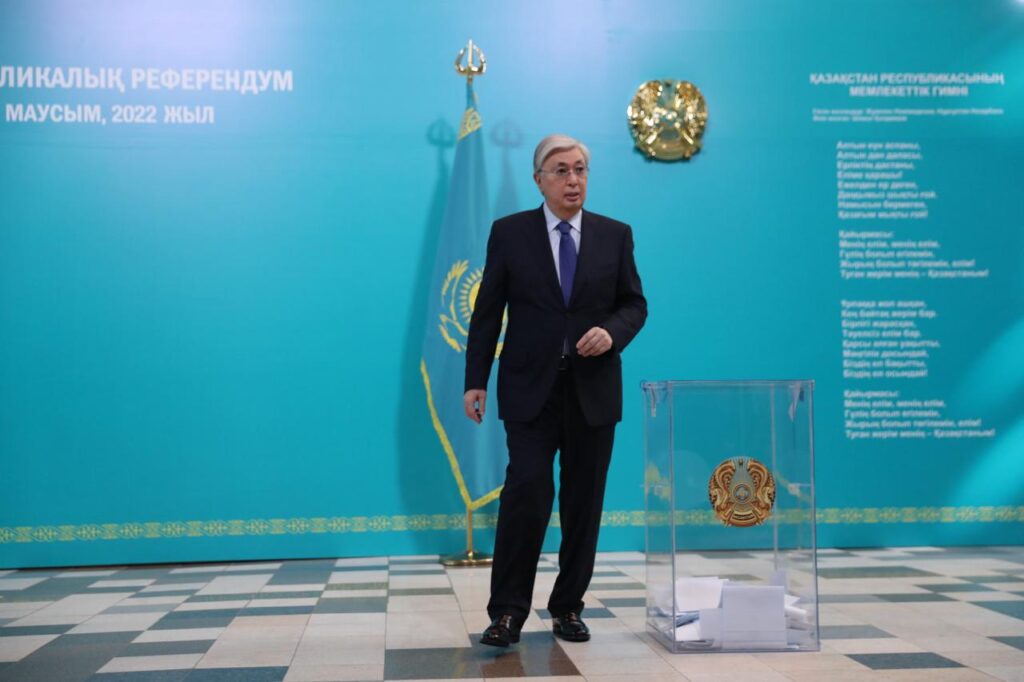
The metaphor that history moves in a spiral has resurfaced in Kazakhstan, where ongoing debates over electoral reform and information policy are testing the boundaries of the country’s democratic trajectory. Recent official messaging points toward a more managed model of political participation, framed as a necessary response to emerging challenges. This trajectory was articulated by State Councilor Erlan Karin in his article, "The Politics of Common Sense," published in the state-run Kazakhstanskaya Pravda. In the piece, Karin reflects on the formation of public values in Kazakhstan, portraying it as an evolutionary process. Simultaneously, Karin references government-led social programs, such as “Law and Order,” “Clean Kazakhstan,” and “Adal Azamat” - a program focused on building character, promoting civic responsibility, and fostering national unity - as instruments of state-directed civic education. Karin reiterates his previously stated position on the existence of “red lines” in public discourse, sensitive subjects such as interethnic relations, religion, language, and foreign policy. While insisting that these topics should not be off-limits, he calls for “common sense” in how they are discussed. “When it comes to public stability, the state will not compromise,” he asserts, adding that the government will lawfully oppose any attempts at “destructive information influence and incitement to hatred.” Karin also highlights what he describes as a new category of problematic actors: "This spring, I drew attention to a phenomenon known as ‘inforeket,’ in which certain bloggers and activists engage in outright extortion. This practice stems from past policies of appeasement toward disruptive elements, which encouraged the rise of pseudo-public figures, bloggers, and ‘tame oppositionists.’ Now abandoned by their once-powerful patrons and wealthy clients, they continue to seek income using outdated methods." In the same article, Karin names a group of experts, deputies, and public figures who contributed input to the new internal policy principles. Several of these individuals are currently advancing proposals to revise aspects of Kazakhstan’s electoral system—particularly the mechanisms for selecting district akims. Among them is Berik Abdygaliuly, political scientist, historian, and director of the National Museum of Kazakhstan. In a recent podcast, Abdygaliuly argued for reconsidering the model of electing district akims. He noted that while more than 3,000 rural akims and maslikhat deputies have been elected in recent years, the outcomes have been mixed. Voter fatigue is mounting, he said, and the financial costs of repeated campaigns - amounting to hundreds of millions of tenge - have not corresponded with visible improvements in local governance. His proposal is that district akims should be chosen not by direct popular vote but by maslikhats, the local representative bodies empowered to demand reports, assess performance, express no confidence, and initiate dismissals. This idea quickly gained support from other commentators participating in public discussions of governance reform. Political analyst Marat Shibutov wrote on his Telegram channel that the electorate is “simply getting tired of elections” after several consecutive voting cycles since 2021. Shibutov supported the idea of “revising or freezing” the election mechanism for district akims as “rational.” Meanwhile, political scientist Andrey Chebotarev highlighted...

Ashgabat Police Intensify Crackdown on Internal Migrants Ahead of Neutrality Day

Security forces in Turkmenistan’s capital Ashgabat have stepped up operations targeting visitors from other regions in the lead-up to the country’s 30th anniversary of neutrality. Witnesses report harsh interrogations at checkpoints, physical abuse, ethnic slurs, and widespread raids in areas where day laborers gather. Systematic Interrogations and Raids Recent media reports highlighting police crackdowns on non-resident workers appear to represent only a fraction of a broader campaign against internal migrants. According to residents, anyone arriving in Ashgabat now faces multi-stage inspections at all major entry points, including from the Gokdepe, Dashoguz, Mary, and Lebap regions. Checkpoint officers question travelers in detail, asking where they are going, who they are visiting, the length of their stay, and their purpose. Those suspected of seeking work are often forced to return to their regions of origin. Within Ashgabat, authorities continue searches at the Gurtly bus station and expand checks to markets, construction sites, and agricultural outlets, any location where day laborers might be found. The raids extend to suburban areas, including the city of Arkadag. Ethnic Discrimination and Unofficial Policies Longstanding unofficial policies appear to disproportionately affect ethnic Uzbeks. Residents of Dashoguz and Lebap regions report that career advancement in government is often limited for Uzbeks, with many being encouraged to change their names from childhood to improve their prospects. Even in districts where Uzbeks form the majority, leadership roles are predominantly held by ethnic Turkmen. According to Turkmen.news, the surge in pressure on non-residents coincides with preparations for high-profile events. In the summer, similar measures were observed in the resort town of Avaza before a United Nations forum. Now, authorities appear focused on “cleaning up” Ashgabat and Arkadag ahead of Neutrality Day. Eyewitnesses believe the government aims to present an idealized image of the capital as Turkmenistan prepares to mark 30 years of neutrality. Gurbanguly Berdymuhamedov, the previous president and current Chairman of the country's People's Council, is reportedly placing significant emphasis on the celebrations. High-ranking international delegations are expected to attend. Institutionalized Control Since 2022 The origins of the current policy trace back to January 2022, when Berdymuhamedov, during a Security Council meeting, directed the head of the migration service, Nazar Atagaraev, to increase controls on internal movement. Since then, raids have become routine, with enforcement intensifying ahead of state events.

Old Kazakhstan in Retreat: The Fate of Nazarbayev’s Allies

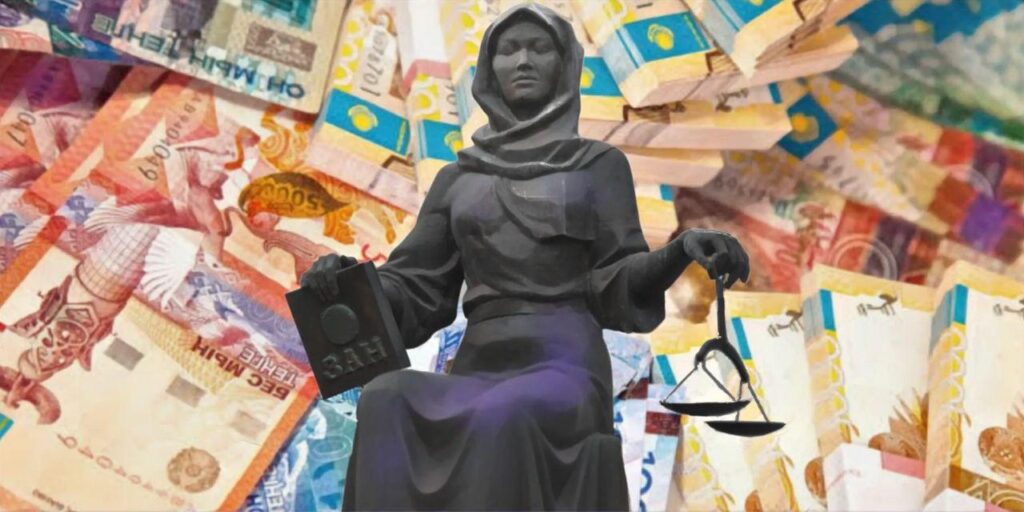
Since early 2022, the influence of the so-called “Old Kazakhstan” - the political and business circle that once surrounded former President Nursultan Nazarbayev — has been steadily eroded. Institutions have been reshaped, loyalties tested, and the once-untouchable elite has found itself under unprecedented scrutiny. Yet the names of Nazarbayev and his closest allies still surface regularly in courtrooms, parliament debates, and media headlines. Are these prosecutions and investigations an attempt to build President Kassym-Jomart Tokayev’s vision of a “Fair Kazakhstan,” or do they mark a new phase of elite score-settling under the banner of reform? The Times of Central Asia examined the fortunes of six figures from Nazarbayev’s inner circle to trace the shifting balance of power. Nurbоl Nazarbayev Recent headlines have revived scrutiny of Nazarbayev's nephew Nurbоl Nazarbayev, the son of his late brother Bolat. Authorities have launched bankruptcy proceedings against him, citing debts of approximately 58 billion tenge ($107 million). His assets and bank accounts have been frozen, and he is subject to travel restrictions. Under the current law, Nurbоl will be barred from taking out loans for five years, registering as an individual entrepreneur, or conducting major financial transactions without notifying the relevant authorities. His assets may be liquidated to repay creditors, with the exception of his primary residence. Once listed as Kazakhstan’s 57th richest businessman by Forbes Kazakhstan, he held ownership stakes in Prime Capital Invest and Prime Capital Holding, was a co-owner of PLS Construction Company and PLS-TM, and the majority shareholder of the Almaty Heavy Machinery Plant. This legal action follows a parliamentary inquiry into a previously sealed court case initiated by the General Prosecutor’s Office. The court ordered the confiscation of assets worth 57 billion tenge ($105.5 million) and imposed a fine of 925 million tenge ($1.7 million), along with penalties totaling 230.4 million tenge ($425,000). Members of parliament, Rinat Zaitov and Ermurat Bapi, have both demanded transparency in the case. Zaitov called for a comprehensive audit of Nurbоl’s assets, including those linked to the Altyn Orda market and land plots in Almaty and its surrounding areas. Shortly afterward, Bapi echoed the call, referencing a complaint from a Karaganda businessman who claimed his company was seized in a raid involving Nazarbayev’s circle. Bapi criticized law enforcement for closing the case, calling it “a betrayal of the President’s vision of a Fair Kazakhstan.” Zhomart Ertayev Zhomart Ertayev, a flamboyant banker once sentenced to 11 years for embezzling 144 billion tenge ($266 million) from Bank RBK, was unexpectedly released earlier this year under an amnesty, according to the Committee of the Penal System. However, a month later, parliament deputy Abzal Kuspan announced that the court’s decision had been overturned, and a formal appeal to the Prosecutor General’s Office led to Ertayev’s re-arrest. Ertayev previously held refugee status and a Russian residence permit, both of which were revoked after Kazakhstan issued an international warrant for his arrest. Kairat Boranbayev Kairat Boranbayev, a prominent businessman and former in-law of the Nazarbayev family, was arrested in 2022 and...

Former Afghan Deputy Speaker “Abbas Dollar” Arrested in Tashkent

Abbas Ibrahimzada, a former deputy speaker of Afghanistan’s parliament, was arrested in Tashkent on September 24, according to sources cited by Amu. Despite reportedly posting bail of more than $350,000, he has remained in custody for over a week. His arrest follows multiple complaints filed by business rivals. Local sources indicate that Ibrahimzada has invested more than $50 million in Uzbekistan over the past four years, with ventures spanning commercial transport and flour production. His detention has raised concerns about potential disruptions to his extensive business interests. Ibrahimzada has not publicly commented on the case. A prominent representative from Balkh province during the 16th term of Afghanistan’s parliament, Ibrahimzada is widely known by the nickname “Abbas Dollar”, a nod to his reputation as one of Afghanistan’s wealthiest private investors. In addition to his political career, Ibrahimzada has long been active in business. According to Afghan-Bios, he heads the Ibrahimzada Group, which operates across multiple sectors, including energy, infrastructure, and education. His arrest in Uzbekistan adds a new layer of complexity to his cross-border business profile, drawing attention to the intersection of political and commercial interests in Central Asia. The case also highlights the legal uncertainties foreign investors may encounter in the region. Authorities have not released an official statement regarding the specific charges or the status of his business operations in Uzbekistan.