• KGS/USD = 0.01144 0%
  • KZT/USD = 0.00214 0%
  • TJS/USD = 0.10874 0.37%
  • UZS/USD = 0.00008 0%
  • TMT/USD = 0.28571 0%
  • KGS/USD = 0.01144 0%
  • KZT/USD = 0.00214 0%
  • TJS/USD = 0.10874 0.37%
  • UZS/USD = 0.00008 0%
  • TMT/USD = 0.28571 0%
  • KGS/USD = 0.01144 0%
  • KZT/USD = 0.00214 0%
  • TJS/USD = 0.10874 0.37%
  • UZS/USD = 0.00008 0%
  • TMT/USD = 0.28571 0%
  • KGS/USD = 0.01144 0%
  • KZT/USD = 0.00214 0%
  • TJS/USD = 0.10874 0.37%
  • UZS/USD = 0.00008 0%
  • TMT/USD = 0.28571 0%
  • KGS/USD = 0.01144 0%
  • KZT/USD = 0.00214 0%
  • TJS/USD = 0.10874 0.37%
  • UZS/USD = 0.00008 0%
  • TMT/USD = 0.28571 0%
  • KGS/USD = 0.01144 0%
  • KZT/USD = 0.00214 0%
  • TJS/USD = 0.10874 0.37%
  • UZS/USD = 0.00008 0%
  • TMT/USD = 0.28571 0%
  • KGS/USD = 0.01144 0%
  • KZT/USD = 0.00214 0%
  • TJS/USD = 0.10874 0.37%
  • UZS/USD = 0.00008 0%
  • TMT/USD = 0.28571 0%
  • KGS/USD = 0.01144 0%
  • KZT/USD = 0.00214 0%
  • TJS/USD = 0.10874 0.37%
  • UZS/USD = 0.00008 0%
  • TMT/USD = 0.28571 0%

Viewing results 1 - 6 of 284

Kazakhstan, Uzbekistan, and Azerbaijan Join Trump-Initiated Board of Peace

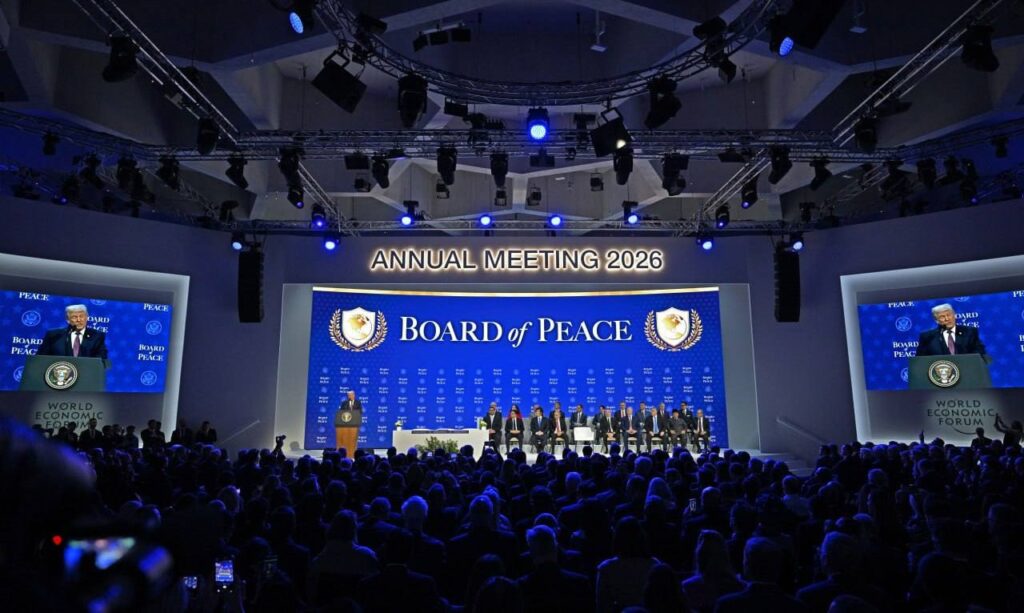
A new international organization, the Board of Peace, was formally established yesterday on the initiative of U.S. President Donald Trump. The charter for the board was signed on the sidelines of the World Economic Forum in Davos by representatives from 19 countries. Joining Kazakhstan and Uzbekistan as founding signatories, the other parties are Argentina, Armenia, Azerbaijan, Bahrain, Bulgaria, Hungary, Indonesia, Jordan, Qatar, Saudi Arabia, Turkey, the United Arab Emirates, Morocco, Mongolia, Pakistan, Kosovo, and Vietnam. The United States is not counted among the 19 signatories, acting instead as the initiative’s convener and chair. The Board of Peace is designed as a consultative platform rather than a treaty-based organization, with no enforcement powers and voluntary participation by member states. Following the signing, a comprehensive development plan for the Gaza Strip was unveiled, which envisions transforming the enclave into a regional economic hub by 2035, with a projected GDP of over $10 billion under the proposal. The plan includes restoring water, electricity, sewage systems, and hospitals, creating jobs, and developing coastal tourism. The concept was presented by entrepreneur Jared Kushner, Trump’s son-in-law. Kushner will serve on the Board of Peace’s executive board, alongside U.S. Secretary of State Marco Rubio, Special Envoy Steve Witkoff, World Bank President Ajay Banga, and former British Prime Minister Tony Blair, among others. The inclusion of Kazakhstan and Uzbekistan, the two largest economies in Central Asia, as founding members underscores their growing role in global diplomacy. Azerbaijan, which has recently expressed interest in joining the Central Asia-focused C5 regional format, also signed the charter. Separately, observers have begun referring to the growing cooperation between Central Asia and Azerbaijan as the “C6,” which could pave the way for greater collaboration on the development of the Trans-Caspian International Transport Route, including the Zangezur Corridor through Armenia. [caption id="attachment_42672" align="aligncenter" width="1280"] Image: president.uz[/caption] Uzbekistan’s participation reflects Tashkent’s increasingly active multi-vector foreign policy under President Shavkat Mirziyoyev, which has sought to expand the country’s diplomatic footprint beyond its immediate neighborhood. In recent years, Uzbekistan has stepped up engagement with the United States, the European Union, and the Middle East, while positioning itself as a pragmatic regional actor on development, connectivity, and post-conflict reconstruction initiatives. During the signing ceremony, President Kassym-Jomart Tokayev of Kazakhstan and Trump reportedly had a brief but cordial exchange. In a statement to the press, Ruslan Zheldibay, spokesperson for the Kazakh president, said Tokayev pointed out that Kazakhstan’s accession to the Abraham Accords was listed as item 177 in a document titled 365 Victories of President Donald Trump in 365 Days, distributed at the Davos Forum. Tokayev also wished Trump success in pursuing a “common sense” domestic policy. Trump, in turn, thanked Tokayev for supporting the Board of Peace initiative. [caption id="attachment_42673" align="aligncenter" width="2560"] Image: Akorda.kz[/caption] The press service of Akorda, the presidential residence of Kazakhstan, later clarified that joining the Board of Peace is based on a sovereign decision and entails a standard three-year term. Participation does not require a financial contribution, though the charter allows member states...

Finland’s President Stubb Warns Russia’s Imperial Thinking Poses Risks for Central Asia

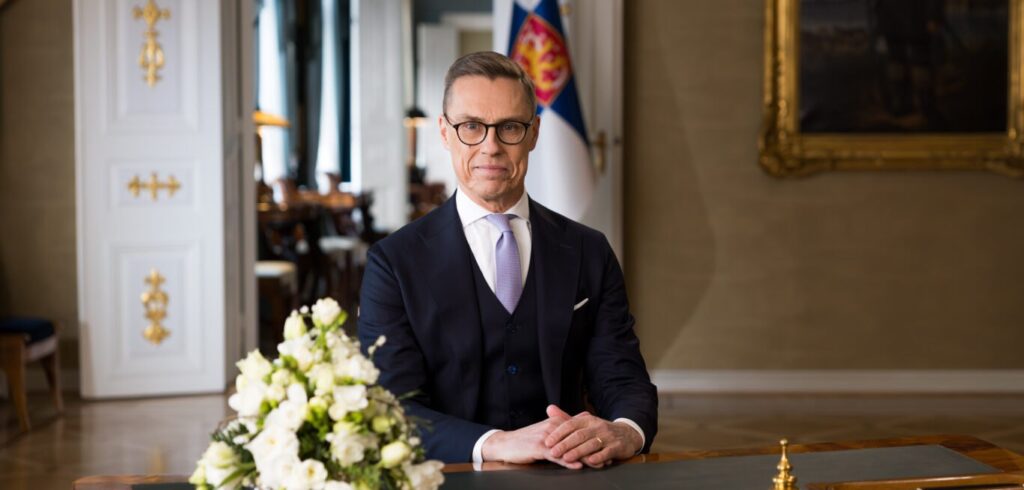
Russia’s imperial worldview may pose a greater long-term risk to Central Asia and the South Caucasus than to NATO member states, Finnish President Alexander Stubb said in an interview with The Washington Post, highlighting concerns that continue to resonate across the post-Soviet space. Speaking with columnist David Ignatius, Stubb referenced Finland’s long and complex history with its eastern neighbor, noting that expansionist thinking remains deeply rooted in Russian political culture. “I think the DNA of Russia is still expansion and imperialism,” he said, arguing that President Vladimir Putin views the collapse of the Soviet Union as a historical injustice. While much of the Western debate centers on potential threats to NATO countries such as the Baltic states, Finland, or Poland, Stubb suggested that more vulnerable regions lie elsewhere. “I think the more worrying aspect for others is the Central Asian countries, the Southern Caucasus and others,” he said, pointing to what he described as a top-down political system driven by the ideology of Russkiy mir, or the “Russian world.” Stubb also spoke about his personal interactions with Russian officials, including Putin and Foreign Minister Sergei Lavrov, stressing that meaningful political dialogue remains unlikely while the war in Ukraine continues. As previously reported by The Times of Central Asia, Russian television host Vladimir Solovyov sparked backlash after suggesting that Moscow could conduct “special military operations” in Central Asia and Armenia. The remarks were widely condemned by Uzbek scholars, journalists, and analysts as destabilizing and provocative. More recently, Russian ultranationalist Alexander Dugin, often described as an ideologue of the “Russian world”, publicly questioned the sovereignty of several former Soviet republics, including Uzbekistan, Kazakhstan, Tajikistan, and Kyrgyzstan. A video of his comments circulated widely online, drawing sharp criticism across the region. Russia’s Foreign Ministry later sought to distance the Kremlin from such statements. Spokesperson Maria Zakharova stated that Solovyov’s remarks did not reflect official policy and reaffirmed that Moscow’s relationships with Central Asian countries are based on partnership and respect for sovereignty.

Uzbekistan Agrees to Join U.S.-Proposed Board of Peace

Uzbekistan has received and accepted an official invitation from U.S. President Donald Trump to join a new international initiative aimed at promoting peace and resolving conflicts in the Middle East, according to the press secretary of the President of Uzbekistan. The invitation, addressed to President Shavkat Mirziyoyev, proposes Uzbekistan’s participation as a founding member of a newly established Peace Council. The initiative is anchored in a comprehensive plan to end the conflict in Gaza, which was announced on September 29, 2025, supported by several global leaders, and endorsed by United Nations Security Council Resolution 2803, adopted on November 17, 2025, the presidential press service stated. According to the letter from the White House, the initiative seeks to unite countries willing to take responsibility for fostering long-term peace, stability, and security in the Middle East. The Peace Council is envisioned as an international body that would initially focus on Gaza, with a broader mandate to address other conflicts over time. In his response, President Mirziyoyev affirmed Uzbekistan’s readiness to join the Peace Council as a founding member. He called the initiative a significant step toward resolving enduring conflicts in the Middle East and promoting peace and stability across the wider region. In recent years, Tashkent has sought to expand its international role through dialogue-oriented diplomacy while avoiding formal military or bloc alignments. As previously reported by The Times of Central Asia, Kazakhstan has also accepted an invitation to join the Peace Council. The offer, addressed to President Kassym-Jomart Tokayev, was confirmed by Ruslan Zheldibay, assistant to the Kazakh president’s press secretary. Zheldibay stated that Tokayev was among the first world leaders to receive an official invitation from President Trump. “Yes, President Kassym-Jomart Tokayev received an official invitation to join the Peace Council, and Kazakhstan was invited to become one of its founding states,” Zheldibay said. He added that Tokayev responded with gratitude, confirmed Kazakhstan’s participation, and reaffirmed the country’s intention to contribute to a lasting peace in the Middle East and broader global stability. According to a report by Reuters, international reactions to Trump’s proposal have been cautious. The initiative, sent to approximately 60 countries, has raised concerns among some diplomats who worry it could undermine the role of the United Nations. Reuters also reported that the Peace Council would be chaired for life by President Trump and would initially focus on Gaza before expanding its scope to other global conflicts. Member states would serve three-year terms, unless they contribute $1 billion each to gain permanent membership. The White House stated that permanent membership would be reserved for countries demonstrating a sustained commitment to peace, security, and prosperity.

Russian Philosopher Sparks Outrage by Questioning Sovereignty of Former Soviet States

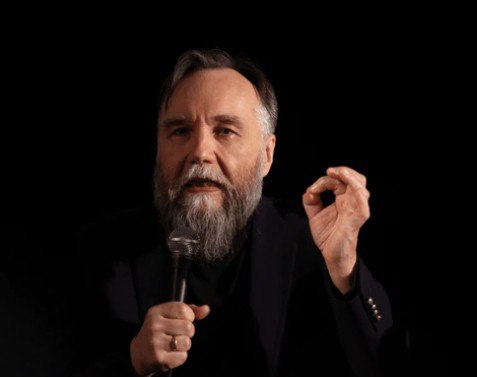
A fresh wave of controversy has erupted in Central Asia after Russian philosopher and political theorist Alexander Dugin publicly questioned the sovereignty of several post-Soviet states, including Uzbekistan. A video fragment of Dugin’s recent remarks circulated widely online, prompting strong backlash from regional analysts and commentators. In the recording, Alexander Dugin, founder of the International Eurasian Movement and often described as the ideologue of the so-called “Russian world,” said that national sovereignty should no longer apply to former Soviet republics. He specifically named Armenia, Georgia, Azerbaijan, Kazakhstan, Uzbekistan, Tajikistan, and Kyrgyzstan as states that, in his view, should not exist independently under any future political order. “Nothing sovereign can exist in this new model. That’s it. Sovereignty is over. National states are a thing of the past. This is garbage,” Dugin said, adding that “it is impossible to agree with the existence of a sovereign Uzbekistan.” Backlash from Uzbek Analysts Dugin’s remarks prompted immediate criticism in Uzbekistan. Journalist Ilyos Safarov described the comments as part of a broader ideological pattern rather than an isolated statement. “Yesterday it was Solovyov calling for a ‘special military operation’ in Central Asia. Today it is Dugin denying our sovereignty,” Safarov said. “This shows that post-imperial thinking is still alive in certain Russian political circles.” He warned that ignoring such rhetoric could further embolden these narratives. “Silence is often interpreted not as diplomacy, but as weakness. If these ideas are left unanswered, they begin to look acceptable to a wider audience,” Safarov said, noting that even unofficial figures can influence public discourse and political attitudes in Russia. Zavqibek Mahmudov, an associate professor at the Abdulla Avloniy National Institute of Pedagogical Excellence, echoed these concerns. He argued that ideological declarations, even from non-state actors, can translate into real-world political agendas. “History shows that radical political projects often begin with philosophical justifications,” Mahmudov said. He criticized Dugin’s rhetoric as part of a political chauvinism that categorizes countries as either "real" or "artificial." “When the existence of an entire nation is questioned, this is no longer academic debate, it is a direct challenge to international law and the principle of sovereign equality.” Mahmudov called for a coordinated legal and diplomatic response from all the countries mentioned in Dugin’s remarks. “A collective stance would be far more effective than individual national responses,” he noted. Official Distancing from Moscow The controversy follows recent remarks by Russian television host Vladimir Solovyov, who had floated the possibility of military action in Central Asia. That incident prompted a response from Russia’s Foreign Ministry. On January 16, ministry spokesperson Maria Zakharova stated that Solovyov’s views did not represent official Russian policy and reaffirmed that Moscow’s relationships with Central Asian countries are grounded in “partnership and respect for sovereignty.” Despite this distancing, analysts caution that repeated rhetorical assaults on Central Asian sovereignty, whether from state actors or affiliated intellectuals, may reflect deeper ideological currents that could have lasting consequences for regional stability.

The Venezuela Effect: Oil, Sanctions, and Kazakhstan’s Strategic Dilemma

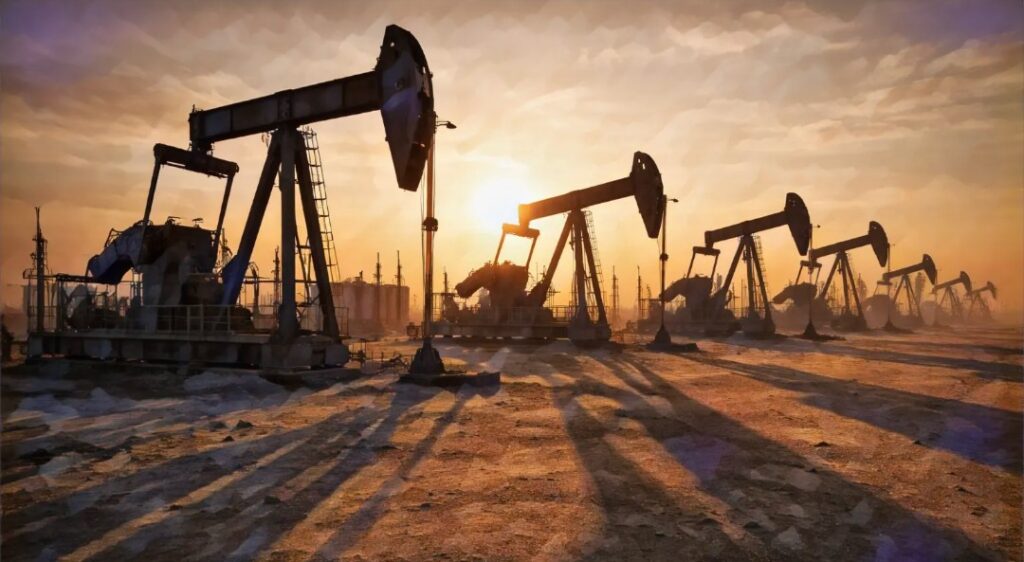
The start of 2026 was marked by political upheaval across two continents: fresh protests in Iran drawing comparisons among some Kazakh analysts to the country’s own Bloody January of 2022, and a U.S. military operation described by Washington as a law-enforcement action in Venezuela. The latter led to the arrest of Venezuelan President Nicolás Maduro and what some analysts are describing as a move toward far greater U.S. influence over Venezuela’s oil sector. Beyond its immediate implications for global oil supply and pricing, the geopolitical symbolism of the Venezuela operation is resonating in unexpected places, including Central Asia. Contrary to some early reports, the American intervention in Caracas was not bloodless. At least 40 Venezuelan security and military personnel were reportedly killed during the rapid offensive. Still, Kazakh political scientist Marat Shibutov argues that the perception of a swift and decisive U.S. action, especially in contrast to Russia’s grinding war in Ukraine, is symbolically damaging for Moscow. “This comparison with Russia’s prolonged conflict is not flattering,” Shibutov noted. “It creates a sensitive political backdrop for the Kremlin.” In Kazakhstan, where debates over foreign energy contracts have been simmering for years, the events in Venezuela are being closely watched. Political analyst Daniyar Ashimbayev referenced Astana’s past discussions about reviewing oil agreements with Western companies. “The topic of revising oil contracts is becoming less and less popular. At this rate, it could even be equated with extremism,” he commented ironically, underscoring how sensitive the issue has become. Some experts are also concerned that political shifts in Venezuela and Iran could destabilize the oil market in ways that would hit Kazakhstan’s economy hard. Kazakhstan derives a substantial share of its state budget revenues from the oil sector, making sustained price declines a direct fiscal risk rather than a purely market concern, analysts note. Energy analyst Olzhas Baidildinov points out that Venezuela holds the largest proven oil reserves in the world, approximately 300 billion barrels, more than 30 times Kazakhstan’s profitable reserves. “If liberal or Western-friendly governments come to power simultaneously in Venezuela and Iran, they could supply an additional 2-3 million barrels per day to the global market within the next 3-4 years,” he warned. Even without full regime change, he noted, easing sanctions or the return of “shadow exports” could push global prices down to $50-70 per barrel. “At such prices, it will be difficult to demonstrate economic growth and maintain momentum in Kazakhstan’s oil sector,” Baidildinov added. Financial analyst Arman Beisembayev offered a more bearish view. “If production volumes increase and the U.S. begins releasing more oil onto the market, including from Venezuela, then I’m afraid prices won’t stay at $60 per barrel. The base case is a drop to $50. A worst-case scenario could see prices at $40, or even lower.” But not everyone believes Venezuela can upend the market. Askar Ismailov, a Geneva-based advisor on Central Asia at the Global Gas Centre, remains skeptical. “Venezuelan crude is extremely heavy, difficult to extract, and expensive to transport. Historically, it depended on a...

From GDP to AI: EAEU Leaders Review Integration Milestones in St. Petersburg

The leaders of the Eurasian Economic Union (EAEU) gathered on December 21 at the Yeltsin Presidential Library in St. Petersburg, Russia, to assess the bloc’s progress and outline future integration priorities. The summit was attended by the leaders of EAEU member states, President of Russia, Vladimir Putin, President of Belarus, Aleksandr Lukashenko, Prime Minister of Armenia, Nikol Pashinyan, President of Kazakhstan, Kassym-Jomart Tokayev, President of Kyrgyzstan, Sadyr Zhaparov, and Chairman of the Board of the Eurasian Economic Commission, Bakytzhan Sagintayev. In an expanded format, representatives of Uzbekistan, Indonesia, Iran, and Cuba also participated. The meeting took place against the backdrop of continued global economic fragmentation, as the EAEU looks to position itself as a stable integration platform within an increasingly multipolar economic order. [caption id="attachment_41254" align="aligncenter" width="2560"] Image: Akorda[/caption] Opening the meeting, Vladimir Putin proposed a year-end review and highlighted key decisions aimed at deepening cooperation. He stated that the EAEU has solidified its position as an independent and self-sufficient center within the evolving multipolar world. Putin pointed to rising combined GDP figures and noted that EAEU membership has contributed to economic stability and improved living standards across member states. These assessments framed the EAEU not only as a regional trade bloc but as a long-term economic center adapting to shifting global alignments. [caption id="attachment_41258" align="aligncenter" width="2560"] Image: Akorda[/caption] Putin also cited progress in building the union’s payment infrastructure, removing trade barriers, and enhancing transport connectivity. Among individual economies, Kyrgyzstan stood out with a GDP growth rate of around 10%. Much of the focus, however, remained on translating macroeconomic gains into deeper market integration across energy, finance, and logistics. Belarusian President Alexander Lukashenko, addressing the summit as chair of the EAEU, called for renewed approaches to economic engagement with third countries over the next five years. He endorsed deeper ties with what he termed the “global majority,” while acknowledging existing challenges, such as delays in establishing unified energy markets and hesitancy among member states to form a common financial market. Nonetheless, he described the Union State of Russia and Belarus as the “locomotive of integration” in the post-Soviet region. The discussion highlighted a recurring tension for the bloc: expanding external partnerships while still completing core internal market harmonization. [caption id="attachment_41259" align="aligncenter" width="2560"] Image: Akorda[/caption] Kazakh President Kassym-Jomart Tokayev emphasized the EAEU's milestone year as it entered its second decade. He projected a 2% increase in the union’s combined GDP in 2025 and noted that intra-union direct investment had surpassed $20 billion. Kazakhstan alone saw a nearly sevenfold increase in EAEU-related investment from $600 million in 2015 to $4 billion in 2024. [caption id="attachment_41260" align="aligncenter" width="2560"] Image: Akorda[/caption] Tokayev also proposed the systematic integration of artificial intelligence technologies into EAEU operations, from trade forecasting to customs duties assessment. He highlighted the union’s potential as a global transport and logistics hub and advocated for the swift implementation of the Caspian Sea shipping agreement. Uzbek President Shavkat Mirziyoyev noted that Uzbekistan’s trade with EAEU countries had nearly doubled to $20 billion over its...