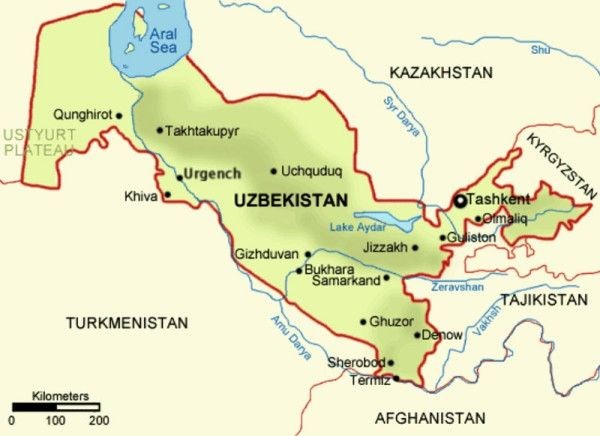
TASHKENT (TCA) — This week’s removal of the powerful and longtime security services chief from his post in Uzbekistan has caused hopes that the Soviet- and Karimov-era repressive policies will finally come to an end. It remains to be seen, however, if the move was just the sidelining of a strong political figure or a decisive step to advance real reforms in the country. We are republishing this article on the issue, originally published by Eurasianet: The morning in Uzbekistan began, fittingly enough, with an earthquake. But the slight seismological activity registered on January 31 was as nothing compared to the developments playing out at the headquarters of the National Security Services (SNB). This week, Rustam Inoyatov, the 73-year old, long-time powerful head of the security services, was allowed to resign his post. The tricksy official formulation masked that Inoyatov had in fact been fired after more than two decades of running an agency responsible for mounting an unrelenting campaign of repression against Uzbekistan’s population. “Inoyatov … will go down in history as one of the most ruthless figures in all of the post-Soviet space, responsible for constructing among the most fearsome and formidable security services agencies in the whole region,” Steve Swerdlow, Central Asia researcher for Human Rights Watch, told Eurasianet. “Inoyatov is closely and personally associated with the worst human rights abuses over the past 22 years, including the imprisonment of thousands of persons on politically motivated charges, the wide-ranging use of torture in places of detention, and the Andijan massacre of hundreds of largely peaceful demonstrators in 2005.” Alexey Malashenko, formerly with the Carnegie Moscow Center, once memorably described Inoyatov as the “last Stalinist politician among the country’s elite.” The new head of the SNB, as the body is known in its Russian-language acronym, has been named as 52-year old Ikhtiyor Abdullayev. The outgoing General Prosecutor will become the first SNB chairman not to be a career security services agent, although it did sometimes happen in Soviet days that local KGB chiefs were drawn from the ranks of the Communist Party. In keeping with his training as a lawyer, Abdullayev’s first major task will be to help implement the instructions of reformist President Shavkat Mirziyoyev, who demanded in December that legislation finally be adopted to properly detail the responsibilities of the SNB. The security services of Uzbekistan have since independence literally operated outside the law. Tashkent-based analyst Bakhtiyor Ergashev was effusive about Inoyatov’s removal, calling it the end of the transition from the era of the late President Islam Karimov to the current system. “Uzbekistan has created a tradition for the peaceful and evolutionary change of power in Central Asia,” Ergashev told Eurasianet, adding that he believed the incoming elite was capable of favoring national interests over those of narrow circles close to power. “This serves as an example for the countries and elites of the region.” Under Karimov, who died in September 2016, the SNB operated as a state within a state. It ostensibly served as...