• KGS/USD = 0.01144 0%
  • KZT/USD = 0.00215 0%
  • TJS/USD = 0.10659 0%
  • UZS/USD = 0.00008 0%
  • TMT/USD = 0.28530 0%
  • KGS/USD = 0.01144 0%
  • KZT/USD = 0.00215 0%
  • TJS/USD = 0.10659 0%
  • UZS/USD = 0.00008 0%
  • TMT/USD = 0.28530 0%
  • KGS/USD = 0.01144 0%
  • KZT/USD = 0.00215 0%
  • TJS/USD = 0.10659 0%
  • UZS/USD = 0.00008 0%
  • TMT/USD = 0.28530 0%
  • KGS/USD = 0.01144 0%
  • KZT/USD = 0.00215 0%
  • TJS/USD = 0.10659 0%
  • UZS/USD = 0.00008 0%
  • TMT/USD = 0.28530 0%
  • KGS/USD = 0.01144 0%
  • KZT/USD = 0.00215 0%
  • TJS/USD = 0.10659 0%
  • UZS/USD = 0.00008 0%
  • TMT/USD = 0.28530 0%
  • KGS/USD = 0.01144 0%
  • KZT/USD = 0.00215 0%
  • TJS/USD = 0.10659 0%
  • UZS/USD = 0.00008 0%
  • TMT/USD = 0.28530 0%
  • KGS/USD = 0.01144 0%
  • KZT/USD = 0.00215 0%
  • TJS/USD = 0.10659 0%
  • UZS/USD = 0.00008 0%
  • TMT/USD = 0.28530 0%
  • KGS/USD = 0.01144 0%
  • KZT/USD = 0.00215 0%
  • TJS/USD = 0.10659 0%
  • UZS/USD = 0.00008 0%
  • TMT/USD = 0.28530 0%

Viewing results 1 - 6 of 127

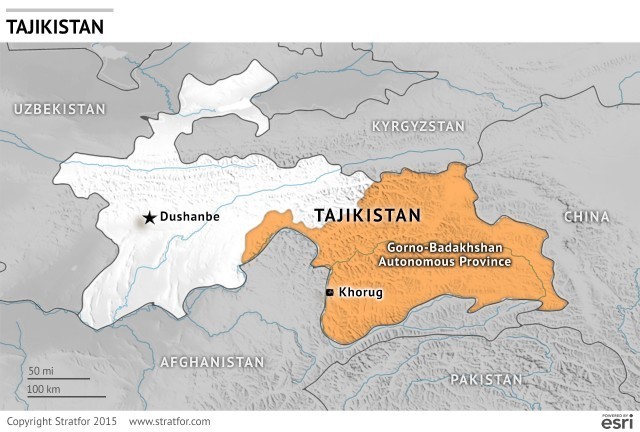
Tajikistan’s Gorno-Badakhshan at nexus of security problems of Central Asia, China, Afghanistan and Russia

BISHKEK (TCA) — The prevailing calm in Gorno-Badakhshan in Tajikistan's remote east does not rule out the prospect of a clash between local powerbrokers and Dushanbe authorities. To mitigate the risks of a local flare-up and regional power rivalry, China and Russia should communicate with each other and nudge Tajik President Emomali Rahmon toward a smooth transition of power, according to new findings presented at International Crisis Group’s briefing, Rivals for Authority in Tajikistan's Gorno-Badakhshan, on March 14. Following a 10-day research trip, Crisis Group has found Tajikistan’s little known and remote eastern territory of Gorno-Badakhshan Autonomous Oblast (GBAO) to be at the nexus of significant security problems, including Uighur unrest in China’s Xinjiang region, Afghanistan’s war and opium trafficking, and jihadists’ potential return from Iraq and Syria to China, Central Asia or Russia. Gorno-Badakhshan is one of the most strategically sensitive areas in Central Asia. Situated high in the Pamir mountains, this autonomous region (or oblast) of eastern Tajikistan is bordered to the south and west by Afghanistan and to the east by China’s Xinjiang Uighur Autonomous Region. Beijing’s security presence in the region appears to be increasing, likely motivated by concerns about Uighur militants operating across the border in Afghanistan or returning from the Middle East. Since the 1990s, Gorno-Badakhshan has sought to strengthen its self-rule, including through armed struggle. For now, it is relatively quiet, but that could change without warning. At some point soon, perhaps as early as 2020, Tajik President Emomali Rahmon is expected to hand over power to a younger family member. A rocky transition could lead Gorno-Badakhshan powerbrokers to seek a more influential role in the new dispensation. Their track record suggests they may be willing to use force to achieve their ends. Complicating matters is that the Tajik government’s control of Gorno-Badakhshan is tenuous at best. Irregulars loyal to local powerbrokers known as “the Authorities” have clashed with government forces in the past and may do so again if challenged, particularly in the event of a disorderly political transition in Dushanbe, Crisis Group says. Meanwhile, Beijing appears to have established a security presence in GBAO. Local officials and residents say China has built an installation in a remote corner of the oblast, near both Xinjiang and the Afghan border. The location is not surprising, given China’s concern about Uighurs fighting in Iraq and Syria, some of whom could return through Afghanistan or Central Asia. Yet Beijing’s presence has provoked some local concern, and increasing Chinese influence in the region could needle Russia, which traditionally has stronger ties to Tajikistan. Officials in GBAO and Dushanbe confirmed Beijing’s security presence in the oblast. “There are quite a lot of Chinese soldiers here”, one said, adding that they keep a low profile. Another spoke of some form of Chinese security installation in the settlement of Shaimak, near the border with Xinjiang and the Wakhan corridor, a high mountain valley in Afghanistan separating Tajikistan and Pakistan. He described the installation as “a joint counter-terrorism centre” housing...
Kyrgyzstan: high-level resignation points to trouble at the top

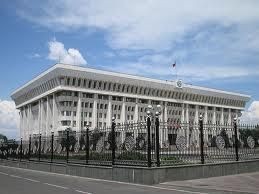
BISHKEK (TCA) — The President of Kyrgyzstan is gaining strength, and although he will hardly abandon the political and economic course of his predecessor, tensions are possible within the country’s ruling elite. We are republishing this article on the issue by Nurjamal Djanibekova, originally published by Eurasianet: The defection of a high-ranking figure from within Kyrgyzstan’s presidential administration has ignited talk of tensions within the ruling elite. After days of uncertainty, President Sooronbai Jeenbekov on March 7 accepted the resignation of his chief of staff, Farid Niyazov, a prominent figure on the national political scene. Niyazov is widely known as a loyal confidante of Jeenbekov’s predecessor, Almazbek Atambayev. Speaking to reporters this week, Jeenbekov denied that there was any tussle going on behind the scenes, but there are few analysts in Bishkek taking him at his word. Whatever jostling is underway is presumed to be occurring between the Jeenbekov and Atambayev camps. Because of changes made to the constitution following the 2010 revolution, Atambayev was required to step down at the end of his six-year term. Jeenbekov, an influential but markedly dour politician from the rural south, was in effect a successor hand-picked by Atambayev. His assigned role was to continue Atambayev’s legacy, which is centered around incremental economic development, loyalty to Russia and ensuring stability at all costs, usually by jailing opposition politicians and persecuting independent journalists. Jeenbekov duly won the October presidential elections with 54 percent of the votes cast in a contest many have said was marred by irregularities. No sooner had Jeenbekov taken office, political commentators began to speculate about his designs on building his own independent power base. Political analyst Mars Sariyev told Eurasianet that the moment seems to have come for the president to come out from under Atambayev’s shadow. “Jeenbekov will start positioning his own people. He has found room for movement, he will begin to operate more freely. He had the shortcoming of being fully controlled by Atambayev, but now people won’t say this anymore,” Sariyev said. Edil Baisalov, a leading functionary in a prior presidential administration and an outspoken commentator on the political scene, echoed this point. “[Jeenbekov] will pursue his political course, confidence in his own mandate will increase with every passing day, and he will gain strength. This is a natural process, but we can already say with certainty that he is not a puppet of Almazbek Atambayev, as the latter may have assumed [would be the case],” Baisalov said. Niyazov’s role now, said Baisalov, will be to engineer a parallel center of authority in the Atambayev-founded Social Democratic Party of Kyrgyzstan, or SDPK, which occupies a dominant role in parliament. Political analyst Denis Berdakov said he believes Niyazov’s resignation is connected to a planned SDPK congress, but he downplayed talks of tensions. “We are expecting the party congress at the end of this month and the start of the next. This is quite an important congress — the SDPK is entering a period of qualitative change, and that...

Uzbekistan: daughter of late president steps down from Gymnastics Federation

TASHKENT (TCA) — The younger daughter of late Uzbek President Islam Karimov says she is leaving her post as president of Uzbekistan’s Gymnastics Federation, weeks after she resigned from the post of the country’s ambassador to UNESCO, RFE/RL reported. Continue reading

Will the ‘Uzbek Gorbachev’ succeed — or be allowed to?

TASHKENT (TCA) — Observers currently speculate to what extent the new Uzbekistan president will go with his reforms, and whether he will be able to succeed with these reforms should they will not prove to be cosmetic. We are republishing this article on the issue by Paul Goble, originally published by The Jamestown Foundation’s Eurasia Daily Monitor: Continue reading

Uzbekistan: former chief prosecutor ‘arrested’ in latest sign of ongoing purge

TASHKENT (TCA) — Authorities in Uzbekistan have arrested the country's former prosecutor-general, the latest in a series of top government officials who have been caught up in an apparent purge by the administration of President Shavkat Mirziyoev, RFE/RL's Uzbek Service reports. Continue reading

Kazakhstan moves to expand, strengthen National Security Council

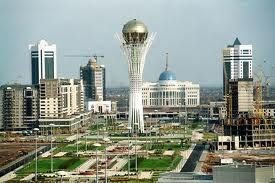
ASTANA (TCA) — The current reorganization of Kazakhstan’s National Security Council highlights the importance the authorities attach to matters of national security, and shows that President Nazarbayev — who is eligible to chair the Council for life — will keep a leading decision-making role even if he decides to retire. We are republishing this article on the issue by Anna Gussarova, originally published by The Jamestown Foundation’s Eurasia Daily Monitor: Kazakhstan’s parliament introduced new legislation, on January 24, 2018, pertaining to the National Security Council (KNSC) (Abctv.kz, January 24). The legislation notably follows last year’s adoption of a new military strategy, which focuses on ways to strengthen national security and domestic stability (see EDM, October 23, 2017). The latest document outlines the key responsibilities, structure and legal status of the National Security Council. Although the January 24 law lays out new directives for the KNSC, this body has formally existed since the 1990s, when it was first introduced via presidential decree. During that time, the KNSC’s main task was to advise the head of state on defense and national security issues—namely territorial integrity, sovereignty and stability (Qamzhy.kz, January 24). Kazakhstan and its post-Soviet neighbors largely inherited the idea of a presidential advisory body on foreign policy and national security from Russia. Indeed, the Kazakhstani document on the KNSC closely emulates Kremlin terminology. However, unlike other National Security Council counterparts present in the United Kingdom, Georgia and the United States, the Kazakhstani Security Council also assists the president with domestic matters, such as political and social stability, as well as addresses human rights and freedoms guaranteed by the Constitution (Tengrinews.kz, March 20, 1999). The new law introduced last month by the parliament specifically establishes the KNSC as an executive branch body responsible for foreign policy and national security matters. Even though the document greatly repeats the presidential decree of 1999, there are several important points that will significantly change the governance and decision-making process pertaining to issues of national security. As a result, the newly reformed KNSC should reinforce and restructure Kazakhstan’s national security approach in the coming years. First of all, the Security Council has been transformed from an advisory to a constitutional body. It will now coordinate the implementation of a unified state policy that ensures national security and defense capabilities, preserves political stability, and protects the constitutional order (Kursiv.kz, January 24). According to Urazgali Selteyev, a prominent expert from the Institute of World Economy and Politics Under the President of the Republic of Kazakhstan, the Security Council will become “a key decision-making center with a nomenklatura [key government appointees] leadership” (Inform.kz, January 29). Another important novelty is the increased number of participants. Starting from three permanent members (the prime minister, the chairman of the National Security Committee and the Council’s secretary) in 1990s, now the total number of KNSC members will be 12. The new law adds the ministers of interior, foreign affairs and defense, as well as the secretary of state, the general prosecutor, the state secretary,...