• KGS/USD = 0.01144 0%
  • KZT/USD = 0.00204 0%
  • TJS/USD = 0.10835 0%
  • UZS/USD = 0.00008 0%
  • TMT/USD = 0.28490 -0.28%
  • KGS/USD = 0.01144 0%
  • KZT/USD = 0.00204 0%
  • TJS/USD = 0.10835 0%
  • UZS/USD = 0.00008 0%
  • TMT/USD = 0.28490 -0.28%
  • KGS/USD = 0.01144 0%
  • KZT/USD = 0.00204 0%
  • TJS/USD = 0.10835 0%
  • UZS/USD = 0.00008 0%
  • TMT/USD = 0.28490 -0.28%
  • KGS/USD = 0.01144 0%
  • KZT/USD = 0.00204 0%
  • TJS/USD = 0.10835 0%
  • UZS/USD = 0.00008 0%
  • TMT/USD = 0.28490 -0.28%
  • KGS/USD = 0.01144 0%
  • KZT/USD = 0.00204 0%
  • TJS/USD = 0.10835 0%
  • UZS/USD = 0.00008 0%
  • TMT/USD = 0.28490 -0.28%
  • KGS/USD = 0.01144 0%
  • KZT/USD = 0.00204 0%
  • TJS/USD = 0.10835 0%
  • UZS/USD = 0.00008 0%
  • TMT/USD = 0.28490 -0.28%
  • KGS/USD = 0.01144 0%
  • KZT/USD = 0.00204 0%
  • TJS/USD = 0.10835 0%
  • UZS/USD = 0.00008 0%
  • TMT/USD = 0.28490 -0.28%
  • KGS/USD = 0.01144 0%
  • KZT/USD = 0.00204 0%
  • TJS/USD = 0.10835 0%
  • UZS/USD = 0.00008 0%
  • TMT/USD = 0.28490 -0.28%

Viewing results 1 - 6 of 76

Kazakhstan Prioritizes Nuclear Energy in Long-Term Development Strategy

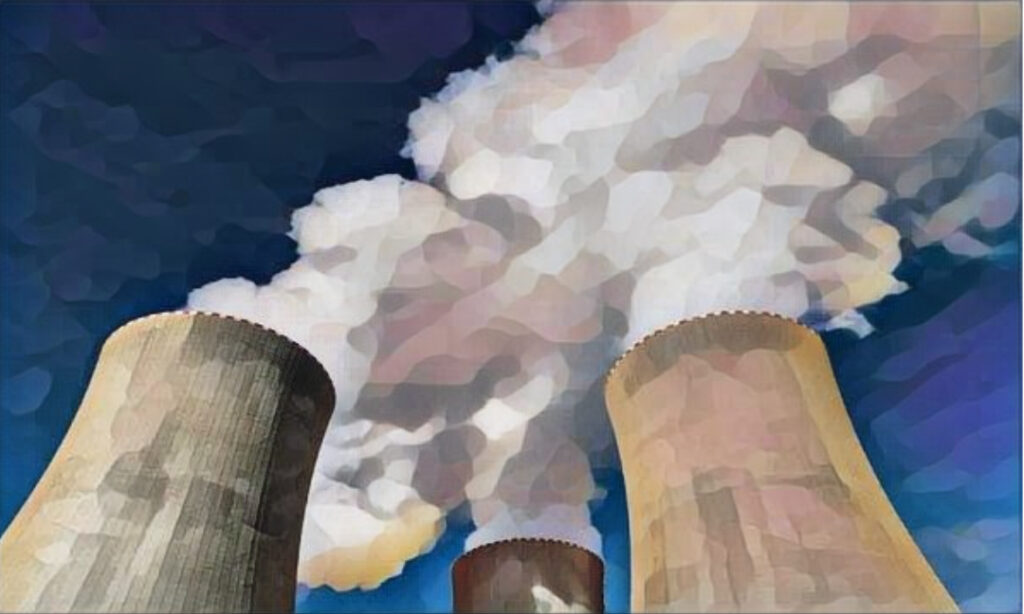
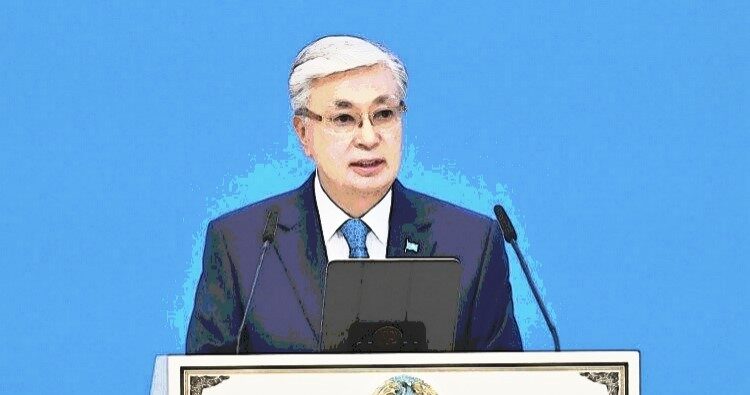
Kazakhstan has identified the development of nuclear energy as a strategic priority for the country's economic future, President Kassym-Jomart Tokayev announced at the Astana International Forum (AIF). “Kazakhstan, which possesses 40% of the world's uranium reserves, views nuclear energy as a key pillar of its national development strategy,” Tokayev stated. “However, sustainable development is impossible without addressing the climate crisis, particularly as Central Asia is among the region’s most vulnerable to climate change. Global warming is occurring here at twice the global average rate.” To address this, Tokayev outlined Kazakhstan’s commitment to a pragmatic and regionally coordinated climate agenda. He noted the country’s participation in various international organizations and agreements focused on environmental sustainability. In 2026, Kazakhstan, in partnership with the United Nations, will host a Regional Climate Summit, aimed at aligning Central Asian strategies with global environmental ambitions. Tokayev also highlighted the recent establishment of the UN Regional Center for Sustainable Development Goals for Central Asia and Afghanistan in Almaty. “This marks a significant step in our multilateral cooperation. The center will facilitate joint projects, provide technical support, and coordinate international efforts,” he said. At the same time, Kazakhstan continues to promote nuclear non-proliferation. “Today, nine countries possess more than 13,000 nuclear warheads. Experts warn that the risk of their use is rising, whether through miscalculation, accident, or escalation,” Tokayev cautioned. He emphasized the lasting impact of 450 nuclear tests conducted on Kazakh territory during the Soviet era. Public support for nuclear energy has been growing. In a referendum held last fall, over 70% of Kazakh citizens voted in favor of developing the country’s nuclear energy capacity. In January 2025, the government finalized a shortlist of potential technology suppliers for Kazakhstan’s first nuclear power plant. The contenders include Russia’s Rosatom, South Korea’s KHNP, China’s CNNC, and France’s EDF. The inaugural plant is expected to be built in the Almaty region and operational by 2035. Authorities are also evaluating sites for two additional facilities, with possible locations in Balkhash (southeastern Kazakhstan), Kurchatov (in the Abai region, near the former Semipalatinsk nuclear test site), and Aktau (Mangistau region, home to a Soviet-era experimental reactor). To oversee the development and regulation of the sector, Kazakhstan established the Atomic Energy Agency in March. Reporting directly to the president, the agency is responsible for uranium mining, atomic energy use, radiation safety, and management of the Semipalatinsk Nuclear Safety Zone.

Tokayev Backs Expansion of UN Security Council for Greater Global Representation

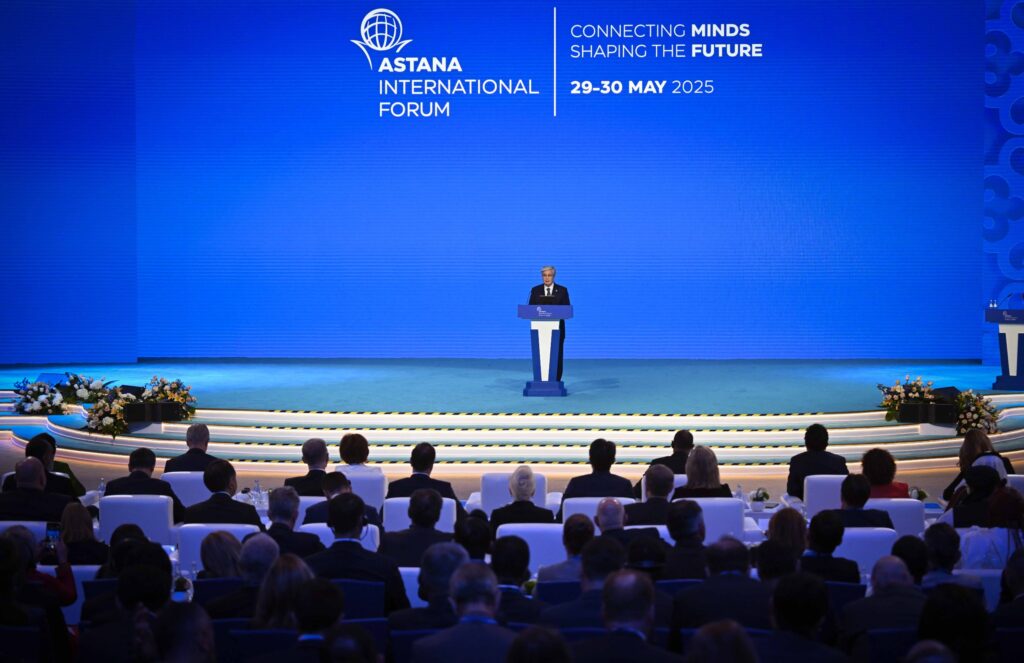
Kazakhstan's President Kassym-Jomart Tokayev has called for expanding the United Nations Security Council to better reflect contemporary global dynamics. Speaking at the Astana International Forum (AIF), he emphasized that reforming the UN’s most powerful body is essential to restoring trust and maintaining international peace and security. The Security Council currently consists of 15 members, five permanent (the United States, China, Russia, France, and the United Kingdom) and ten non-permanent members elected for two-year terms by the UN General Assembly. “Kazakhstan supports the expansion of the UN Security Council to include broader regional representation,” Tokayev stated. “This year, we celebrate the 80th anniversary of the United Nations. Founded in 1945 by 51 states in the aftermath of a devastating global war, the UN envisioned a more peaceful and secure world. Today, it has grown to 193 member states.” Tokayev criticized the Council’s structure as outdated. “The gap between institutional design, frozen in the post-World War II era, and modern realities undermines both trust in the UN and its effectiveness. Critical decisions affecting billions should not rest in the hands of only a few,” he argued. He called for a structural overhaul of the Council to ensure its continued relevance, emphasizing that major powers must recommit to the foundational principles of peace, security, and respect for the territorial integrity of all nations. Highlighting the scale of current global unrest, Tokayev noted that 52 countries were in active armed conflict last year. The economic toll from these hostilities reached an estimated US$19 trillion, approximately 13.5% of global GDP. “Beyond the staggering numbers lies a more troubling reality,” he said. “Modern conflicts are becoming longer, more complex, and increasingly involve non-state actors. Many are rooted in deep historical and structural contradictions.” Tokayev emphasized the growing role of so-called “middle powers” in shaping a fairer and more inclusive world order. “Middle powers must be ready to assume greater responsibility in rethinking global governance,” he concluded. As previously reported by The Times of Central Asia, the 2025 Astana International Forum, themed “Uniting Minds, Shaping the Future,” gathered global leaders, international organizations, investors, businesspeople, and policy experts in Kazakhstan’s capital.

Kazakhstan Plants Over 1 Billion Trees as Reforestation Drive Extends to 2027

Between 2021 and 2024, Kazakhstan planted a total of 1.15 billion tree saplings, according to the Ministry of Ecology and Natural Resources. The effort forms part of a sweeping national campaign aimed at reversing deforestation and mitigating climate impacts. Initially, President Kassym-Jomart Tokayev had set a target of planting two billion trees by 2025. However, the government has now extended the deadline to the end of 2027 and re-approved its Comprehensive Plan for Reforestation and Afforestation. As part of the initiative, one and two-year-old saplings of both deciduous and coniferous species are being planted across various ecosystems. Currently, 251 forest nurseries operate across the country on 3,178 hectares of land, producing more than 280 million saplings for future planting. Urban greening is also a key focus. Under the presidential initiative to plant 15 million trees in cities and villages nationwide, 14.3 million have already been planted between 2021 and 2024. The plan calls for more than three million trees to be planted annually through 2025. To support this effort, the government has approved detailed landscaping and green zone development plans for Kazakhstan’s regions, as well as for its three major cities, Astana, Almaty, and Shymkent. Another priority is the afforestation of the dried bed of the Aral Sea, a critical environmental concern in Central Asia. Over the past three decades, trees and shrubs have been planted on more than 600,000 hectares of the former seabed, including 413,000 hectares over the last four years alone.

Kazakhstan’s Lower House Passes Controversial New Tax Code Amid Public Backlash

On April 30, the Mazhilis, the lower house of Kazakhstan’s parliament, approved a new Tax Code by majority vote. The draft law, part of President Kassym-Jomart Tokayev’s broader economic reforms, has triggered intense public and political debate. While proponents highlight its emphasis on modernization and fairness, critics warn of increased pressure on businesses and potential inflation. The final decision now rests with the president, following Senate review. Key Reforms and Adjustments According to Berik Beisengaliyev, head of the Mazhilis working group, the final version of the Tax Code diverges significantly from the original draft submitted in August 2024. One of the major changes concerns VAT (value-added tax). The government’s initial proposal to raise the VAT rate to 20% was scaled back to 16%. The threshold for mandatory VAT registration has been raised from 15 million to 40 million tenge. Reduced VAT rates are set for medical services and medicines, 5% from 2026 and 10% from 2027. Goods and services tied to guaranteed free medical care, compulsory health insurance, and treatment of orphan and socially significant diseases will be VAT-exempt. Additionally, the VAT exemption will extend to socially significant food items, books published domestically, and related publishing services. Agricultural producers will benefit from a higher VAT offset, increased from 70% to 80%. Other reforms include a shift from a permissive to a prohibitive activity list, with a unified 4% tax rate that regional maslikhats can adjust by ±50%. Special tax regimes for business-to-business transactions are also being expanded. Corporate income tax (CIT) has been reduced to 5% from 2026 and 10% from 2027 for social sector organizations. The social tax deduction for people with disabilities has increased to 5,000 MCI (19.6 million tenge in 2025). Meanwhile, the CIT rate for banks and the gambling industry has been raised to 25%, though a 20% rate remains on banks’ business lending income. A progressive income tax scale will be introduced: 10% on annual wages up to 8,500 MCI (33.5 million tenge or roughly $65,000), and 15% on income above that threshold. For dividends, the rate will be 5% on income up to 230,000 MCI (1 billion tenge, or $2 million), and 15% thereafter. The code also proposes higher excise taxes on alcohol, tobacco, and heated tobacco products, along with a new excise on energy drinks as part of a health initiative. Land use provisions have been amended to penalize inefficient use of agricultural land, with payment rates increasing up to 100-fold. Mineral resource usage rates will vary based on license duration and the number of plots held. Political Dissent and Criticism The Ak Zhol party opposed the code in both readings, citing disproportionate fiscal burdens on SMEs while sparing large extractive firms. The party also criticized the VAT hike as inflationary and warned about the opaque nature of the risk management system (RMS), which they say allows for discretionary actions by tax authorities. “The code is bloated with over 100 new articles, making it more difficult for entrepreneurs to navigate. This is not...

Tokayev Warns of Rising Extremism and Erosion of Global Norms at Assembly Speech

President Kassym-Jomart Tokayev has warned of a global resurgence of extremist ideologies and populist rhetoric, citing a crisis of confidence that has weakened international law and institutions. Speaking at the 34th session of the Assembly of the People of Kazakhstan (APK), Tokayev addressed both foreign and domestic challenges facing the country, while emphasizing the importance of national unity and interethnic harmony. “We have become a more modern and advanced society. This evolution places new demands on our model of social harmony. Methods that worked yesterday may no longer be applicable today,” Tokayev said in his address, urging a critical review of past achievements and failures to avoid regression. Highlighting Kazakhstan’s foundational principles, Tokayev reaffirmed that “consent, tolerance, and friendship” are not mere slogans but integral to daily life. “The politicization of interethnic and interfaith relations is unacceptable. The state guarantees justice and equal opportunity for all citizens, regardless of ethnicity, religion, or social status,” he stressed. He also condemned attempts to impose language norms in personal and public communication. “Everyone is equal before the law. We will decisively suppress any provocation aimed at undermining interethnic harmony, no matter the source,” Tokayev stated. He accused some foreign-funded organizations, bloggers, and former citizens living abroad of deliberately inciting discord under the guise of promoting human rights and freedom of speech. According to Tokayev, recent revelations concerning the operations of some foreign NGOs exposed their “cynicism, greed, and indifference” to Kazakhstan’s welfare. On foreign policy, Tokayev reaffirmed Kazakhstan’s strategic alliance with Russia and historical ties with China. He expressed concern over the global retreat into extremism and the weakening of key institutions. “There is a return to extremist ideologies and populism, a surge in radical rhetoric, and an erosion of international law. In this context, Kazakhstan continues to advocate for adherence to and reform of the UN Charter,” he said. Tokayev stressed the need for global unity, compromise, and mutual understanding to prevent chaos. “For some, ethnic diversity may be a source of risk and mistrust. For us, it is a national asset and strategic advantage,” he said. “Unity, dialogue, mutual trust, and civic responsibility are essential pillars for the sustainable progress of our nation.”

President Tokayev: Kazakhstan Prepared for Global Market Turbulence

Kazakh President Kassym-Jomart Tokayev has stated that Kazakhstan is prepared to confront the consequences of what he described as one of the most severe global economic crises in recent decades. Speaking at a meeting with the country’s scientific community, Tokayev emphasized that while the international environment is turbulent, there is no reason for panic, noting that Kazakhstan has prior experience in navigating such challenges. “Due to the onset of a ‘tariff war of all against all,’ we are witnessing the breakdown of production and trade chains, the collapse of markets, and heightened volatility in raw material prices. These developments will inevitably affect all nations, including Kazakhstan,” Tokayev warned. Despite these external shocks, he assured that the country will stay the course on its development agenda. All priority infrastructure projects, he confirmed, will continue to receive full financing and will be implemented as planned. In light of growing global uncertainty, Tokayev underlined the fierce competition for investment that lies ahead. “We need to be in very good shape. We must be ready for all scenarios. We must act pragmatically and confidently. Crises are beneficial in that they reveal the presence or absence of managerial talent and give rise to new opportunities,” the president stated. A day earlier, Tokayev had convened a meeting with key figures from the government’s economic and financial sectors to assess the situation following a steep decline in global prices for energy resources and essential commodities. As previously reported by The Times of Central Asia, Kazakhstan’s economy has recently received a temporary boost thanks to increased demand and rising prices for several key exports. This trend followed the U.S. suspension of additional tariffs on various countries, including Kazakhstan.