


Does Kyrgyzstan need another state management company?
BISHKEK (TCA) — The share of industry in Kyrgyzstan’s GDP remains at 8.7% and is not increasing, the State Committee for Industry, Energy and Subsoil Use reported. Continue reading
Viewing results 1 - 6 of 53

BISHKEK (TCA) — The share of industry in Kyrgyzstan’s GDP remains at 8.7% and is not increasing, the State Committee for Industry, Energy and Subsoil Use reported. Continue reading
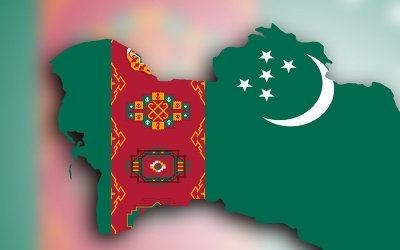
ASHGABAT (TCA) — Turkmenistan says it will privatize much of the state-owned transport system and gradually end funding for the nation’s Academy of Sciences as it looks to bolster its struggling economy and save money amid a continuing slump in its energy sector, RFE/RL reports. A decree published on January 30 by President Gurbanguly Berdymukhammedov said the privatization process was "designed to help strengthen the competitiveness of the national economy," increase investment, and strengthen small and medium-sized businesses. The president gave the Justice Ministry three months to propose legislation to transform the transport industry, but he did not indicate whether foreign companies would be able to invest in the privatized sector. Meanwhile, the government also said state funding for the Academy of Sciences will be phased out over three years and that the organization will be streamlined. Berdymukhammedov, 61, has ruled the gas-rich former Soviet republic since his autocratic predecessor, Saparmurat Niyazov, died in December 2006. Government critics and human rights groups say he has suppressed dissent and made few changes in the restrictive country since he came to power. Turkmenistan's manat currency has lost a fifth of its value after the collapse of hydrocarbon prices in 2014, while Russian energy giant Gazprom's decision to cease purchasing Turkmen gas at the start of 2016 further hurt the economy. The move left Turkmenistan even more reliant on demand from China, which last year imported 35 billion cubic meters of Turkmen gas via the Central Asia-China pipeline. A year ago, Berdymukhammedov ended a quarter-century-long practice of providing free natural gas, electricity, and water to residents in Turkmenistan in efforts to save money.
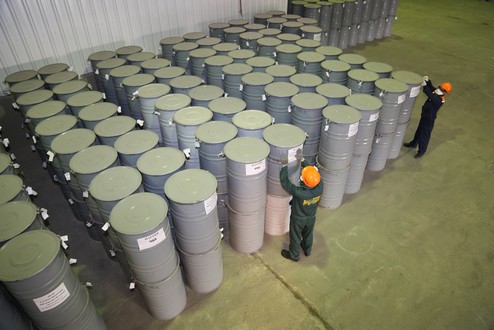
ASTANA (TCA) — Kazakhstan’s national atomic company Kazatomprom has become the first national company to float successfully in the international stock exchange. The National Company has successfully placed 15% of its shares for US$ 451 million on the London Stock Exchange. The demand has exceeded the supply 1.7-fold, Kazakhstan’s Sovereign Wealth Fund Samruk-Kazyna Joint Stock Company, which holds state-owned stakes in the country’s largest companies, said on November 13. The number of shares / GDR placed amounts to 38 903 491 items or 15% of Kazatomprom shares. Kazakhstani investors acquired 47.5% of the shares of the total number of the securities placed. The volume of the shares placed is estimated at US$451 million. “Despite the volatility to be observed on the global stock markets since early October, we have performed our task and entered the IPO, as we consider it to be a long-term growth prospect. Kazatomprom is the first quasi-state company to enter the international IPO both on the London Stock Exchange (LSE) and the AIFC (AIX). The status of a public company will make Kazatomprom to become more transparent and understandable for investors,” said Akhmetzhan Yessimov, CEO of Samruk-Kazyna JSC, at the meeting of the Management Board of Samruk-Kazyna JSC on November 13. The IPO of Kazatomprom is the first key element of the state property privatization program approved by the Kazakhstan Government in 2016. The program is implemented within the framework of the task set by the President of Kazakhstan Nursultan Nazarbayev to reduce the state’s share in the national economy to 15% of GDP according to the OECD recommendations.
ASTANA (TCA) — The government of Kazakhstan is planning to privatize state-owned stakes in a number of major companies, including the national uranium company. We are republishing this article on the issue, written by George Voloshin: Kazakhstan’s national uranium company Kazatomprom said, on October 15, that it was ready to go public by selling a portion of its issued shares on the London Stock Exchange and on the trading platform of the Astana International Financial Center (AIFC). The AIFC was officially launched without much fanfare in January 2018. It was later inaugurated by Kazakhstani President Nursultan Nazarbayev on the eve of his birthday and the 20th anniversary of the founding of his country’s current capital, Astana, both of which fall on July 6. The Astana International Exchange has a few registered members but no shares are currently traded, with all trading in equity and bonds taking place on the Almaty-based Kazakhstan Stock Exchange, instead. In 2015, Nazarbayev signed into law a special piece of legislation granting AIFC residents long-term tax breaks, hassle-free work permits and other perks. The brand-new financial center has a court of arbitration and a court of appeal, each staffed with Western-born judges and using English common law in what is the first extraterritorial application of foreign laws in Kazakhstan (Kursiv.kz, October 15; Mir24.tv, July 5; Sputniknews.kz, January 1). If Kazatomprom becomes a public company, it will be only the second major uranium miner in the world, after Canada’s Cameco, to obtain such a status. Kazakhstan’s sovereign wealth fund Samruk Kazyna, whose assets account for about 60 percent of national GDP, intends to dispose of up to a quarter of all shares outstanding (issued shares minus those held in treasury). Regardless of how many shares are eventually subscribed, it will remain the majority shareholder and will continue to exert effective control over company operations. According to further announcements made on October 31, Kazatomprom’s management values the whole company at between $3 billion and $4 billion. Initially, it plans to sell not more than 15 percent of the shares offered under the IPO to outside investors, including at least one fifth within the AIFC. The trading of global depository receipts (GDR) in London should commence on November 13, to be followed by the start of trading in GDRs and common stock in Kazakhstan several days later (Kazatomprom.kz, Informburo.kz, October 31; Kapital.kz, October 24). The global uranium sector is a highly concentrated industry, and Kazatomprom just happens to be the world’s largest producer of uranium, a strategic metal used for both civilian and military purposes. Last year, its output from wholly and jointly owned enterprises reached 12,100 tons, equivalent to 20 percent of the world total. Unlike most other producers that rely on good relations with foreign governments for continued access to their reserves, Kazatomprom has its entire resource base of approximately 300,000 tons located in Kazakhstan alone. In 2017, it had total sales of $907 million, down from $1.1 billion the year before, although its net profit rose...
BISHKEK (TCA) — The Government of Kyrgyzstan has decided not to sell the leading mobile operator, Alfa Telecom CJSC (TM MegaCom), experts believe. The Economy Ministry has submitted for public discussion a draft Government program for the privatization of state property for 2018-2020, and has not included the company in it. According to Kyrgyzstan’s legislation, the Alfa Telecom CJSC is an independent legal entity with a private ownership, with 100% of the state-owned shares. After numerous unsuccessful attempts to sell the company, the State Property Management Fund of Kyrgyzstan (SPMF) proposed that the company should remain on the Fund’s balance, and the Government agreed. Earlier this month, SPMF Chairman Renat Tuleberdiev told journalists that the Fund does not intend to sell MegaCom. The company works well, and in terms of profitability it is the second after the Manas International Airport OJSC, he said. Failed attempts There were many attempts to sell MegaCom. The initial price of its shares was 19.7 billion soms (about $306 million) in May 2016, but over time it was reduced to 13.5 billion. In August 2017, after the failed attempts to sell the company through auctions, it was put up for direct bidding. A Russian citizen Elena Nagornaya, who sells African tea and coffee in Russia, was the only buyer. She was ready to pay 14.5 billion soms, including the 7% commission fees and to take responsibility for possible lawsuits of the company. However, in November the Property Management Fund terminated the deal explaining that “the parties failed to reach mutually acceptable terms of sale.” Nagornaya asked to transfer the company to trust management for three years with subsequent redemption but Kyrgyzstan’s law does not allow this. After that, other potential buyers were from Russia, South Korea and Switzerland, but the SPMF canceled all sales procedures because the new privatization program for 2018-2020 was not approved, and the previous program expired. Given the mistakes of previous years, the Government did not take into account the proceeds from the sale of the company in the national budget revenues for 2018. In 2016, the Government hoped to complete the construction of the road around Lake Issyk-Kul before the start of the World Nomad Games by selling MegaCom. The company was not sold, and the construction of the road stopped. The Cabinet headed by Temir Sariyev was forced to resign due to the scandal over the reconstruction of the Balykchy-Korumdu road. Opinions There were very different points of view about MegaCom’s future. If the company is economically profitable for the State, then it is not necessary to sell it, said Prime Minister Abylgaziyev in May. A new assessment should be carried out, he added. Many experts said that it was necessary to sell MegaCom to create equal conditions for competition. If an enterprise is run by the state, its management system becomes very cumbersome, they said. The telecommunication company should develop, introduce modern technologies, and offer high-quality communication services to subscribers. But due to bureaucratic delays, the state-owned company...
ASTANA (TCA) — At a meeting on July 17, the Government of Kazakhstan reviewed the progress of privatization in the country, the official website of the Prime Minister of Kazakhstan reported. Continue reading
