• KGS/USD = 0.01143 0%
  • KZT/USD = 0.00208 0%
  • TJS/USD = 0.10438 -0.1%
  • UZS/USD = 0.00008 0%
  • TMT/USD = 0.28579 0%
  • KGS/USD = 0.01143 0%
  • KZT/USD = 0.00208 0%
  • TJS/USD = 0.10438 -0.1%
  • UZS/USD = 0.00008 0%
  • TMT/USD = 0.28579 0%
  • KGS/USD = 0.01143 0%
  • KZT/USD = 0.00208 0%
  • TJS/USD = 0.10438 -0.1%
  • UZS/USD = 0.00008 0%
  • TMT/USD = 0.28579 0%
  • KGS/USD = 0.01143 0%
  • KZT/USD = 0.00208 0%
  • TJS/USD = 0.10438 -0.1%
  • UZS/USD = 0.00008 0%
  • TMT/USD = 0.28579 0%
  • KGS/USD = 0.01143 0%
  • KZT/USD = 0.00208 0%
  • TJS/USD = 0.10438 -0.1%
  • UZS/USD = 0.00008 0%
  • TMT/USD = 0.28579 0%
  • KGS/USD = 0.01143 0%
  • KZT/USD = 0.00208 0%
  • TJS/USD = 0.10438 -0.1%
  • UZS/USD = 0.00008 0%
  • TMT/USD = 0.28579 0%
  • KGS/USD = 0.01143 0%
  • KZT/USD = 0.00208 0%
  • TJS/USD = 0.10438 -0.1%
  • UZS/USD = 0.00008 0%
  • TMT/USD = 0.28579 0%
  • KGS/USD = 0.01143 0%
  • KZT/USD = 0.00208 0%
  • TJS/USD = 0.10438 -0.1%
  • UZS/USD = 0.00008 0%
  • TMT/USD = 0.28579 0%

Viewing results 1 - 6 of 49

Kazakhstan’s Rare Earth Exports Under Political Spotlight as Strategic Role Grows

Kazakhstan’s rare earth metal exports are once again under scrutiny. On September 3, the leader of the Ak Zhol party in Kazakhstan’s parliament, Azat Peruashev, renewed his call for tighter control over rare earth exports. Peruashev formally urged the Minister of Industry and Construction, Ersaiyn Nagaspayev, to investigate and improve oversight after concerns that state control over ore shipments is increasingly being delegated to private labs without adequate verification. Peruashev’s statement raised the alarm about the possible undervaluation of exports and the concealment of valuable trace metals, a practice that could deprive the state of critical revenues at a time of growing global demand for rare earth elements. “According to the law on precious metals and stones, the state authority is responsible for control over the import and export of ores and concentrates. But based on the official response from the Ministry of Industry, it appears that state control has effectively been delegated to laboratories hired by the subsoil users themselves. The government agency does not verify the accuracy of its data and limits itself to just receiving the documents,” Peruashev said. The appeal marks the latest development in a controversy that first surfaced earlier this year. On March 7, The Times of Central Asia reported that Peruashev had submitted a formal parliamentary inquiry to Kazakhstan’s Anti-Corruption Service and the Ministry of Industry. That inquiry cited allegations from a former Kazakhmys lab assistant who claimed ore and concentrate exports were leaving the country without undergoing proper chemical analysis. According to the complaint, this practice allowed exporters to underreport the presence of rare earth and precious metals, artificially lowering shipment valuations to the benefit of powerful business interests. Kazakhmys rejected suggestions of intentional wrongdoing, stressing that any rare metals recovered during processing were incidental and directed to the state enterprise Zhezkazganredmet. The company added that it welcomed greater state scrutiny and dialogue. Peruashev’s renewed demand, however, indicates that concerns remain unresolved, particularly around whether the government has sufficient oversight to prevent leakage or mismanagement in an industry viewed as of increasing strategic and economic importance. A Geological Windfall This renewed debate comes as Kazakhstan’s rare earth sector enjoys unprecedented global attention. In April, TCA reported the discovery of a massive new deposit in the Karagandy region, unofficially dubbed “Zhana Kazakhstan,” estimated at 20 million metric tons of ore containing neodymium, cerium, lanthanum, and yttrium. Officials said average concentrations reached 700 grams per ton, a figure that, if validated, would position Kazakhstan among the world’s top three in rare earth deposits. In total, the government has identified 38 new mineral deposits, including 3.7 million tons of copper and nickel and 19 tons of gold. These discoveries are part of an ambitious exploration program that aims to expand mapped geological territory to 2.2 million square kilometers by 2026. For policymakers, the figures highlight both an opportunity and a dilemma: how to harness world-class reserves without falling into the trap of export dependence. At Home and Abroad International interest in Kazakhstan’s deposits is on...

The View From Ankara – President Tokayev’s Working Visit to Turkey

The official visit of President of Kazakhstan Kassym-Jomart Tokayev to Turkey on July 29, 2025, carries a multidimensional and strategic significance that extends far beyond the boundaries of diplomatic protocol. This engagement stands out as part of an ongoing multidimensional process of transformation marked by deepening regional alliances in the fields of science, energy, and logistics. Invited by President Recep Tayyip Erdoğan, Tokayev co-chaired the fifth meeting of the Turkey-Kazakhstan High-Level Strategic Cooperation Council. As a result of this summit, 20 bilateral agreements were signed, encompassing new frameworks of regional integration, especially in the fields of mining, energy, transportation, and higher education. Energy Diplomacy and Resource Geopolitics One of the most striking dimensions of the visit was the negotiation of new cooperation mechanisms aimed at transporting Kazakh oil to global markets via Turkey. According to President Tokayev, currently 1.4 million tons of Kazakh oil are transported annually through the Baku–Tbilisi–Ceyhan pipeline. Under the newly signed memoranda of understanding, the parties aim to increase this volume. This development not only strengthens Turkey’s ambition to become a regional energy hub but also holds critical importance for Kazakhstan’s strategy to diversify export routes and secure access to safe ports. Furthermore, the expressed intent of Turkish Petroleum Corporation (TPAO) to operate in Kazakhstan signals that the collaboration may extend beyond transport into production processes as well. Kazakhstan's reserves of rare earth elements and strategic minerals are of considerable value to both European and Asian economies prioritizing green energy transitions. In this context, the agreements signed in the mining sector may herald a new phase — one that mandates not only commercial but also technological and scientific R&D collaborations. Strategic Dimensions of the Middle Corridor Another key agenda item during the visit was the development and activation of the Trans-Caspian International Transport Route, commonly referred to as the ‘Middle Corridor.’ According to data shared by Tokayev, approximately 85% of road freight transported between China and Europe passes through Kazakhstan. This positions Kazakhstan as the backbone of the region’s logistics infrastructure. Turkey’s central role in the Middle Corridor makes it a decisive actor in the route’s integration with Europe. In this regard, Kazakhstan’s efforts to modernize its rail and road infrastructure, alongside its revival of maritime transport on the Caspian Sea, when combined with Turkey’s port capacity and transportation infrastructure, offer significant synergistic potential. These developments also underscore the strategic importance of the Zangezur Corridor and reinforce the value of uninterrupted transportation from China to Europe via Turkey, bypassing the Iranian route. Education and Academic Diplomacy The visit also drew attention for its scientific and cultural dimensions, in addition to its economic focus. Joint initiatives such as Gazi University’s planned establishment of a branch within the South Kazakhstan Pedagogical University can contribute to aligning the Turkish higher education model with Kazakhstan’s ongoing education reforms. Moreover, the Turkish Maarif Foundation’s new school initiatives in Kazakhstan signify a broadening and institutionalization of bilateral cooperation in education. These efforts may extend beyond student exchange programs to encompass joint research...

After Securing Ukraine Agreement, U.S. Eyes Central Asia for Rare Earths

After months of negotiations, the United States and Ukraine have finally signed an agreement to co-finance the development of Ukraine’s mineral resources, hydrocarbons, and infrastructure. According to The National Interest, the U.S. will not assume ownership of Ukraine’s assets; instead, profits will be directed into a joint investment fund, with full reinvestment in Ukraine. Ukraine’s First Deputy Prime Minister Yulia Svyrydenko described the deal as a mutually beneficial partnership. U.S. Treasury Secretary Scott Bessent hailed it as a “historic economic partnership,” underscoring America’s enduring commitment to a “free and prosperous Ukraine.” Since his return to office in January, President Donald Trump has prioritized securing access to rare earth minerals. This move is part of a broader U.S. strategy to reduce reliance on China, which currently dominates the sector with control over approximately two-thirds of global production. By contrast, the United States accounts for only about 12%. While Ukraine possesses 22 of the 50 minerals identified as critical by the U.S. government, it holds just around 5% of global reserves. As a result, Washington is looking beyond Ukraine and Central Asia has emerged as a strategic alternative. Reports from the Caspian Policy Center and the International Tax and Investment Center highlight the region’s significant rare earth potential. The countries of Central Asia have already taken steps toward deeper cooperation. In 2024, the United States and Uzbekistan signed a Memorandum of Understanding to enhance collaboration on critical minerals. However, competition for access remains stiff. China maintains robust trade links across the region, and Russia continues to wield considerable economic influence. Nonetheless, regional dynamics are shifting. In recent years, Central Asian states have increasingly sought to diversify their partnerships, reducing dependence on Moscow and Beijing. They have moved to deepen ties with the United States, the United Kingdom, and the European Union. In September 2023, then-President Joe Biden met with Central Asian leaders to discuss regional cooperation, including rare earth supply chains. This was followed by the June 2024 meeting of the U.S.-Central Asia Trade and Investment Framework Council, where both parties emphasized the need for increased trade and integration. Like Ukraine, Central Asian nations stand to gain from U.S. investment, particularly in energy infrastructure and broader economic development. If implemented effectively, rare earth revenues could be retained within the region, supporting long-term local growth. For the United States, enhanced access to Central Asian resources represents a step toward greater energy security and reduced strategic vulnerability. While China and Russia maintain structural advantages, Washington now has a meaningful opportunity to deepen its presence in Central Asia and forge enduring partnerships.

Kazakhstan’s Economy Receives Boost Amid Changing Tariff and Commodity Dynamics

Kazakhstan’s economy has recently navigated a series of external market shocks. While the suspension of U.S. reciprocal tariffs by President Trump represents a positive development, its direct impact on Kazakhstan is minimal, as the 27% tariff applied to only a minor segment (4.8%) of the nation’s exports and excluded key commodities such as oil, uranium, and silver. Kazakhstan is still subject to the universal baseline rate of 10%. However, the broader improvement in global market dynamics, spurred by increased demand for commodities that Kazakhstan predominantly produces, has provided a substantial boon to the country's economic prospects. This shift underscores a more favorable outlook for Kazakhstan, with rising global demand aligning closely with its resource-driven economy. On April 9, oil prices, in particular, rebounded strongly after hitting a four-year low earlier in the day. Brent crude rose by 4.23% to $65.48 per barrel. Similar trends were observed in other key commodities. Copper prices jumped nearly 3%, and gold rose over 3%, marking its best performance since October 2023, as investors sought safe-haven assets. U.S. natural gas futures, meanwhile, experienced a significant 8% increase, reflecting broader optimism spurred by the tariff suspension. Uranium futures, another strategic export for Kazakhstan, edged up by 1.18% to $64.40. Rare earth metals also showed exceptional growth, with a 12.5% gain highlighted by the VanEck Rare Earth and Strategic Metals ETF (REMX). This coincides with Kazakhstan’s recent discovery of over 20 million metric tons of rare earth deposits, consolidating its position as a potential global heavyweight in this critical market. The timing of the tariff suspension aligns closely with domestic efforts to address the country’s economic challenges. On April 9, President Kassym-Jomart Tokayev convened a meeting to tackle the ongoing economic crisis triggered by global market collapses and declining oil prices. He stressed the importance of maintaining development priorities while implementing swift actions to mitigate the crisis’ impact. The rise in commodity prices following the tariff halt gives these initiatives fresh momentum and a more favorable outlook for executing recovery measures.

Kuirektykol Deposit May Elevate Kazakhstan to Global Leader in Rare-Earth Reserves

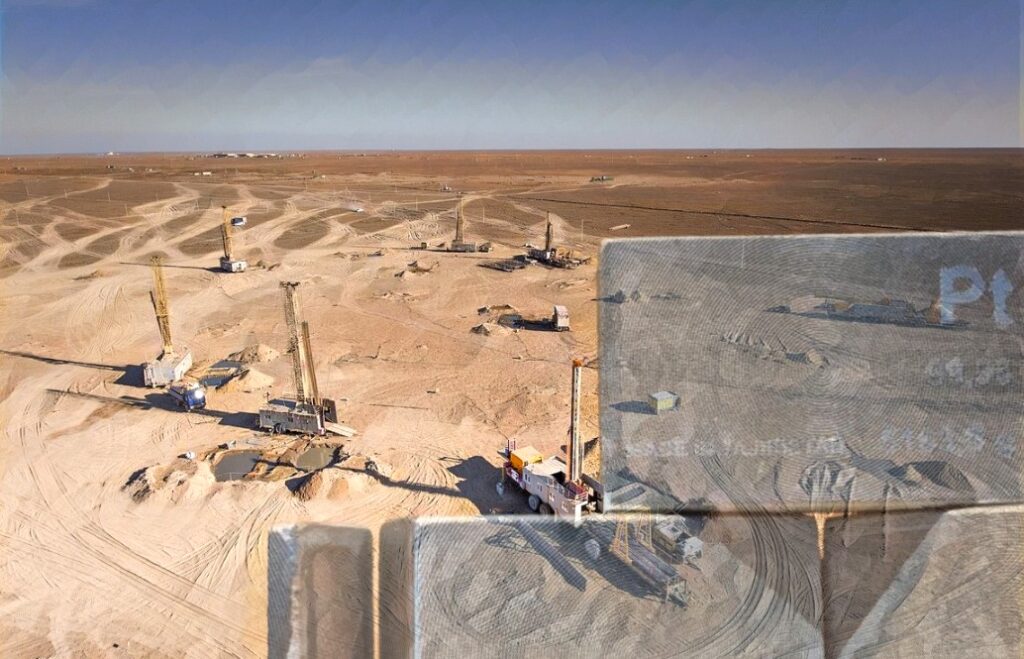
Kazakhstani geologists have identified several promising new areas within the Kuirektykol deposit in the Karkaraly District of the Karaganda Region. If confirmed, these reserves could position Kazakhstan among the world’s leading nations in rare-earth metal resources. Exploration of the Kuirektykol site began in 2022. By November 2024, surveyors had discovered commercially viable concentrations of rare-earth elements, including cerium and lanthanides, across four prospective zones. These were initially estimated to contain total resources of 935,400 tons, including 795,800 tons of proven reserves. At the time, experts predicted that with further in-depth exploration, total reserves could potentially double. That projection is now being borne out by new findings, according to the Ministry of Industry and Construction. In a recent statement, the ministry reported that LLP Tsentrgeolszemnadzor, working within the framework of the state program for geological subsoil research, had uncovered several additional promising areas at the Kuirektykol site. These areas are believed to contain a combined one million tons of rare-earth metals. The agency also announced the preliminary evaluation of a vast new prospective area named Zhana Kazakhstan. Following recent prospecting work, geologists now estimate the total predicted resources of rare-earth metals in the Kuirektykol area to exceed 20 million tons at depths of up to 300 meters. The average concentration of rare-earth elements in the ore is approximately 700 grams per ton. As previously reported by The Times of Central Asia, the state-owned National Mining Company Tau-Ken Samruk is preparing to begin development of the Kuirektykol deposit, a move expected to attract significant private investment in the sector. These developments come amid increasing global demand for rare-earth elements, which are essential to technologies ranging from renewable energy and electric vehicles to defense and telecommunications, and are set to be exempt from new U.S. trade tariffs. Kazakhstan's growing resource base could play a pivotal role in diversifying global supply chains and enhancing the country’s strategic economic importance.

Kazakhstan Faces Big U.S. Tariffs, but Minerals Could be Exempted

Kazakhstan will be hit with the largest U.S. tariffs among Central Asian states after President Donald Trump announced duties on goods from global trading partners, vowing to end what he calls unfair treatment of the United States even as concerns grow that a vast trade war carries grave risks for economies around the world. According to a White House list released on Wednesday, Kazakhstan charges 54% tariffs on American goods and its own products will therefore be subject to duties of 27% when they arrive in the United States. A minimum baseline of 10% tariffs will also be applied to goods from Kyrgyzstan, Uzbekistan, Tajikistan, and Turkmenistan. However, Kazakhstan has large reserves of minerals that could have applications in energy and other industries and might be exempted under terms of the Trump administration’s plan. The measure against Kazakhstan reflects what the White House calls “an individualized reciprocal higher tariff” on countries with which the United States has its biggest trade deficits. The U.S. says its tariffs on nations around the world, which are to take effect in the coming days, can be increased if trading partners retaliate or can go down if those partners collaborate with Washington on economic and security matters. The fallout from the Trump administration’s move remains to be seen, with many economists and other analysts warning that falling markets and the threat of higher prices, including in the United States, are a sign of the economic upheaval to come. But a possible loophole for some Central Asian countries lies in the U.S. statement that some goods will not be subject to the tariffs. They include copper, pharmaceuticals, semiconductors, lumber, bullion, and “energy and other certain minerals that are not available in the United States.” Kazakhstan said this week that it had discovered a huge rare earth metals deposit in the central region of Karaganda. By some estimates, the deposit could contain roughly 20 million tons of the coveted materials and is among the larger of more than a dozen similar deposits found in the country. “The identified rare earth deposits and promising areas, if further confirmed, could position Kazakhstan as a global leader in rare earth element reserves and enable the rapid development of a high-tech rare earth metals industry,” the Ministry of Industry and Construction said, according to the Orda news organization. Those natural resources are of interest to the United States. On March 12, U.S. Secretary of State Marco Rubio spoke with Kazakh Foreign Minister Murat Nurtleu and the U.S. “looks forward to working with Kazakhstan to deepen economic ties in the energy, telecommunications, and critical minerals sectors,” the U.S. State Department said. U.S. tariffs and Central Asian resources are also likely to be discussed at a meeting of regional and European Union leaders in Samarkand, Uzbekistan, on Friday. The EU is seeking to expand trade ties with Central Asia as its longtime alliance with the United States unravels over trade and security matters. More on this breaking story will follow.