• KGS/USD = 0.01144 0%
  • KZT/USD = 0.00205 0%
  • TJS/USD = 0.10441 0.1%
  • UZS/USD = 0.00008 0%
  • TMT/USD = 0.28571 0%
  • KGS/USD = 0.01144 0%
  • KZT/USD = 0.00205 0%
  • TJS/USD = 0.10441 0.1%
  • UZS/USD = 0.00008 0%
  • TMT/USD = 0.28571 0%
  • KGS/USD = 0.01144 0%
  • KZT/USD = 0.00205 0%
  • TJS/USD = 0.10441 0.1%
  • UZS/USD = 0.00008 0%
  • TMT/USD = 0.28571 0%
  • KGS/USD = 0.01144 0%
  • KZT/USD = 0.00205 0%
  • TJS/USD = 0.10441 0.1%
  • UZS/USD = 0.00008 0%
  • TMT/USD = 0.28571 0%
  • KGS/USD = 0.01144 0%
  • KZT/USD = 0.00205 0%
  • TJS/USD = 0.10441 0.1%
  • UZS/USD = 0.00008 0%
  • TMT/USD = 0.28571 0%
  • KGS/USD = 0.01144 0%
  • KZT/USD = 0.00205 0%
  • TJS/USD = 0.10441 0.1%
  • UZS/USD = 0.00008 0%
  • TMT/USD = 0.28571 0%
  • KGS/USD = 0.01144 0%
  • KZT/USD = 0.00205 0%
  • TJS/USD = 0.10441 0.1%
  • UZS/USD = 0.00008 0%
  • TMT/USD = 0.28571 0%
  • KGS/USD = 0.01144 0%
  • KZT/USD = 0.00205 0%
  • TJS/USD = 0.10441 0.1%
  • UZS/USD = 0.00008 0%
  • TMT/USD = 0.28571 0%

Viewing results 1 - 6 of 97

Tajikistan and Russia Discuss Resuming Rail and Bus Routes

Tajikistan and Russia are in discussions to resume passenger train service between Dushanbe and Moscow, as well as bus routes between cities in both countries. These services were suspended due to the COVID-19 pandemic. Tajikistan’s Minister of Transport, Azim Ibrohim, shared this information at a press conference in response to a question from TASS. He said the issue was discussed in Moscow during a meeting between the Tajik delegation and Russian Transport Minister Roman Starovoit at the CIS Coordination Transport Conference. “We addressed many transport-related issues and reached a full understanding. There were no unresolved matters, but some require time, including the Dushanbe-Moscow railway route,” Ibrohim stated. He added that discussions are ongoing, with a final decision expected soon. The minister also noted that rail service between Bishkek and Moscow resumed late last year. In addition to rail services, Tajikistan and Russia are working to expand bus connections. In mid-January, bus routes from Khujand to Novosibirsk, Tyumen, and Surgut were restored. Currently, passenger trains from Tajikistan — departing from Dushanbe, Kulyab, and Khujand — only operate to Volgograd. If negotiations succeed, the resumption of direct rail and bus links will further facilitate travel and trade between the two countries.

Kazakhstan’s Alageum Electric to Build Transformer Plant in Kyrgyzstan to Boost Power Grid

Alageum Electric, the largest transformer producer in Kazakhstan and Central Asia, plans to build an electric transformer manufacturing plant in Kyrgyzstan. The project was discussed on January 29 during a meeting in Kazakhstan between Kyrgyzstan’s Minister of Energy, Taalaibek Ibrayev, and the founder of Alageum Electric, Saidulla Kozhabayev. According to the Kyrgyz Ministry of Energy, Kozhabayev confirmed his readiness to cooperate on the plant’s construction. A memorandum of cooperation has been signed between the Ministry and Alageum Electric, and construction could begin this year. During his visit, Minister Ibrayev toured Alageum Electric’s production facilities to observe the transformer manufacturing process. Transformers are a critical component of Kyrgyzstan’s aging power distribution grid, which struggles to handle surging electricity consumption during the cold winter months. Increased reliance on electric heating in winter often overloads grid infrastructure, forcing power distribution companies to switch users to alternative feeders. This results in temporary outages lasting one to two hours. The Ministry of Energy explains that such measures are necessary to prevent critical equipment, such as expensive transformers, from failing. For example, a 220 kV transformer with a capacity of 250 MW costs $1.5 million and requires 150 days for manufacturing and delivery, followed by one to one and a half months for installation. Collaboration with Alageum Electric will enable Kyrgyzstan to begin domestic production of much-needed transformers at lower costs while modernizing the country’s power distribution grid. The initiative is expected to improve energy infrastructure resilience and reduce dependency on imported equipment.

Mirziyoyev: Central Asia Can Become a Global Green Energy Hub

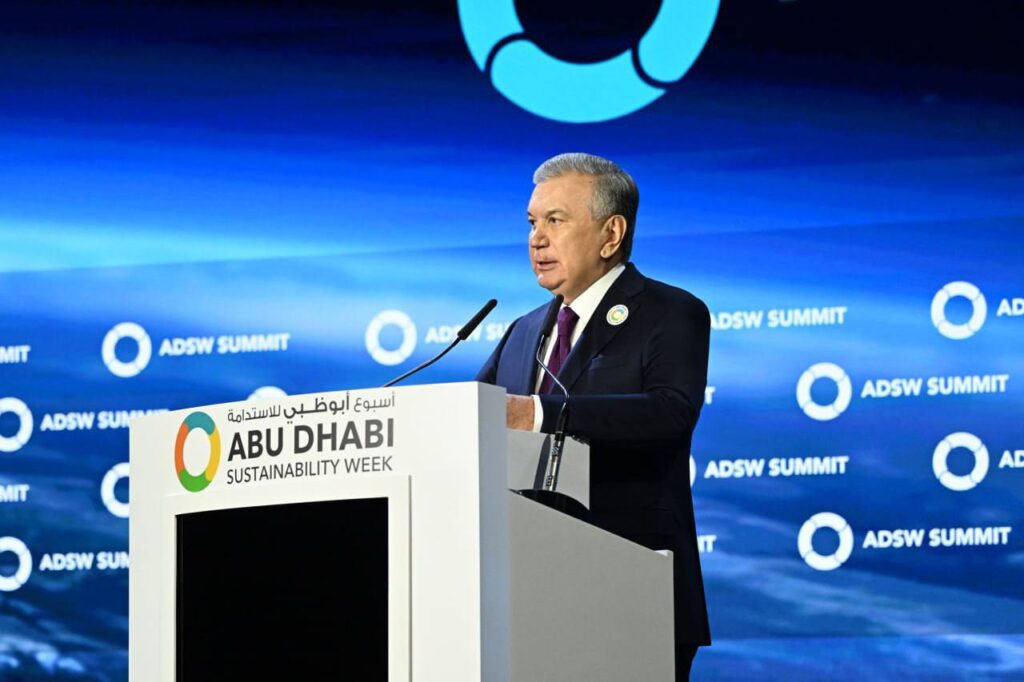
President Shavkat Mirziyoyev of Uzbekistan delivered a keynote address at the Sustainability Week Summit in Abu Dhabi on January 14. The event, hosted by UAE President Sheikh Mohammed Al Nahyan, gathered global leaders, including the presidents of Azerbaijan and Kazakhstan, the prime ministers of Italy, Malaysia, and Finland, as well as heads of international organizations and financial institutions. The Urgency of Transitioning to a Green Economy In his speech, Mirziyoyev emphasized the critical need for a green economic transition, stating: “The diversification of energy sources and a drastic reduction of hydrocarbons are now critical conditions for mitigating climate change and ensuring global security.” Mirziyoyev noted that Uzbekistan has declared 2025 as the “Year of Environmental Protection and Green Economy.” The country’s strategic goal, under the "New Uzbekistan" framework, is to achieve sustainable economic growth through environmental sustainability and resource conservation. Low-Carbon Development Goals Outlining Uzbekistan’s low-carbon development strategy, Mirziyoyev announced plans to integrate green finance into 50% of investment projects over the next five years; reduce greenhouse gas emissions by 35% by 2030; "Green" at least 30% of urban areas; and ensure that 100% of agricultural lands adopt water-saving technologies. Mirziyoyev also highlighted Uzbekistan’s achievements in renewable energy, stating: “In the past five years, we have attracted almost $20 billion in foreign investments, commissioning modern energy capacities of 9.6 gigawatts. This includes 14 solar and wind power plants with a total capacity of 3.5 gigawatts.” Uzbekistan is currently collaborating with foreign partners on over 50 major energy projects worth $26 billion, aiming to reach a total energy capacity of 24 gigawatts by 2030. By that time, renewable energy is expected to account for 54% of the country’s total energy generation. Regional Collaboration and Global Ambitions Mirziyoyev underscored the importance of regional cooperation, saying: “We aim to turn Central Asia into one of the global centers for green economy and clean energy.” He highlighted a multilateral agreement with Kazakhstan and Azerbaijan to export green energy to Europe and restore the Great Silk Road through energy connectivity. The president shared success stories of partnerships with companies like Masdar, which have generated 1.5 gigawatts of renewable energy in Uzbekistan. Additional projects are underway to create 1.6 gigawatts of generating capacity and build energy storage systems with a capacity of about 520 megawatts per hour. He also noted Uzbekistan’s untapped renewable energy potential, citing the ability to produce 500 gigawatts of solar, 100 gigawatts of wind, and 10 gigawatts of hydro energy. Advancing Green Research and Innovation Mirziyoyev referenced the establishment of the Green University in Tashkent - which will serve as a hub for global scientific collaboration - and proposed creating an international research network focused on combating land degradation and desertification. He also reiterated Uzbekistan’s initiatives introduced at COP-28 and COP-29, including the creation of an International Center for Damage and Loss Assessment and a regional hub for water-saving technologies. “We are ready to begin practical work in these areas with all our partners,” he stated. A Nationwide Green Movement Concluding his address,...

Uzbekistan to Launch Bus Routes to Central Asian Countries, Russia, and China

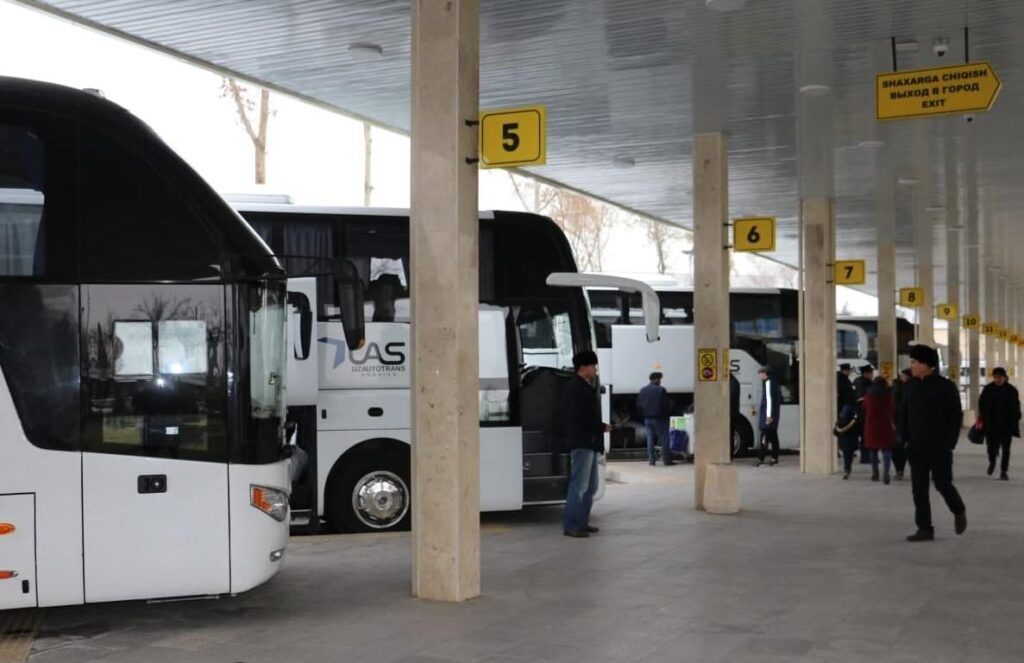
Uzbekistan’s Ministry of Transport has unveiled plans to establish new international passenger bus routes connecting regions of Uzbekistan to cities in Kazakhstan, Kyrgyzstan, Tajikistan, Russia, and China. The initiative aims to increase the share of bus transportation in Uzbekistan’s international passenger traffic, which is currently dominated by air travel. Planned Routes Kazakhstan Bukhara – Turkestan Urgench – Aktau Fergana – Almaty Kyrgyzstan Andijan – Osh Andijan – Jalalabad Andijan – Arslanbob Kosonsoy – Jalalabad Bukhara – Bishkek Tajikistan Samarkand – Dushanbe Bukhara – Dushanbe Russia Surkhandarya – Bukhara – Urgench – Nukus – Moscow Urgench – Nukus – Ufa Nukus – Krasnodar Tashkent – Ufa Tashkent – Krasnodar China Nukus – Urgench – Bukhara – Urumqi (Xinjiang Uyghur Autonomous Region) The Ministry has invited both domestic and international transport companies to apply for the operation of regular bus services on these proposed routes.

Heads of Kyrgyz, Tajik, and Uzbek Governments Meet… Finally

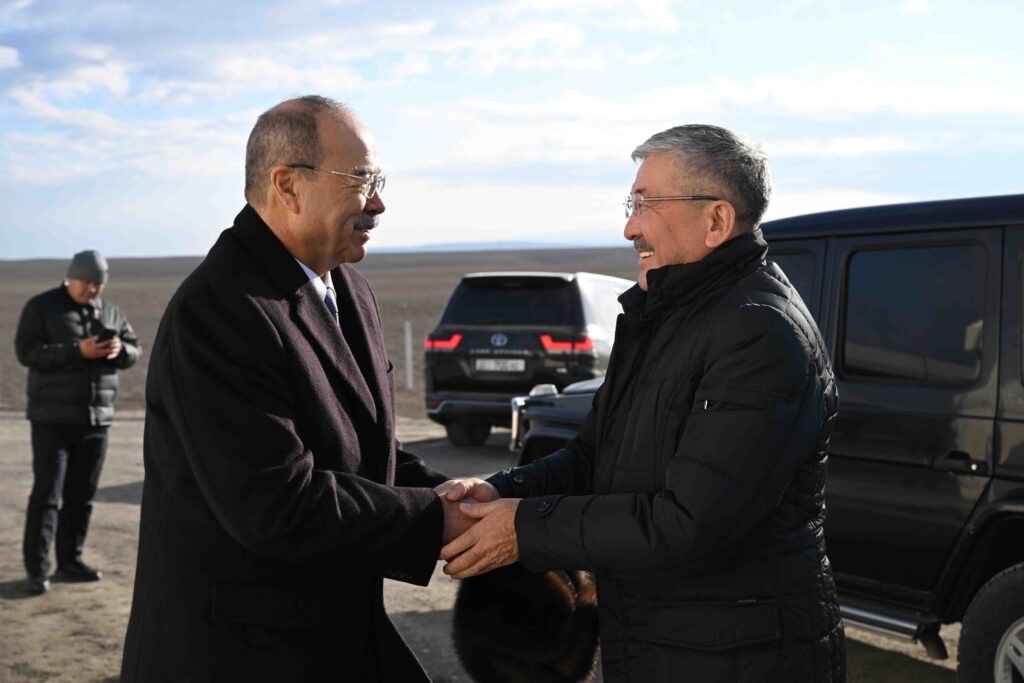
It took more than 30 years, but the prime ministers of the three Central Asian countries that share the Ferghana Valley finally met to discuss a range of important issues that concern all three states. Tajik Prime Minister Kohir Rasulzoda, Uzbek Prime Minister Abdulla Aripov, and Chairman of Kyrgyzstan’s Cabinet of Ministers (Kyrgyzstan does not have a post of prime minister) Adylbek Kasymaliyev met on January 8 at a desolate area where the borders of the three countries meet. [caption id="attachment_27412" align="aligncenter" width="8256"] Image: gov.kg[/caption] The group touted agreements on the completion of the delimitation process along the Uzbek-Kyrgyz border and the early December 2024 agreement on the Kyrgyz-Tajik border. Since 1991, unmarked areas of the borders in the Ferghana Valley were often the scenes of conflicts between communities on either side of the frontier. Border guards sometimes fired on trespassers and dozens of people were killed or wounded, sometimes simply because they inadvertently strayed over unmarked territory into the neighboring country. The Ferghana Valley is the most densely populated region in Central Asia. This is due to the rich agricultural land which makes the region to this day the breadbasket of Central Asia. Soviet mapmakers drew lines to create Soviet republics in the region, though these borders mattered little since they were internal administrative boundaries inside one country. [caption id="attachment_27413" align="aligncenter" width="8256"] Image: gov.kg[/caption] After the USSR collapsed, these often-arbitrary, zigzagging borders took on meaning, and disputes quickly broke out about what land historically belonged to which nation and who had rights to water use. These issues were greatly complicated by the existence of enclaves created during the Soviet period such as Uzbekistan’s Soh and Shahimardon and Tajikistan’s Vorukh, all three of which are surrounded by Kyrgyzstan.   Looking Ahead The three prime ministers discussed hydropower plants (HPP), an important topic for all three countries, especially as key HPPs are located in the mountains ringing the Ferghana Valley and more are currently under construction. Central Asia is one the regions most affected by climate change, so HPPs and water use in general are crucial issues, especially given that agriculture in the Ferghana Valley is vital to all three countries. All three countries face electricity shortages and hydropower is seen as a means of alleviating or even totally resolving this dilemma, but at the same time waters flowing from the mountains of Kyrgyzstan are important for agriculture in every Central Asian state. Uzbek media noted Uzbek Energy Minister Jurabek Mirzamahmudov was part of the delegation attending the January 8 talks. Reports did not mention if energy ministers from Kyrgyzstan and Tajikistan were also present. [caption id="attachment_27414" align="aligncenter" width="8256"] Image: gov.kg[/caption] Central Asia is also taking on a new importance as a trade corridor between Europe and China, and from Europe and China into Afghanistan and on further to Pakistan. Reports noted logistics were high on the agenda at the meeting of the three prime ministers. Trade between the three countries, specifically in the Ferghana Valley, was also discussed not only...

Central Asia’s Pivotal Role in the Global Energy Transition

The United States and Europe are driving a global shift from fossil fuels to renewable energy, though progress has been slow. Central Asia’s oil, gas, uranium, and green hydrogen resources are expected to remain vital for Europe and global energy security for years to come. Within Central Asia, a shift to cleaner natural gas and nuclear energy is anticipated to replace coal-fired power, reducing environmental harm. Europe’s push for electrification has also renewed focus on nuclear energy, increasing the strategic and commercial value of Central Asia’s uranium deposits. On December 16, 2024, The Times of Central Asia, in cooperation with the Central Asia-Caucasus Institute and the American Foreign Policy Council, hosted a Burgut Expert Talk titled, "Central Asia in the Energy Transition". The event featured presentations by Dr. Svante Cornell and Dr. Brenda Shaffer, who outlined their takes on the topic. The discussion focused on Central Asia’s significant role in the global energy landscape, particularly in light of the push for renewable energy and Europe's efforts to diversify its energy sources. Challenging the notion of a true "energy transition," Shaffer argued that despite substantial investment in renewable energy, fossil fuels remain dominant. Shaffer pointed out that traditional biomass burning continues to be a major energy source in developing countries, posing significant health risks. Highlighting the fact that renewables often rely on a baseload of fossil fuels, Shaffer noted that this makes complete reliance on renewables impractical, especially in regions with harsh winters, such as Central Asia. Dr. Shaffer further emphasized that European policies, including the reluctance to finance fossil fuel projects and the instability of U.S. LNG exports, serve to hinder diversification efforts. Stressing the need for affordable and accessible energy solutions - particularly for developing countries - to address the issue of indoor pollution caused by traditional biomass burning, she argued that natural gas can serve as a bridge fuel, offering a cleaner alternative to traditional methods. Dr. Cornell focused on the rising importance of Central Asia as a major uranium producer, supplying a crucial element for nuclear energy, which is gaining renewed interest as a low-carbon energy source. Cornell highlighted the dependence of the EU on uranium imports and the potential for Central Asia, particularly Kazakhstan, to play a pivotal role in supplying this demand. Outlining the geopolitical dynamics surrounding uranium, Cornell noted the involvement of France, Russia, and China in Central Asia's uranium sector, emphasizing the importance of Central Asian states maintaining a balance in their foreign relations and partnering with various countries to ensure their independence in the uranium market. Drawing parallels to the oil and gas diplomacy of the 1990s - when Central Asian countries strategically engaged with multiple actors to safeguard their interests - Cornell advocated for the development of a robust domestic nuclear industry in Central Asia, enabling the region to move beyond raw material production and gain greater control over the value chain. Cornell also stressed the need for Western powers to actively engage in the region's nuclear sector, supporting the development...