• KZT/USD = 0.00214
  • TJS/USD = 0.10810
  • UZS/USD = 0.00008
  • TMT/USD = 0.29760
  • KZT/USD = 0.00214
  • TJS/USD = 0.10810
  • UZS/USD = 0.00008
  • TMT/USD = 0.29760
  • KZT/USD = 0.00214
  • TJS/USD = 0.10810
  • UZS/USD = 0.00008
  • TMT/USD = 0.29760
  • KZT/USD = 0.00214
  • TJS/USD = 0.10810
  • UZS/USD = 0.00008
  • TMT/USD = 0.29760
  • KZT/USD = 0.00214
  • TJS/USD = 0.10810
  • UZS/USD = 0.00008
  • TMT/USD = 0.29760
  • KZT/USD = 0.00214
  • TJS/USD = 0.10810
  • UZS/USD = 0.00008
  • TMT/USD = 0.29760
  • KZT/USD = 0.00214
  • TJS/USD = 0.10810
  • UZS/USD = 0.00008
  • TMT/USD = 0.29760
  • KZT/USD = 0.00214
  • TJS/USD = 0.10810
  • UZS/USD = 0.00008
  • TMT/USD = 0.29760

Viewing results 1 - 6 of 74

Official Meetings in Almaty Boost Efficiency of Trans-Caspian Transport Route

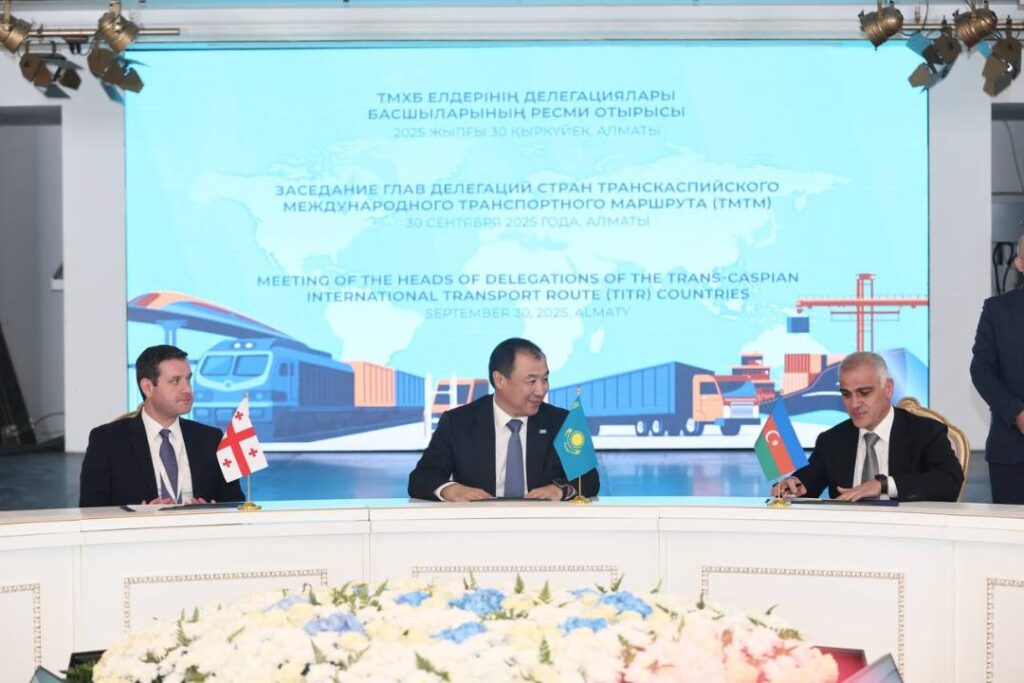
Almaty hosted a high-level meeting on October 1 of delegations from countries participating in the Trans-Caspian International Transport Route (TITR). The TITR is also known as the Middle Corridor, a strategic Eurasian trade link connecting China, Central Asia, and Europe. Senior officials from Azerbaijan, Georgia, Kazakhstan, and Turkey convened to discuss ways to enhance the corridor’s efficiency and competitiveness. Key Agreements Signed Among the main outcomes was the signing of an action plan aimed at removing bottlenecks along the TITR. The document outlines coordinated measures by the railway companies of Kazakhstan, Azerbaijan, and Georgia to streamline cargo transportation. The plan includes the introduction of a unified long-term tariff across the corridor and strategies to expand its overall capacity. Another major development was an agreement between the European Bank for Reconstruction and Development (EBRD) and JSC Aktau International Sea Trade Port to modernize port infrastructure and acquire new ship-to-shore cranes. The initiative, supported by up to €45 million in financing from the EBRD and the European Union, aims to significantly boost container-handling capabilities at Aktau, Kazakhstan’s principal maritime hub on the Caspian Sea. The project includes the extension of two berths and the acquisition of weather-resistant cranes, enabling the port to operate two fully dedicated container berths. By the end of 2026, Aktau is expected to host the largest container terminal in the Caspian region, with an annual handling capacity of up to 240,000 twenty-foot equivalent units (TEUs). Regional Cooperation Under the OTS Also on October 1, Almaty hosted the 8th meeting of transport ministers of the Organization of Turkic States (OTS), which includes Azerbaijan, Kazakhstan, Kyrgyzstan, Turkey, and Uzbekistan. The ministers focused on accelerating the development of the TITR through greater adoption of digital technologies and electronic transit systems. Participants endorsed initiatives to enhance maritime transport, including expanded Caspian shipping, the construction of new transshipment facilities, and the launch of additional ferry services. The meeting also backed efforts to establish regular block train operations, particularly along the Baku-Tbilisi-Kars railway corridor.

Afghanistan Absent, Not Forgotten – Central Asia’s UNGA Strategy

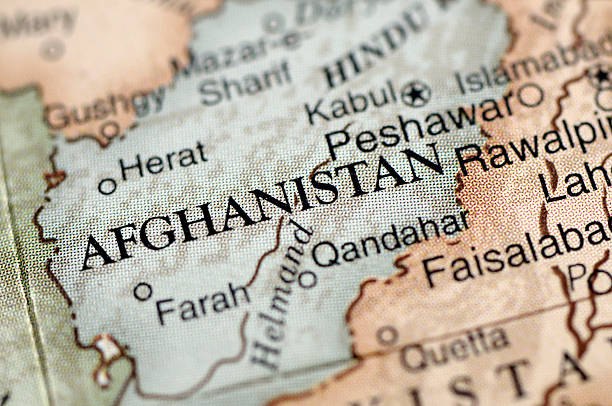
From September 23–29, 2025, the UN General Assembly’s general debate unfolded without an Afghan delegation addressing those assembled amid the unresolved UN seat issue. Yet Afghanistan was hardly absent. Central Asian presidents used their platform to project a collective stance that stopped short of recognition while rejecting isolation. Their message reflected a regional doctrine of managed engagement: keep the neighbor connected enough to limit collapse, through corridors, energy grids, and humanitarian channels. President Shavkat Mirziyoyev of Uzbekistan offered the clearest blueprint, urging the international community to “prevent [Afghanistan’s] isolation,” and calling for support to develop transport and energy corridors across Afghan territory. That language aligns with initiatives already underway: a multilateral framework signed in Kabul on July 17 to move the Trans-Afghan railway toward feasibility, and fresh agreements on the 500 kV Surkhan–Pul-i-Khumri line designed to stabilize Afghanistan’s power supply while linking it to a regional grid. Mirziyoyev’s message was a bid to convert geography into risk management. Kazakhstan struck a technocratic note. Kassym-Jomart Tokayev told the Assembly that “inclusive development in Afghanistan” is the basis for long-term regional peace and stability. This phrasing matches Almaty’s UN-backed hub for the Sustainable Development Goals and Astana’s self-image as the region’s administrative center. The goal is to stabilize the weakest link so trade and transit do not fracture. Kyrgyz President Sadyr Japarov used part of his brief UN address to demand that roughly $9 billion in Afghan central-bank assets frozen in Western jurisdictions be returned to “the Afghan people,” and called isolation “unacceptable.” In a remittance-dependent economy like Kyrgyzstan’s, collapse next door risks hunger, displacement, and crime. His remarks were both moral and practical, and marked the sharpest public challenge to Western policy voiced by any Central Asian leader this week. Traditionally, Tajikistan has taken the hardest line on the Taliban. This time, Emomali Rahmon emphasized humanitarian assistance, citing drought-hit regions and areas devastated by the August 31 eastern Afghanistan earthquake, and said Dushanbe supports peace, stability, and socio-economic development next door. The quake killed more than 2,000 people and destroyed thousands of homes across Kunar, Nangarhar, and Laghman just as aid budgets were shrinking. Turkmenistan took a different approach. President Serdar Berdimuhamedov did not mention Afghanistan, instead promoting Ashgabat’s permanent neutrality as a proposed UN agenda item, “Neutrality for Peace and Security,” along with broad transport and energy initiatives. This approach preserved flexibility on projects like TAPI without committing to specifics in New York. What makes these speeches consequential is how closely they mirror work on the ground. The Trans-Afghan railway, long dismissed as only a plan, now has a political framework and a declared security pledge from Kabul. Whether it moves forward depends on both capital and security, but for Tashkent, a southern outlet to Pakistani ports is the difference between landlocked and land-linked. The Surkhan–Pul-i-Khumri line is more conventional and urgent: a 200-kilometer fix to keep the lights on and the revenues flowing. The long-troubled CASA-1000 power corridor is also inching back into view after being paused post-2021, with...

Uzbekistan President Urges SCO Reform and Regional Unity in Tianjin

On September 1, Uzbek President Shavkat Mirziyoyev participated in the regular meeting of the Council of Heads of State of the Shanghai Cooperation Organization (SCO), held in Tianjin, China, according to the presidential press service. The summit brought together leaders of member states to discuss the future of the organization, regional stability, and responses to global challenges. Opening the meeting, Chinese President Xi Jinping congratulated Uzbekistan on its Independence Day and commended the country’s progress under Mirziyoyev’s leadership. In his address, Mirziyoyev stressed the need for the SCO to adapt to a world marked by growing geopolitical tensions, a crisis of trust, and the weakening of multilateral institutions. He stressed that closer solidarity among SCO members is crucial for ensuring peace and stability in the region. Among his key proposals was the adoption of a declaration on multilateral partnership for nuclear security. The initiative is intended to enhance cooperation in the peaceful use of nuclear energy and support global non-proliferation efforts within the UN framework. Mirziyoyev also called for the resumption of interior minister-level meetings within the SCO, revisions to the existing agreement on combating organized crime, and the drafting of a new program to fight drug addiction, with targets extending to 2030. On Afghanistan, he proposed reviving the SCO-Afghanistan Contact Group to promote dialogue and launch socio-economic initiatives aimed at stabilizing the country. On economic cooperation, Mirziyoyev urged SCO member states to sign an agreement simplifying trade procedures and to develop new financial mechanisms to support industrial and infrastructure projects. He proposed the creation of a regional center for critical raw materials, a unified energy consortium, a network of venture capital funds for start-up development, and a digital portal to promote cross-border investment and connect businesses across the SCO space. Transport and connectivity featured prominently in his speech. Mirziyoyev advocated for the establishment of a “common transport space” and strengthening of the North-South and East-West corridors linking Central Asia with the Persian Gulf and Indian Ocean regions. He also called for the launch of regional platforms dedicated to climate adaptation and green technology development, alongside new initiatives in culture, education, and tourism to deepen people-to-people ties across the SCO.

Central Asian Countries Launch New Contact Group on Afghanistan

At Uzbekistan’s initiative, the special representatives of four Central Asian countries convened in Tashkent on August 26, for the inaugural meeting of a new regional Contact Group on Afghanistan. Delegations from Uzbekistan, Kazakhstan, Kyrgyzstan, and Tajikistan participated, launching a platform for regular envoy-level dialogue on shared concerns related to Afghanistan. According to the ministry, the participants emphasized the “relevance and timeliness” of creating this Contact Group as an independent mechanism for regional coordination. The meeting builds on commitments made by the presidents of the four countries during the August 2024 Central Asian summit in Astana, which produced a joint statement and a 2025-2027 roadmap for regional cooperation. In Tashkent, delegates reiterated the need for a unified regional approach to Afghanistan, given Central Asia’s geographic proximity and long-standing cultural and economic ties with its southern neighbor. The envoys underscored that the region must take a self-reliant, coordinated stance on Afghan affairs, one that promotes stability, security, and sustainable development across Eurasia. During the talks, the participants pledged to pursue common, balanced, and realistic policies toward the situation in Afghanistan based on consensus. They identified the urgent need to restore and expand trade, transport, logistics, and cultural-humanitarian connections with Afghanistan, which have deteriorated in recent years. The envoys also exchanged views on engaging with Afghanistan’s de facto Taliban authorities in line with each country's interests. They expressed support for enhanced cooperation on regional security challenges, including the fight against terrorism, extremism, narcotics trafficking, and cross-border crime. Although none of the Central Asian states formally recognize the Taliban government, all maintain practical working relationships with Kabul, particularly in areas such as border control, counterterrorism, trade, and humanitarian support. Since the Taliban’s return to power in 2021, Central Asia has navigated a delicate diplomatic path, maintaining cautious ties with Kabul while also deepening relations with China and Russia. Uzbekistan has taken a leading role. In August 2024, its prime minister visited Kabul, signing 35 agreements worth $2.5 billion. Bilateral trade reached $866 million in 2023. Kazakhstan, Afghanistan’s primary supplier of wheat and flour, has kept its embassy open in Kabul and held multiple business forums since 2023. According to the CACI Analyst, Kazakh-Afghan trade reached $700 million in the first nine months of 2024, with projections aiming for $3 billion within five years.

Tokayev Calls for Global Action at UN LLDC3 Summit in Turkmenistan

At the Third United Nations Conference on the Landlocked Developing Countries (LLDC3), held from August 5-8 in the Turkmen resort town of Awaza, Kazakhstan’s President Kassym-Jomart Tokayev urged the international community to deepen cooperation, enhance regional connectivity, and take decisive collective action in support of the 32 countries that lack direct access to the sea and remain on the periphery of global trade. A Global Call for Equality and Interconnectedness Speaking at the plenary session, Tokayev highlighted Kazakhstan’s leadership in advancing the LLDC agenda. In 2003, Almaty hosted the first UN conference on landlocked countries, which culminated in the Almaty Programme of Action (APoA). Two decades later, the president noted, structural barriers, such as limited market access, underdeveloped infrastructure, and high exposure to geopolitical shocks, remain largely unchanged. “Landlocked countries should be seen as equal and promising partners in global development,” Tokayev said. “Our voice must be louder and our cooperation deeper.” [caption id="attachment_34680" align="alignnone" width="300"] @akorda[/caption] The Awaza Action Programme: A Roadmap for 2024-2034 The centerpiece of LLDC3 was the adoption of the Awaza Action Programme for the coming decade, structured around five strategic priorities: structural transformation of economies, development of sustainable infrastructure, trade facilitation, regional integration, and resilience. Kazakhstan endorsed the plan and called for stronger political and financial support from transit countries, international institutions, and private investors. Tokayev emphasized the need for innovative financing tools to mobilize investment in transport, energy, and digital infrastructure. Addressing the Climate Challenge The president also highlighted the disproportionate climate-related vulnerabilities faced by LLDCs, including water scarcity, glacial melt, and desertification. He called for a balanced and inclusive approach to climate policy and invited participants to the Regional Environmental Summit, scheduled for April 2026 in Astana, to be co-hosted with the United Nations. Tokayev also pointed to Kazakhstan’s recent achievements in digital innovation and sustainability, citing the launch of the Alem.AI Artificial Intelligence Center and the commissioning of a new national supercomputer. “We are open to international scientific cooperation,” he said. [caption id="attachment_34681" align="alignnone" width="300"] @akorda[/caption] Central Asia as a Model of Regional Resilience Despite geographic constraints, Tokayev presented Central Asia as a case study in overcoming isolation through cooperation. “Geography does not determine destiny,” he said. “With political will, strategic investment, and international partnership, lack of access to the sea can become not a barrier but a source of growth.” Kazakhstan is investing heavily in transport corridors such as the Middle Corridor (Trans-Caspian International Route) and the North-South Corridor, strengthening its role in the Eurasian logistics network. Energy Diplomacy and Regional Projects On the sidelines of the conference, Central Asian leaders convened for informal talks, where they discussed priority areas of cooperation, including energy. Topics included development of Turkmenistan’s Galkynysh Gas Field, one of the world’s largest, and ongoing transport projects such as the Kazakhstan-Turkmenistan-Iran railway and the Turkmenbashi-Garabogaz-Kazakhstan border highway. According to the UN, trade costs in LLDCs are 74% higher than in coastal states, and cross-border shipping takes twice as long. Collectively, these countries account for only 1.2% of...

Steppe Diplomacy: Mongolia Deepens Central Asia Ties

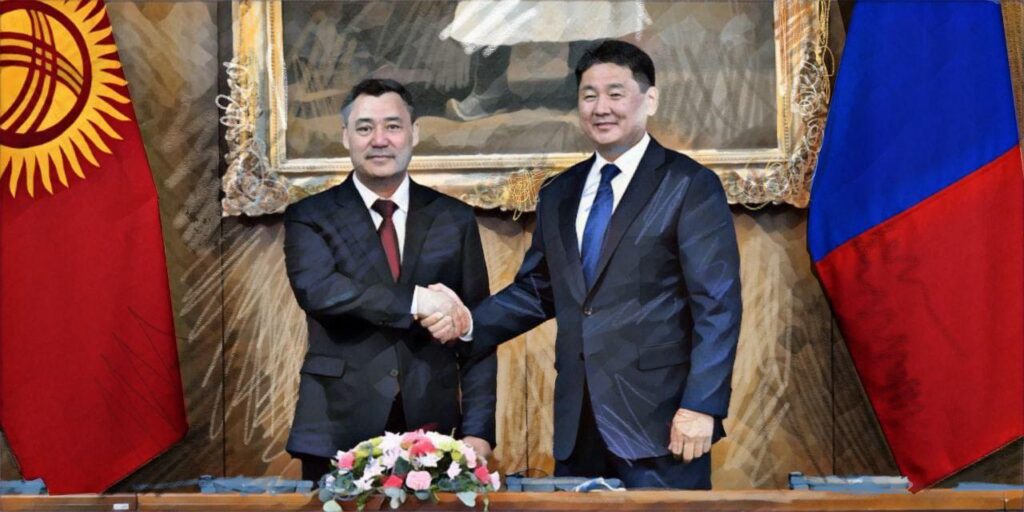
Late on July 20th, the President of Mongolia, Ukhnaagiin Khürelsükh, touched down in Bishkek as part of a two-day state visit to Kyrgyzstan. It forms part of Khürelsükh’s wider Central Asian tour, with the President set to fly to Dushanbe following his sojourn in the Kyrgyz capital. The trip builds on Kyrgyz President Sadyr Japarov’s 2023 visit to Ulaanbaatar, where he oversaw the opening of Kyrgyzstan’s first embassy in Mongolia and toured the Genghis Khan Museum in the capital. A warm greeting Khürelsükh was welcomed by Japarov on the red carpet at Manas International Airport, where traditional dances, music, and even a ceremonial eagle were laid on. The pair greeted each other like old friends before the motorcade swept along the empty roads towards the city. Like Japarov, Khürelsükh has been president since 2021, although, unlike his Kyrgyz counterpart, his role is largely ceremonial. Indeed, current Mongolian politics offers a hint of nostalgia to those in Kyrgyzstan with fond memories of the pre-Japarov era. In June, the Mongolian Prime Minister was forced to resign after losing a vote of confidence in the country’s parliament. This followed months of protests after press reports covering his son’s extravagant spending. The second day of the visit afforded Japarov the chance to play to statesman-like host and welcome a new visitor to the Presidential Palace – the Yntymak Ordo – which is still less than a year old. With temperatures hitting 37°C (98° Fahrenheit) in the Kyrgyz capital, the Mongolian leader arrived at the palace in a blacked-out Mercedes, flanked by a horse-mounted honor guard. The besuited leaders then stood in the baking sunshine to receive a military salute from Kyrgyzstan’s army. A burgeoning friendship Perhaps the scale of the pomp masks the limits of what can be achieved bilaterally. Iskander Sharsheyev, an independent Kyrgyz economist, was keen to stress to The Times of Central Asia that the leaders did achieve some breakthroughs in terms of agriculture: “Veterinary certificates were signed... This provides a new market for Kyrgyz producers. Kyrgyzstan and Mongolia signed a memorandum of cooperation in the field of wool processing, including cashmere. Mongolia is one of the world leaders in cashmere production, and the transfer of technology and training of specialists can dramatically improve the Kyrgyz textile sector.” However, real announcements were thin on the ground and the language of diplomacy was heavy with blandishments: “We strive to develop mutually beneficial cooperation in all areas, especially in the trade and economic sphere,” said Khürelsükh, while Japarov noted that “comprehensive cooperation with Mongolia is one of the priority areas of the development of Kyrgyzstan's foreign policy.” The question is whether there is any substance behind this. Economically, the numbers are hardly going to move the dial. In the first five months of this year, Kyrgyzstan exported $3.1 million worth of goods to Mongolia, much of it confectioneries. Mongolian exports in the other direction are even lower. While officials are trumpeting the rate of growth, which tripled in 2024, it’s worth having a...