• KZT/USD = 0.00213
  • TJS/USD = 0.10810
  • UZS/USD = 0.00008
  • TMT/USD = 0.29760
  • KZT/USD = 0.00213
  • TJS/USD = 0.10810
  • UZS/USD = 0.00008
  • TMT/USD = 0.29760
  • KZT/USD = 0.00213
  • TJS/USD = 0.10810
  • UZS/USD = 0.00008
  • TMT/USD = 0.29760
  • KZT/USD = 0.00213
  • TJS/USD = 0.10810
  • UZS/USD = 0.00008
  • TMT/USD = 0.29760
  • KZT/USD = 0.00213
  • TJS/USD = 0.10810
  • UZS/USD = 0.00008
  • TMT/USD = 0.29760
  • KZT/USD = 0.00213
  • TJS/USD = 0.10810
  • UZS/USD = 0.00008
  • TMT/USD = 0.29760
  • KZT/USD = 0.00213
  • TJS/USD = 0.10810
  • UZS/USD = 0.00008
  • TMT/USD = 0.29760
  • KZT/USD = 0.00213
  • TJS/USD = 0.10810
  • UZS/USD = 0.00008
  • TMT/USD = 0.29760

Viewing results 1 - 6 of 74

Kazakhstan in Afghanistan: From Rhetoric to Infrastructure

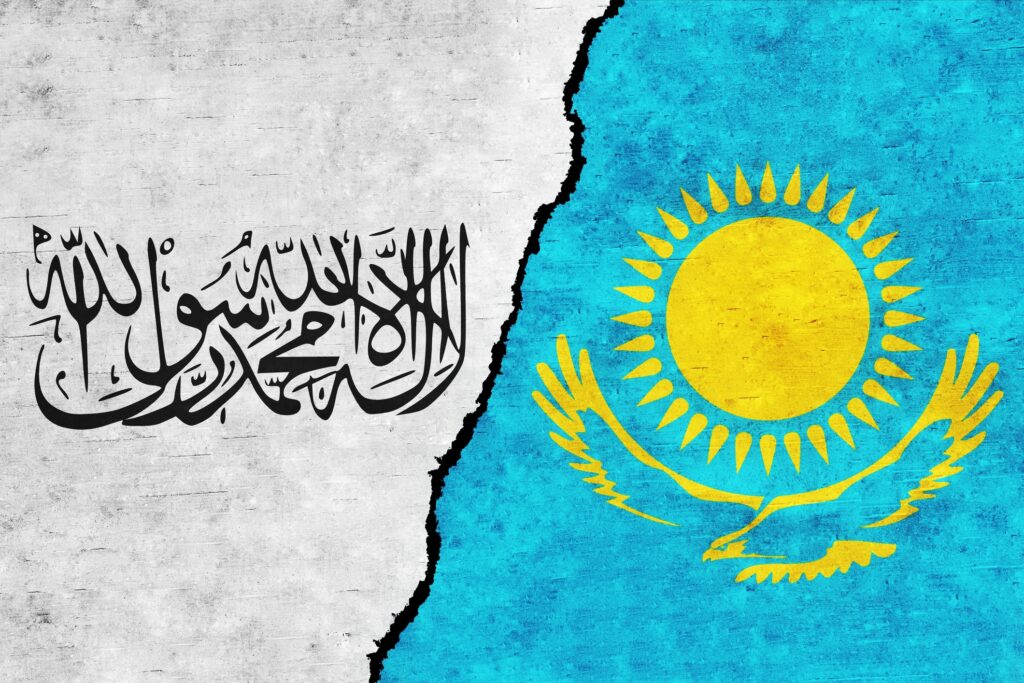
The visit of Kazakhstan's Foreign Minister Murat Nurtleu to Kabul (July 10–11) was a turning point not only for bilateral relations but also for the entire regional logistics agenda. While Astana's previous statements about its readiness to participate in the Trans-Afghan Corridor were viewed by many with skepticism as a demonstration of goodwill without practical substance, these doubts have now been dispelled. Kazakhstan has not only reaffirmed its commitment to the project but also reinforced it with concrete commitments. An interdepartmental memorandum on the implementation of the Torgundi-Herat railway line has been signed, and Astana has confirmed its readiness to invest up to $500 million in the Trans-Afghan railway project. This is an important step in the formation of future transport corridors within the Central Asia to South Asia (CA2SA) initiative. Practical matters such as tariff policy, border crossing procedures, logistics, and digitalization were also discussed. The visit also carried diplomatic weight. Kazakhstan is demonstrating its willingness to engage pragmatically with Afghanistan’s de facto authorities. This is not a step towards recognizing the Taliban regime, but an effort to involve Kabul in economic processes without altering Kazakhstan’s legal or political stance. Attempts to link this visit to Russia's recognition of the Taliban appear superficial. Such trips are not planned spontaneously — in diplomatic practice, visits at this level are prepared for weeks, if not months. The very structure of the negotiations made it clear what the priorities were: infrastructure, transport security, and economic cooperation, not political recognition. Given Kazakhstan’s balanced foreign policy, formal de jure recognition of the Taliban regime is unlikely in the foreseeable future. The current status quo — practical cooperation without political legitimization — is acceptable to all parties, regional states, and Afghanistan alike. At most, we may see an elevation of diplomatic representation. Currently, both countries are represented by temporary chargés d'affaires. After the visit, extraordinary and plenipotentiary ambassadors may be appointed. However, even this would not mean recognition. Diplomatic missions are a means of communication, not a political endorsement. Kazakhstan’s position continues to be guided by that of the United Nations. Until the Credentials Committee changes its position on the Afghan side's participation in the General Assembly, Astana will not force events. From 2021 to 2024, the committee rejected the Taliban's applications for accreditation, which de facto means a refusal of international recognition at the global level. Although these decisions are not legally binding, they serve as the main political guideline for states that adhere to a collective approach. In matters of recognition, it is essential not to get ahead of geopolitical realities. It is important that Kazakhstan's actions are not isolated: they are in line with other countries in the region, especially those bordering Afghanistan. Whereas previously the policy of Central Asian countries towards their southern neighbor was determined by security issues, the focus is now shifting to trade, logistics, and infrastructure development. Across all regional capitals, there is growing recognition that supporting Afghanistan is not a formality, but a rational strategic choice. After...

The Turkic States Are Quietly Building a Geoeconomic Power Base

The Organization of Turkic States (OTS) has spent the past years assembling itself not through declarations or summit communiqués, but through shared transport and logistics, harmonized customs procedures, and coordinated capital flows. What began in 2009 as the Turkic Council, a lightly institutional and rhetorically cohesive forum for shared identity, has evolved, following its 2021 transformation into the OTS, into a logistical and regulatory organism. Its under-the-radar evolution has been systematized through agreed documents, deployed capital, and materialized infrastructure. The OTS has entered a phase of procedural coordination and structural intent. Its cooperation is now practical, strategic, and functionally embedded. This evolution has not followed a single arc, nor has it merely responded to outside pressures. Instead, it has progressed through an uneven sequence of internal adjustments, sometimes slow and technical, sometimes accelerated by external jolts such as the recent disruption in Azerbaijani–Russian relations. But such jolts only intensified a trajectory already underway. Member states had been converging long before this most recent bilateral crisis by aligning their policies, testing instruments, and developing the practical grammar of multilateral coordination. The current phase of renewed cooperation is not a reactive surge but a prepared transition that expresses an underlying structural shift in Eurasian geoeconomics at large. Digital Infrastructure and Networked Cooperation If there is a single domain where institutional convergence becomes immediately visible, this would be digital logistics. Once-fractured national processes — disjointed customs systems, mismatched permits, bureaucratic duplication — have begun to fold into a shared administrative architecture (including eTIR, eCMR, and ePermit) structured by international conventions that have been adapted to fit the particular alignments now emerging in the Turkic sphere. These procedures are no longer pilot projects but live systems. They digitize paperwork, synchronize border procedures, and build the kind of operational rhythms that trade corridors need in order to function. Negotiations continue, meanwhile, on a Free Trade in Services Agreement, targeted not at deregulation but at harmonization, viz., the alignment of technical and professional standards across a disparate set of economies. Kazakhstan and Azerbaijan, for example, are already piloting a Simplified Customs Corridor. Its eventual integration with the multimodal Uzbekistan–Türkiye axis is not a matter of if, but of how soon. Official observer states to the OTS are also beginning to move, with Hungary being the clearest case. Its $100 million injection into the Turkic Investment Fund made headlines, but the real story is downstream: Hungarian infrastructure now receives Azerbaijani gas via Türkiye. That is not diplomacy; that is energy dependence, structurally routed. Turkmenistan, long the holdout, has started to engage, first through planning meetings and now through signed agreements. Its ports, once idle in regional plans, are being fitted into the wider Caspian logistics network. The Turkish Republic of Northern Cyprus (TRNC), formally recognized only by Türkiye, is also a functional participant through educational exchanges, shared language, and soft institutions. Reciprocal Trade and Development The shift underway is as much geographic as it is institutional. Central Asia is no longer on the margins of the OTS...

Opinion: Regional Power Starts at Home – Central Asia’s Path to Autonomy

The world is once again in a phase of systemic uncertainty. As conflicts proliferate and global governance splits, small and medium states must grapple with the consequences. For Central Asia, these external crises are not distant events; they are transmitted through trade, remittances, energy prices, and diplomatic pressure. But while exposure is unavoidable, dependence is not. The region’s future lies not in aligning with competing hegemons, but in constructing durable institutions of regional cooperation and self-governance. Over the last two decades, Central Asian countries have existed in a delicate balance. Security guarantees from Russia, infrastructure finance from China, and development assistance from the West provided a measure of stability, but they also bred institutional inertia. Today, that equilibrium is breaking down. Russia is preoccupied and sanctioned. China’s external ambitions are increasingly self-serving. The West is distracted. The resulting vacuum could leave Central Asia either exposed or, more optimistically, empowered to shape its own destiny. Uzbekistan's Institutional Recalibration Uzbekistan's pivot after 2016 was more than a diplomatic rebranding. It marked a nascent effort to build regional institutional trust, which was long absent in Central Asia. For the first time since independence, disputes over borders, transit, and trade were addressed not through coercion or isolation, but negotiation. The Khujand Declaration, signed by Uzbekistan, Kyrgyzstan, and Tajikistan, offered a blueprint for how local capacity, rather than external mediation, can resolve long-standing frictions. This was a decisive shift from extractive bilateralism to inclusive multilateralism. But diplomatic normalization is only a prelude. The deeper question remains: Can Central Asia institutionalize integration? Can it create shared rules and enforcement mechanisms strong enough to withstand both internal and external shocks? If Central Asian countries want to succeed, they should invest in four areas of regional institution-building, which will bring collective autonomy to the region. Mobility without bureaucracy Mobility is not just about tourism or convenience; it is about labor markets, political identity, and state capacity. Central Asia must move toward the full elimination of intra-regional visa and registration requirements. A legally binding regional agreement should guarantee the right of all citizens to live, work, and invest across borders without administrative friction. Strategic alignment through membership discipline Membership in multilateral organizations is not costless. It binds countries to external norms and power hierarchies. Uzbekistan’s exit from the CSTO and its calibrated WTO accession strategy demonstrate the value of selectively aligning with institutions that advance national and regional interests. Central Asian countries should have the political will to reconsider all memberships that harm their prosperity. Instead, a coordinated foreign policy doctrine between countries could increase their authority and bargaining power on the global stage. Energy security through joint investment and governance Energy independence is the main concern in Central Asia. Therefore, a Central Asian Energy Association should be established to coordinate grid connectivity, renewable development, and strategic reserves. Collective energy governance would reduce dependency on Russian and Chinese systems, while enabling scale economies in transition technologies. Investment in Afghanistan as a regional stability mechanism The marginalization of Afghanistan has...

From Eurasia to Greater Central Asia: A Region Reclaims Its Voice

At its most basic, Eurasia refers to the combined landmass of Europe and Asia, stretching from the Atlantic Ocean in the west to the Pacific in the east, and from the Arctic in the north to South and Southeast Asia in the south. Yet when defined in political or economic terms, the concept becomes more complex. This vast region—covering over 36% of the world’s surface area—includes influential Western institutions in the west, such as the European Union and the Council of Europe. In contrast, the east is shaped by post-Soviet and Sino-Russian groupings, including the Commonwealth of Independent States (CIS), the Shanghai Cooperation Organization (SCO), and the Eurasian Economic Union (EAEU). In policy circles, the term "Eurasia" often refers more narrowly to the Caucasus (Armenia, Azerbaijan, Georgia) and Central Asia (Kazakhstan, Kyrgyzstan, Uzbekistan, Tajikistan, Turkmenistan, Mongolia, and Afghanistan). Yet countries in these regions rarely lead the institutions that shape their future. Instead, most regional organizations are dominated by larger powers, primarily Russia and China. One partial exception is the Organization of Turkic States (OTS), though it excludes non-Turkic members such as Tajikistan, Georgia, and Armenia. Many external actors—beginning with Japan's "Central Asia plus Japan" initiative in 2001—have formed dialogue platforms with the five post-Soviet Central Asian republics, often referred to collectively as the "C5." More recently, Turkey, China, the EU, and others have created similar frameworks. While these engagements have value, they are usually shaped by external agendas. The fundamental issue remains: Central Asia lacks strong, self-directed institutions of its own. In response to this institutional vacuum, Professor S. Frederick Starr proposed in 2015 a broader regional framing: Greater Central Asia. He called for moving beyond the Soviet-era definition of Central Asia to include neighboring regions with shared historical, cultural, and strategic ties. He also noted a stark reality: Greater Central Asia is the only region of its kind without its own exclusive institutions—ones not directed by outsiders. That may be starting to change. A more distinct regional identity is emerging, with new frameworks for cooperation gradually taking shape. As countries in the region increasingly define their own development priorities and diversify partnerships beyond Moscow and Beijing, there is growing momentum for a more autonomous and inclusive model of regional integration. One of the clearest examples is CAMCA—an initiative that reflects the full geographic and political scope of Greater Central Asia. Over the past decade, the Central Asia-Caucasus Institute (CACI), founded by Professor Starr, has worked with the Rumsfeld Foundation to support a new generation of regional leaders through the CAMCA Fellowship Program. Originally conceived by alumni of a joint initiative between Starr and former U.S. Secretary of Defense Donald Rumsfeld more than fifteen years ago, the CAMCA Network has become one of the few institutions uniting the entire Greater Central Asia region. Each year, the fellowship culminates in a regional forum hosted by a different CAMCA country. The most recent—held last week in Ulaanbaatar—marked the 11th such gathering and the second time the event has been hosted by CAMCA...

Central Asia Unites: Evacuations Amid Middle East Turmoil

As hostilities between Israel and Iran escalate in the Middle East, Kazakhstan, Kyrgyzstan,  and Uzbekistan have initiated a comprehensive evacuation of their citizens from high-risk areas, drawing on regional cooperation and humanitarian assistance to ensure their safe return. Regional Support in Evacuation Efforts Azerbaijan and Turkmenistan have stepped in to aid the Central Asian nations' evacuation operations, providing transit routes and logistical support. At the Astara border checkpoint, six Kazakh citizens crossed from Iran into Azerbaijan, where they were offered medical assistance and meals before continuing their journeys. Turkmenistan has also facilitated the safe passage of approximately 120 evacuees, including citizens of Kazakhstan, Kyrgyzstan, Uzbekistan, Tajikistan, and Romania, through its border checkpoints with Iran. Turkmenistan’s Ministry of Foreign Affairs confirmed that foreign diplomats and their families were recently evacuated from Iran through Turkmenistan. The country provided comprehensive humanitarian assistance to the evacuees, offering transportation, food, accommodation, and essential supplies. Turkmenistan’s authorities highlighted that the operation was carried out in close cooperation with foreign embassies and international organizations, reflecting its commitment to humanitarian values, international cooperation, and good neighborly relations, particularly during the “Year of Peace and Trust,” as declared by the United Nations General Assembly at Turkmenistan’s initiative. Uzbekistan has evacuated over 30 citizens of its citizens from Iran via Turkmenistan and Azerbaijan, according to the Ministry of Foreign Affairs. “All necessary measures are being taken to ensure the safety of our citizens. The embassies of Uzbekistan in Iran and Israel are operating around the clock,” the ministry stated. Kyrgyzstan has also successfully evacuated 28 of its citizens from Iran via Azerbaijan. "Currently, the necessary assistance is being provided to facilitate the swift return of the evacuees from Azerbaijan to Kyrgyzstan," a Foreign Ministry official stated. Flight Bans and Alternative Routes Kazakhstan’s Civil Aviation Committee has meanwhile implemented a full ban on flights over or near the airspace of Iran, Iraq, Israel, Jordan, Lebanon, and Syria following intensified airstrikes in the region. This decision disrupted flights for hundreds of Kazakh travelers, particularly those in the United Arab Emirates and other Middle Eastern nations. To address the situation, alternative evacuation routes were established. On June 15, two FlyDubai flights arrived in Almaty, carrying a total of 332 Kazakh citizens. These flights included passengers initially stranded after the airspace ban and others who had been scheduled to depart after the interruption. Following rerouting operations, airlines such as Air Astana and FlyArystan have warned of disruptions to flights to and from the Gulf and North Africa. Passengers have been advised to check schedules in advance and to expect delays. Mirziyoyev Addresses the Conflict’s Impact The conflict between Israel and Iran has raised serious concerns across Central Asia. Speaking during a government meeting held via videoconference, Uzbekistan’s President Mirziyoyev warned that the hostilities could negatively impact newly developing trade and transport routes in the region. The growing conflict will “have an impact not only on the Middle East, but also on our region. If the escalation continues, trade relations and logistics routes that are...

Opinion: Strengthening the Silk Bonds — India’s Renewed Push Towards Central Asia

The velvet-draped tables of New Delhi’s 4th India-Central Asia Dialogue convened under the stewardship of External Affairs Minister Dr. S. Jaishankar on June 6, 2025, radiated congeniality, with history and strategy converging. This high-level engagement, attended by foreign ministers from Kazakhstan, Kyrgyzstan, Tajikistan, Turkmenistan, and Uzbekistan, marked more than a diplomatic ritual — it signaled India's deepening resolve to recalibrate its strategic posture in a region too long shaped by other powers. Yet beneath pledges of shared civilizational futures and energy corridors, an uncomfortable truth lingered as India remains a guest, not a player, in Central Asia’s great power theatre. Further, India’s internal socio-political landscape presents notable challenges that inadvertently shape its foreign policy credibility, particularly in the eyes of Central Asian nations. Persistent communal tensions — most visibly manifested in the Hindu-Muslim divide, the controversial demolition of the Babri Masjid in 1992, and the politically charged construction of the Ram Mandir — have deepened perceptions of religious polarization. Such domestic developments, while largely internal, resonate beyond India’s borders, especially in the Muslim-majority Central Asian republics, raising concerns about inclusivity and pluralism in India’s governance model. Simultaneously, India’s strained relations with key neighbors — Pakistan, and China, and increasingly volatile dynamics with Nepal, Bangladesh, and Sri Lanka — have reinforced a regional image of discord and inconsistency. These internal and regional complexities contribute to a trust deficit, making Central Asian countries cautious in placing long-term strategic confidence in India. For New Delhi to emerge as a dependable partner in the region, addressing internal fissures and presenting a coherent, inclusive national vision is as vital as economic or diplomatic outreach. Central Asia sits at the center of ancient trade routes and modern geopolitical competition. For India, its importance is twofold: the region is a bridge to Eurasia and a repository of energy resources critical to India’s growing economy. But India’s historical connectivity to Central Asia — through the Silk Road, shared cultural legacies, and spiritual exchanges — has, for decades, been overshadowed by geographic and political barriers, notably the lack of direct overland access due to Pakistan. Recognizing these constraints, the dialogue showcased a strategic pivot. India reaffirmed its commitment to enhancing regional connectivity through the International North-South Transport Corridor (INSTC) and the Chabahar Port in Iran. While geopolitical instability in Iran and Afghanistan poses challenges, India's emphasis on multimodal routes demonstrates pragmatic flexibility. In an era defined by supply chain resilience and multipolar geopolitics, connectivity is no longer just an infrastructure question — it is a currency of influence. The dialogue also addressed the evolving regional security architecture. India’s proposal for counter-terrorism cooperation, capacity building, and intelligence sharing was timely and necessary. However, the dialogue echoed with familiar refrains, viz. civilizational bonds, shared destiny, and multipolar cooperation. Yet beneath the diplomatic choreography lies a haunting question. Can India transcend its historical role as Central Asia’s cultural cousin to become its strategic confidant? History whispers caution. The Burden of History: From Silk Roads to Shadow Roads For centuries, the Silk Road...