• KGS/USD = 0.01144 0%
  • KZT/USD = 0.00198 -0%
  • TJS/USD = 0.10879 0%
  • UZS/USD = 0.00008 0%
  • TMT/USD = 0.28571 0%
  • KGS/USD = 0.01144 0%
  • KZT/USD = 0.00198 -0%
  • TJS/USD = 0.10879 0%
  • UZS/USD = 0.00008 0%
  • TMT/USD = 0.28571 0%
  • KGS/USD = 0.01144 0%
  • KZT/USD = 0.00198 -0%
  • TJS/USD = 0.10879 0%
  • UZS/USD = 0.00008 0%
  • TMT/USD = 0.28571 0%
  • KGS/USD = 0.01144 0%
  • KZT/USD = 0.00198 -0%
  • TJS/USD = 0.10879 0%
  • UZS/USD = 0.00008 0%
  • TMT/USD = 0.28571 0%
  • KGS/USD = 0.01144 0%
  • KZT/USD = 0.00198 -0%
  • TJS/USD = 0.10879 0%
  • UZS/USD = 0.00008 0%
  • TMT/USD = 0.28571 0%
  • KGS/USD = 0.01144 0%
  • KZT/USD = 0.00198 -0%
  • TJS/USD = 0.10879 0%
  • UZS/USD = 0.00008 0%
  • TMT/USD = 0.28571 0%
  • KGS/USD = 0.01144 0%
  • KZT/USD = 0.00198 -0%
  • TJS/USD = 0.10879 0%
  • UZS/USD = 0.00008 0%
  • TMT/USD = 0.28571 0%
  • KGS/USD = 0.01144 0%
  • KZT/USD = 0.00198 -0%
  • TJS/USD = 0.10879 0%
  • UZS/USD = 0.00008 0%
  • TMT/USD = 0.28571 0%
04 December 2025

Viewing results 1 - 6 of 18

Kyrgyzstan Restricts Livestock Exports to Stabilize Meat Prices

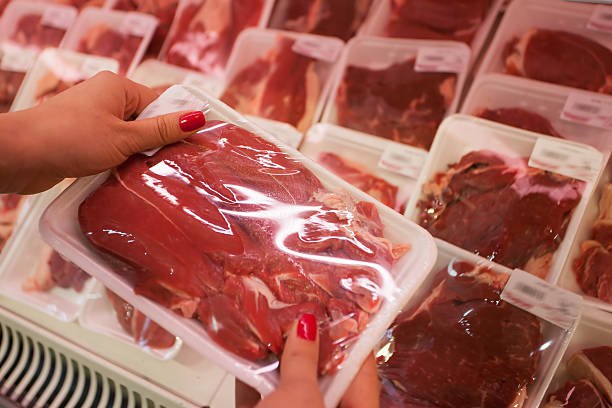
In early 2025, Kyrgyzstan temporarily suspended livestock exports in a bid to curb rising meat prices on the domestic market. The measure has resulted in a significant reduction in export volumes. According to the Ministry of Water Resources, Agriculture and Processing Industry, between January and mid-August 2025, Kyrgyzstan exported 30,493 cattle, 31,781 sheep and goats, and 1,636 horses. This marks a sharp decline compared to the same period in 2024, when the country exported 77,907 cattle, 70,392 sheep and goats, and 5,113 horses. Kyrgyz livestock is primarily exported to neighboring Central Asian countries. Officials say the suspension has helped prevent meat shortages and price surges domestically. To further bolster local meat production and supply, the ministry has proposed extending the export ban for an additional six months. In the first half of 2025, Kyrgyzstan produced 115,400 tons of meat, an increase of 3,900 tons compared to the same period in 2024. However, demand continues to outpace supply. National meat consumption stood at 309,400 tons in 2024 and reached 157,300 tons in the first half of 2025. In 2024, Kyrgyzstan met 86.2% of domestic meat demand through local production. That figure dropped to 79.7% in the first half of 2025, underscoring the country’s ongoing reliance on imports to bridge the supply gap. To contain prices, the government implemented temporary state control over retail meat prices beginning August 11. For a 90-day period, the price of beef and mutton has been capped at 700 Kyrgyz soms ($8) per kilogram.

Central Asia Grapples with Fuel Shortages Amid Market Volatility

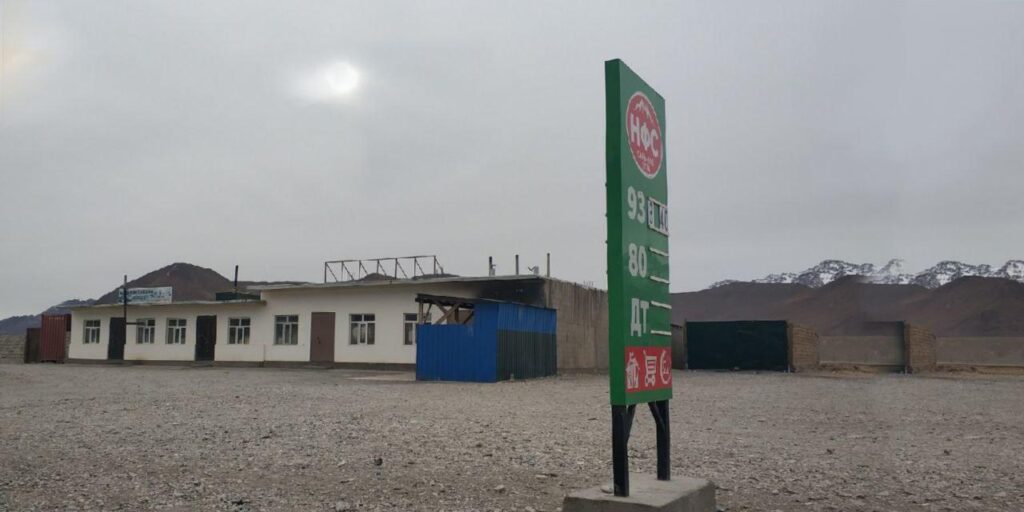
The heavy reliance on fuel imports from Russia is placing Central Asian countries in an increasingly precarious position. Disparities in pricing and exchange rates are driving a surge in illicit fuel resales, exacerbating supply challenges across the region. Gasoline and diesel prices continue to climb, and shortages are being felt widely. This dependence on Russian supplies is particularly concerning following U.S. President Donald Trump's ultimatum to Moscow: end the war in Ukraine within ten days or face 100% tariffs on countries trading oil and petroleum products with Russia. The tariffs could take effect as early as next week, placing Central Asian states in a hugely vulnerable position. Kazakhstan: Shortages and Shadow Exports In early July, motorists across Kazakhstan reported widespread shortages of AI-95 gasoline, particularly along the Karaganda-Balkhash and Astana-Pavlodar highways and in the country’s western regions. Some filling stations restricted purchases of AI-95 to 30 liters per vehicle, and AI-98 was only available via coupons. The Ministry of Energy attributed the shortages to increased tourist and transit traffic. Price caps on gasoline were lifted in January 2025, after which they began to steadily rise. According to the Ministry of Energy, fuel in Kazakhstan remains significantly cheaper than in other Eurasian Economic Union (EAEU) member states, prompting the government to gradually align prices with the regional market. Forecasts suggest gasoline prices could rise by up to 50%, further fueling inflation and impacting all sectors of the economy. The government argues that maintaining artificially low fuel prices would require substantial budget subsidies. The resulting price differentials have made illegal fuel exports more profitable, aggravating domestic shortages. To combat speculation, Kazakhstan imposed a ban in January on exporting gasoline and diesel by road and rail. Despite the country’s ongoing efforts to expand domestic production, Kazakhstan is expected to import substantial volumes from Russia in 2025: 285,000 tons of motor gasoline, 300,000 tons of jet fuel, 450,000 tons of diesel, and 500,000 tons of bitumen. Experts caution that significant increases in domestic output may not materialize until 2030. Russia’s decision on July 28 to tighten its gasoline export ban to include large producers is further complicating the situation. The embargo, introduced amid record-high exchange prices, is expected to last through August. Nevertheless, Energy Minister Erlan Akkenzhenov insists the Russian export restrictions will not affect Kazakhstan, citing a standing intergovernmental agreement that exempts the country from such measures. The Rise of Grey Market Schemes Despite official reassurances, fuel prices continue to rise. Energy expert Olzhas Baidildinov warns of a growing shadow market, driven in part by the weakening of the Kazakh tenge against the Russian ruble. With the exchange rate at 6.6 tenge per ruble, the economic incentive for illicit exports from Kazakhstan remains strong. Baidildinov predicts further shortages by the autumn if this trend continues. Kyrgyzstan: Growing Dependence Kyrgyzstan, which has faced repeated fuel shortages in recent years, has seen prices rise sharply. Over the past decade, the cost of AI-92 has climbed by 52%, AI-95 by 57%, and diesel, used in agriculture...

Turkmenistan Tightens Internet Blocks to Promote State-Controlled VPNs

Internet restrictions in Turkmenistan have intensified sharply in recent weeks, according to sources who spoke with turkmen.news. Authorities have reportedly expanded the national IP blacklist by adding numerous /16 subnets, each covering over 65,000 IP addresses. While such sweeping blocks might appear politically motivated, insiders claim the real motive is commercial: corrupt officials are using the restrictions to market and sell VPN services and “whitelist” access they control themselves. In July 2024, Turkmen authorities briefly restored access to around 3 billion previously blocked IP addresses, raising hopes of a more open digital environment and a boost to the stagnant online economy. However, that reprieve proved temporary. The blocks soon returned, initially targeting smaller /24 subnets (255 IP addresses each). This summer, the government's cybersecurity department escalated efforts by blocking entire /16 subnets, cutting off hundreds of thousands of websites in a matter of weeks. Restrictions Without Justification Turkmenistan already ranks among the most digitally isolated nations. Independent media, global social networks, and any platforms perceived to host criticism of the government have long been inaccessible. However, the latest wave of blocks is not driven by political considerations, as most politically sensitive platforms were already restricted. Instead, the scale and targets of the new blocks suggest other motivations. According to turkmen.news, even benign and essential online services, such as update servers for antivirus software like Bitdefender and some Google utilities, have been caught in the dragnet. Experts warn that this poses a growing cybersecurity risk in a country with limited digital literacy and inadequate access to software updates. Selling Access in a Closed System Sources allege that Turkmen officials are using the crackdown to corner the market for virtual private networks. VPN keys now cost around 1,000 manats (roughly $50) per month, while access to a whitelist, ensuring uninterrupted connectivity, can run up to $2,000 monthly. The officials reportedly behind the scheme are said to be deliberately blocking alternatives to force users into purchasing their products. Last year, turkmen.news identified several figures allegedly involved in this scheme: Maksat Geldyev, Allanazar Kulnazarov, and Didar Seyidov. While these individuals reportedly profit from the artificial scarcity they create, the broader economy suffers. Analysts estimate that Turkmenistan loses millions of dollars daily due to the constraints on digital development, which is a key factor in modern GDP growth. Official Denials Amid International Scrutiny Despite mounting evidence, the Turkmen government continues to deny the severity of the situation. The Foreign Ministry recently issued a statement condemning Ukrainian television channel FreeDom for what it described as “biased and false” coverage of the country’s internet restrictions. Nonetheless, experts warn that unless the government reverses course, Turkmenistan’s digital isolation will continue to hinder economic development, deepen cybersecurity vulnerabilities, and further disconnect its population from the global information space.

Bans and Beliefs: Understanding Central Asia’s Most Controversial Restrictions

A recent controversy involving the Spiritual Administration of Muslims of Kazakhstan (SAMK) has reignited public debate over seemingly bizarre bans in Central Asia. SAMK was asked to comment on whether popular video games such as Counter-Strike 2, Dota 2, GTA, League of Legends, Minecraft, and Genshin Impact are permissible under Islamic law. SAMK responded that, from a Sharia perspective, all of these games are prohibited. The public interpreted this as an official ban, possibly even a fatwa, sparking a media uproar. But the reaction wasn’t unfounded: Central Asian republics often make headlines with prohibitions that, from the outside, can appear surreal. Yet, context often provides a more nuanced explanation. Turkmenistan: The Regional Champion of Bans Turkmenistan remains unmatched in its record of curious restrictions. Under its first president, Saparmurat Niyazov, the state banned smoking in cars, mobile phones, radios, stereo systems, clowns, and lip-syncing. Public smoking was also prohibited, and officials were barred from having gold teeth. Other bans targeted personal appearance. Men were forbidden from wearing long hair, beards, or mustaches, while makeup was banned for television presenters. Niyazov justified the latter by claiming it was difficult to distinguish men from women on screen and that Turkmen women’s natural “wheat-colored” complexion should be visible. Cultural life was similarly curtailed. Niyazov abolished ballet, opera, the circus, and even the national folk dance ensemble. “I don’t understand ballet. Why do I need it?” he said. “You can’t instill a love for ballet in Turkmen people if it’s not in their blood”. His successor, Gurbanguly Berdimuhamedov, retained many of these restrictions, particularly the sweeping limitations on internet access. According to Turkmen.news, as of 2023, approximately 75% of global IP addresses were blocked in Turkmenistan. The list of banned platforms includes Facebook, Instagram, TikTok, Telegram, YouTube, WhatsApp, and X (formerly Twitter). Cloud services such as Google Cloud, Microsoft Azure, and Dropbox are also blocked, along with most public DNS servers and online games such as Minecraft, Dota 2, and League of Legends. Dushanbe Follows Suit Kazakhstan and Turkmenistan are not alone in targeting video games. In 2024, the Interior Ministry in Tajikistan’s capital, Dushanbe, banned the distribution of games and video clips deemed violent or immoral. Authorities argued that such content negatively influenced youth behavior and contributed to crime. Games like Counter-Strike and GTA were explicitly named. Tajikistan has also imposed a range of non-digital bans. In 2018, the Committee for Architecture and Construction ordered that rooftops follow a citywide color scheme: green on one side of the river, burgundy on the other. The directive was short-lived. That same year, the mayor banned wearing house clothes, galoshes, and slippers in public, citing the need to uphold the capital’s dignity. The city also outlawed drying laundry on balconies to preserve the urban aesthetic. While these rules may seem odd, they reflect the ongoing transformation of societies that, until recently, were largely agrarian. Urbanization has brought with it an effort to instill new norms and behaviors. Sorcery, Beards, and Dress Codes This same logic applies...

E-Scooter Ban and Moped Crackdown on Bishkek’s Agenda

The Jogorku Kenesh, Kyrgyzstan’s parliament, has called on the Ministry of Internal Affairs and the Bishkek City Council to urgently address the rising threat posed by electric scooters and mopeds on city sidewalks. Lawmakers claim that the growing presence of these vehicles has made pedestrians fearful and contributed to an increase in traffic accidents, some of them fatal. Speaker of the Jogorku Kenesh, Nurlanbek Turgunbek uulu, has formally appealed to the Minister of Internal Affairs and the Mayor of Bishkek to take swift and decisive action. “Most scooter and moped drivers are children. They do not have driver's licenses, and mopeds are not captured by traffic cameras. Many countries have strict regulations for such vehicles. We need to implement similar rules,” said Turgunbek uulu. Lawmakers argue that the unchecked proliferation of electric scooters, often abandoned on sidewalks, makes Bishkek resemble cities in Southeast Asia. According to the Patrol Service, the capital has seen a sharp rise in accidents involving scooters and mopeds, with 186 incidents recorded since the beginning of 2025, resulting in six deaths and 207 injuries. This marks a 118% increase compared to the previous year. In response, the Ministry of Internal Affairs has proposed a total ban on electric scooter rentals, asserting that rental users are the primary source of risk. Many of them ride at high speeds, ignore traffic rules, and operate scooters on sidewalks and narrow alleys. Authorities also point out that rental companies often neglect maintenance, leaving safety unchecked. The city’s infrastructure, they argue, is ill-equipped to manage the growing number of scooters. “Everyone rides however they want, there are no rules and no responsibility,” a police spokesperson commented. To improve safety on highways, the ministry also recommends mandatory registration for mopeds and the introduction of a new driver's license category, M1. Parliamentarians have drafted a bill currently under review by the State Security and National Security Committee. It introduces a new classification, individual mobility device (IMD), modeled after similar legislation in Russia. Under the proposal, all IMDs capable of exceeding 50 km/h, or with an engine displacement over 50cc or a power output above 4 kW, must be registered. Less powerful IMDs would require users to obtain a special license, available from the age of 14. The Bishkek city administration has expressed support for the Interior Ministry’s proposals but emphasized that implementing the new rules would necessitate revisiting existing agreements with scooter rental firms.

Kyrgyzstan Offers International Audits of State Firms Amid Russia Sanctions Scrutiny

Kyrgyzstan has expressed its readiness to subject state-owned enterprises to international audits amid rising Western scrutiny over potential sanctions circumvention. The statement was made during a meeting in London between First Deputy Chairman of the Cabinet of Ministers Daniyar Amangeldiev and David Reed, Director of Sanctions at the UK Foreign, Commonwealth & Development Office. The two officials discussed Kyrgyzstan’s compliance with international sanctions regimes and the need to prevent any circumvention of restrictions, particularly those related to Russia. Reed raised concerns about the activities of certain Kyrgyz companies engaged in foreign trade, specifically naming Capital Bank and Trading Company, both state-owned enterprises. Capital Bank was created to oversee financial transactions involving Russia and has been designated, as of May 1, as a clearing institution for settlements in Russian rubles. The Trading Company is tasked with monitoring transit trade flows. Amangeldiev emphasized that the establishment of these entities was aimed at enhancing transparency and regulatory oversight, not sanctions evasion. He assured the UK side that Kyrgyzstan is fully open to inspections by international auditing firms and reaffirmed that these companies are operating within legal frameworks. Kyrgyzstan’s foreign trade, especially its re-export of goods, has faced growing scrutiny from Western governments amid broader concerns over the enforcement and impact of sanctions on Russia. The Kyrgyz government has consistently denied any role in facilitating sanctions evasion.