• KGS/USD = 0.01143 -0%
  • KZT/USD = 0.00198 -0%
  • TJS/USD = 0.10899 0.93%
  • UZS/USD = 0.00008 0%
  • TMT/USD = 0.28490 -0.28%
  • KGS/USD = 0.01143 -0%
  • KZT/USD = 0.00198 -0%
  • TJS/USD = 0.10899 0.93%
  • UZS/USD = 0.00008 0%
  • TMT/USD = 0.28490 -0.28%
  • KGS/USD = 0.01143 -0%
  • KZT/USD = 0.00198 -0%
  • TJS/USD = 0.10899 0.93%
  • UZS/USD = 0.00008 0%
  • TMT/USD = 0.28490 -0.28%
  • KGS/USD = 0.01143 -0%
  • KZT/USD = 0.00198 -0%
  • TJS/USD = 0.10899 0.93%
  • UZS/USD = 0.00008 0%
  • TMT/USD = 0.28490 -0.28%
  • KGS/USD = 0.01143 -0%
  • KZT/USD = 0.00198 -0%
  • TJS/USD = 0.10899 0.93%
  • UZS/USD = 0.00008 0%
  • TMT/USD = 0.28490 -0.28%
  • KGS/USD = 0.01143 -0%
  • KZT/USD = 0.00198 -0%
  • TJS/USD = 0.10899 0.93%
  • UZS/USD = 0.00008 0%
  • TMT/USD = 0.28490 -0.28%
  • KGS/USD = 0.01143 -0%
  • KZT/USD = 0.00198 -0%
  • TJS/USD = 0.10899 0.93%
  • UZS/USD = 0.00008 0%
  • TMT/USD = 0.28490 -0.28%
  • KGS/USD = 0.01143 -0%
  • KZT/USD = 0.00198 -0%
  • TJS/USD = 0.10899 0.93%
  • UZS/USD = 0.00008 0%
  • TMT/USD = 0.28490 -0.28%
07 December 2025

Viewing results 1 - 6 of 21

Kyrgyzstan Election Delivers Wins for Women and the President’s Allies

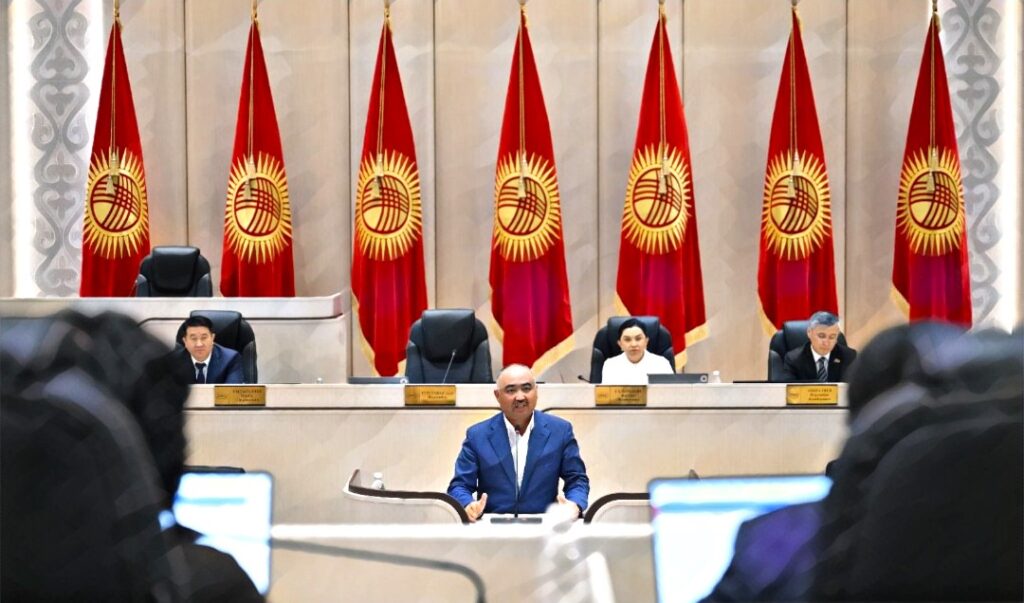
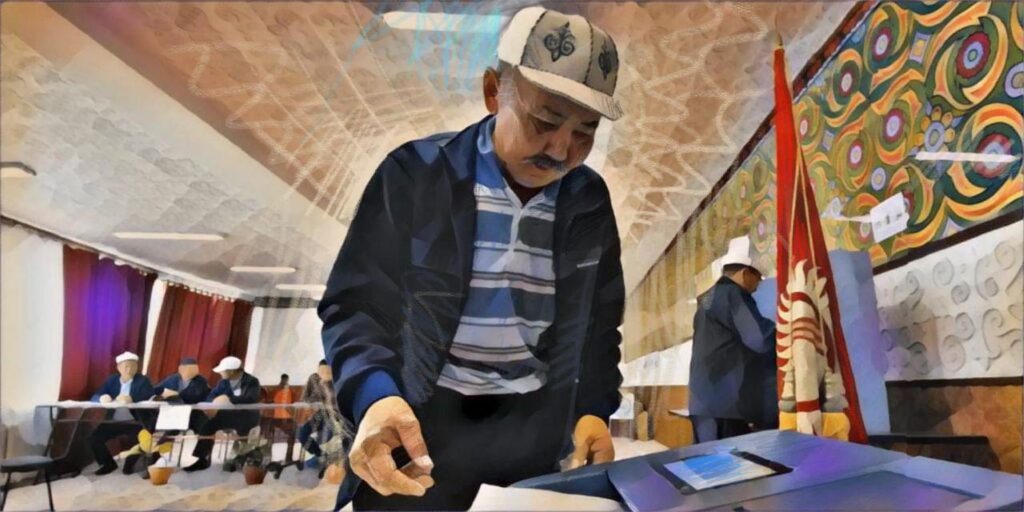
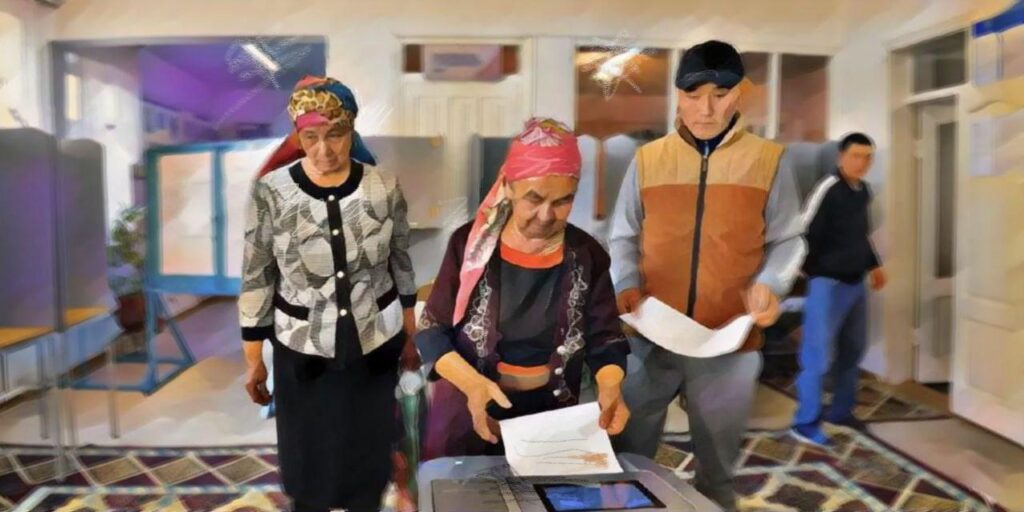
Kyrgyzstan held snap parliamentary elections on November 30 that seem not to have elicited widespread enthusiasm among the electorate. Not long ago, Kyrgyzstan had the most vibrant political culture in Central Asia. Campaigning for parliamentary elections was a lively period that was impossible not to notice. Parties and candidates were in the news constantly in the weeks before the elections. There were campaign posters and signs, and public events with concerts organized by parties or candidates all around the country. The rapid pace of these latest elections, in which candidates had only 20 days to campaign, might have contributed to voter confusion and apathy on election day, but the elections do seem to have come off without any major controversy. In a country that has had three revolutions in the last 20 years, two of them directly connected to parliamentary elections, a quiet election day is a victory of sorts. Election Day Polls opened at 8:00 local time, and several hours after they closed at 20:00, Kyrgyzstan’s Central Election Commission reported that 36.9% of eligible voters had cast ballots. The last few elections in Kyrgyzstan have seen turnouts of less than 40%. This time, the Kyrgyz authorities were hoping for a significant increase in participation to validate the new system for parliamentary elections approved earlier this year. However, the turnout of 36.9% was only slightly better than the 34.61% of voters who took part in the November 2021 parliamentary elections. As many as 500,000 Kyrgyz citizens are working or living outside Kyrgyzstan, and only just over 26,000 showed up at any of the 100 polling stations in 34 countries. Five of Kyrgyzstan’s last six parliamentary elections were decided based on party lists. The last parliamentary elections were conducted under a split system, whereby 54 of the 90 seats in parliament were selected via party lists, and the other 36 seats in single-mandate districts. This time, all 90 seats were chosen under a majoritarian system, with a twist. The country was divided up into 30 electoral districts, each of which selected three deputies. Kyrgyzstan had a requirement that at least 30% of the seats in parliament should go to women, but that quota has not been observed in recent elections. In the November 30 elections, at least one woman had to be among the three candidates who secured seats in parliament, though up to two women could win in a district (at least one of the winners was required to be a man). Election results confirmed that one woman won a seat in every district, but only one. There were no instances where two women took seats in a district. Also, according to the preliminary election results, all the women who won came in third place in their districts, with one exception. In District 23, veteran MP Elvira Surabaldiyeva took the most votes. Results posted by AKI Press showed that without the requirement of one female deputy per district, only seven women would have become deputies. Name recognition was bound to...
Kyrgyzstan Elections 2025: Short Campaign, High Stakes

Campaigning for seats in Kyrgyzstan’s upcoming parliamentary elections is underway, and it is already shaping up to be a race unlike anything seen before in Kyrgyzstan. The 467 candidates competing for the 90 seats in parliament have only 20 days to make their cases to voters in their districts. Kyrgyz President Sadyr Japarov’s government has vowed to keep these elections clean and fair, and threatened severe punishment for those who attempt to cheat in any way. Uneven Electoral Landscape The country is divided into 30 voting districts, and in each district, the three candidates who receive the most votes will win seats. The level of competition varies, depending on the district. Electoral district 11, which is Manas city (formerly Jalal-Abad), has 155,023 eligible voters. Only five candidates are running in the district, three of whom are women. According to new election rules, a woman (or a man) must win at least one of the three seats available in each district. Name recognition is always important, and especially so in elections with many newcomers seeking seats in parliament. One of the candidates in District 11 is Shairbek Tashiyev, the brother of the current head of the State Committee for National Security (GKNB), Kamchybek Tashiyev. He is almost certain to win one of the seats. In electoral district 19 in Kyrgyzstan’s northern Chuy Province, with 138,373 eligible voters, there are 25 candidates competing. The two districts with the largest number of voters, district 15 in the Aksy area of western Kyrgyzstan with 160,218 voters, and district 28 in the Zhety-Oguz area of eastern Kyrgyzstan with 160,181 voters, have, respectively, 15 candidates and 17 candidates. In the districts where there are 15 or more candidates, the three winners might only receive around 10,000 votes, or even less. The candidates are out meeting with voters, but many are relying on social networks to promote their image and spread their message. Domestic television stations, ElTR and UTRK, are airing candidate debates that “will be distributed regionally, depending on the candidates' electoral districts.” Not Running Eleven of the current 90 deputies in parliament have opted not to run for reelection. Among them are Iskhak Masaliyev - currently in the Butun (United) Kyrgyzstan Party but previously the long-time head of Kyrgyzstan’s Communist Party - the son of Absamat Masaliyev, who was first secretary of the Communist Party of the “Kirghizia” Soviet Socialist Republic from 1985 until independence in August 1991. Another current member of parliament who is not running is Jalolidin Nurbayev, whose attempt to register was rejected due to two criminal cases having previously been opened against him, one in 2006, the other in 2021.” A new election rule prohibits people whose cases were “terminated on non-rehabilitating grounds” from being eligible to hold public office. Effectively, this means that any case against them has been closed without declaring the person innocent, but without restoring their reputation, even though they are no longer being prosecuted. Members of organized criminal groups and their family members have won seats...

Kyrgyzstan Election 2025: New Rules, New Map, Same High Stakes

Kyrgyzstan is conducting snap parliamentary elections on November 30. The deadline for would-be candidates to hand in their forms was October 30. Nearly 600 prospective contenders have submitted registration forms to run for the 90 seats in parliament. The Central Election Commission (CEC) now has until November to process candidates’ applications to ensure they meet all the requirements to participate in the upcoming poll. Those who qualify will then have 18 days to convince voters in their districts to cast their ballots for them. The Basics These will be the ninth parliamentary elections held in Kyrgyzstan since the country became independent in late 1991. The reason officials gave for moving elections forward from November 2026 is that the next presidential election is scheduled for January 2027. However, in June 2025, amendments to the electoral system came into effect that changed the voting system and redivided electoral districts, opening the way to hold early elections. Parliament voted to dissolve itself in late September, and shortly after, the date of the forthcoming election was announced. To be eligible to run for a seat in parliament, a Kyrgyz citizen must be at least 25 years old, have a higher education, and have lived continuously in Kyrgyzstan for the last five years. Anyone with a criminal record is barred from participating. In Kyrgyzstan’s parliamentary elections in the 1990s and early 2000s, some prominent opposition figures were convicted of what appeared to be politically motivated charges and imprisoned to prevent them from taking part in elections. This happened to so many opposition politicians that after Kyrgyzstan’s first revolution, the Tulip Revolution of March 2005, a rule was introduced that allowed people with previous convictions to run for office. Now, an exception is made only for those whose convictions were later overturned. What’s New? These elections will be decided through single-mandate voting. That is not new. It was the way Kyrgyzstan’s parliamentary elections were conducted until 2007. The constitutional referendum of October 2007 changed the electoral system and introduced voting by party-list. Then-President Kurmanbek Baliyev formed the Ak-Jol party immediately after the referendum, and the party went on to win more than 60% of seats in parliament in the elections in December 2007. Bakiyev’s attempts to concentrate power into his hands eventually backfired and played a role in his ouster in the revolution of April 2010. Elections continued to be conducted by party list in 2010, 2015, and 2020. However, the elections of 2020 were plagued by allegations of rigging and vote-buying during the campaign, and when two pro-government parties won the majority of seats, it sparked another revolution that saw current President Sadyr Japarov come to power. The deputies elected in 2015 remained in their posts for more than another year. The last parliamentary elections in November 2021 were held using a mixed system, whereby 36 seats were decided by single-mandate voting, and 54 by party lists. President Japarov signed amendments to the election laws in June 2025, one of which was to decide the...

Kyrgyzstan Snap Election: Democracy on Edge or Politics as Usual?

On September 25, Kyrgyzstan’s parliament voted to dissolve itself, clearing the way for snap elections. As previously reported by The Times of Central Asia, deputies approved the dissolution by an 84–0 vote, with five abstentions and one absence. The election will now take place on November 30, under revised electoral rules. The new system divides the country into 30 constituencies, each of which elects three deputies, at least one of whom must be a woman. Lawmakers justified the move by pointing to the costs and logistical burdens of overlapping parliamentary and presidential campaigns, arguing that holding parliamentary elections a year early would streamline preparations and reduce the administrative strain. Critics, however, have suggested the real motivation is political, noting that pro-government blocs stand to benefit from locking in deputies under the new majoritarian system by mobilizing local administrative resources, especially after years of pressure on opposition groups and independent media. “Regarding the early elections, I fully support this decision,” Eldar Turatbek, founder of the Legalize political party, told The Times of Central Asia. “There is no point in waiting another year until the end of the 7th convocation’s term, especially when you consider that after the 2020 revolution, most deputies spent a year in temporary status anyway. In essence, they have already ‘worked off’ their five-year term.” Japarov’s Centralization of Power The dissolution also fits into a broader cycle of political reshuffles across the region. Both Kyrgyzstan and Kazakhstan have undergone rapid personnel and institutional changes in recent months, with Bishkek’s early vote reflecting President Sadyr Japarov’s emphasis on electoral timing, and, analysts argue, designs to cement his grip on power. The step arrives in a political environment that has grown markedly more centralized since Japarov’s rise during the turmoil of 2020. New restrictions on online media and internet traffic have narrowed the space for civil society, measures the government frames as necessary to restore order and promote national values. Rights advocates, however, warn of democratic backsliding in a country once seen as the most pluralistic in Central Asia. Opposition journalist Bolot Temirov offered a blunt assessment as to the reasons why the authorities are holding early parliamentary elections. “In recent years, the president’s entourage and the head of the State Committee for National Security have acquired money, and now want to show off their deputy badges,” he told TCA. “Kamchybek Tashiyev will try to get as many of his people into parliament as possible to strengthen his position in the confrontation with Sadyr Japarov and his team. Mandates have long since become a commodity, and parliamentary seats are for sale.” International IDEA has recorded a decline in civil liberties and checks on executive authority under the current administration, and Kyrgyzstan’s trajectory makes this moment especially significant. The country has experienced three revolutions since independence - in 2005, 2010, and 2020 - each triggered by discontent over corruption, contested elections, and concentrated presidential power. These upheavals reshaped institutions but also entrenched a cycle of volatility that continues to cast a...

Kyrgyz Parliament Votes to Dissolve; Preparations for Early Elections Begin

Deputies in Kyrgyzstan’s parliament voted on September 25 to dissolve parliament, paving the way for early elections that will be conducted under a revised electoral format later this year. Deputies voted 84-0 in favor of dissolving parliament. Five other deputies abstained from voting, and one MP was absent from the session. Kyrgyz President Sadyr Japarov now has five days to name the date for snap parliamentary elections, though speaker of parliament Nurlanbek Turgunbek uulu said he expects the date will be November 30. The move was expected as a group of deputies started collecting signatures earlier in September to introduce a motion on dissolving parliament. The chairman of Kyrgyzstan’s Central Election Commission (CEC), Tynchtykbek Shaynazarov, said in an interview on September 2 that the CEC is ready to conduct parliamentary elections this year, “if [parliament] takes the decision to dissolve itself.” Shaynazarov explained the reason for advancing elections by one year. “According to the law, and plans, the elections for deputies to the Jogorku Kenesh (Kyrgyzstan’s parliament) will take place in November 2026.”  However, Shaynazarov said, “According to the constitutional regulations, the next presidential election is set for January 2027. If we have (parliamentary) elections… in November 2026, the CEC must release an official tally (of votes) within 20 days.” Shaynazarov continued, “Then there will be those who are dissatisfied with the elections and will file a lawsuit. Thus, the campaign for the election of deputies may drag on until December.” Shaynazarov pointed out this would overlap with campaigning for the presidential election. Member of Parliament Janar Akayev agreed the proximity of the two elections according to the current schedule could negatively impact the work of the CEC. Akayev also noted that Japarov signed a new law on procedures for electing parliamentary deputies in June this year.  That law changed the mixed system of electing deputies Kyrgyzstan used in 2021, whereby 36 MPs were elected in single-mandate districts and 54 by party lists. In the next elections, all 90 deputies will be chosen in single-mandate districts. “Since current MPs support the transition to a new system, new elections should be held,” Akayev said. Kyrgyzstan’s early parliamentary elections, in 1995, 2000, and 2005, were conducted via single-mandate districts. Election by party lists was first used in the 2007 snap elections, and continued to be used in the 2010, 2015, and 2020 elections. The new regulations for parliamentary elections have negative and positive aspects. The non-refundable fee to seek a seat in parliament favors the wealthy. The fee for independent candidates to run remains at 100,000 Kyrgyz som (about $1,115), which is still a high price in a country where the average monthly salary is just a bit over 41,000 som. Political parties can still participate in elections but must pay 9 million som (almost $103,000). Currently six parties have seats in parliament, but 21 parties fielded candidates in the 2021 elections. The prohibitively high cost of registering will make it difficult for many people who aspire to a seat in parliament...

Steppe Diplomacy: Mongolia Deepens Central Asia Ties

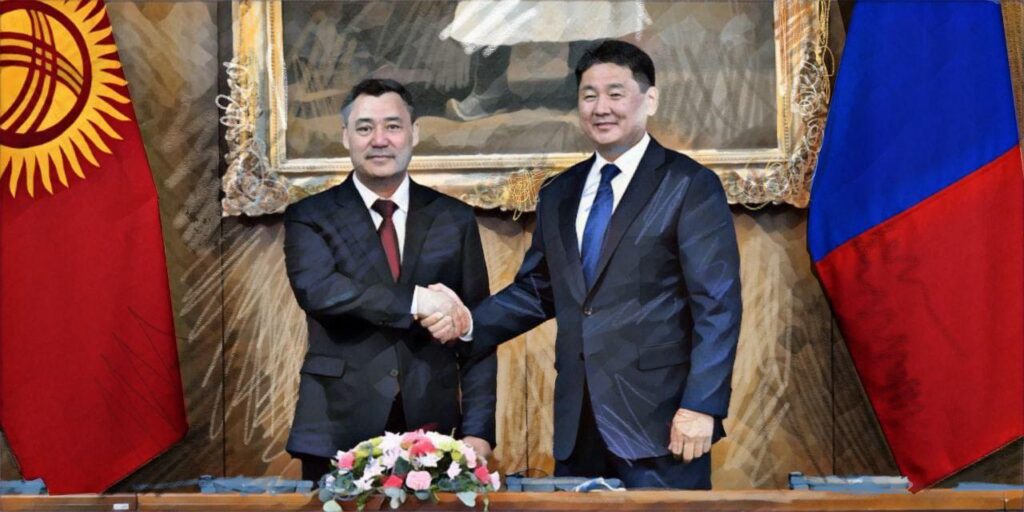
Late on July 20th, the President of Mongolia, Ukhnaagiin Khürelsükh, touched down in Bishkek as part of a two-day state visit to Kyrgyzstan. It forms part of Khürelsükh’s wider Central Asian tour, with the President set to fly to Dushanbe following his sojourn in the Kyrgyz capital. The trip builds on Kyrgyz President Sadyr Japarov’s 2023 visit to Ulaanbaatar, where he oversaw the opening of Kyrgyzstan’s first embassy in Mongolia and toured the Genghis Khan Museum in the capital. A warm greeting Khürelsükh was welcomed by Japarov on the red carpet at Manas International Airport, where traditional dances, music, and even a ceremonial eagle were laid on. The pair greeted each other like old friends before the motorcade swept along the empty roads towards the city. Like Japarov, Khürelsükh has been president since 2021, although, unlike his Kyrgyz counterpart, his role is largely ceremonial. Indeed, current Mongolian politics offers a hint of nostalgia to those in Kyrgyzstan with fond memories of the pre-Japarov era. In June, the Mongolian Prime Minister was forced to resign after losing a vote of confidence in the country’s parliament. This followed months of protests after press reports covering his son’s extravagant spending. The second day of the visit afforded Japarov the chance to play to statesman-like host and welcome a new visitor to the Presidential Palace – the Yntymak Ordo – which is still less than a year old. With temperatures hitting 37°C (98° Fahrenheit) in the Kyrgyz capital, the Mongolian leader arrived at the palace in a blacked-out Mercedes, flanked by a horse-mounted honor guard. The besuited leaders then stood in the baking sunshine to receive a military salute from Kyrgyzstan’s army. A burgeoning friendship Perhaps the scale of the pomp masks the limits of what can be achieved bilaterally. Iskander Sharsheyev, an independent Kyrgyz economist, was keen to stress to The Times of Central Asia that the leaders did achieve some breakthroughs in terms of agriculture: “Veterinary certificates were signed... This provides a new market for Kyrgyz producers. Kyrgyzstan and Mongolia signed a memorandum of cooperation in the field of wool processing, including cashmere. Mongolia is one of the world leaders in cashmere production, and the transfer of technology and training of specialists can dramatically improve the Kyrgyz textile sector.” However, real announcements were thin on the ground and the language of diplomacy was heavy with blandishments: “We strive to develop mutually beneficial cooperation in all areas, especially in the trade and economic sphere,” said Khürelsükh, while Japarov noted that “comprehensive cooperation with Mongolia is one of the priority areas of the development of Kyrgyzstan's foreign policy.” The question is whether there is any substance behind this. Economically, the numbers are hardly going to move the dial. In the first five months of this year, Kyrgyzstan exported $3.1 million worth of goods to Mongolia, much of it confectioneries. Mongolian exports in the other direction are even lower. While officials are trumpeting the rate of growth, which tripled in 2024, it’s worth having a...