• KGS/USD = 0.01144 0%
  • KZT/USD = 0.00204 0%
  • TJS/USD = 0.10394 -0.38%
  • UZS/USD = 0.00008 0%
  • TMT/USD = 0.28490 -0.28%
  • KGS/USD = 0.01144 0%
  • KZT/USD = 0.00204 0%
  • TJS/USD = 0.10394 -0.38%
  • UZS/USD = 0.00008 0%
  • TMT/USD = 0.28490 -0.28%
  • KGS/USD = 0.01144 0%
  • KZT/USD = 0.00204 0%
  • TJS/USD = 0.10394 -0.38%
  • UZS/USD = 0.00008 0%
  • TMT/USD = 0.28490 -0.28%
  • KGS/USD = 0.01144 0%
  • KZT/USD = 0.00204 0%
  • TJS/USD = 0.10394 -0.38%
  • UZS/USD = 0.00008 0%
  • TMT/USD = 0.28490 -0.28%
  • KGS/USD = 0.01144 0%
  • KZT/USD = 0.00204 0%
  • TJS/USD = 0.10394 -0.38%
  • UZS/USD = 0.00008 0%
  • TMT/USD = 0.28490 -0.28%
  • KGS/USD = 0.01144 0%
  • KZT/USD = 0.00204 0%
  • TJS/USD = 0.10394 -0.38%
  • UZS/USD = 0.00008 0%
  • TMT/USD = 0.28490 -0.28%
  • KGS/USD = 0.01144 0%
  • KZT/USD = 0.00204 0%
  • TJS/USD = 0.10394 -0.38%
  • UZS/USD = 0.00008 0%
  • TMT/USD = 0.28490 -0.28%
  • KGS/USD = 0.01144 0%
  • KZT/USD = 0.00204 0%
  • TJS/USD = 0.10394 -0.38%
  • UZS/USD = 0.00008 0%
  • TMT/USD = 0.28490 -0.28%

Viewing results 1 - 6 of 41

Kyrgyzstan Shutters April TV as President Signs New Media Law

A district court in Bishkek has ordered the liquidation of April TV, one of Kyrgyzstan’s few remaining independent broadcasters, intensifying what some observers are calling an ongoing campaign to silence dissenting voices in the country’s media landscape. The decision, handed down by the Oktyabr District Court on July 9, followed a lawsuit brought by state prosecutors who alleged that the broadcaster's content was “biased, one-sided, destructive and manipulative,” and posed a threat to the constitutional order. In a related development, on July 11, President Sadyr Japarov signed a new law clamping down on media freedom into force. In the district court, prosecutors argued that April TV’s content risked inciting mass unrest and undermining the authority of the state. The court’s ruling cited assessments conducted by the State Committee for National Security (GKNB), which claimed that the broadcaster’s video reports negatively influenced public opinion, insulted government officials, and could provoke calls for the seizure of power. Over the past two years, President Japarov's administration claims to have successfully thwarted several attempted coups and assassination plots targeting high-ranking officials. These incidents, according to the government, highlight ongoing challenges to political stability in Kyrgyzstan, which has framed its efforts as critical to ensuring the country’s continued progress amidst a complex regional and domestic landscape. In addition to terminating April TV’s legal status, the court also authorized the blocking of its online platforms and affiliated channels, including the popular YouTube-based partner channel Next TV. Editor-in-chief of April TV, Dmitriy Lozhnikov, rejected the government’s claims, defending the station’s critical tone and stating that “criticizing the government isn’t a crime, but one of the core functions of the press.” In a final message before going offline, the outlet declared it was taking “a vacation from which [we] might never return.” At least ten current and former staff members of April TV were summoned for questioning by the GKNB as part of a broader criminal probe. No specific charges have been disclosed. The closure of April TV mirrors actions taken against other prominent independent outlets in Kyrgyzstan over the past two years. In February 2024, a Bishkek court approved the liquidation of Kloop, a media organization known for its investigative reporting on corruption – a ruling later upheld by the Supreme Court. The authorities claimed that its charter did not permit Kloop to engage in journalism, and objected to what they described as the “negative tone” of its reporting. In late May, the security forces conducted coordinated raids on the homes of eight current and former Kloop employees in Bishkek and Osh — detaining two on charges of “public calls for mass unrest” and compelling the others to sign non-disclosure agreements. Kloop has relocated its operations abroad, maintaining access to its content in Kyrgyzstan through mirror sites and launching a new podcast studio in Georgia. Despite mounting pressure, the outlet’s leadership remains defiant, vowing to continue producing the “most incisive investigations, the most objective news, and the boldest commentary.” In a similar vein, the investigative media outlet Temirov...
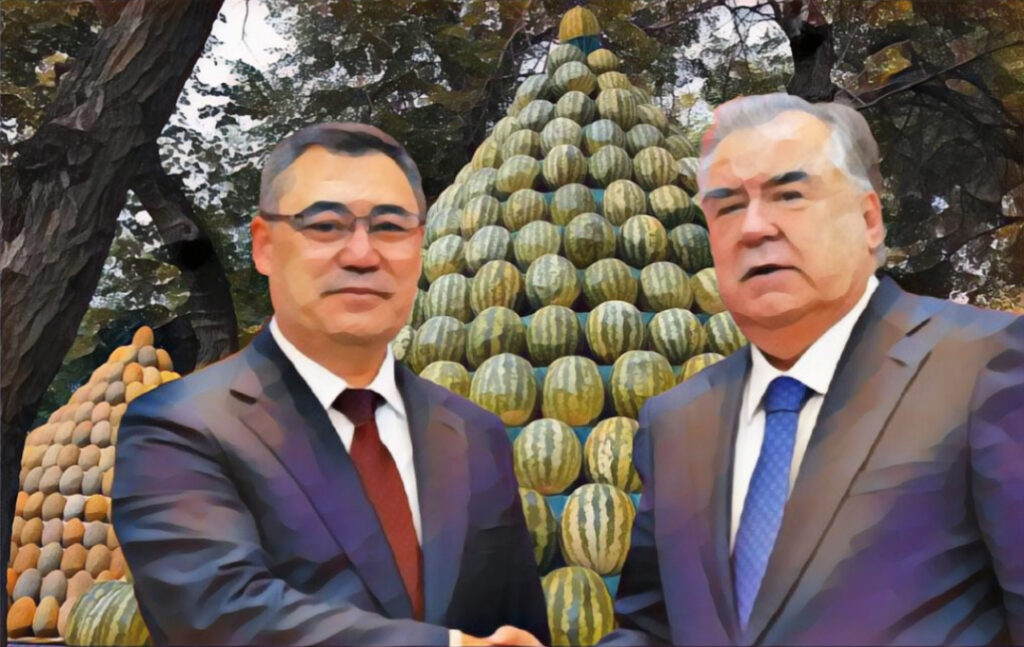
Kyrgyz President Visits Tajikistan, Opening New Era of Friendship

Kyrgyzstan’s President Sadyr Japarov just concluded a two-day visit to Tajikistan. Rarely has the visit of one Central Asian leader to another Central Asian country been as welcome as Japarov’s trip to Tajikistan was. The two countries engaged in brief, but intense and devastating conflicts in late April 2021 and mid-September 2022, the only clashes between the militaries of the two Central Asian countries since the five Central Asian states became independent in late 1991. Judging by Japarov’s warm reception in the Tajik capital Dushanbe, the worst of times have passed in Kyrgyz-Tajik relations. A Year of Firsts Japarov, who has been in power in Kyrgyzstan since late 2020, was making his first state visit to Tajikistan on July 8-9. Japarov traveled to Tajikistan in June 2021, nearly two months after the first outbreak of hostilities along the Kyrgyz-Tajik border, to speak with Tajik President Emomali Rahmon about easing tensions along their common frontier. That June, a meeting was hastily arranged as an exercise in damage control, not a state visit, and in any case, the talks between the two presidents failed to head off even worse fighting in September of the next year. This first state visit by Japarov followed President Rahmon’s visit to the Kyrgyz capital in March 2025, the first state visit by Rahmon to Kyrgyzstan in nearly 12 years. During Rahmon’s meeting in March, Kyrgyzstan and Tajikistan signed the agreement delimiting the final disputed sections of their border, which both sides hope will end more than a decade of violence and destruction in the border area. That agreement led to the first-ever summit of the presidents of the three Central Asian countries that share the Ferghana Valley. Uzbek President Shavkat Mirziyoyev joined Japarov and Rahmon on March 31 in the northern Tajik city of Khujand to celebrate the agreement on all three countries’ borders and talk about future cooperation. Pomp and Ceremony Rahmon was at the Dushanbe airport to meet Japarov when the latter arrived on July 8. Tajikistan’s Honor Guard played the national anthems of both countries, followed by a 21-gun salute for Japarov, before the two presidents made their way to the Tajik capital to hold talks. The two leaders also visited a Kyrgyz-Tajik trade exhibit and attended a concert featuring performers from both countries dedicated to “Eternal Friendship.” Moving Forward Ahead of the Japarov-Rahmon meeting, The Times of Central Asia reported that trade between the two nations is starting to increase again. The figure for January-May trade between the two countries this year was a modest $6.35 million, but that is 15 times more than the meager $405,100 of bilateral trade during the first five months of 2024. Less than a decade ago, there were years when Kyrgyz-Tajik bilateral trade topped $50 million. Following the border agreement in March, two border crossings were reopened along the western sections of the Kyrgyz-Tajik frontier. During the meeting between the two presidents, it was announced that a third crossing had opened, the Tajvaron-Karamyk post connecting Kyrgyzstan’s...

Kyrgyzstan’s Rebrand: New Country, or New Distractions?

On January 29, in what became a viral social media post, Seide Ibraimova and her mother drove to the site of VDNKh, the exhibition center built in the Kirghiz SSR to demonstrate the achievements of socialist science and culture. Her mother, wrapped in a white headscarf, reminisced happily about the times she’d spent there, surrounded by poplar trees in the shadow of the mountains. Seide’s father was one of the architectural team who built the main pavilion in 1974. But as they arrived at the site, they found nothing but rubble. The government had bulldozed the pavilion to make way for a new congress hall. “How could they?” said the old lady in a choked whisper. “Your father gave his heart and soul to this, for the people of the republic. The number of delegations who came here… how could they?” In the post’s comments section, an intense debate began. Some lamented the loss of the exhibition center: “Without this historic architecture, Bishkek will be nothing more than a concrete jungle,” said one. Another invoked Chingiz Aitmatov’s famous mankurt metaphor, describing those who had destroyed the site as having “no sense of memory or feelings, without attachment, who do not know who they are or where they come from.” Others were less sentimental, pointing out that VDNKh had been left to rot for two decades, and that those venerating the Soviet relics were the real mankurts, “forgetting your language, preaching the history and ideology of the fascists who invaded and occupied our country.” “You can forget the USSR,” said another. “We live in a sovereign state, the Kyrgyz Republic!” These online spats come at a time when Kyrgyzstan is going through a form of national branding under the government of Sadyr Japarov. But is the country really shedding its Soviet skin, or are the changes mere window dressing? [caption id="attachment_29217" align="aligncenter" width="1600"] The ruins of the VDNKh pavilion, February 2025; image: Joe Luc Barnes[/caption] Around two hundred meters from the wreckage of the pavilion is Yntymak-Ordo, or the “new White House”. This is the newly-constructed official administrative building of Kyrgyzstan’s president – a squat structure with thick columns, topped by a glass dome and surrounded by iron bars and armed guards. Reminiscent of many of the other presidential palaces that have sprung up across Central Asia over the past thirty years, it is an assertion of power. Further along Chinghiz Aitmatov Avenue (which was called Prospekt Mira until 2015) are scores of new high-rise residential buildings. Each month, new approvals are granted for more of these in the city center, contributing to a construction boom. Some see this as a deliberate attempt to erase the Soviet past from the city and replace it with their own idea of a modern Kyrgyz capital. The aesthetic shift is not just architectural. The government recently launched a competition for a new Kyrgyz national anthem. Aspiring composers have been invited to submit their proposals, the commission recently confirming that 23 have been accepted so...

Kyrgyzstan Raises First Sovereign Bond to Mitigate China’s Growing Influence

On February 4, Kyrgyz president Sadyr Japarov embarked on a four-day state visit to China, visiting Beijing and the northern city of Harbin for the opening ceremony of the 2025 Asian Winter Games. The visit comes against a backdrop of increasing engagement between Bishkek and Beijing. Temur Umarov, a fellow at the Carnegie Russia Eurasia Center, says that certain groups within the government are worried about an overreliance on China. “This is the problem of the current political leadership,” Umarov says. “They want to do more with China … they want to have more investment from China, but they have this debt that they inherited from the previous administrations.” Indeed, 36.7% of Kyrgyzstan’s foreign debt is now owed to the Export-Import Bank of China (Exim Bank), Beijing’s state-run lender which traditionally deals with foreign investments. China is also responsible for 46% of Kyrgyzstan’s foreign trade. With Russia hemorrhaging influence in the region amid its ongoing war in Ukraine, accessing new sources of investment has risen up the agenda in Bishkek. The Name’s Bond A key plank of these diversification attempts was put forward on January 13, when the Minister of Economy and Commerce, Bakyt Sydykov, announced plans to raise $1.7 billion through the sale of ten-year sovereign bonds in Hong Kong. “The country intends to tap into the international market for the first time,” Sydykov said. “We want to use Hong Kong’s role as a financial center to attract more potential investors, probably more diversified investors.” For Iskender Sharsheyev, an economist, this turn to the global markets cannot come soon enough. “This should have happened thirty years ago,” he says. Sharsheyev notes that the groundwork has been laid over the last few years, with ratings agency Moody’s reaffirming its B3 credit rating last year and projecting a “stable” outlook for the country. The yield of these bonds has yet to be announced, although Sharsheyev expects it to be reasonably high. “We expect that [the yield] will be worse for our country than for other countries, because, firstly, we are just entering. Secondly, the new flow of cash into the country could create risks; it can also spur inflation.” However, the high yield and the risk is seen as worth the cost. “The bond offering is an example of how Kyrgyzstan is trying to balance out its debt portfolio and have diversified ties with different creditors,” says Umarov. He notes that this mirrors a trend seen across Central Asia, where bonds have not traditionally been used as a means of fundraising but have become increasingly popular over recent years. In October 2024, Kazakhstan issued its first dollar-denominated Eurobond since 2015, the 10-year bond raising $1.5 billion with a yield of 4.714%. Sharsheyev believes that some of the proceeds of the bond sale will be used specifically to head off debts to Beijing. “China is the main [source of] pressure. To maintain sovereignty, we have begun to service the external debt. Our country has spent an average of $400-500 million on paying...

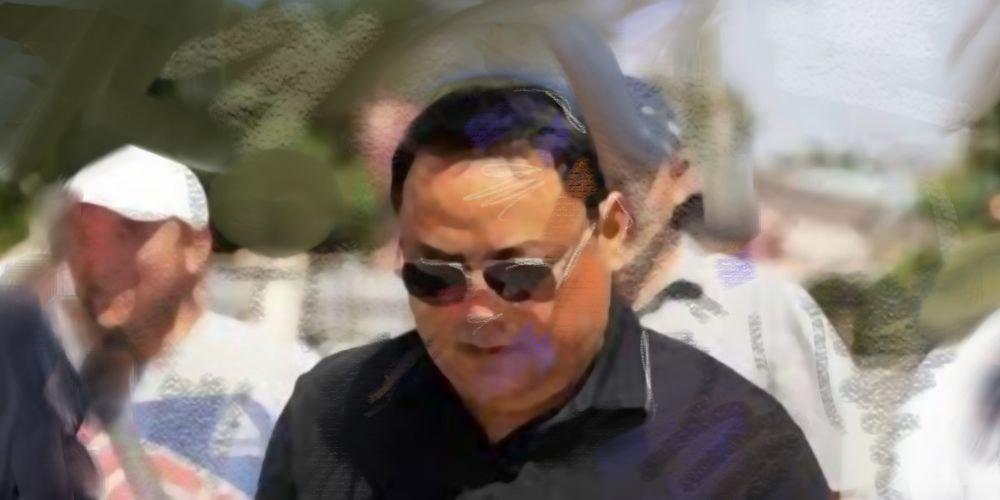
Capital Over Confinement in Sentencing of Raimbek “Millions” Matraimov

Raimbek Matraimov, infamously known as “Millions” for his tremendous wealth, once wielded immense power in Kyrgyzstan. Rising to prominence as deputy chairman of Kyrgyzstan’s Customs Service from 2015 to 2017, Matraimov’s tenure became synonymous with corruption and organized crime. His activities, alleged to have funneled monumental sums of money through shadowy operations, fashioned him not only as a dominant figure within the Customs Service but also as a key player in Kyrgyzstan’s criminal underworld.   The Rise of Raimbek Matraimov During his time in the Customs Service, Matraimov amassed an extraordinary fortune. His influence extended beyond bureaucratic corridors, infiltrating the political landscape of Kyrgyzstan. Whispers of his role as an organized crime leader were persistent, yet his wealth and connections left him virtually untouchable in those years. Speculation about his political influence peaked after the dramatic rise of Sadyr Japarov to Kyrgyzstan’s presidency in October 2020. Japarov’s elevation, from prison to the highest office amidst a tide of civil unrest, prompted many to suspect that Matraimov’s financial backing played a decisive role in the ascent. However, despite Japarov-appointed head of Kyrgyzstan’s State National Security Committee (GKNB), Kamchybek Tashiyev once describing him as a “good guy,” if Matraimov hoped to shelter under Japarov's influence, his expectations were soon dashed.   The Turning Point Japarov’s administration showed no hesitation in targeting Kyrgyzstan’s entrenched criminal networks. With Matraimov having bounced in and out of jail since October 2020, by October 2023, the GKNB had escalated their crackdown on organized crime, culminating in the death of Kamchybek Kolbayev, the country’s top crime kingpin - a member of the “Bratva” linked to heroin trafficking - during a security operation in Bishkek. Sensing the shifting winds, Matraimov fled Kyrgyzstan shortly after Kolbayev's death. However, his flight only seemed to intensify the resolve of the government in his homeland, where the authorities began seizing Matraimov's assets and investigating his allies. Among those implicated was Matraimov’s brother, Iskender, a parliamentary deputy with significant political connections.   Extradition and Arrest In late March 2024, Kyrgyzstan’s crackdown on Matraimov escalated when the GKNB detained five Azerbaijani nationals in Bishkek. These individuals, suspected members of a transnational organized crime group, were allegedly dispatched by Matraimov from Azerbaijan to assassinate top Kyrgyz government officials. This accusation  - one of countless similar claims regarding assassination attempts made by the Kyrgyz authorities this year alone - led to diplomatic action, and March 26, 2024, Matraimov along with three of his brothers were extradited from Baku to Kyrgyzstan. Upon his arrival, Matraimov was immediately taken into custody. The legal net tightened further as the case against him unfolded, with allegations of illegal border crossings, hooliganism involving weapons, money laundering, and broader accusations regarding his criminal empire.   Asset Seizures and Financial Settlements Prior to his sentencing, Matraimov had reportedly returned $200 million to the state budget, equivalent to over 17 billion Kyrgyz som, to be released from custody to house arrest pending his trial. Authorities also confiscated significant assets, including a 14-story business center in...