• KGS/USD = 0.01144 0%
  • KZT/USD = 0.00207 0%
  • TJS/USD = 0.10409 -0.86%
  • UZS/USD = 0.00008 0%
  • TMT/USD = 0.28571 0%
  • KGS/USD = 0.01144 0%
  • KZT/USD = 0.00207 0%
  • TJS/USD = 0.10409 -0.86%
  • UZS/USD = 0.00008 0%
  • TMT/USD = 0.28571 0%
  • KGS/USD = 0.01144 0%
  • KZT/USD = 0.00207 0%
  • TJS/USD = 0.10409 -0.86%
  • UZS/USD = 0.00008 0%
  • TMT/USD = 0.28571 0%
  • KGS/USD = 0.01144 0%
  • KZT/USD = 0.00207 0%
  • TJS/USD = 0.10409 -0.86%
  • UZS/USD = 0.00008 0%
  • TMT/USD = 0.28571 0%
  • KGS/USD = 0.01144 0%
  • KZT/USD = 0.00207 0%
  • TJS/USD = 0.10409 -0.86%
  • UZS/USD = 0.00008 0%
  • TMT/USD = 0.28571 0%
  • KGS/USD = 0.01144 0%
  • KZT/USD = 0.00207 0%
  • TJS/USD = 0.10409 -0.86%
  • UZS/USD = 0.00008 0%
  • TMT/USD = 0.28571 0%
  • KGS/USD = 0.01144 0%
  • KZT/USD = 0.00207 0%
  • TJS/USD = 0.10409 -0.86%
  • UZS/USD = 0.00008 0%
  • TMT/USD = 0.28571 0%
  • KGS/USD = 0.01144 0%
  • KZT/USD = 0.00207 0%
  • TJS/USD = 0.10409 -0.86%
  • UZS/USD = 0.00008 0%
  • TMT/USD = 0.28571 0%

Viewing results 1 - 6 of 138

Another Uzbek Citizen Convicted of Insulting Mirziyoyev

A court in Uzbekistan has sentenced a 28-year-old Almalyk resident to correctional labor for insulting the country's president Shavkat Mirziyoyev. The man said he wrote insulting comments on the internet during a fit of anger because he had received several fines from the tax office. According to the case, the married father of two, an owner of a pharmacy, left insulting comments under four videos and photographs of Mirziyoyev between May 2 and August 31 last year, The defendant pleaded guilty and expressed regret for his actions. He said that while running his pharmacy, in the Tashkent region, tax inspection officers had fined him several times, and when he saw the photos and videos on Instagram he left derogatory comments in a fit of anger. Local media has reported that "The court took into account the man's admission of guilt and sentenced him to correctional work for two years and six months with the recovery of 20% of his salary to be given to the state. Also, the court imposed on the Ministry of Digital Technologies to restrict access to the account of the man on Instagram, and also decided to recover the phone Samsung Galaxy A53 in favor of the state". In March 2021 an article was added to Uzbekistan's Criminal Code establishing liability for public insult or slander against Mirziyoyev using telecommunications networks or the internet. This crime is punishable by corrective labor of up to three years, restriction of freedom from two to five years, or imprisonment of up to five years. In October 2023 a court sentenced a 19-year-old resident of Kattakurgan district (Samarkand region) to two years and six months in prison for insulting comments about Mirziyoyev on Instagram. In March this year a court sentenced a 27-year-old resident of Namangan, who had recently returned from Iran, to five years in prison for insulting and defamatory comments about Mirziyoyev on Facebook.
NGOs in Kyrgyzstan Have Two Months to Register as “Foreign Agents”

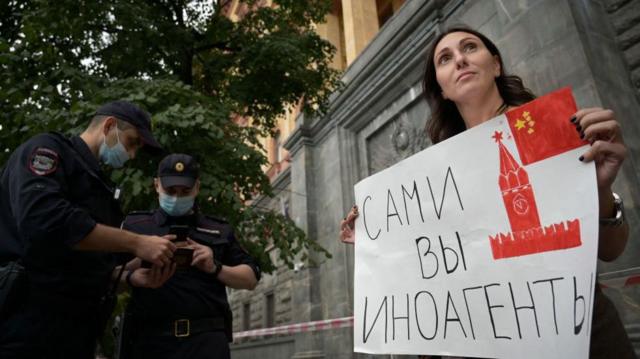
Kyrgyzstan's Ministry of Justice has approved the creation of a register for "non-governmental organizations performing the functions of a foreign representative", which gives authorities the right to inspect their activities. All non-profit agencies that receive foreign funding have been given two months from 16 May to submit documents to the ministry. Kyrgyz president Sadyr Zhaparov signed the law "on Foreign Representatives" on April 2, despite over 100 organizations and civil society figures appealing for him not to do so. Zhaparov made assurances at the time that non-governmental organizations would not be persecuted. Local NGOs funded from abroad that are engaged in political activities in Kyrgyzstan are now recognized as "performing the functions of a foreign representative", and are placed in a separate register. Organizations included in this register -- so-called 'foreign agents' -- may be subjected to various unscheduled inspections. Several international organizations, as well as the United States and certain countries in the European Union, have voiced criticisms of the new law. After it came into force, the Soros-Kyrgyzstan Foundation announced that it would be terminating its activities in Kyrgyzstan.

A Demographic Phenomenon in Kazakhstan — the Population is Rapidly Getting Younger

Kazakhstan stands out sharply on the demographic map of the world, according to Alexei Raksha, a Russian demographer. The republic's government supports high birth rates, which not only bring significant benefits but can also be a source of risk. Independent demographer Raksha has repeatedly said that Kazakhstan does not fit into global fertility trends. By all parameters (relatively high GDP, rising living standards, urbanization, etc.), the republic belongs to countries that should have already completed the first demographic transition. This term means a decline in mortality and fertility due to improved nutrition and medicine, resulting in simple generational replacement. That is, women no longer give birth to 10-15 children, hoping that two or three of them will survive. The first demographic transition has ended almost everywhere except in Africa, scientists believe. Nevertheless, according to Raksha, Kazakhstan -- along with Israel -- shows other indicators. In both countries, both religion and the desire for some kind of historical justice play a role. However, the demographer emphasizes that Kazakhstan's fertility figures are unevenly distributed regionally and ethnically. The fertile southern and western regions contrast sharply with the north, where the population is aging. Raksha recently commented on Kazakhstan's birth rate by women's ethnicity in 2022-2024. "If Kazakhs, Uzbeks and Uyghur women have birth rates at 2.9 to 4.2 children per woman, then representatives of European nations have an average of 1.3-1.5 children (average European level). It is obvious that there is a deep difference in cultural attitudes, both in the degree of social conservatism and in the level of religiosity," he wrote online. According to his data, in recent years, Kazakhstan has been steadily overtaking Uzbekistan, formerly considered the regional leader in population "production". This is confirmed by the data of the study of the leading medical journal The Lancet "Institute for Health Metrics and Evaluation" (IHME) on fertility in 204 countries and territories in the period from 1950 to 2021 with forecasts up to 2100. According to the report, Kazakhstan has surpassed all its neighbors in Central Asia and all countries in the Northern Hemisphere in terms of fertility over 70 years. For contrast, Raksha constantly cites data on prolonged depopulation in Europe, North America, China, Korea, and Japan. Countries whose population is inexorably aging and whose birth rate is below the level of simple reproduction (less than two children per woman) are doomed to attract labor migrants, the expert believes. In addition, the SWO plays a destructive role in the post-Soviet space. Russia has faced precisely unrecorded but obvious demographic losses, while Ukraine is on the verge of social catastrophe. Kazakhstan will not face the fate of an endangered country in the coming generations. In late April, the Bureau of National Statistics of Kazakhstan reported that the total fertility rate in 2023 amounted to 19.52 per 1000 people. In 2022 it was at the level of 20.57 births per 1000 people. The highest birth rates are noted in Mangistau region (26.74 people per 1000 people), Turkestan region (26.18) and Shymkent...

Victory Day Comes in Central Asian Countries Without Much Pomp, but Plenty of Feeling

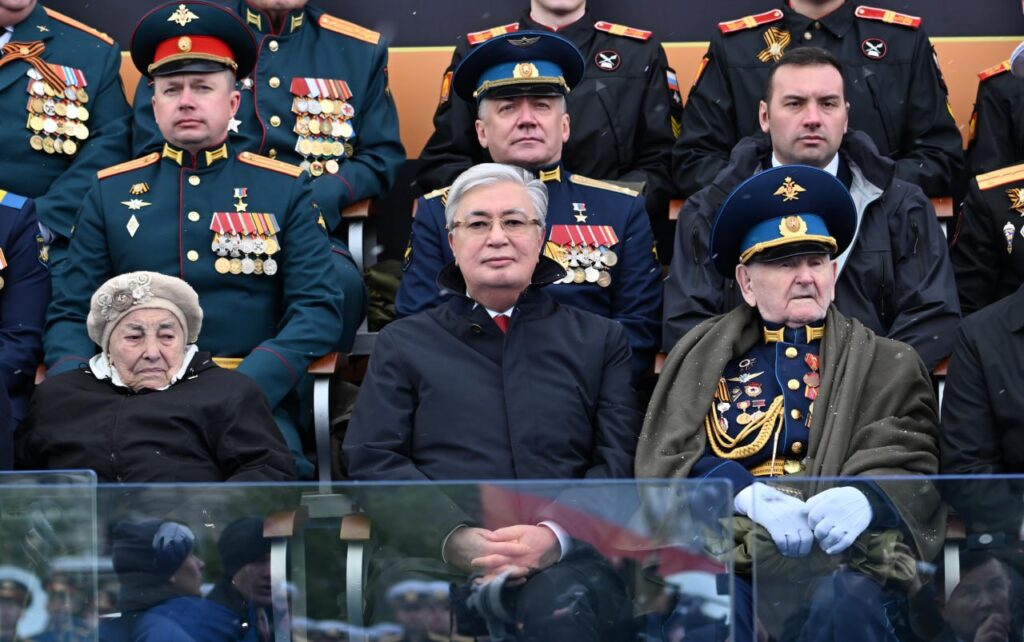
This year, as in previous years, the attitude toward Victory Day celebrations in Central Asian countries serves as an important political marker. The leaders of Kazakhstan, Kyrgyzstan, Tajikistan and Turkmenistan are scheduled to attend the Victory Day parade in Moscow on May 9. The leaders of Belarus, Cuba, Laos and Guinea-Bissau will also take part in the celebrations. The absences of the presidents of Uzbekistan, Armenia and Azerbaijan are particularly noticeable in that list. It's noteworthy that the Russian press is commenting on the different stances taken by the Central Asian countries in an extremely negative way -- deliberately agitating discord between Russia and the region. It's even been stated that Victory Day has been "canceled" in the region. Such are the broadcasts taking place against a backdrop of analysts' opinions: that in the coming decades, Central Asian countries won't be able to break the ties that bind them to their former Soviet master, as the economic dependence on Russia is only growing. This is especially true for Kazakhstan, as the lion's share of Kazakhstan's oil goes through Russian pipelines to Europe. In addition, a project increasing the transshipment of Russian hydrocarbons to China through Kazakhstan is in the works. However, contrary to the opinion of Russian tabloids, the Central Asian countries remain reverent and respectful of the cultural institution that is Victory Day. Most residents of the republics are proud of their fathers and grandfathers who fought on the fronts of World War II. In particular, for several years in a row, Kazakhstan has maintained a leading role in terms of doling out state budget payments to veterans of World War II. According to statistics, the size of a lump-sum social payment commemorating Victory Day in Kazakhstan, where 148 veterans live, averages $3,800. In Tajikistan there are 24 surviving veterans of World War II, and their payments amounted to $2,200-$2,300. Veterans in Uzbekistan received about $1,500, and in Belarus, Azerbaijan and Kyrgyzstan, about $1,100 apiece. Russia's 12,500 surviving veterans in Russia will receive the least -- the equivalent of only $107. To be sure, Kazakhstan has not held military parades in honor of the holiday for a year. That move is explained by the need to save money. This spring, unprecedented floods -- which affected almost half of the country -- have pushed President Kassym-Jomart Tokayev's administration to tend towards being thrifty and instead fund humanitarian aid and reconstruction. According to the Ministry of Defense of Kazakhstan, the parade requires spending about 4 billion tenge ($9 million) -- such a huge sum of money can be spent more impactfully on providing housing for the victims. Along with large-scale, WWII-related festive events in Kazakhstan, other important projects, such as international forums, have been canceled. Nevertheless, in his speech, President Tokayev not only congratulated veterans, but also emphasized the need to prepare for the 80th anniversary of the May 1945 victory, which is scheduled to be widely celebrated next year. In Uzbekistan, May 9 is considered a Day of Remembrance, but...

Divisive Forces Prompt Tokayev’s “National Unity” Message

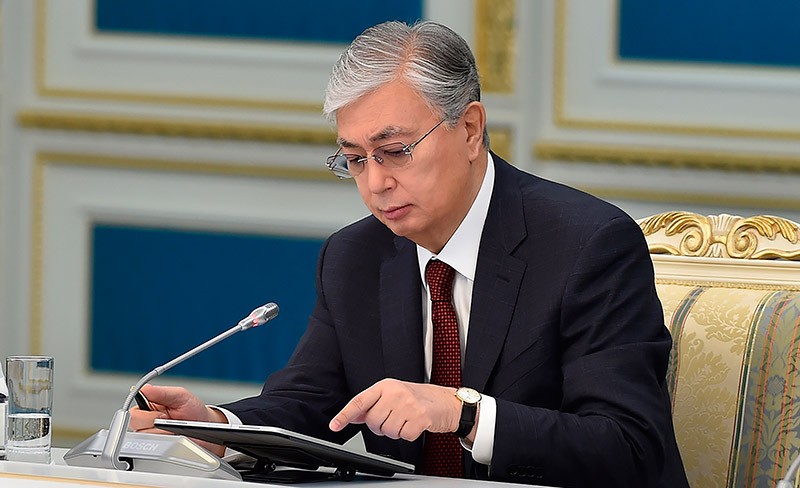
At the 32nd session of the Assembly of the People of Kazakhstan, President Kassym-Jomart Tokayev promoted peace and harmony as the state ideology and impressed on “national unity” by referring to all citizens of his country as Kazakhs regardless of their ethnic, linguistic or religious affiliation. “Society should not be divided on these grounds”, Tokayev said. Kazakhstan, a predominantly Muslim nation where Christians make up nearly 25% of the population, constitutes a genuine melting pot housing 131 different ethnicities. Such diversity can positively fuel innovation by merging different perspectives and create complex problem-solving methods. But it can also turn into a vulnerability when differences are manipulated to divide communities to gain political advantage. The Assembly of the People of Kazakhstan was established in 1995 to mitigate such risks and foster social harmony in the country.   Forces of division The President's latest statements draw attention to what the country perceives as threats to its national unity, which also reverberate elsewhere in the world, including corruption, malign foreign influence, and disinformation. It is difficult to ascertain whether foreign-backed political activities are genuinely aimed at enhancing the human condition in a country or are instead trying to undermine the state's stability to advance the agendas of other states or individuals. Worryingly for Kazakhstan, a survey of whom many of the well-known political activists are affiliated with shows that they have not grown organically from the country’s civil society ecosystem. Instead, they are often funded by foreign states, NGOs and/or oligarchs. This represents a complex scenario that should alarm true defenders of democracy and human rights. Firstly, the entrenched oligarchy formed under former President Nazarbayev’s thirty-year reign presents a challenge to the current leadership’s efforts to tackle corruption, kleptocracy and disinformation. These powerful business elites, who largely control the economy and media, resist any efforts to curtail their reach and influence. The government’s anti-corruption initiatives and asset recovery efforts are seen as direct threats to their wealth and dominance. Secondly, foreign actors see Kazakhstan’s strategic value in the renewed Cold War between Russia and the West. While Kazakhstan’s official and clear position has been one of neutrality, foreign-backed grassroots movements and misinformation campaigns have aimed to move society to take one side or another in this somewhat bipolar battle. The convergence of these domestic and international pressures forms a formidable challenge that threatens to compromise Kazakhstan's sovereignty and the welfare of its citizens. The oligarchs, mainly fearing repatriation of their assets hidden abroad through the recovery efforts of the country’s new leadership, could be inclined to support state-led polarization efforts to weaken the government, thus further intensifying the threat to Kazakhstan's peace and stability.   The evolution of the Kazakh ideology The development of Kazakhstan's national identity has been in the works since its independence from the Soviet Union in 1991, and has intensified as the country became a focal point for foreign powers seeking influence in 2022. This broader statehood identity celebrates Kazakhstan's history and diversity. President Tokayev appears to be leading...

Kyrgyzstan’s Special Services Take On The Drug Mafia

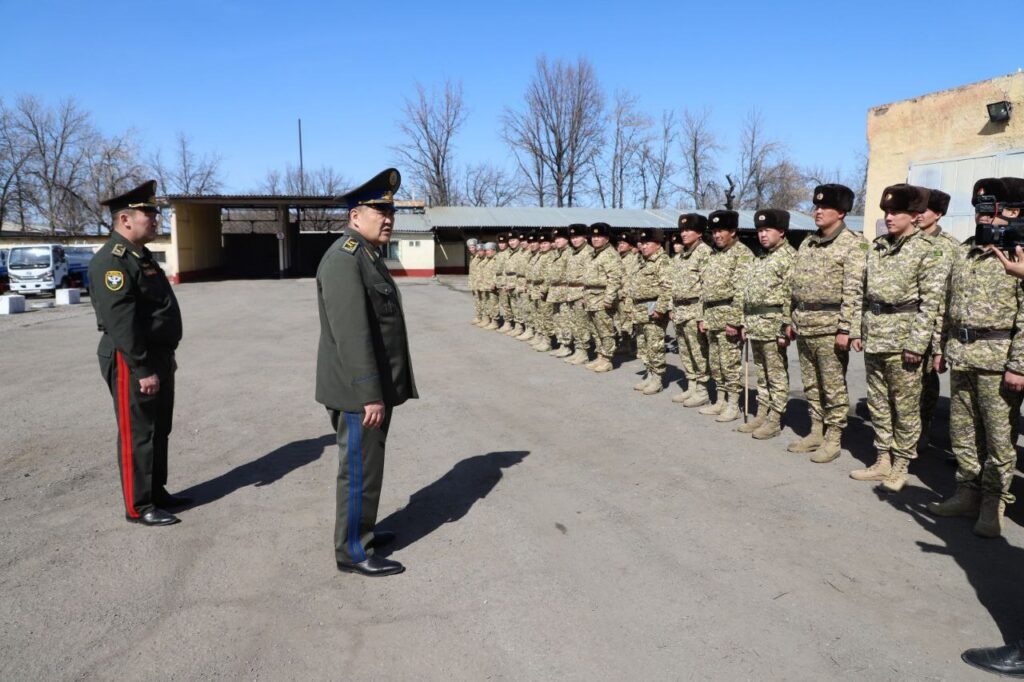
The head of Kyrgyzstan's National Security Service, Kamchybek Tashiyev, has commented that unless it is curbed, the country's already highly complex drug situation is likely to be beyond control within ten years. Speaking at a meeting with heads of Kyrgyzstan's police departments, Tashiyev said that the number of both drug distributers and drug users has soared recently, largely among people under 25, and growing drug abuse threatens to reduce the contribution that young Kyrgyz can make to the country. In a move to combat the problem, when evaluating the work of law enforcement agencies, their success in stopping drug trafficking will be factored in. Tashiyev admitted that 12 law enforcement officers have been found to have links to the drug mafia in the past year alone. According to operational data, drug traffickers have flourished in the online space, using modern technology -- even payment goes through electronic wallets. Tashiyev added: "Drugs which used to be [farmed] have now been replaced by synthetic drugs, and the number of laboratories manufacturing these drugs has increased. Substances are sourced from abroad and the drugs are then manufactured in our country." "If the drug situation in the country remains at the same level as it is now, our society will face a big problem in ten years at most. Therefore, all law enforcement agencies must begin a ruthless fight against those who distribute drugs. All measures within the law will be applied to such persons," Tashiyev emphasized. He demanded special control over schools, universities, nightclubs and cafes. Kyrgyzstan is considered a transit country for illegal drugs because of its close proximity to Afghanistan. The estimated number of people who use substances on a regular basis has reached 50,000.