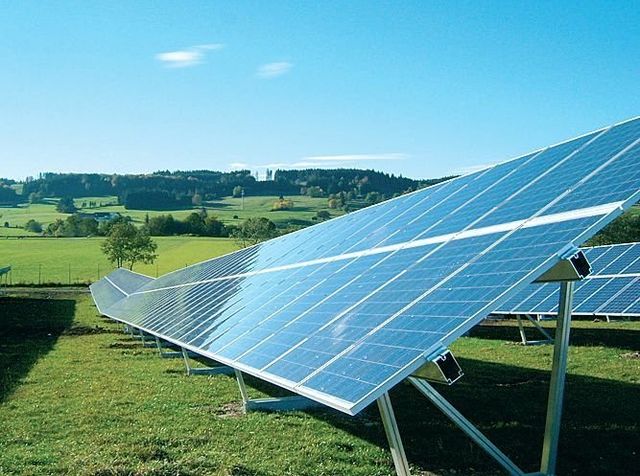
BISHKEK (TCA) — New solar-powered generating capacity is growing at a crackling pace in emerging markets including Central Asia. The growth is fuelled by low-priced equipment and innovative new applications that are expanding energy access for millions, Bloomberg New Energy Finance (BNEF) finds in a comprehensive new study of clean energy activity in key developing nations. A total of 34 gigawatts of new solar-power generating capacity came on line in 2016 in 71 emerging market countries studied by BNEF as part of its annual Climatescope survey, which was released at the BNEF Future of Energy Summit in Shanghai on November 28. That's up from 22 gigawatts in 2015 and 3 gigawatts as recently as 2011. Total cumulative solar capacity grew 54% year-on-year and has more than tripled in three years. Climatescope assesses 71 countries in emerging markets on their progress made towards the clean energy transition and reports on clean energy investment made in those countries. China accounted for the vast majority of this with 27 gigawatts added, by far the most of any country. But other nations saw strong growth as well. India added 4.2 gigawatts. Meanwhile, Brazil, Chile, Jordan, Mexico, and Pakistan and nine other nations all saw installed photovoltaic capacity double or more in 2016. Overall, solar accounted for 19% of all new generating capacity added in Climatescope countries last year, up from 10.6% in 2015 and 2% in 2011. This year, China remains the world's single largest market for clean energy development, but saw new asset (project) investment fall by $36.6 billion year-on-year. Seven of the top 10 ranked nations scored lower this year than in the prior survey. Brazil, Jordan, Mexico, India, South Africa, Chile, Kenya, Uruguay and Vietnam comprise the rest of the top 10. Kyrgyzstan Although occupying 59th place among 71 Climatescope countries, Kyrgyzstan is the second best ranking country in Central Asia mainly due to its value chain readiness. While lagging behind in component manufacturing, Kyrgyz companies are ready with services ranging from project development, engineering, to O&M services. The Kyrgyz government is rolling out smart energy meters in an effort to reduce its financial losses from power distribution. International donors including the KfW and World Bank are financing first phase of the program. Further, they are advising the government on communications strategy as the government fears social unrest that followed all previous attempts to increase energy tariffs, according to the report. In Kyrgyzstan, all parts of the power market are still almost 100% government owned. Most pressing is the need to bring more diversity into power generation, where only 4.6 MW is owned by independent power producers. While some domestic development and commercial finance is available, local clean energy projects have made a very limited use of it in Kyrgyzstan. The Kyrgyz government in cooperation with the EBRD is developing a new climate investment strategy. Newly established Climate Finance Secretariat will then oversee implementation of the program. Tajikistan The other success story comes from one of the most remote areas of Tajikistan....