
• KZT/USD = 0.00215
  • TJS/USD = 0.10800
  • UZS/USD = 0.00008
  • TMT/USD = 0.29850
  • KZT/USD = 0.00215
  • TJS/USD = 0.10800
  • UZS/USD = 0.00008
  • TMT/USD = 0.29850
  • KZT/USD = 0.00215
  • TJS/USD = 0.10800
  • UZS/USD = 0.00008
  • TMT/USD = 0.29850
  • KZT/USD = 0.00215
  • TJS/USD = 0.10800
  • UZS/USD = 0.00008
  • TMT/USD = 0.29850
  • KZT/USD = 0.00215
  • TJS/USD = 0.10800
  • UZS/USD = 0.00008
  • TMT/USD = 0.29850
  • KZT/USD = 0.00215
  • TJS/USD = 0.10800
  • UZS/USD = 0.00008
  • TMT/USD = 0.29850
  • KZT/USD = 0.00215
  • TJS/USD = 0.10800
  • UZS/USD = 0.00008
  • TMT/USD = 0.29850
  • KZT/USD = 0.00215
  • TJS/USD = 0.10800
  • UZS/USD = 0.00008
  • TMT/USD = 0.29850
16 August 2026

Viewing results 1 - 6 of 60

Korea Backs Kyrgyzstan’s Transition to Smart Electricity Metering

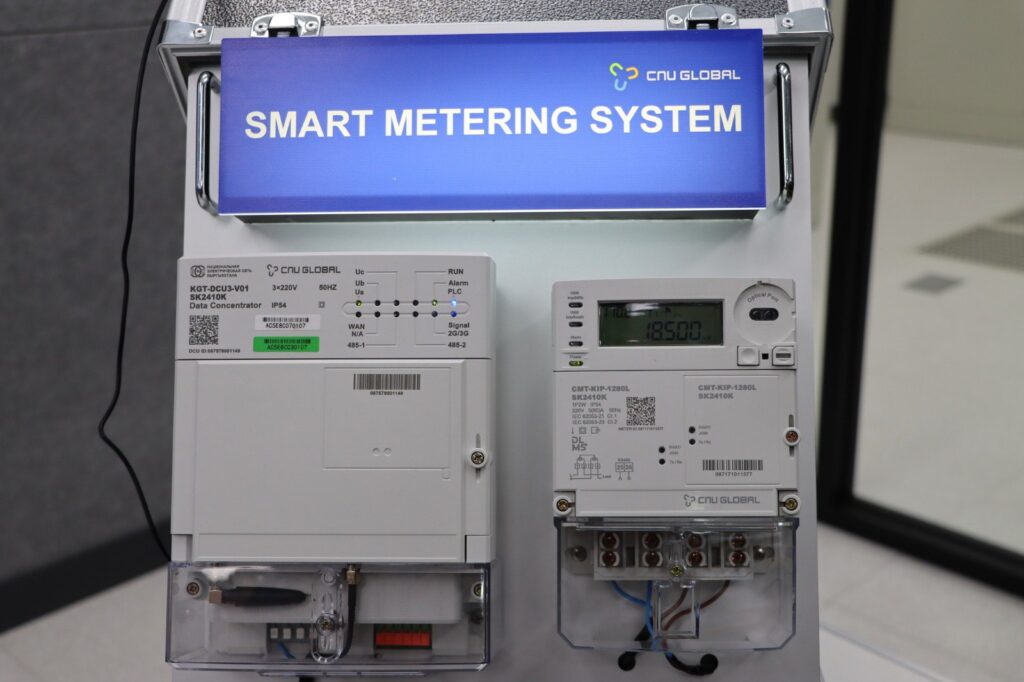
Kyrgyzstan’s Ministry of Energy, in partnership with the Korea International Cooperation Agency (KOICA), has completed the construction of a Centralized Advanced Metering Infrastructure (AMI) System Operation Center, a milestone in the country’s energy sector modernization. The completion ceremony, held last week, was attended by Kyrgyz Energy Minister Taalaibek Ibrayev, South Korean Ambassador Kim Kwang-jae, and KOICA Vice President Hong Seok-hwa. According to the Ministry of Energy, the project began in 2023 with KOICA’s support. The agency provided approximately $10.5 million and donated 10,779 smart electricity meters under a grant agreement. The new centralized system is designed to manage up to 1.5 million smart meters nationwide. “This ambitious project is the result of fruitful cooperation between the Kyrgyz Republic and the Republic of Korea,” said Minister Ibrayev. “Completion of the national Operation Center is a milestone in the digitalization of Kyrgyzstan’s energy sector. The Center will serve as a critical hub for managing the smart metering system, improving the reliability of electricity supply, enhancing distribution efficiency, ensuring billing transparency, reducing emergency shutdowns, and cutting power grid losses, an especially pressing need for our country.” Ambassador Kim echoed this sentiment: “Kyrgyzstan has great potential in the energy sector, and Korea is proud to contribute to its energy future with our experience and technology. We hope this project lays a foundation for data-driven energy policies and reduced energy losses.” Efficient electricity metering is vital for Kyrgyzstan, which suffers from recurring power shortages, particularly in winter. Although the country has the potential to produce up to 142 billion kilowatt-hours (kWh) annually, current production is just 14 billion kWh, roughly 10% of its hydropower capacity. Kyrgyzstan currently generates 3,450 megawatts of electricity, while demand has climbed to 3,600 megawatts. In 2024, national consumption reached 18.3 billion kWh, up 1.1 billion kWh from the previous year. To meet the shortfall, Kyrgyzstan imported 3.63 billion kWh of electricity, an increase of 141.7 million kWh compared to 2023.
Korean Universities Expand Cooperation with Kazakhstan

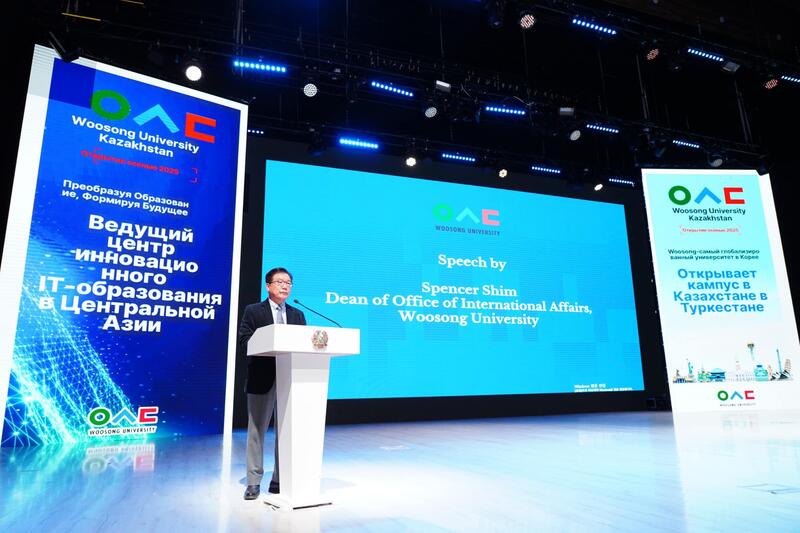
South Korea’s Woosong University is set to open its branch in Turkestan, Kazakhstan, before the start of the new academic year, according to Kazakhstan’s Minister of Science and Higher Education, Sayasat Nurbek. The announcement came during a meeting with South Korea’s Vice Minister of Education, Oh Seok Hwan, on April 28 in Almaty.  Construction of the university premises is currently underway. For the initial intake, Woosong University has allocated 110 scholarships, which will supplement academic grants provided by the Kazakh government. Strengthening Educational Ties During the meeting, Minister Nurbek highlighted several ongoing joint educational and scientific projects between Korean and Kazakhstani institutions: Dong-Eui University, one of South Korea’s leading mechanical engineering universities, is collaborating with Akhmet Baitursynov University to train mechanical engineers for automobile plants in Kostanay. Korkyt Ata University in Kyzylorda has launched dual-degree programs with Seoul National University of Science and Technology (SeoulTech). Satbayev University in Almaty is partnering with the Korea Advanced Institute of Science and Technology (KAIST) to establish a center for rare earth metals processing. According to Nurbek, the establishment of foreign university branches plays a crucial role in Kazakhstan’s ambition to become a regional hub for higher education and to further integrate into the global educational landscape. Vice Minister Oh Seok Hwan expressed confidence that Kazakhstan’s systemic approach and academic potential would ensure its leadership position in the Central Asian educational market. Following their meeting, Nurbek and Oh Seok Hwan attended the opening of the Study in Korea exhibition in Almaty, which featured participation from more than 30 Korean universities. Kazakhstan’s Expanding Educational Horizon Kazakhstan’s growing reputation as an academic hub is further evidenced by other international initiatives. As previously reported by The Times of Central Asia, the Moscow State Institute of International Relations (MGIMO), one of Russia’s top universities, will open a branch in Astana in September 2025.  Additionally, Cardiff University in Wales plans to launch a campus in Astana later this year, reinforcing the Kazakh capital’s rising status as a regional center for higher education. 

Bishkek Collaborates with KOICA and Seoul Institute on Sustainable Urban Transport Project

On March 11, Aibek Junushaliyev, Mayor of Bishkek, met with representatives from the Korea International Cooperation Agency (KOICA) and the Seoul Institute, an official think tank for South Korea’s capital, to discuss preparations for a project titled, Creating a Sustainable Urban Transport System to Achieve Carbon Neutrality in Bishkek. The initiative aims to reduce air pollution and improve the quality of life for Bishkek residents. According to the Bishkek municipality, KOICA representatives presented an implementation plan, while the Seoul Institute provided practical recommendations on integrating innovative transport technologies. The project’s key objectives include: Developing a long-term transport strategy for Bishkek, ensuring sustainable urban mobility Integrating modern technologies to optimize public transport routes, monitor traffic flows, and enhance efficiency through data analysis Improving accessibility and safety for all categories of users, including pedestrians and cyclists Engaging stakeholders, such as local communities, businesses, and NGOs, to ensure an inclusive and citizen-focused transport system Promoting environmental sustainability by introducing eco-friendly public transport and expanding pedestrian and cycling infrastructure Mayor Junushaliyev emphasized that the project’s success would not only modernize the city’s transport infrastructure but also enhance Bishkek’s environmental sustainability and investment appeal. Municipal transport remains a pressing issue in Kyrgyzstan’s rapidly growing capital. However, in recent years, Bishkek has taken steps to modernize its fleet, replacing older diesel-powered vehicles with larger, more eco-friendly buses running on liquefied petroleum gas (LPG).

Uzbek Citizen Purchases Luxury Apartment in Seoul for Over $5 Million in Cash

An Uzbek citizen has purchased a high-end apartment in Seoul, South Korea, for 7.4 billion won (approximately $5.09 million), according to a report by the Korean publication Choson Biz. The property is located in Banpo Xi, a prestigious residential complex in Banpo-dong, Seocho-gu, Seoul. With a dedicated area of 244 square meters, the apartment was sold at the highest recorded price for the complex, surpassing the previous record by 300 million won. The transaction took place in November last year. The buyer, a 41-year-old Uzbek national whose given address is in Tashkent and is identified only as "A", is registered under the “Korea-Uzbekistan Traditional Medicine Clinic” in Tashkent, a center that promotes traditional medicine and provides acupuncture training for Uzbek doctors. Official records indicate that the property transfer was registered on the 28th. Reports suggest that the buyer paid the full amount in cash, as no mortgage was listed on the property deed. Banpo Xi, a large residential complex with 3,410 units, is also home to several South Korean celebrities, including comedian Park Jun-hyung, Kim Ji-hye, and actress Yeo Jeong-a. The purchase comes amid a rising trend of foreign real estate investment in South Korea. As of June 2023, nearly 100,000 housing units in the country were owned by foreigners, according to the Ministry of Land, Infrastructure, and Transport. Chinese buyers lead the list, owning 52,798 units (55.5%), followed by U.S. nationals with 21,360 units (22.5%). Canadians hold 6,225 units (6.5%), while Taiwanese and Australians own 3,307 (3.5%) and 1,894 (2.0%) units, respectively.

Uzbekistan Approves Regular Flights from Malaysia, South Korea, and Egypt

Uzbekistan has approved regular flights for airlines from Malaysia, South Korea, and Egypt, the Civil Aviation Agency under the Ministry of Transport of Uzbekistan announced. Under an intergovernmental air services agreement between Uzbekistan and Malaysia, AirAsia X Berhad received approval on February 3, 2025, to operate regular flights between Kuala Lumpur and Tashkent. On the same day, South Korea’s T’way Air was also granted permission to launch regular flights on the Seoul-Tashkent-Seoul route under the Uzbekistan-South Korea air services agreement. Both AirAsia X Berhad and T’way Air will operate these flights using Airbus A330 aircraft. On February 4, Egypt’s Red Sea Airlines received approval to operate regular flights between Sharm el-Sheikh and Tashkent. This decision follows the Uzbekistan-Egypt air services agreement, and the airline will use Boeing 737 aircraft for these flights. Previously, The Times of Central Asia reported that Uzbekistan Airways altered its flight routes to Europe starting in January, bypassing Russian and Belarusian airspace. The airline’s press service stated that the decision was based on recommendations from the European Union Aviation Safety Agency (EASA), and was not related to the recent Azerbaijan Airlines crash.

Kyrgyzstan Builds National Center for Aquaculture and Fisheries Development

Construction of Kyrgyzstan’s National Center for the Development of Aquaculture and Fisheries is underway in the village of Bokonbaevo on the southern shore of Lake Issyk-Kul. The project is a joint initiative of the Kyrgyz Ministry of Water Resources, Agriculture, and Processing Industry and the Korea Maritime Institute. The center will provide training in fish farming technologies for farmers, students, and researchers. According to the ministry, a well has been drilled to a depth of 180 meters, and pumping equipment and water purification systems have been installed to supply water for the center’s incubation workshop. The facility is scheduled for completion by December 2026. It will include fish incubation workshops, laboratories, residential quarters, a canteen, and other necessary infrastructure. The center is designed to boost Kyrgyzstan’s fishing industry. Currently, the country produces about 30,000 tons of fish annually, of which only 5,000 tons are exported. However, experts estimate that Kyrgyzstan has the capacity to produce up to 105,000 tons and export 50,000 tons of fish. According to official statistics, in 2023, Kyrgyzstan produced 33,600 tons of fish and exported 5,556 tons of fish and fish products, mainly to Russia, Kazakhstan, Uzbekistan, and Lithuania. Fish farming in Kyrgyzstan, particularly trout production, is carried out in artificial ponds and fishery farms at lakes Issyk-Kul and Son-Kul.
