• KGS/USD = 0.01143 0%
  • KZT/USD = 0.00205 0%
  • TJS/USD = 0.10724 0.09%
  • UZS/USD = 0.00008 0%
  • TMT/USD = 0.28571 0%
  • KGS/USD = 0.01143 0%
  • KZT/USD = 0.00205 0%
  • TJS/USD = 0.10724 0.09%
  • UZS/USD = 0.00008 0%
  • TMT/USD = 0.28571 0%
  • KGS/USD = 0.01143 0%
  • KZT/USD = 0.00205 0%
  • TJS/USD = 0.10724 0.09%
  • UZS/USD = 0.00008 0%
  • TMT/USD = 0.28571 0%
  • KGS/USD = 0.01143 0%
  • KZT/USD = 0.00205 0%
  • TJS/USD = 0.10724 0.09%
  • UZS/USD = 0.00008 0%
  • TMT/USD = 0.28571 0%
  • KGS/USD = 0.01143 0%
  • KZT/USD = 0.00205 0%
  • TJS/USD = 0.10724 0.09%
  • UZS/USD = 0.00008 0%
  • TMT/USD = 0.28571 0%
  • KGS/USD = 0.01143 0%
  • KZT/USD = 0.00205 0%
  • TJS/USD = 0.10724 0.09%
  • UZS/USD = 0.00008 0%
  • TMT/USD = 0.28571 0%
  • KGS/USD = 0.01143 0%
  • KZT/USD = 0.00205 0%
  • TJS/USD = 0.10724 0.09%
  • UZS/USD = 0.00008 0%
  • TMT/USD = 0.28571 0%
  • KGS/USD = 0.01143 0%
  • KZT/USD = 0.00205 0%
  • TJS/USD = 0.10724 0.09%
  • UZS/USD = 0.00008 0%
  • TMT/USD = 0.28571 0%

Viewing results 1 - 6 of 72

South Korean Firm to Launch EV Charging Station Production in Kyrgyzstan

A new partnership between Kyrgyz and South Korean stakeholders aims to bring electric vehicle (EV) charging station manufacturing to Kyrgyzstan. The Public-Private Partnership Center under the National Investment Agency of Kyrgyzstan, OJSC Chakan HPP, and South Korea’s BLUE NETWORKS CO., LTD., a company specializing in EV charging infrastructure, have signed a memorandum of cooperation to jointly implement the project. The agreement, reached under a public-private partnership (PPP) framework, outlines plans to establish a local manufacturing facility and roll out a nationwide EV charging network in major cities and regions across the country. According to the PPP Center, the initiative is designed to support sustainable and environmentally friendly transport infrastructure, localize high-tech production, and create new employment opportunities. It also reflects Kyrgyzstan’s broader goals of modernizing its energy and transport sectors and strengthening international cooperation in green technologies. In a related move, Kyrgyzstan’s Ministry of Economy and Commerce signed a memorandum of understanding in June with South Korean firms EVSIS, NGS, and the Korea Automobile Environment Association. That agreement focuses on developing EV charging infrastructure in Bishkek. The broader partnership also includes plans to collaborate with the Kyrgyz State Technical University to offer technical training and internship programs. Emphasis will be placed on building local expertise through industry-academic cooperation, particularly in the operation and maintenance of EV charging networks. The aim is to support the employment of young professionals and foster sustainable growth in the green tech sector. These initiatives are aligned with the Kyrgyz government’s strategy to promote eco-friendly transport alternatives and reduce air pollution in Bishkek and other major urban centers.

South Korean Firm to Invest Up to $3.1 Billion in Green Hydrogen Project in Kazakhstan

South Korea’s YPP Corporation is set to invest up to $3.1 billion in a large-scale green hydrogen and ammonia production facility in Kazakhstan, following the signing of a framework agreement with the national investment promotion agency, Kazakh Invest. The agreement was signed on July 15 by Azamat Kozhanov, Deputy Chairman of Kazakh Invest, and John M. Bek, Chairman of the Board at YPP Corporation (Your Permanent Partner), an engineering and energy firm based in South Korea. According to Kazakh Invest, the "Green Energy Complex" aims to establish a full-cycle production chain for green hydrogen and ammonia powered by renewable energy. The project includes the construction of solar and wind power plants with a combined capacity of up to 2 gigawatts, along with electrolysis systems and ammonia synthesis units. Annual output is projected at up to 75,000 tons of green hydrogen and 310,000 tons of green ammonia. While most of the output will be exported, a portion will be used domestically. The facility will also include supporting infrastructure such as energy storage systems, logistics and water supply networks, and potential integration into Kazakhstan’s heat and power systems, particularly in the Almaty region. “This project fully aligns with Kazakhstan’s long-term energy strategy and our ambition to become a key player in green hydrogen,” said Kozhanov. “Kazakhstan’s renewable energy potential is estimated at 1,820 billion kWh from wind and 2.5 billion kWh from solar annually. Global interest in developing green energy here is growing steadily.” YPP founder John M. Bek cited Kazakhstan’s favorable geography and investment climate. “We see Kazakhstan as a strategic partner and are committed to implementing a project that brings together Korea’s advanced technology and global best practices in sustainable energy,” he said. The agreement paves the way for the next phase of development, including a detailed investment model, regulatory approvals, and potential partnerships with major offtakers such as Samsung C&T.

South Korea to Support Electric Transport Infrastructure Development in Bishkek

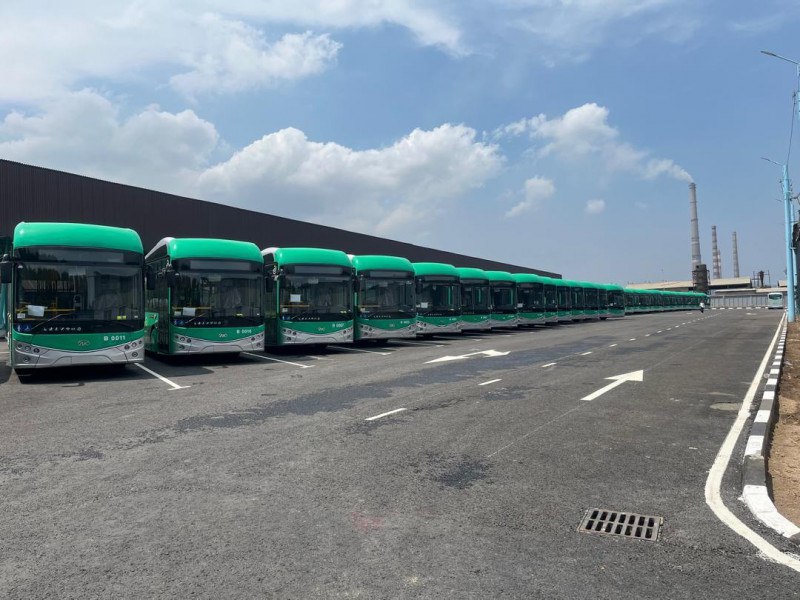
South Korean companies will assist Bishkek in building a modern charging infrastructure for electric public transport, following agreements reached between Kyrgyz Deputy Minister of Economy and Trade Sanzhar Bolotov and representatives of the Korea Environmental Transport Association, along with several private firms. The collaboration aims to jointly develop, implement, and operate a state-of-the-art network of charging stations for electric buses in the Kyrgyz capital. It also includes the introduction of improved environmental practices. “The South Korean side expressed its readiness not only to help with infrastructure, but also to transfer to Bishkek expert knowledge and technology in the field of eco-friendly transport, as well as to conduct extensive information campaigns to promote electric transport among the population,” the Kyrgyz Ministry of Economy and Trade stated. The agreement also encompasses a range of environmental initiatives. South Korean experts will assist Bishkek in improving air quality and reducing carbon emissions, critical objectives for a city frequently plagued by severe air pollution, particularly in the autumn and winter months. An important component of the agreement is the training of young specialists in South Korea. “Particular attention will be paid to the formation of a system of interaction between industry and the academic community, which will ensure the employment of trained specialists and the development of local expertise in the field of charging infrastructure operation,” the ministry added. Bishkek has pursued a consistent strategy of replacing traditional public transport with electric alternatives. Initially, the city phased out route taxis, replacing them with buses powered by gas and petrol. More recently, city authorities purchased 120 electric buses manufactured in China, with some units already delivered, through a project in collaboration with the Asian Development Bank. Concurrently, the city has begun phasing out its aging trolleybus fleet, a move that has sparked public debate. The infrastructure previously used for trolleybuses is being repurposed for the electric bus network. However, the process has faced delays, and several tenders for modifying the existing contact network have been cancelled. Starting in 2025, the popular Ala-Archa Nature Park will ban entry for vehicles with internal combustion engines. Tourists will be transported exclusively by municipal electric buses or allowed to use their own electric vehicles.

Kazakhstan’s Nuclear Diplomacy – With China Set to Build Second, Who Will Construct Third Nuclear Power Plant?

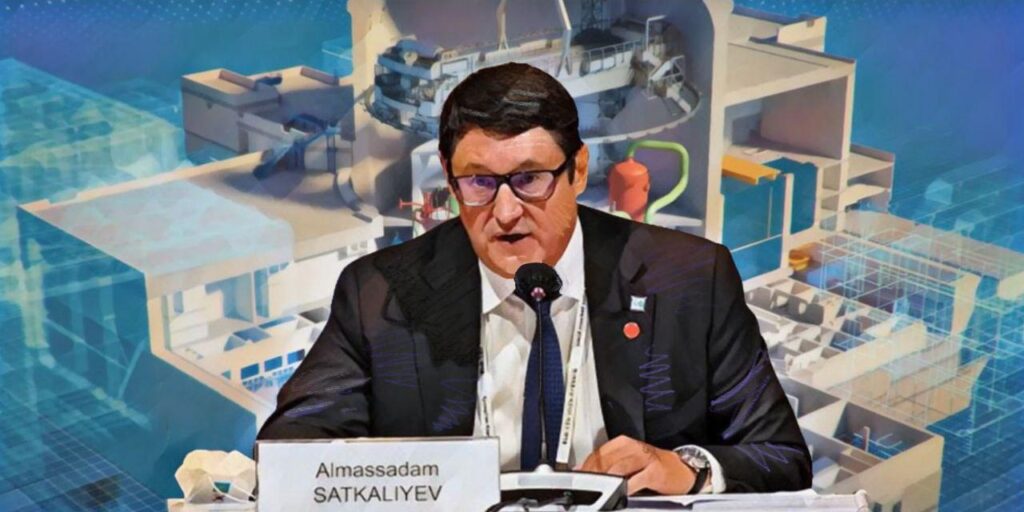
Kazakhstan’s famed hospitality, long enshrined in its national proverbs, has also become a guiding principle in its foreign policy. One recent example is the Kazakh government’s diplomatic maneuvering in the selection of partners for its nuclear power program. Leader of the Race Initially, Kazakhstan planned to build a single nuclear power plant by 2035 to address potential electricity shortages. However, following the October 6, 2024, referendum, where 71.12% of voters approved a plant in the Almaty Region, President Kassym-Jomart Tokayev instructed the government to explore the construction of at least two additional facilities. This directive, as it turns out, was both timely and strategic. In March 2025, the newly formed Atomic Energy Agency, reporting directly to the president, was tasked with overseeing the selection of international consortium leaders. On June 14, the agency announced that Russia’s state-owned Rosatom would lead the consortium to build Kazakhstan’s first nuclear power plant. Rosatom CEO Alexey Likhachev welcomed the decision, stating that the VVER-1200 Generation 3+ reactors, already operating in Russia and Belarus and selected by partners in Hungary, Egypt, Turkey, Bangladesh, and China, would be used. These reactors, he emphasized, meet international safety standards and integrate both active and passive safety systems. Tricks Up Their Sleeves Behind the scenes, the selection process revealed a quiet tug-of-war between Chinese and Russian interests. Ultimately, Rosatom prevailed, thanks, in part, to two strategic moves. First, Rosatom’s supporters enlisted Assystem, an ostensibly independent nuclear engineering consultancy, to assist Kazakhstan Atomic Power Plants LLP in the evaluation process. The firm’s analysis favored Rosatom. Second, to pre-empt concerns about Western sanctions, the Kazakh authorities emphasized that Kazakhstan would be the sole owner and operator of the facility. Atomic Energy Agency head Almasadam Satkaliev stated that Kazakhstan would control the entire production cycle from uranium mining to fuel processing and plant maintenance, thereby limiting direct Russian involvement post-construction. This arrangement may allow the creation of a Kazakh legal entity immune to Western sanctions, as it would be wholly state-owned. Whether this could offer Rosatom a loophole for acquiring restricted components remains an open question but one that few may press given the global interest in nuclear safety. Another Contender Emerges Just hours after Rosatom’s contract was announced, Satkaliev made a second, equally strategic statement: China National Nuclear Corporation (CNNC) would lead the construction of Kazakhstan’s second nuclear power plant. Satkaliev cited CNNC’s “strongest proposals” and revealed plans for a broader agreement on nuclear cooperation with China. “Objectively, few countries can master the entire nuclear cycle. China is one of them,” Satkaliev noted. Back in February, prior to the agency’s creation, Kazakhstan’s Ministry of Energy, then also led by Satkaliev, had identified Kurchatov and Aktau as potential sites for future nuclear facilities. Kurchatov lies near the former Semipalatinsk nuclear test site, while Aktau once hosted the Soviet-era BN-350 fast neutron reactor. The timing of Satkaliev’s announcement is no coincidence. Chinese President Xi Jinping is scheduled to visit Kazakhstan on June 16 for the second China-Central Asia Summit. For a nation that...

Korea Backs Kyrgyzstan’s Transition to Smart Electricity Metering

Kyrgyzstan’s Ministry of Energy, in partnership with the Korea International Cooperation Agency (KOICA), has completed the construction of a Centralized Advanced Metering Infrastructure (AMI) System Operation Center, a milestone in the country’s energy sector modernization. The completion ceremony, held last week, was attended by Kyrgyz Energy Minister Taalaibek Ibrayev, South Korean Ambassador Kim Kwang-jae, and KOICA Vice President Hong Seok-hwa. According to the Ministry of Energy, the project began in 2023 with KOICA’s support. The agency provided approximately $10.5 million and donated 10,779 smart electricity meters under a grant agreement. The new centralized system is designed to manage up to 1.5 million smart meters nationwide. “This ambitious project is the result of fruitful cooperation between the Kyrgyz Republic and the Republic of Korea,” said Minister Ibrayev. “Completion of the national Operation Center is a milestone in the digitalization of Kyrgyzstan’s energy sector. The Center will serve as a critical hub for managing the smart metering system, improving the reliability of electricity supply, enhancing distribution efficiency, ensuring billing transparency, reducing emergency shutdowns, and cutting power grid losses, an especially pressing need for our country.” Ambassador Kim echoed this sentiment: “Kyrgyzstan has great potential in the energy sector, and Korea is proud to contribute to its energy future with our experience and technology. We hope this project lays a foundation for data-driven energy policies and reduced energy losses.” Efficient electricity metering is vital for Kyrgyzstan, which suffers from recurring power shortages, particularly in winter. Although the country has the potential to produce up to 142 billion kilowatt-hours (kWh) annually, current production is just 14 billion kWh, roughly 10% of its hydropower capacity. Kyrgyzstan currently generates 3,450 megawatts of electricity, while demand has climbed to 3,600 megawatts. In 2024, national consumption reached 18.3 billion kWh, up 1.1 billion kWh from the previous year. To meet the shortfall, Kyrgyzstan imported 3.63 billion kWh of electricity, an increase of 141.7 million kWh compared to 2023.

Korean Universities Expand Cooperation with Kazakhstan

South Korea’s Woosong University is set to open its branch in Turkestan, Kazakhstan, before the start of the new academic year, according to Kazakhstan’s Minister of Science and Higher Education, Sayasat Nurbek. The announcement came during a meeting with South Korea’s Vice Minister of Education, Oh Seok Hwan, on April 28 in Almaty.  Construction of the university premises is currently underway. For the initial intake, Woosong University has allocated 110 scholarships, which will supplement academic grants provided by the Kazakh government. Strengthening Educational Ties During the meeting, Minister Nurbek highlighted several ongoing joint educational and scientific projects between Korean and Kazakhstani institutions: Dong-Eui University, one of South Korea’s leading mechanical engineering universities, is collaborating with Akhmet Baitursynov University to train mechanical engineers for automobile plants in Kostanay. Korkyt Ata University in Kyzylorda has launched dual-degree programs with Seoul National University of Science and Technology (SeoulTech). Satbayev University in Almaty is partnering with the Korea Advanced Institute of Science and Technology (KAIST) to establish a center for rare earth metals processing. According to Nurbek, the establishment of foreign university branches plays a crucial role in Kazakhstan’s ambition to become a regional hub for higher education and to further integrate into the global educational landscape. Vice Minister Oh Seok Hwan expressed confidence that Kazakhstan’s systemic approach and academic potential would ensure its leadership position in the Central Asian educational market. Following their meeting, Nurbek and Oh Seok Hwan attended the opening of the Study in Korea exhibition in Almaty, which featured participation from more than 30 Korean universities. Kazakhstan’s Expanding Educational Horizon Kazakhstan’s growing reputation as an academic hub is further evidenced by other international initiatives. As previously reported by The Times of Central Asia, the Moscow State Institute of International Relations (MGIMO), one of Russia’s top universities, will open a branch in Astana in September 2025.  Additionally, Cardiff University in Wales plans to launch a campus in Astana later this year, reinforcing the Kazakh capital’s rising status as a regional center for higher education.