• KGS/USD = 0.01144 0%
  • KZT/USD = 0.00198 -0%
  • TJS/USD = 0.10903 0.18%
  • UZS/USD = 0.00008 0%
  • TMT/USD = 0.28571 0%
  • KGS/USD = 0.01144 0%
  • KZT/USD = 0.00198 -0%
  • TJS/USD = 0.10903 0.18%
  • UZS/USD = 0.00008 0%
  • TMT/USD = 0.28571 0%
  • KGS/USD = 0.01144 0%
  • KZT/USD = 0.00198 -0%
  • TJS/USD = 0.10903 0.18%
  • UZS/USD = 0.00008 0%
  • TMT/USD = 0.28571 0%
  • KGS/USD = 0.01144 0%
  • KZT/USD = 0.00198 -0%
  • TJS/USD = 0.10903 0.18%
  • UZS/USD = 0.00008 0%
  • TMT/USD = 0.28571 0%
  • KGS/USD = 0.01144 0%
  • KZT/USD = 0.00198 -0%
  • TJS/USD = 0.10903 0.18%
  • UZS/USD = 0.00008 0%
  • TMT/USD = 0.28571 0%
  • KGS/USD = 0.01144 0%
  • KZT/USD = 0.00198 -0%
  • TJS/USD = 0.10903 0.18%
  • UZS/USD = 0.00008 0%
  • TMT/USD = 0.28571 0%
  • KGS/USD = 0.01144 0%
  • KZT/USD = 0.00198 -0%
  • TJS/USD = 0.10903 0.18%
  • UZS/USD = 0.00008 0%
  • TMT/USD = 0.28571 0%
  • KGS/USD = 0.01144 0%
  • KZT/USD = 0.00198 -0%
  • TJS/USD = 0.10903 0.18%
  • UZS/USD = 0.00008 0%
  • TMT/USD = 0.28571 0%
05 December 2025

Viewing results 1 - 6 of 33

Aliyev, Tokayev Pledge Deeper Cooperation as Azerbaijan Lifts Armenia Transit Ban

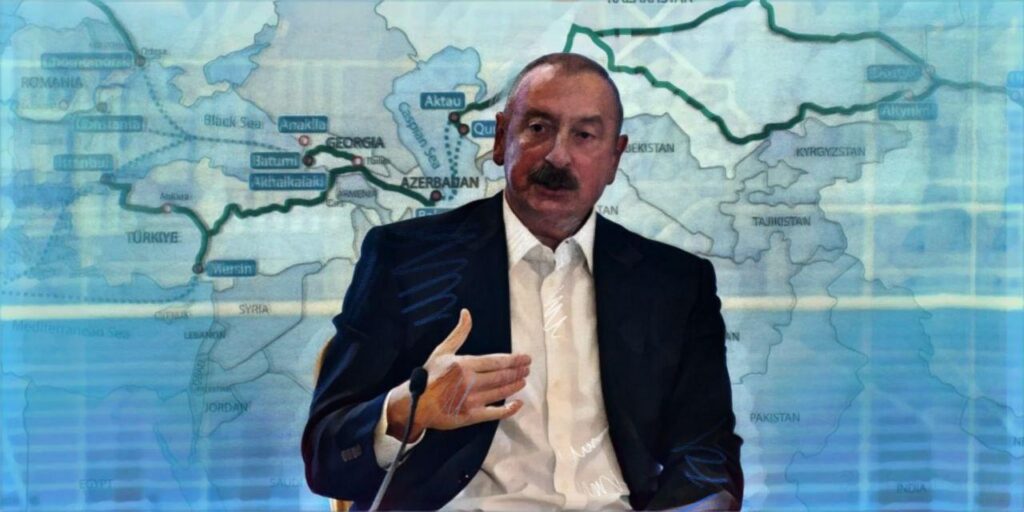
Azerbaijan’s President Ilham Aliyev began a state visit to Kazakhstan on Monday with a series of high-level meetings and a significant policy shift: Baku is lifting all restrictions on the transit of goods to Armenia. The move, announced during joint talks with Kazakh President Kassym-Jomart Tokayev in Astana, is one of the most concrete regional gestures since the end of the Second Karabakh War. The visit began with an official welcoming ceremony at Akorda Presidential Palace in Astana, where Presidents Kassym-Jomart Tokayev and Ilham Aliyev reviewed an honor guard before holding bilateral talks and chairing the second meeting of the Kazakhstan–Azerbaijan Supreme Intergovernmental Council. Speaking at a joint press briefing after the meeting, Aliyev confirmed that, “All restrictions on the transit of goods from Azerbaijan to Armenia and from third countries to Armenia through Azerbaijan have been lifted.” While no formal agreement was signed on Monday, the announcement is being viewed as a confidence-building measure at a moment of cautious diplomacy in the South Caucasus. Tokayev welcomed the development and stressed the importance of expanding cooperation between Kazakhstan and Azerbaijan in key sectors such as transport and energy. Ties on a Strategic Track Aliyev’s visit comes as Kazakhstan and Azerbaijan are expanding cooperation in multiple areas, including rail, ports, digital infrastructure, and energy. Monday’s talks produced several new accords and project announcements, including commitments to expand freight flows along the Trans-Caspian International Transport Route (Middle Corridor) - a logistics network connecting China to Europe via Central Asia, the Caspian Sea, and the South Caucasus. Since Russia’s 2022 invasion of Ukraine upended established overland trade routes, the corridor’s importance has surged, with Astana and Baku positioning themselves as key actors in a reconfigured Eurasian logistics network that bypasses Russian territory. In his welcoming address, Tokayev framed Aliyev’s state visit as of “critically important significance for the further development of our strategic partnership.” Tokayev described the relationship as “allied in nature,” calling Azerbaijan “a regional power that has strengthened its authority on the international stage.” He emphasized that developing multifaceted cooperation “remains a priority” and highlighted trade, economic, and political partnership as key goals. “Azerbaijan is a special country for Kazakhstan, a fraternal state,” Tokayev stated. “We are united by common historical roots, a rich spiritual and cultural heritage, and, ultimately, a shared mentality and outlook on developments. On this unshakable foundation, we are successfully developing our multifaceted cooperation.” Aliyev, in turn, praised Kazakhstan’s ongoing political and economic reforms, saying his country “fully supports [Tokayev’s] course of modernization” and is aiming to “strengthen cooperation in all areas” In a related development, Azerbaijan’s state energy firm SOCAR and Kazakhstan’s sovereign wealth fund Samruk-Kazyna are expected to deepen their collaboration in upstream energy projects and petrochemical exports, though no new energy deals were signed on Monday. Transit Opening to Armenia: Why Now? Aliyev’s announcement on transit restrictions - made in Astana, not Baku - was notable not just for its content, but its timing and setting. Since the end of the 2020 Second Karabakh...

Uzbekistan Jordan Relations Advance with Landmark State Visit

King Abdullah II of Jordan paid a state visit to Uzbekistan on August 25-26 at the invitation of President Shavkat Mirziyoyev. The visit, his first since the establishment of diplomatic relations, marked a milestone in bilateral ties and culminated in the signing of 15 agreements spanning politics, trade, investment, education, and culture. A Historic Visit with Symbolic and Strategic Weight Mirziyoyev welcomed King Abdullah with full ceremonial honors in Samarkand, including flag displays, a guard of honor, and performances of national songs and dances. The leaders visited prominent cultural sites, including the Shah-i-Zinda complex, Amir Temur’s mausoleum, and Registan Square, where the Jordanian monarch received an overview of Uzbekistan’s rich historical heritage. King Abdullah also visited the tomb of Qutham ibn al-ʿAbbas, a revered early Islamic preacher in Samarkand. The Jordanian delegation toured the “Eternal City” cultural park, which showcases Uzbekistan’s traditional crafts, architecture, and customs. Expanding Economic and Diplomatic Cooperation The official program commenced on August 26 at the Congress Center in Samarkand. Following the ceremonial welcome, the leaders visited an exhibition of Uzbekistan’s export-oriented products. The showcase featured a range of goods from key industries such as pharmaceuticals, chemicals, mining, textiles, agriculture, IT, and jewelry. King Abdullah praised Uzbekistan’s industrial development and called for increased business-to-business collaboration. During bilateral talks, the two sides agreed to elevate their relationship to a comprehensive partnership. Discussions focused on expanding political dialogue, boosting trade and investment, and strengthening cooperation in science, education, tourism, and culture. To formalize the partnership, the two countries agreed to establish a joint intergovernmental commission and a business council by the end of the year, and to convene an Uzbek-Jordanian business forum. They also outlined plans for cooperation in smart agriculture, geology, healthcare, and the textile industry. Broad-Based Agreements and International Alignment Fifteen agreements and memoranda were signed during the visit, including: An extradition treaty A bilateral investment promotion agreement A visa waiver agreement Cooperation protocols in higher education, scientific research, agriculture, veterinary medicine, tourism, and standardization The two leaders also reiterated their commitment to close coordination within international organizations, including the United Nations and the Organization of Islamic Cooperation. Honoring Partnership and Future Prospects In recognition of his role in strengthening bilateral ties, Mirziyoyev was awarded Jordan’s highest state honor, the Order of Al Nahda (“Renaissance”), presented personally by King Abdullah II. “I accept this award with great honor, as a recognition of our joint efforts to expand multifaceted cooperation and a sign of friendship and respect for the people of Uzbekistan, who are laying the foundations for the Third Renaissance in our country,” Mirziyoyev said. The visit concluded with a joint statement and mutual invitations for future high-level exchanges, reaffirming both countries’ shared ambition to elevate Uzbekistan-Jordan relations to a new strategic level.

Jordan’s King Abdullah II Departs for Uzbekistan and Kazakhstan

At the invitation of President Shavkat Mirziyoyev, King Abdullah II departed earlier today for a state visit to Uzbekistan spanning 25–26 August, with the main events to be held in Samarkand. The King will then continue to Kazakhstan for an official visit on 26–27 August. In Samarkand, King Abdullah II and President Mirziyoyev are expected to review political dialogue, trade and investment, agriculture and food security, education, tourism, and transport connectivity. Uzbek media report that several cooperation documents are slated for signature, underscoring Samarkand’s growing role as a diplomatic venue for Central Asia. In Astana, the King will meet President Kassym-Jomart Tokayev and attend events designed to expand commercial ties. The authorities in Astana have announced traffic curbs tied to the visit, a signal that a tightly choreographed official program is imminent. Kazakh media have framed the stop as part of a broader effort to deepen links with Middle Eastern partners at a time when Kazakhstan is diversifying export routes and courting investment from the Levant and Gulf. According to the official website of the President of the Republic of Kazakhstan, “high-level negotiations will be held aimed at further strengthening Kazakh-Jordanian cooperation in the trade, economic, cultural and humanitarian spheres.” The two visits fit into Jordan’s long-running outreach to Central Asia. Diplomatic relations with the region’s states date back to the 1990s, and Amman has increasingly paired political dialogue with practical economic initiatives. For Uzbekistan, officials have been looking to scale up a cordial relationship into more structured cooperation, and the Samarkand setting gives both sides a stage to announce concrete timelines for working groups or ministerial roadmaps. For Kazakhstan, Jordan is positioning itself as a mid-market gateway to the Levant and the Gulf, complementing Astana’s drive to build partnerships that can open new consumer markets, source medical-pharma products, and expand educational and tourism flows. Beyond Uzbekistan and Kazakhstan, Jordan’s engagement with Central Asia has emphasized areas where Amman brings specific comparative advantages. Jordan’s experience in water management and desert agriculture aligns with Central Asian priorities on climate resilience and efficient irrigation; its halal and medical-pharma sectors appeal to governments seeking to diversify imports; and its universities offer English- and Arabic-language programs that can deepen people-to-people links. Following the visits, observers will look for intergovernmental agreements that move beyond generalities, whether in health and pharmaceuticals, food supply chains, tourism promotion, or student exchanges. Aviation and cargo-handling announcements would be early evidence of a more durable commercial bridge, while references to streamlined customs procedures or mutual recognition in standards could make a material difference for small and mid-sized exporters on both sides. As Central Asia is recalibrating connectivity amid sanctions frictions and supply-chain shocks, Middle Eastern partners are seeking new sources of food, energy inputs, and investable projects with predictable regulatory environments. The two-country tour could, therefore, touch upon both sides' requirements, with Jordan’s looking to move its Central Asia policy from exploratory diplomacy to delivery.

Armenia’s PM to Visit Kazakhstan Amid Historic Peace Breakthrough and Economic Opportunities

Astana is preparing to host Armenian Prime Minister Nikol Pashinyan on an official visit scheduled for late 2025. On August 12, President Kassym-Jomart Tokayev had a call with Pashinyan, during which, according to an official statement, he praised the "outstanding qualities" of the Armenian Prime Minister, "as a politician with strong political will and a strategic vision of the national interests of his state." The forthcoming trip follows what U.S. Secretary of State Marco Rubio described as "the beginning of a peace deal" between Armenia and Azerbaijan, which was signed in Washington, D.C. on August 8, 2025, marking a pivotal moment in the South Caucasus after decades of conflict. At the White House, Pashinyan and Azerbaijani President Ilham Aliyev signed a framework pledging to respect each other’s territorial integrity, renounce the use of force, and dissolve the long-standing OSCE Minsk Group mediation format. The agreement also approved the creation of a major transit corridor — dubbed the Trump Route for International Peace and Prosperity (TRIPP) — linking Azerbaijan’s mainland to its exclave of Nakhchivan via Armenian territory. Kazakh President Kassym-Jomart Tokayev welcomed the accord as a “historic achievement” that not only ends a decades-long military standoff but also creates space for a deeper regional economic and diplomatic reset. In recent talks, Pashinyan briefed Tokayev on the details of the framework, the decision to dissolve the Minsk Group, and the TRIPP initiative. Both leaders emphasized the potential for new investment opportunities emerging from the stability the deal promises to bring and agreed to maintain an active political dialogue. For Kazakhstan, the visit reinforces its positioning as a neutral mediator between Eurasian powers, willing to offer diplomatic platforms for peace talks. In May 2024, Astana hosted ministerial-level Armenia–Azerbaijan negotiations in Almaty. With the TRIPP corridor set to enhance connectivity across the South Caucasus, Kazakhstan’s role in facilitating regional integration could expand beyond mediation into infrastructure, trade, and energy cooperation. Economically, the corridor offers Armenia new opportunities to become a transit hub between Central Asia and Europe, while Kazakhstan could benefit from more direct westward routes for its exports. Previous bilateral meetings have already laid the groundwork for business forums and joint initiatives in transport, technology, and investment, and the visit could provide the political momentum needed to bring these plans to fruition. Challenges remain, however. In Armenia, nationalist factions have criticized the peace deal, with border demarcation and the fallout from the Second Nagorno-Karabakh War remaining sensitive issues. Iran has also expressed opposition to the TRIPP corridor, citing concerns over shifting regional influence. Yet both Yerevan and Astana appear determined to use the current diplomatic window to solidify long-term cooperation. As the South Caucasus recalibrates, Pashinyan’s upcoming visit to Astana will test whether the political optimism generated in Washington can translate into tangible projects. For Kazakhstan, this presents an opportunity to deepen bilateral ties, demonstrate its growing influence as a stabilizing force, and secure a stake in the region’s new economic and geopolitical landscape.

Steppe Diplomacy: Mongolia Deepens Central Asia Ties

Late on July 20th, the President of Mongolia, Ukhnaagiin Khürelsükh, touched down in Bishkek as part of a two-day state visit to Kyrgyzstan. It forms part of Khürelsükh’s wider Central Asian tour, with the President set to fly to Dushanbe following his sojourn in the Kyrgyz capital. The trip builds on Kyrgyz President Sadyr Japarov’s 2023 visit to Ulaanbaatar, where he oversaw the opening of Kyrgyzstan’s first embassy in Mongolia and toured the Genghis Khan Museum in the capital. A warm greeting Khürelsükh was welcomed by Japarov on the red carpet at Manas International Airport, where traditional dances, music, and even a ceremonial eagle were laid on. The pair greeted each other like old friends before the motorcade swept along the empty roads towards the city. Like Japarov, Khürelsükh has been president since 2021, although, unlike his Kyrgyz counterpart, his role is largely ceremonial. Indeed, current Mongolian politics offers a hint of nostalgia to those in Kyrgyzstan with fond memories of the pre-Japarov era. In June, the Mongolian Prime Minister was forced to resign after losing a vote of confidence in the country’s parliament. This followed months of protests after press reports covering his son’s extravagant spending. The second day of the visit afforded Japarov the chance to play to statesman-like host and welcome a new visitor to the Presidential Palace – the Yntymak Ordo – which is still less than a year old. With temperatures hitting 37°C (98° Fahrenheit) in the Kyrgyz capital, the Mongolian leader arrived at the palace in a blacked-out Mercedes, flanked by a horse-mounted honor guard. The besuited leaders then stood in the baking sunshine to receive a military salute from Kyrgyzstan’s army. A burgeoning friendship Perhaps the scale of the pomp masks the limits of what can be achieved bilaterally. Iskander Sharsheyev, an independent Kyrgyz economist, was keen to stress to The Times of Central Asia that the leaders did achieve some breakthroughs in terms of agriculture: “Veterinary certificates were signed... This provides a new market for Kyrgyz producers. Kyrgyzstan and Mongolia signed a memorandum of cooperation in the field of wool processing, including cashmere. Mongolia is one of the world leaders in cashmere production, and the transfer of technology and training of specialists can dramatically improve the Kyrgyz textile sector.” However, real announcements were thin on the ground and the language of diplomacy was heavy with blandishments: “We strive to develop mutually beneficial cooperation in all areas, especially in the trade and economic sphere,” said Khürelsükh, while Japarov noted that “comprehensive cooperation with Mongolia is one of the priority areas of the development of Kyrgyzstan's foreign policy.” The question is whether there is any substance behind this. Economically, the numbers are hardly going to move the dial. In the first five months of this year, Kyrgyzstan exported $3.1 million worth of goods to Mongolia, much of it confectioneries. Mongolian exports in the other direction are even lower. While officials are trumpeting the rate of growth, which tripled in 2024, it’s worth having a...

Kyrgyz President Visits Tajikistan, Opening New Era of Friendship

Kyrgyzstan’s President Sadyr Japarov just concluded a two-day visit to Tajikistan. Rarely has the visit of one Central Asian leader to another Central Asian country been as welcome as Japarov’s trip to Tajikistan was. The two countries engaged in brief, but intense and devastating conflicts in late April 2021 and mid-September 2022, the only clashes between the militaries of the two Central Asian countries since the five Central Asian states became independent in late 1991. Judging by Japarov’s warm reception in the Tajik capital Dushanbe, the worst of times have passed in Kyrgyz-Tajik relations. A Year of Firsts Japarov, who has been in power in Kyrgyzstan since late 2020, was making his first state visit to Tajikistan on July 8-9. Japarov traveled to Tajikistan in June 2021, nearly two months after the first outbreak of hostilities along the Kyrgyz-Tajik border, to speak with Tajik President Emomali Rahmon about easing tensions along their common frontier. That June, a meeting was hastily arranged as an exercise in damage control, not a state visit, and in any case, the talks between the two presidents failed to head off even worse fighting in September of the next year. This first state visit by Japarov followed President Rahmon’s visit to the Kyrgyz capital in March 2025, the first state visit by Rahmon to Kyrgyzstan in nearly 12 years. During Rahmon’s meeting in March, Kyrgyzstan and Tajikistan signed the agreement delimiting the final disputed sections of their border, which both sides hope will end more than a decade of violence and destruction in the border area. That agreement led to the first-ever summit of the presidents of the three Central Asian countries that share the Ferghana Valley. Uzbek President Shavkat Mirziyoyev joined Japarov and Rahmon on March 31 in the northern Tajik city of Khujand to celebrate the agreement on all three countries’ borders and talk about future cooperation. Pomp and Ceremony Rahmon was at the Dushanbe airport to meet Japarov when the latter arrived on July 8. Tajikistan’s Honor Guard played the national anthems of both countries, followed by a 21-gun salute for Japarov, before the two presidents made their way to the Tajik capital to hold talks. The two leaders also visited a Kyrgyz-Tajik trade exhibit and attended a concert featuring performers from both countries dedicated to “Eternal Friendship.” Moving Forward Ahead of the Japarov-Rahmon meeting, The Times of Central Asia reported that trade between the two nations is starting to increase again. The figure for January-May trade between the two countries this year was a modest $6.35 million, but that is 15 times more than the meager $405,100 of bilateral trade during the first five months of 2024. Less than a decade ago, there were years when Kyrgyz-Tajik bilateral trade topped $50 million. Following the border agreement in March, two border crossings were reopened along the western sections of the Kyrgyz-Tajik frontier. During the meeting between the two presidents, it was announced that a third crossing had opened, the Tajvaron-Karamyk post connecting Kyrgyzstan’s...