• KGS/USD = 0.01144 0%
  • KZT/USD = 0.00204 0%
  • TJS/USD = 0.10835 0%
  • UZS/USD = 0.00008 0%
  • TMT/USD = 0.28571 0.28%
  • KGS/USD = 0.01144 0%
  • KZT/USD = 0.00204 0%
  • TJS/USD = 0.10835 0%
  • UZS/USD = 0.00008 0%
  • TMT/USD = 0.28571 0.28%
  • KGS/USD = 0.01144 0%
  • KZT/USD = 0.00204 0%
  • TJS/USD = 0.10835 0%
  • UZS/USD = 0.00008 0%
  • TMT/USD = 0.28571 0.28%
  • KGS/USD = 0.01144 0%
  • KZT/USD = 0.00204 0%
  • TJS/USD = 0.10835 0%
  • UZS/USD = 0.00008 0%
  • TMT/USD = 0.28571 0.28%
  • KGS/USD = 0.01144 0%
  • KZT/USD = 0.00204 0%
  • TJS/USD = 0.10835 0%
  • UZS/USD = 0.00008 0%
  • TMT/USD = 0.28571 0.28%
  • KGS/USD = 0.01144 0%
  • KZT/USD = 0.00204 0%
  • TJS/USD = 0.10835 0%
  • UZS/USD = 0.00008 0%
  • TMT/USD = 0.28571 0.28%
  • KGS/USD = 0.01144 0%
  • KZT/USD = 0.00204 0%
  • TJS/USD = 0.10835 0%
  • UZS/USD = 0.00008 0%
  • TMT/USD = 0.28571 0.28%
  • KGS/USD = 0.01144 0%
  • KZT/USD = 0.00204 0%
  • TJS/USD = 0.10835 0%
  • UZS/USD = 0.00008 0%
  • TMT/USD = 0.28571 0.28%

Viewing results 1 - 6 of 75

Steppe Diplomacy: Mongolia Deepens Central Asia Ties

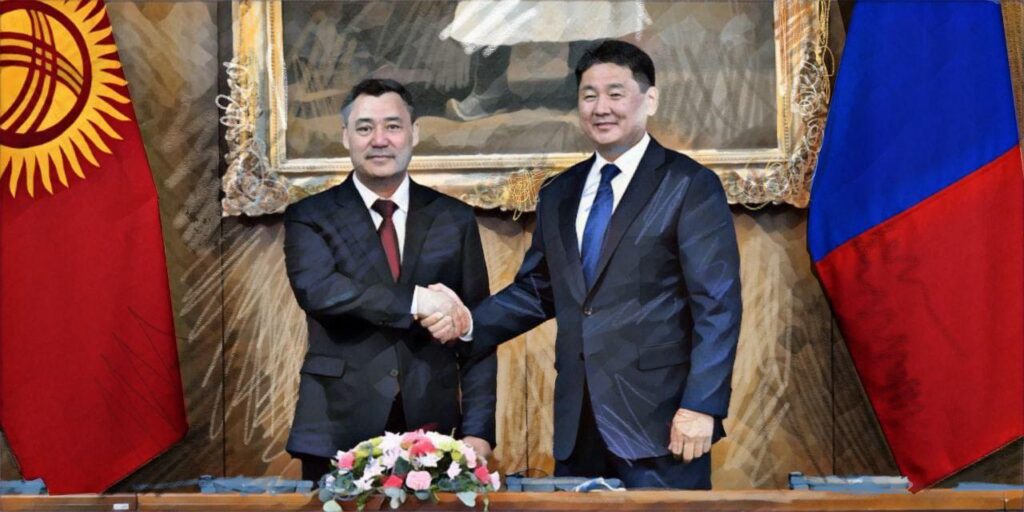
Late on July 20th, the President of Mongolia, Ukhnaagiin Khürelsükh, touched down in Bishkek as part of a two-day state visit to Kyrgyzstan. It forms part of Khürelsükh’s wider Central Asian tour, with the President set to fly to Dushanbe following his sojourn in the Kyrgyz capital. The trip builds on Kyrgyz President Sadyr Japarov’s 2023 visit to Ulaanbaatar, where he oversaw the opening of Kyrgyzstan’s first embassy in Mongolia and toured the Genghis Khan Museum in the capital. A warm greeting Khürelsükh was welcomed by Japarov on the red carpet at Manas International Airport, where traditional dances, music, and even a ceremonial eagle were laid on. The pair greeted each other like old friends before the motorcade swept along the empty roads towards the city. Like Japarov, Khürelsükh has been president since 2021, although, unlike his Kyrgyz counterpart, his role is largely ceremonial. Indeed, current Mongolian politics offers a hint of nostalgia to those in Kyrgyzstan with fond memories of the pre-Japarov era. In June, the Mongolian Prime Minister was forced to resign after losing a vote of confidence in the country’s parliament. This followed months of protests after press reports covering his son’s extravagant spending. The second day of the visit afforded Japarov the chance to play to statesman-like host and welcome a new visitor to the Presidential Palace – the Yntymak Ordo – which is still less than a year old. With temperatures hitting 37°C (98° Fahrenheit) in the Kyrgyz capital, the Mongolian leader arrived at the palace in a blacked-out Mercedes, flanked by a horse-mounted honor guard. The besuited leaders then stood in the baking sunshine to receive a military salute from Kyrgyzstan’s army. A burgeoning friendship Perhaps the scale of the pomp masks the limits of what can be achieved bilaterally. Iskander Sharsheyev, an independent Kyrgyz economist, was keen to stress to The Times of Central Asia that the leaders did achieve some breakthroughs in terms of agriculture: “Veterinary certificates were signed... This provides a new market for Kyrgyz producers. Kyrgyzstan and Mongolia signed a memorandum of cooperation in the field of wool processing, including cashmere. Mongolia is one of the world leaders in cashmere production, and the transfer of technology and training of specialists can dramatically improve the Kyrgyz textile sector.” However, real announcements were thin on the ground and the language of diplomacy was heavy with blandishments: “We strive to develop mutually beneficial cooperation in all areas, especially in the trade and economic sphere,” said Khürelsükh, while Japarov noted that “comprehensive cooperation with Mongolia is one of the priority areas of the development of Kyrgyzstan's foreign policy.” The question is whether there is any substance behind this. Economically, the numbers are hardly going to move the dial. In the first five months of this year, Kyrgyzstan exported $3.1 million worth of goods to Mongolia, much of it confectioneries. Mongolian exports in the other direction are even lower. While officials are trumpeting the rate of growth, which tripled in 2024, it’s worth having a...

Kyrgyz President Visits Tajikistan, Opening New Era of Friendship

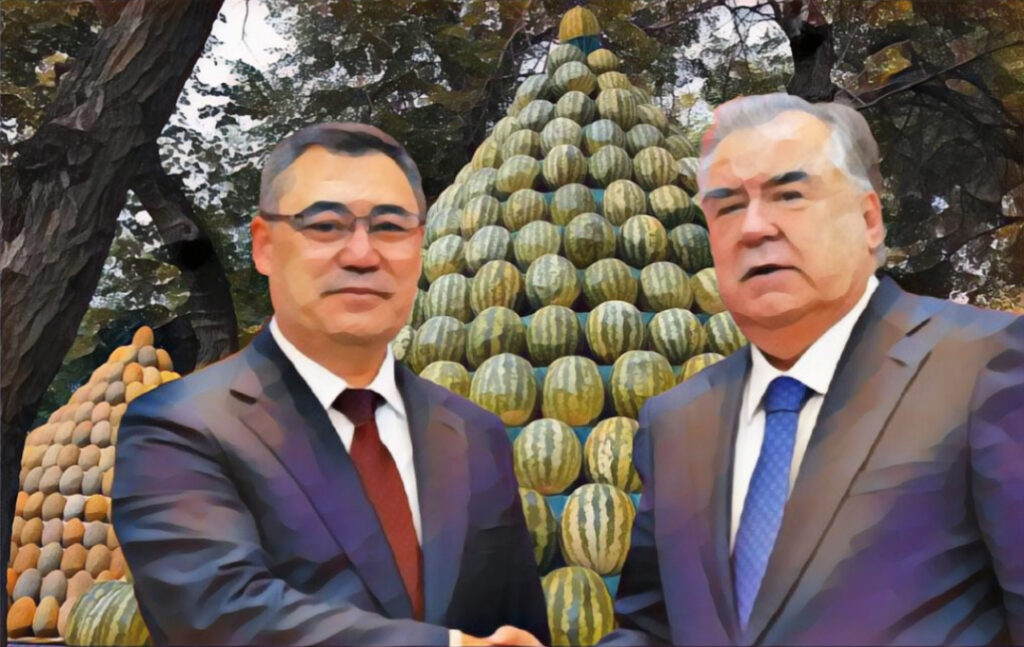
Kyrgyzstan’s President Sadyr Japarov just concluded a two-day visit to Tajikistan. Rarely has the visit of one Central Asian leader to another Central Asian country been as welcome as Japarov’s trip to Tajikistan was. The two countries engaged in brief, but intense and devastating conflicts in late April 2021 and mid-September 2022, the only clashes between the militaries of the two Central Asian countries since the five Central Asian states became independent in late 1991. Judging by Japarov’s warm reception in the Tajik capital Dushanbe, the worst of times have passed in Kyrgyz-Tajik relations. A Year of Firsts Japarov, who has been in power in Kyrgyzstan since late 2020, was making his first state visit to Tajikistan on July 8-9. Japarov traveled to Tajikistan in June 2021, nearly two months after the first outbreak of hostilities along the Kyrgyz-Tajik border, to speak with Tajik President Emomali Rahmon about easing tensions along their common frontier. That June, a meeting was hastily arranged as an exercise in damage control, not a state visit, and in any case, the talks between the two presidents failed to head off even worse fighting in September of the next year. This first state visit by Japarov followed President Rahmon’s visit to the Kyrgyz capital in March 2025, the first state visit by Rahmon to Kyrgyzstan in nearly 12 years. During Rahmon’s meeting in March, Kyrgyzstan and Tajikistan signed the agreement delimiting the final disputed sections of their border, which both sides hope will end more than a decade of violence and destruction in the border area. That agreement led to the first-ever summit of the presidents of the three Central Asian countries that share the Ferghana Valley. Uzbek President Shavkat Mirziyoyev joined Japarov and Rahmon on March 31 in the northern Tajik city of Khujand to celebrate the agreement on all three countries’ borders and talk about future cooperation. Pomp and Ceremony Rahmon was at the Dushanbe airport to meet Japarov when the latter arrived on July 8. Tajikistan’s Honor Guard played the national anthems of both countries, followed by a 21-gun salute for Japarov, before the two presidents made their way to the Tajik capital to hold talks. The two leaders also visited a Kyrgyz-Tajik trade exhibit and attended a concert featuring performers from both countries dedicated to “Eternal Friendship.” Moving Forward Ahead of the Japarov-Rahmon meeting, The Times of Central Asia reported that trade between the two nations is starting to increase again. The figure for January-May trade between the two countries this year was a modest $6.35 million, but that is 15 times more than the meager $405,100 of bilateral trade during the first five months of 2024. Less than a decade ago, there were years when Kyrgyz-Tajik bilateral trade topped $50 million. Following the border agreement in March, two border crossings were reopened along the western sections of the Kyrgyz-Tajik frontier. During the meeting between the two presidents, it was announced that a third crossing had opened, the Tajvaron-Karamyk post connecting Kyrgyzstan’s...

Uzbekistan and Azerbaijan Forge $1B Trade Vision

President Shavkat Mirziyoyev of Uzbekistan arrived in Baku on July 2 for a state visit at the invitation of Azerbaijani President Ilham Aliyev. He was received at the airport by Deputy Prime Minister Yagub Eyyubov and other senior officials, with an official reception taking place at the presidential residence in Zagulba.  A Thirty-Year Economic Partnership During bilateral talks, Presidents Mirziyoyev and Aliyev reaffirmed their commitment to enhancing the strategic partnership between Uzbekistan and Azerbaijan as the two nations mark 30 years of diplomatic ties. “Never in history have our relations been at such a high level as they are today,” said Mirziyoyev. Economic cooperation was a key focus of the discussions. Trade between the two countries has increased by 25% over the past year, and there are now approximately 300 joint ventures with a combined project portfolio valued at $4 billion. The leaders agreed to a new goal of boosting bilateral trade and investment to $1 billion annually by 2030. A comprehensive cooperation program was adopted to facilitate this, covering sectors such as industry, infrastructure, agriculture, healthcare, tourism, and banking. Advancing Transport and Logistics Links Significant progress was reported in the transport and energy sectors. The two presidents welcomed the growth of cargo transit along the Trans-Caspian International Transport Route, also known as the “Middle Corridor.” Uzbek cargo volumes on the route rose by 25% in 2024, surpassing one million tons, a development supported by the launch of a new electronic permit system in March. The leaders also committed to accelerating work on a joint green energy export initiative targeting European markets. Institutionalizing Strategic Ties Several bilateral documents were signed to formalize cooperation. These included a roadmap for implementing the 2023 Treaty on Alliance Relations through 2029, as well as agreements in environmental protection, science, higher education, and industry for the 2025-2026 period. Additional deals addressed agriculture, food security, social protection, maritime navigation, and municipal partnerships. New sister-city agreements were signed between Tashkent and Sumgayit, and between Navoi and Gabala. At a joint press briefing, Mirziyoyev lauded Azerbaijan’s efforts to restore its UN-recognized territorial integrity, stating, “You have fulfilled the long-standing dream of your father and every citizen of Azerbaijan.” He also praised infrastructure development in formerly disputed territories of Nagorno-Karabakh and described Azerbaijan as a “reliable ally and strategic partner.” The two leaders emphasized their shared positions on regional and global issues and pledged continued coordination in international forums. Mirziyoyev reaffirmed Uzbekistan’s commitment to the diplomatic resolution of conflicts. Cultural Diplomacy and Symbolism The visit featured symbolic and cultural highlights. In Baku’s Ag Sheher district, the presidents laid the foundation for Uzbekistan Park, a 4.5-hectare space celebrating Uzbek culture and architecture. They also inaugurated Uzbekistan’s new embassy in Baku, which includes halls named after different Uzbek regions, with Mirziyoyev proposing to name one of the halls after Karabakh as a gesture of friendship. The two leaders later toured the Sea Breeze resort complex on the Caspian coast, part of the broader Caspian Riviera tourism project. A similar development, Sea...

Opinion: Mirziyoyev’s Historic Visit Opens New Era for Uzbekistan-Mongolia Ties

Uzbekistan’s President Shavkat Mirziyoyev embarked on a historic journey to Mongolia on June 24-25, marking a significant milestone in the relationship between the two nations. This landmark visit, the first of its kind in over thirty years since the establishment of diplomatic ties, signifies a new era of collaboration and potential growth in Central Asia. Accompanied by his wife, Mirziyoyev was warmly received in Ulaanbaatar by Mongolian Foreign Minister Batmunkh Battsetseg and a host of other dignitaries. Their arrival set the stage for discussions aimed at unlocking vast opportunities for multifaceted cooperation and development, reflecting a shared vision for a prosperous future. Despite the significant geographical distance that separates Uzbekistan and Mongolia, the two nations are witnessing a remarkable evolution in their bilateral relations. This burgeoning partnership spans several domains, including diplomacy, economics, transportation, culture, and humanitarian efforts. A pivotal moment in this relationship was marked by the recent inauguration of the Mongolian Embassy in Tashkent, which symbolizes a commitment to fostering closer ties. Additionally, the increased frequency of intergovernmental and interparliamentary dialogue reflects a shared ambition to enhance collaboration. The signing of 14 bilateral agreements further underscores a mutual desire to cultivate trust and strengthen the partnership, paving the way for a promising future. In recent years, the partnership between Uzbekistan and Mongolia has experienced a remarkable surge in trade and investment. This dynamic growth is underpinned by a robust and multifaceted cooperation that spans numerous sectors, showcasing the commitment of both nations to strengthening ties. Between 2018 and 2023, trade between Uzbekistan and Mongolia experienced a significant increase, rising by more than 8.8 times. This impressive upward trajectory has continued into the early months of 2025, with preliminary data indicating a sustained expansion. Uzbekistan exports a variety of goods to Mongolia, including vital agricultural and industrial products, while Mongolia has ramped up its livestock exports, enriching the trading landscape. The establishment of numerous joint ventures exemplifies, with many ventures operating in Uzbekistan featuring 100% Mongolian capital, primarily in the realms of trade and services. Both nations are actively identifying and pursuing opportunities for collaborative projects in critical areas, including logistics, agro-processing, and machinery manufacturing. A particular emphasis is placed on joint production initiatives in sectors such as leather, wool, and cashmere processing, as well as the fabrication of electrical equipment, machinery, and construction materials. Agricultural cooperation is also a key focus, with plans for joint clusters and projects aimed at the processing and production of meat, dairy, wool, and leather products. Enhancing transport interconnectivity and developing innovative logistics routes are prioritized, with a direct air service between the capitals anticipated to be in place by the end of the year. Cultural and humanitarian exchanges are being fostered through initiatives such as the Days of Uzbek Culture, which take place in Ulaanbaatar, and the return of Mongolian students to Uzbek universities. The recent meeting between the President of Uzbekistan and the President of Mongolia, Ukhnaagiin Khurelsukh, marked a significant step toward enhancing bilateral cooperation. Both leaders engaged in productive...

Turkmenistan Steps into the Spotlight with Regional Diplomacy and Economic Reforms

Long known for its isolationist policies, Turkmenistan is gradually opening up to the international community through significant economic and diplomatic initiatives. Recent efforts include diversifying its natural gas exports, engaging in regional infrastructure projects such as the TAPI gas pipeline, and expanding trade partnerships. Additionally, the government has taken steps toward modernization and economic reforms to attract foreign investment, signaling a shift towards enhanced regional cooperation and global integration. This week, these initiatives gathered pace, as Chairman of the Halk Maslahaty of Turkmenistan, Gurbanguly Berdimuhamedov, continued his diplomatic tour of Central Asia with official visits to Kazakhstan and Kyrgyzstan. Berdimuhamedov's meetings focused on strengthening strategic partnerships, expanding trade and economic cooperation, and deepening cultural dialogue. Visit to Kazakhstan: Cultural Diplomacy and Strategic Cooperation On April 21, Berdimuhamedov arrived in the city of Turkestan, where he was welcomed by Kazakh President Kassym-Jomart Tokayev. The leaders held an informal meeting and visited key cultural and infrastructure sites, including the mausoleum of Khoja Ahmed Yassawi, a UNESCO World Heritage Site considered a spiritual center of the Turkic world. The tour also included the “Ethnoaul” ethnographic complex, the Turkistan Visit Centre, and an inspection of ongoing archaeological and restoration work at the ancient settlement of Kultobe. At the SPK Turkistan industrial park, they reviewed six investment projects worth a total of 36.5 billion tenge, encompassing production from tractors to medical equipment, with future expansion plans involving 112 facilities​. During the meeting, Tokayev highlighted growing bilateral ties and discussed joint initiatives in energy, transport, and digitalization. Tokayev reaffirmed Kazakhstan’s interest in participating in the development of Turkmenistan’s Galkynysh gas field and regional infrastructure projects, including the Turgundi-Herat-Kandahar-Spin Buldak railway and various transit highways connecting the two nations. Tokayev also offered support in digital governance and IT training, aligning with broader goals of regional modernization. Speaking to Toppress.kz, political analyst Tair Nigmanov interpreted Berdimuhamedov’s regional tour as a sign of Turkmenistan’s gradual emergence from diplomatic isolation. Nigmanov emphasized the symbolic significance of Turkestan, which Kazakhstan is positioning as a regional diplomatic hub for the Turkic world. Visit to Kyrgyzstan: Tradition and Informal Diplomacy On April 22, Berdimuhamedov arrived in Kyrgyzstan, where he was met at Issyk-Kul Airport by President Sadyr Japarov, who personally drove his guest along the visit route, a gesture that drew public attention. The leaders toured the Rukh-Ordo cultural center in Cholpon-Ata, and held informal discussions. During the visit, Japarov gifted a komuz, a traditional Kyrgyz string instrument, and invited Berdimuhamedov to sample the national kuurma tea. Talks on April 23 focused on enhancing bilateral relations. President Japarov praised the “centuries-old friendship” between the two nations and proposed establishing a Kyrgyz-Turkmen Development Fund, modeled on similar funds with Russia, Hungary, and Uzbekistan. Berdimuhamedov responded positively, expressing a desire to expand cooperation in trade, energy, education, and cultural exchange. Next Stop: Uzbekistan Berdimuhamedov is scheduled to visit Uzbekistan on April 23-24 at the invitation of President Shavkat Mirziyoyev. The agenda includes political, economic, and transportation cooperation, continuing the regional outreach and reinforcing Turkmenistan’s strategic...

Kyrgyzstan Raises First Sovereign Bond to Mitigate China’s Growing Influence

On February 4, Kyrgyz president Sadyr Japarov embarked on a four-day state visit to China, visiting Beijing and the northern city of Harbin for the opening ceremony of the 2025 Asian Winter Games. The visit comes against a backdrop of increasing engagement between Bishkek and Beijing. Temur Umarov, a fellow at the Carnegie Russia Eurasia Center, says that certain groups within the government are worried about an overreliance on China. “This is the problem of the current political leadership,” Umarov says. “They want to do more with China … they want to have more investment from China, but they have this debt that they inherited from the previous administrations.” Indeed, 36.7% of Kyrgyzstan’s foreign debt is now owed to the Export-Import Bank of China (Exim Bank), Beijing’s state-run lender which traditionally deals with foreign investments. China is also responsible for 46% of Kyrgyzstan’s foreign trade. With Russia hemorrhaging influence in the region amid its ongoing war in Ukraine, accessing new sources of investment has risen up the agenda in Bishkek. The Name’s Bond A key plank of these diversification attempts was put forward on January 13, when the Minister of Economy and Commerce, Bakyt Sydykov, announced plans to raise $1.7 billion through the sale of ten-year sovereign bonds in Hong Kong. “The country intends to tap into the international market for the first time,” Sydykov said. “We want to use Hong Kong’s role as a financial center to attract more potential investors, probably more diversified investors.” For Iskender Sharsheyev, an economist, this turn to the global markets cannot come soon enough. “This should have happened thirty years ago,” he says. Sharsheyev notes that the groundwork has been laid over the last few years, with ratings agency Moody’s reaffirming its B3 credit rating last year and projecting a “stable” outlook for the country. The yield of these bonds has yet to be announced, although Sharsheyev expects it to be reasonably high. “We expect that [the yield] will be worse for our country than for other countries, because, firstly, we are just entering. Secondly, the new flow of cash into the country could create risks; it can also spur inflation.” However, the high yield and the risk is seen as worth the cost. “The bond offering is an example of how Kyrgyzstan is trying to balance out its debt portfolio and have diversified ties with different creditors,” says Umarov. He notes that this mirrors a trend seen across Central Asia, where bonds have not traditionally been used as a means of fundraising but have become increasingly popular over recent years. In October 2024, Kazakhstan issued its first dollar-denominated Eurobond since 2015, the 10-year bond raising $1.5 billion with a yield of 4.714%. Sharsheyev believes that some of the proceeds of the bond sale will be used specifically to head off debts to Beijing. “China is the main [source of] pressure. To maintain sovereignty, we have begun to service the external debt. Our country has spent an average of $400-500 million on paying...