• KZT/USD = 0.00215
  • TJS/USD = 0.10800
  • UZS/USD = 0.00008
  • TMT/USD = 0.29850
  • KZT/USD = 0.00215
  • TJS/USD = 0.10800
  • UZS/USD = 0.00008
  • TMT/USD = 0.29850
  • KZT/USD = 0.00215
  • TJS/USD = 0.10800
  • UZS/USD = 0.00008
  • TMT/USD = 0.29850
  • KZT/USD = 0.00215
  • TJS/USD = 0.10800
  • UZS/USD = 0.00008
  • TMT/USD = 0.29850
  • KZT/USD = 0.00215
  • TJS/USD = 0.10800
  • UZS/USD = 0.00008
  • TMT/USD = 0.29850
  • KZT/USD = 0.00215
  • TJS/USD = 0.10800
  • UZS/USD = 0.00008
  • TMT/USD = 0.29850
  • KZT/USD = 0.00215
  • TJS/USD = 0.10800
  • UZS/USD = 0.00008
  • TMT/USD = 0.29850
  • KZT/USD = 0.00215
  • TJS/USD = 0.10800
  • UZS/USD = 0.00008
  • TMT/USD = 0.29850
16 August 2026

Viewing results 1 - 6 of 3

Japarov Says Tashiyev Was His Planned Successor as Prosecutors Seek Nine-Year Terms

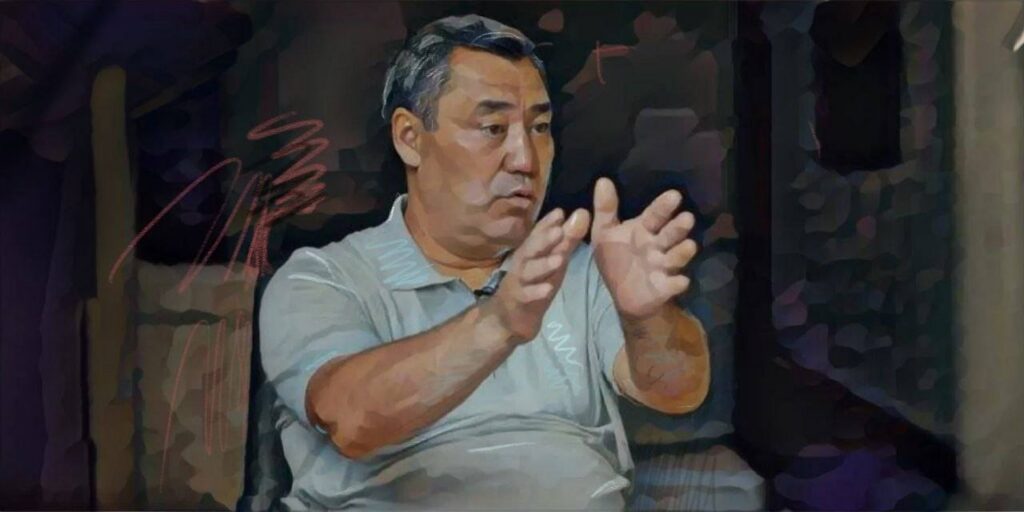
Kyrgyz President Sadyr Japarov says he once planned to leave office in 2027 and support Kamchybek Tashiyev as his successor, before deciding that his longtime political partner was not ready for the presidency. The disclosure comes as prosecutors are asking an appeals court to impose nine-year prison terms on Tashiyev and seven other defendants in the “Letter of 75” case. Japarov set out the abandoned succession plan in an interview with journalist Ali Toktakunov released on August 13. He said he had expected to complete the six-year term he won in 2021, then leave politics if Tashiyev was ready to take over. “Kamchy would become president, and I would retire. I had such a plan,” Japarov said. The president said he had told Tashiyev about the plan roughly a year earlier and urged him to prepare for the presidency by imposing more discipline on the people around him. Japarov said he later concluded that Tashiyev was not ready. He cited the conduct of some of Tashiyev’s staff and associates, the appearance of the “Letter of 75,” and signs that parliament was being divided between supporters of the president and supporters of “the general,” a reference to Tashiyev. Japarov said he summoned Tashiyev and told him: “This won’t do. You cannot split people.” He said he informed Tashiyev that he would be removed from office, but claimed he was still prepared to allow him to contest the presidential election without obstruction. That account adds a succession dispute to the explanation Japarov gave when he dismissed Tashiyev on February 10 as chairman of the State Committee for National Security (GKNB) and deputy chairman of the Cabinet of Ministers. At the time, the presidency said the decision was needed to “prevent a split in society” and state institutions. Senior GKNB officials were removed soon afterward, the border service was taken out of the hands of the committee, and parliamentary speaker Nurlanbek Turgunbek uulu resigned. Japarov has now drawn a sharp distinction between his personal relationship with Tashiyev and their political future. In another part of the interview, he said the two had been friends since 2005, and their families had been close. “He will remain my friend, but I have no plans to appoint him to any position,” Japarov said. He credited Tashiyev with making a major contribution during his five years at the GKNB, but said he should rest and consider where he had made mistakes. Japarov also confirmed for the first time himself that he intends to seek another term. “I intend to run for another term and continue my work,” he said, according to Reuters. His spokesman had said in 2024 that Japarov planned to run again, but the president had not previously made a public declaration of his own. He said a second term was needed to complete reforms already under way. Japarov also promised that rivals would be free to challenge him. “The road is open. Whoever wants to run, let them run,” he said, adding that there...

The Tradition of Power – Why Political Succession in Central Asia Follows Its Own Rules

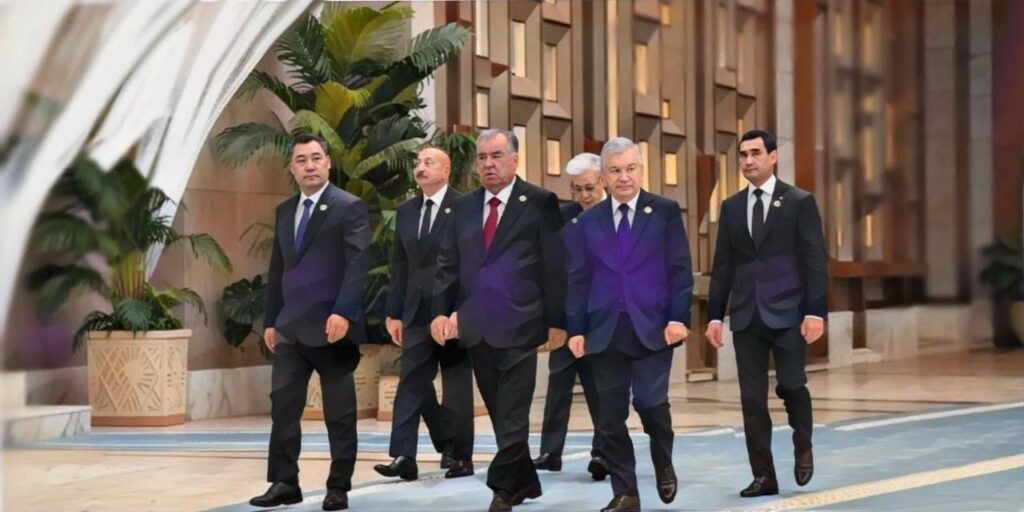
In January 2027, Kyrgyzstan will hold a presidential election, an event that is anything but routine for the Central Asian republic. Over the past three decades, political crises, often surrounding disputed elections, have repeatedly ended in the removal of presidents. Kyrgyzstan remains an outlier in the region, although it, too, has gradually been moving towards a political model that has long become the norm across the rest of Central Asia. This year marks 35 years since the Soviet republics embarked on independent political lives following the collapse of the USSR. Yet many of the mechanisms governing the transfer of supreme power, shaped during the Soviet era, continue to define politics across the independent states. In Central Asia, three decades of independence have produced a distinctive model of political succession. The final years of the Soviet Union became known as the era of the so-called "gun-carriage race." As one ageing General Secretary after another passed away, an unwritten rule appeared to emerge: the official who chaired the state funeral commission for the deceased leader often became his successor. A remarkably similar pattern later emerged in Central Asia – first in Turkmenistan, then in Uzbekistan. Turkmenistan's first president, Saparmurat Niyazov, died in December 2006. The state funeral commission was chaired by Deputy Prime Minister and Health Minister Gurbanguly Berdimuhamedov, who simultaneously became acting president. It was during those funeral ceremonies that the wider public was introduced for the first time to the family of Turkmenbashi. Under the constitution, parliamentary speaker Ovezgeldy Atayev should have assumed the presidency. Instead, he was stripped of immunity and arrested, clearing the way for Berdimuhamedov to take the acting presidency. After assuming the presidency in 2007, Berdimuhamedov gradually abandoned the more eccentric elements of his predecessor's personality cult while building a political system centered on his own leadership. If Niyazov styled himself Turkmenbashi – Leader of All Turkmens – his successor adopted the title Arkadag, or Protector of the Nation. In February 2022, Berdimuhamedov unexpectedly announced that he would step down following an early presidential election scheduled for March 12. He explained the decision by saying it was time to "give the younger generation an opportunity to govern the country." Few doubted that he was referring to his son Serdar Berdimuhamedov, who by then had already occupied most of the key positions within the state hierarchy. That is precisely what happened. Serdar Berdimuhamedov became president, while his father moved to the chairmanship of the Halk Maslahaty, retaining the title of National Leader of the Turkmen People. Uzbekistan followed a similar pattern, although under different circumstances. Islam Karimov built a highly centralized presidential system that left virtually no room for political competition. This applied not only to political opponents, but also to those closest to the president. His eldest daughter, Gulnara Karimova, was placed under house arrest while her father was still alive. Following his death, she was convicted and remains imprisoned in Uzbekistan. When Karimov died in September 2016, reports of his death circulated for several days...

Japarov Breaks the Kyrgyz Tandem

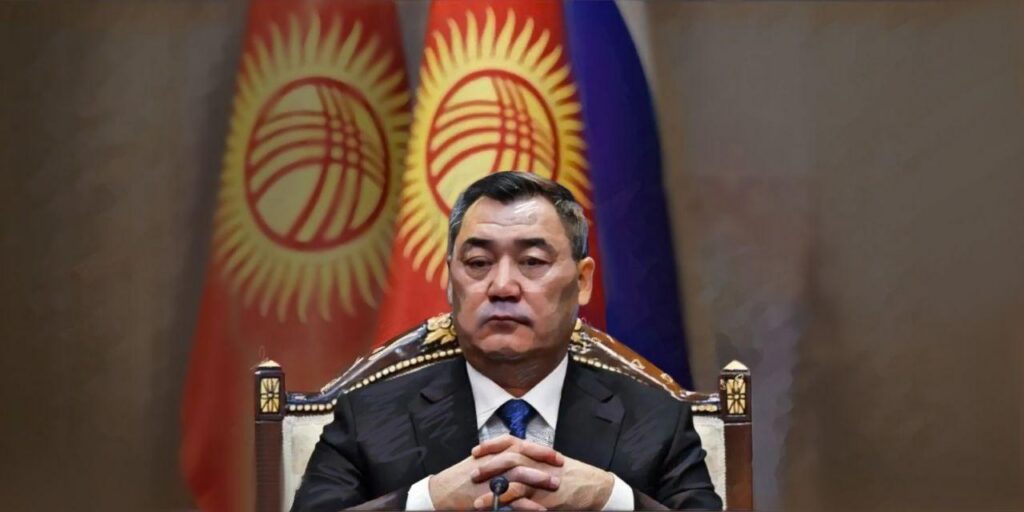
When Kamchybek Tashiyev returned to Bishkek from medical travel abroad after losing his post as Chairman of the State Committee for National Security (GKNB), as well as the deputy chairmanship of the Cabinet of Ministers, he returned to a system already being disassembled. Kyrgyzstan’s President Sadyr Japarov dismissed him on February 10, ending a five-year arrangement in which the presidency and the security apparatus were closely fused. The decision deliberately dismantled the governing tandem that had defined Kyrgyzstan’s power structure since 2020. The immediate question was whether this was a closing of an episode or the opening of a new one. The first wave of moves suggests the latter: a transition toward a more personalized presidency, with the internal-security bloc fractured and its succession logic unsettled. Japarov publicly framed the decision as preempting an institutional split. He explicitly pointed to parliamentary groupings that began sorting deputies into “pro-president” versus “pro-general” camps. Russian-language coverage has tended to present the episode as an effort to end a dual-power configuration, not merely to remove one official. This narrative implies that the state’s operative center of gravity had already begun drifting away from predictable office-holding and toward informal allegiance tests. Once such a dynamic becomes evident, according to such a telling, the preservation of regime coherence often requires rapid, coercive re-centering. Domestic Political Configurations The first domestic signal was indeed speed. Along with Tashiyev, senior security officials were removed, and an acting head was installed pending parliamentary procedures. The point here was not just about personnel but about the timing: the presidency moved first, then moved again, so that no alternative pole could consolidate inside the security institutions. If the system had been built around a Japarov–Tashiyev tandem, then the immediate dismantling of Tashiyev’s proximate layers was also a message to the broader stakeholder society that the presidency would decide who inherits the southern security networks and clan linkages. Japarov was clearly conveying a signal of dominance that ruled out negotiation. A second signal came through parliament. Speaker Nurlanbek Turgunbek uulu resigned shortly after the dismissal, amid reporting that he was politically close to Tashiyev and vulnerable once the security bloc shifted. Russian reporting treated the speaker’s resignation as part of the same chain reaction set off by the February 10 decree. This was part of a pattern whereby institutional actors in Kyrgyzstan’s domestic politics reorient quickly toward whoever appears to be winning in the short term. Loyalty is anticipatory because the penalty for backing the wrong camp can arrive through law enforcement, prosecutorial pressure, or reputational destruction. A third signal emerged through the revived early-election debate. The open-letter campaign and talk about a “snap election” did not arise in a vacuum; it built on a preexisting argument about constitutional timing and mandate renewal. That development provided a political vocabulary for testing whether the tandem’s first stage had ended. The credible possibility of early elections has destabilized patronage, compelling every member of the political class at every level to recalculate expectations. Every political actor...