• KZT/USD = 0.00218
  • TJS/USD = 0.10800
  • UZS/USD = 0.00008
  • TMT/USD = 0.29850
  • KZT/USD = 0.00218
  • TJS/USD = 0.10800
  • UZS/USD = 0.00008
  • TMT/USD = 0.29850
  • KZT/USD = 0.00218
  • TJS/USD = 0.10800
  • UZS/USD = 0.00008
  • TMT/USD = 0.29850
  • KZT/USD = 0.00218
  • TJS/USD = 0.10800
  • UZS/USD = 0.00008
  • TMT/USD = 0.29850
  • KZT/USD = 0.00218
  • TJS/USD = 0.10800
  • UZS/USD = 0.00008
  • TMT/USD = 0.29850
  • KZT/USD = 0.00218
  • TJS/USD = 0.10800
  • UZS/USD = 0.00008
  • TMT/USD = 0.29850
  • KZT/USD = 0.00218
  • TJS/USD = 0.10800
  • UZS/USD = 0.00008
  • TMT/USD = 0.29850
  • KZT/USD = 0.00218
  • TJS/USD = 0.10800
  • UZS/USD = 0.00008
  • TMT/USD = 0.29850
27 November 2026

Viewing results 1 - 6 of 297

Navigating Challenges: The ICG Reports on Taliban Drug Ban and Its Global Implications

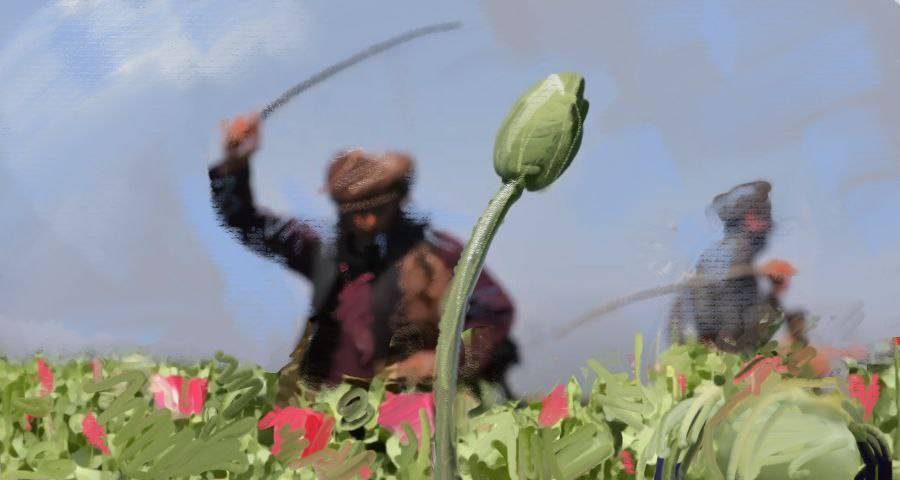
The International Crisis Group, an NGO focused on analyzing conflicts, has reported that “After the Taliban's severe restrictions on women's rights made the regime odious to much of the outside world, the narcotics ban offers a rare opportunity to work with the new authorities on a pressing issue for the benefit of all sides.” Drugs from Afghanistan are a universal problem affecting all regions of the world except for Latin America, with Central Asia remaining one of the main routes for Afghan drugs on their way to Russia and Europe. The so-called “Northern Route” passes through Tajikistan and Uzbekistan, then to Kyrgyzstan and Kazakhstan before reaching the Russian and European markets. Turkmenistan also plays an important role as a transit country for drugs, but on the “Balkan route.” The drug threat from Afghanistan to the five Central Asian republics is not simply a political narrative used by the governments of these republics for their own political purposes. There is a risk of political instability, criminality, corruption, social degradation, and damage to human health as a result of drug trafficking from Afghanistan. Additionally, the elimination of Afghan drug production and trafficking is a key issue in the fight against terrorism, primarily against the Islamic State, as drugs are one of the main sources of income for these groups. In April 2022, hopes for a resolution to this problem appeared following the ban on opium poppy cultivation imposed by the Taliban. Papaver somniferum, commonly known as the opium poppy, has been cultivated in Afghanistan since at least the early twentieth century. The history of opium production is detailed in the Global Illicit Drug Trends report by the United Nations Office on Drugs and Crime (UNODC). Besides the history of opium production, the report provides an overview of measures taken by states in their attempts to regulate and control the drug. Opium began to dominate world drug markets in the early 1980s, after the “April Revolution” and the Soviet invasion of Afghanistan, when the state began to lose control of rural areas, and agriculture itself began to decline. As the UNODC points out, by 1989, opium production was firmly established as the country's main source of income - Afghanistan had become a narco-state. The civil war continued, and the opium economy became firmly entrenched in the country during the 1990s. The first fall of the Taliban in 2001 and the formation of a republican government failed to change the situation due to the newly formed state still having no control over the regions. As a result, its counter-narcotics measures were not effective. It should be noted that only the Taliban managed to reduce drug production. According to the UN, since the Taliban's 2023 ban, opium crops in Afghanistan have declined by 95%, and opium prices have reached record levels. However, many experts wonder if Afghanistan will be able to continue with its chosen policy. Can the new Afghan authorities alone continue to confront the drug threat, and what should be the role of...
Redefining Diplomacy: Kazakhstan’s Strategic Shift in Relations With Afghanistan

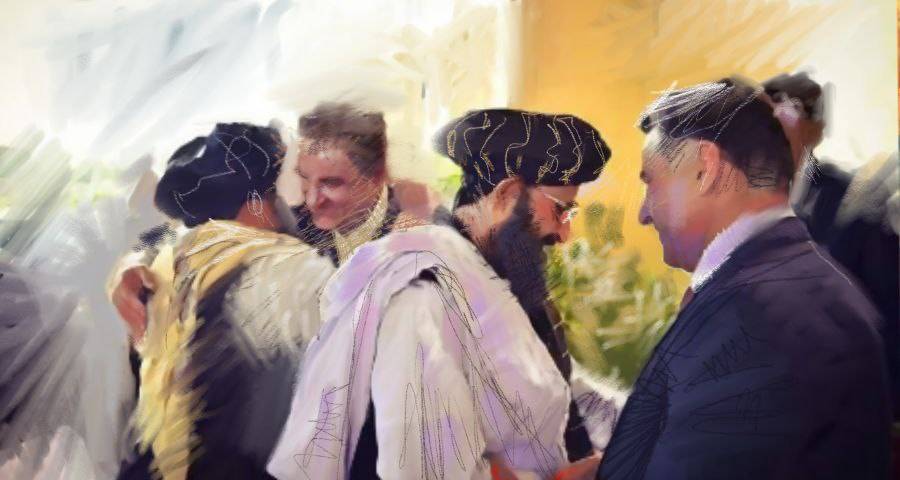
On September 9, 2024, President Kassym-Jomart Tokayev signed a decree dismissing Alimkhan Yesengeldiyev from the position of Kazakhstan's Ambassador to Afghanistan. Yesengeldiyev has been at the post since April 2018. Local media have not yet reported on the appointment of a new ambassador. Previously, Astana has made bold diplomatic steps towards normalizing relations with Afghanistan under Taliban rule. For instance, Kazakhstan accredited Taliban diplomats in April 2023, and removed the Taliban from its list of banned organizations in December 2023. On August 21 of this year, Kazakhstan accredited the head of the Afghan diplomatic mission as charge d'affaires in the country. Astana continues to increase trade, economic, and humanitarian cooperation with the de facto authorities, and has actively engaged in various international platforms for initiatives in Afghanistan. Moreover, President Tokayev outlined Kazakhstan's position on the situation in Afghanistan just a month after the Taliban seized Kabul, when the world was still in shock. “Kazakhstan sees the future Afghanistan as a truly independent and united state living in peace with itself and its neighbors," he stated. "At this crucial historical moment, the multinational people of Afghanistan should not be left alone in the face of unprecedented difficulties.” By changing the head of its diplomatic mission in Kabul, it appears that the authorities in Kazakhstan intend to qualitatively improve the state of their relations with the Taliban. The eventual appointment of a new head of the Kazakh embassy will symbolize a new page in relations. In all likelihood, according to recognized international practice, a diplomat will be presented to the Taliban not in the rank of Ambassador Extraordinary and Plenipotentiary but as the Charge d'Affaires of Kazakhstan. This will preserve the principle of parity and be understandable given international disputes surrounding recognition of the Taliban. Overall, Kazakhstan's foreign policy steps have always been characterized by consistency and an unwavering focus on international law. It seems that the world as a whole is now acclimatizing to the idea of pragmatic dialog with the authorities in Kabul, with whom it is necessary to maintain constant bilateral and multilateral diplomatic contacts. On September 27, at the official request of the British government, the embassy of the former Islamic Republic of Afghanistan in London will officially cease operations. The embassy building will not be handed over to the Taliban or any other political representation. The embassy in Oslo representing the former government in Afghanistan has also ceased functions since September 12 at the request of the authorities there. Neither the British nor the Norwegian authorities are currently commenting on the situation. A few days ago, Deutsche Welle reported that the German Foreign Ministry has accepted the Taliban's application to recognize their consulate general in Munich as the sole center for providing consular services in Germany. In July, the Taliban Foreign Ministry declared that documents issued by 14 Afghan missions abroad are illegitimate. They were located in Britain, Berlin and Bonn in Germany, Belgium, Switzerland, Austria, France, Italy, Greece, Poland, Australia, Sweden, Canada, and Norway. Currently, the...

Kyrgyzstan Removes Taliban From List of Terrorist Organizations

Kyrgyzstan has quietly removed the Taliban from its list of banned terrorist organizations. Kyrgyzstan's Prosecutor General's Office recently published a list of extremist terrorist organizations whose activities are banned by courts in the country. The list includes 20 organizations, but the Taliban is not among them. The State Commission on Religious Affairs could not answer precisely why the Taliban is not on the list. Azamat Yusupov, the agency's deputy head, told reporters that the commission had nothing to do with approving the list. “Given the recent changes in Afghanistan, the Taliban can be removed from the list of terrorist organizations. It is better to contact the judiciary, which can answer this question more accurately,” Yusupov stated. Afghanistan's Taliban government has already responded. The foreign ministry of the unrecognized Islamic Emirate said it “welcomes and approves of the Kyrgyz authorities' decision to remove the Taliban from the list of banned groups.” “The step taken by Kyrgyzstan signifies the growing political recognition of the Islamic Emirate of Afghanistan at both regional and international levels and removes an obstacle to strengthening bilateral relations between Afghanistan and other countries,” the foreign ministry said in a statement. The Taliban has been recognized as a terrorist organization in different years and by other countries and organizations. For example, in Kazakhstan, the Taliban was recognized as a terrorist organization by the Supreme Court on March 15, 2005. And in Kyrgyzstan by the decision of the Pervomaisky District Court of Bishkek on September 15, 2006. In Russia, the Taliban was recognized as a terrorist organization by a decision of the Supreme Court in 2003. In June this year, Kazakhstan removed the Taliban regime from the terrorist list to develop economic interaction with Afghanistan. This was announced by President Kassym-Jomart Tokayev, at a meeting of the Council of the Parliamentary Assembly of the Collective Security Treaty Organization (CSTO). In May of this year, the Russian Foreign Ministry and the Ministry of Justice reported to Russian President Vladimir Putin that the Taliban could be removed from the list of banned organizations; however, this issue still needs to be resolved in Russia.

Uzbek Security Chief: SCO Must Help Afghanistan to Fight Islamic State Khorasan Province

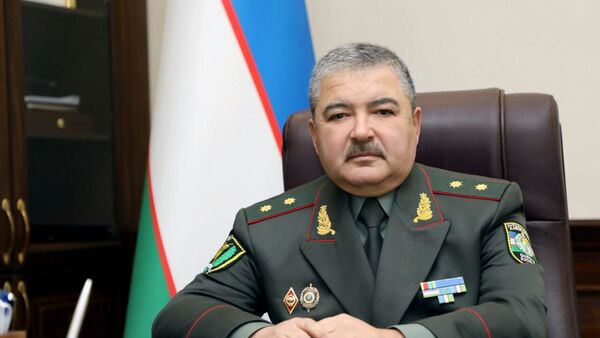
The Shanghai Cooperation Organization (SCO) is holding its 10th regional anti-terrorism conference in Tashkent. The conference is being held on September 4 and 5. At the conference's plenary session, Lieutenant General Abdusalam Azizov, the head of Uzbekistan's State Security Service, emphasized that the member countries of the SCO must work together to fight against international terrorism, extremism, and radicalism. “The Afghan government is fighting international terrorism based on its capabilities and resources, and the Afghan special service is leading the fight against the Islamic State and achieving results. We must fight together against the enemy,” Azizov said. Regarding the branch of Islamic State known as Islamic State Khorasan Province (ISKP), which has claimed responsibility for several fatal attacks in SCO member countries, including the attack on the Crocus City concert hall outside Moscow earlier this year, Azizov said: “It is important to help Afghanistan in the fight against ISKP, because the weakening of countermeasures will lead to the strengthening of this group, which, in turn, poses a threat to the security of the region.” ISKP was formed in 2014 as a collective of defectors from groups including al-Qaeda, Tehrik-e-Taliban (TTP), and former Taliban fighters from Afghanistan and Pakistan. It is estimated that ISKP has between 4,000 and 6,000 members. Since the Taliban killed its leader Sanaullah Ghafari in 2023, it is unclear who runs the group.

U.S. Decision to Give Military Aircraft to Uzbekistan Upsets Taliban

Ownership of 46 U.S. military aircraft that have sat on the tarmac in Uzbekistan’s southern city of Termez for more than three years has finally been established. Most of those planes and helicopters are going to Uzbekistan, and south of the Uzbek border in Afghanistan, the Taliban are not pleased with this decision.   Escape from Afghanistan On August 15, 2021, Taliban forces freely entered Kabul and reestablished themselves in power. The rapid advances of Taliban militants across Afghanistan earlier that month came as the last foreign forces were departing from the country. Panic broke out throughout the nation. On the day the Taliban entered Kabul, dozens of Afghan Army aircraft carrying government officials and soldiers left their bases and flew north, some to Tajikistan, most to Uzbekistan. In Uzbekistan, the Afghans were deported to U.S. custody and taken to the United Arab Emirates, where they were eventually given U.S. visas and sent to live in the United States. However, the 22 planes and 24 helicopters they flew aboard to Uzbekistan have remained at Termez. The aircraft belonged to the United States. They were loaned for use by the U.S.-backed government forces in Afghanistan. The Taliban assert that all the weapons used by troops of the ousted Afghan government belong to the Afghan people, meaning to the Taliban. On January 4, 2022, Taliban Defense Ministry representative, Inomulla Samagani, said a request for the return of the aircraft had been made to Uzbekistan and Tajikistan. Days later, the Taliban’s acting Defense Minister, Mawlawi Mohammad Yaqoob, son of Taliban founder Mullah Omar, demanded their return. “Our planes that you have, that are in Tajikistan and Uzbekistan, must be returned to us,” Yaqoob said, warning both countries, “not to test our patience and not to force us to take possible retaliatory steps to [reclaim the aircraft].” As economic relations have grown between Taliban-ruled Afghanistan and Uzbekistan since late 2021, the Taliban’s language has softened, but their claim to the planes and helicopters has been repeated several times. On August 24, 2024, Uzbekistan’s kun.uz news agency reported that U.S. Ambassador to Uzbekistan Johnathan Henick had stated that most of the U.S. aircraft in Uzbekistan would be handed over to the Uzbek government. “Yes, it is already official,” Henick said. “The military equipment will remain in Uzbekistan, this is already settled.” Unsurprisingly, the Taliban Defense Ministry responded to Henick’s remarks. “Any agreement regarding the fate of Afghan helicopters and planes in Uzbekistan is unacceptable,” a Taliban Defense Ministry statement stated. Taliban Defense Ministry spokesman, Emayatullah Khwarazmi, said in an audio statement released on August 27 that the “government of Uzbekistan is expected to refrain from any dealings in this regard, to consider good neighborly relations, and to make a wise decision by cooperating in the return of Afghanistan's air force aircraft." U.S. officials have made it clear since 2021 that under no circumstance would the aircraft be given to Afghanistan. During a visit to Dushanbe in June 2022, Commander of the U.S. Central Command, General...

Kazakhstan Accredits Chargé D’Affaires of Afghanistan

The Kazakh Foreign Ministry has announced that the country has accredited a chargé d'affaires of Taliban-led Afghanistan to expand trade, economic, and humanitarian cooperation between the two countries. On August 21 in Astana, Deputy Minister of Foreign Affairs Alibek Bakayev met with Muhammad Ur Rehman Rahmani, head of Afghanistan’s diplomatic mission in Kazakhstan. Bakayev stated that Kazakhstan had accredited Mr. Muhammad Rahmani as chargé d'affaires. Early in June, Kazakhstan's President Kassym-Jomart Tokayev announced that his country had removed the Taliban from its list of terrorist organizations, stressing that the move was made to develop trade and economic ties with Taliban-led Afghanistan. In recent years, Kazakhstan has made efforts to increase trade with Afghanistan and participate in Afghan transport and connectivity projects in cooperation with Uzbekistan and Turkmenistan. Kazakhstan has also advocated for consolidating international efforts to provide assistance to Afghanistan and resolve its complex humanitarian problems. To this end, Kazakhstan proposed establishing the UN Regional Centre for Sustainable Development for Central Asia and Afghanistan in Almaty.