• KGS/USD = 0.01143 0%
  • KZT/USD = 0.00200 0%
  • TJS/USD = 0.10593 0.09%
  • UZS/USD = 0.00008 0%
  • TMT/USD = 0.28575 0%
  • KGS/USD = 0.01143 0%
  • KZT/USD = 0.00200 0%
  • TJS/USD = 0.10593 0.09%
  • UZS/USD = 0.00008 0%
  • TMT/USD = 0.28575 0%
  • KGS/USD = 0.01143 0%
  • KZT/USD = 0.00200 0%
  • TJS/USD = 0.10593 0.09%
  • UZS/USD = 0.00008 0%
  • TMT/USD = 0.28575 0%
  • KGS/USD = 0.01143 0%
  • KZT/USD = 0.00200 0%
  • TJS/USD = 0.10593 0.09%
  • UZS/USD = 0.00008 0%
  • TMT/USD = 0.28575 0%
  • KGS/USD = 0.01143 0%
  • KZT/USD = 0.00200 0%
  • TJS/USD = 0.10593 0.09%
  • UZS/USD = 0.00008 0%
  • TMT/USD = 0.28575 0%
  • KGS/USD = 0.01143 0%
  • KZT/USD = 0.00200 0%
  • TJS/USD = 0.10593 0.09%
  • UZS/USD = 0.00008 0%
  • TMT/USD = 0.28575 0%
  • KGS/USD = 0.01143 0%
  • KZT/USD = 0.00200 0%
  • TJS/USD = 0.10593 0.09%
  • UZS/USD = 0.00008 0%
  • TMT/USD = 0.28575 0%
  • KGS/USD = 0.01143 0%
  • KZT/USD = 0.00200 0%
  • TJS/USD = 0.10593 0.09%
  • UZS/USD = 0.00008 0%
  • TMT/USD = 0.28575 0%
21 February 2026

Viewing results 1 - 6 of 107

Attempting to Build a Litter-Free Kazakhstan: An Interview with Ecologist Kamila Akimbekova

Ten years ago, waste recycling in Almaty was largely the domain of individual enthusiasts. Today, environmental campaigns draw thousands, and conversations about responsible consumption have become part of daily life for many city residents. One of the pioneers of this movement is Kamila Akimbekova, an eco-influencer and co-organizer of environmental initiatives. In an interview with The Times of Central Asia, she reflects on the evolution of Almaty’s eco-community, the principles behind the zero waste concept, and how small, consistent changes can reshape a city. TCA: Kamila, you had a successful career in banking. What prompted your transition to environmental activism?  Kamila: I think my interests evolved. People often think recycling is a new trend, but it actually existed in the USSR: students collected waste paper, and people returned glass for reuse. It was an effective circular economy. When I became a mother for the second time, I began thinking more deeply about my impact on the world. I started researching whether Almaty had recycling facilities. At the time, information was scarce, and it wasn’t easy to locate collection points, but I didn’t give up. TCA: Was access to information more limited 10-15 years ago? Kamila: Absolutely. Social media was less developed, and online information was often outdated or unreliable. I started looking for people who shared my values and eventually connected with Almaty’s early eco-activists. They were scattered individuals with a shared desire for change. Over time, we formed a real community, launched joint projects, and I began sharing what I learned on my blog. That’s how I transitioned to eco-influencing. Today, I have around 30,000 Instagram followers, an engaged audience concerned about the environment. TCA: Is the eco-community large now? Kamila: It’s grown significantly, especially in Almaty, though we’re also connected with activists across Kazakhstan. Participation has multiplied. Our early events drew 20-50 people. Now we see around 2,000. There’s strong interest from students and school-children, I lecture regularly and see growing volunteerism. At our last campaign, electronic sensors showed that 1,900 people attended. TCA: Is it true that women form the core of the eco-community? Kamila: Yes, that’s backed by studies. Women tend to be more environmentally conscious, likely due to traditional roles as caretakers of the home and future generations. TCA: Today, people can recycle much more than just paper, glass, and plastic. How did that expansion come about? Kamila: I wanted a convenient way to dispose of multiple waste types, old medicines, unused items, plastics, metals, e-waste, etc. In 2019, we invited companies like Rocket Plastic and an e-waste recycler to set up at our events. We also partnered with the Almaty Pop-Up Store and expanded through collaborations with the Darmarka project and the Recycle Birge team. TCA: I was surprised to learn you accept unusual items, used cooking oil, expired candy, even food scraps for farmers. Kamila: We follow the zero waste concept, which aims to reduce waste to zero. Many newcomers think sorting is the most important part, but recycling is actually the last...

TCA Interview: Musician Merey Otan on the Reinvention of Kazakh Musical Instruments

Until recently, Kazakh national instruments were largely associated with school concerts, folk ensembles, and official ceremonies. The dombra (a long-necked, two-stringed plucked instrument), kobyz (a bowed string instrument with two horsehair strings), and sybyzgy (a wooden end-blown flute traditionally made from apricot wood) seemed to occupy a separate cultural space: symbolically important, yet detached from everyday life. “Before, the dombra was for me only part of school concerts,” recalls Sanzhar Uvashev, 24, a sales specialist from Almaty. “It was brought out on holidays, people dressed in national costumes, played a couple of obligatory songs, and that was it. I never thought this instrument could sound different, or be part of contemporary music.” Today, that distance is steadily narrowing. The sound of the dombra is increasingly featured in contemporary original music, electronic compositions, film scores, and social media. Young musicians are not abandoning tradition, but they are no longer treating it as something frozen in time. To understand how this rethinking is taking place, and why tradition need not remain 'untouched', The Times of Central Asia spoke with Merey Otan, a researcher and musician who works with Kazakh instruments in a modern cultural context. ТCA: Merey, how did your study of national instruments begin? Was it a deliberate decision? MO: It started during my master’s studies, when I was writing a thesis on contemporary music in Kazakhstan. As part of that research, I interviewed the ethno-rock band Aldaspan and kobyz player Almat Saizhan. I was especially interested in how the dombra and kobyz were being transformed and modernized and eventually devoted a whole chapter of my work to this topic. So yes, it was a conscious choice. TCA: People often argue that tradition should be preserved in its original form. What’s your take on that? MO: I’ve heard that view often, especially from traditional musicians. Some believe, for example, that an electronic dombra desecrates the instrument. Given the sacred meaning of the dombra and kobyz, I understand that stance. In sociology, these people are sometimes called purists. But I disagree. The world is changing, and some traditions from the nomadic era have lost their relevance or even become barriers. I believe traditions can, and sometimes should, evolve. If modifying an instrument helps engage younger generations, why not? TCA: Where do you personally draw the line between respect for heritage and experimentation? MO: I see nothing wrong with experimentation. On the contrary, bands like Steppe Sons show deep respect for heritage. Their members have formal musical education and a strong grounding in tradition. However, it's important to consider the concept of cultural appropriation from postcolonial theory. This occurs when privileged groups use the culture of marginalized communities for personal gain. In music, this might look like a Western artist profiting from Kazakh instruments without acknowledging Kazakh musicians. That, in my view, is disrespectful. TCA: Is there still criticism about the “incorrect” use of traditional instruments? MO: Yes, certainly. When Aldaspan introduced the electronic dombra, public figures like Bekbolat Tleukhan were highly critical....

Kazakh Producer Yulia Kim: “We Are Closing the Gap Between Central Asia and World Cinema”

Central Asia is increasingly being recognized as a bright new spot on the global cinema map. Films by regional directors are now regularly featured in major festival programs, and international curators are paying closer attention to the area’s filmmaking talent. One of the key platforms fostering these connections is the Post Space film camp in Kyrgyzstan, a space where emerging directors present their work directly to global festival decision-makers. The Times of Central Asia spoke with Post Space co-founder and Kazakh producer Yulia Kim about how this format works, why bridging the gap between the region and the global film industry is vital, and how campfire songs can forge creative collaborations. [caption id="attachment_42621" align="aligncenter" width="1060"] @PostSpace[/caption] TCA: Yulia, you’re one of the founders of Post Space, widely considered the most influential film camp in Central Asia. You’ve been organizing it for four years now. Has it yielded results? Yulia: Many. In 2024, the Locarno Film Festival invited two Kazakh directors, including Aruan Anartay, a Post Space participant. Last year, we had another Kazakh participant. The Lisbon Film Festival even curated a program specifically dedicated to Central Asian cinema. Its director, Portuguese producer Paulo Branco, visited Post Space for the first time in 2024 and fell in love with our filmmakers. I believe that for the festival curators we invited, Central Asia has opened up in new ways. They now approach our films with a deeper understanding and, hopefully, greater interest. TCA: Would you say international interest is growing? Yulia: Yes, but Post Space aims for more than just professional development. We also strive to create a friendly, supportive atmosphere. The connections formed here often become lasting collaborations. For instance, we ran a screenwriting lab, and soon several films developed during that project will be released. One participant, Diaz Bertis, refined his script with the help of an international mentor we brought in. These are vital steps for our industry. TCA: Many local initiatives fizzle out quickly. Are you planning for the long term? Yulia: Absolutely. Our project is just gaining momentum. But we’re working with a minimal budget and little external support, which limits what we can do. We'd like to offer more grants and long-term support to the projects emerging from Post Space, but for now, it’s mostly moral support. Still, we’re pushing forward, and young filmmakers are eager to grow with us. We focus on giving a voice to emerging artists who aren’t even recognized at local festivals, let alone international ones. TCA: So Post Space is a launchpad for debut filmmakers? Yulia: For many, yes. There’s so much talent in the region, but a lot of it has no connection to the film industry. We want to be the space where they gain confidence, present their work, and receive feedback. Many participants hadn’t shown their films anywhere before Post Space, often due to fear or inexperience. They were thrilled to screen their work here. TCA: What stood out about Post Space 2025? Yulia: Each year has its...

Kazakh-Spanish Film La Tregua to Premiere on Netflix

Following its premiere at the San Sebastian International Film Festival this fall, where it received a special award, the Kazakh-Spanish film La Tregua (The Truce) has been released in cinemas in Spain and Kazakhstan. It is now set to become the first Spanish-language film featuring Kazakhstan to appear on Netflix. “Although critics say the film is not for popcorn viewing, given its focus on little-known and tragic chapters in the histories of Kazakhstan and Spain, its release has generated strong emotional responses in both countries,” said Yerlan Bekhozhin, a prominent Kazakh journalist and co-producer of the film, in an interview with The Times of Central Asia. “It speaks to the timeless struggle of human confrontation.” The film presents a Kazakh narrative about Spaniards caught on opposing sides of ideological conflict. “It is a story from the last century, yet it addresses the present day,” Bekhozhin said. “When we look at today’s world, it’s clear that people lack the ability to engage in dialogue. The main message of the film is: There is always a way to negotiate.” Netflix is expected to stream the film in 2026. Distribution discussions are also underway for theatrical releases in Mexico and other Spanish-speaking countries in Latin America. [caption id="attachment_41648" align="aligncenter" width="2560"] Still from La Tregua[/caption] From Karaganda to the Screen The story is rooted in the history of Karlag, the Karaganda labor camp that operated in Kazakhstan from 1937 to 1959. Victims of Stalinist repression from across the Soviet Union, including foreign nationals, were imprisoned there for dissent, free expression, or as victims of denunciations. The idea for the film came from Spanish producer César Benítez, inspired by an event from over 30 years ago. During the Soviet era, the identities of Spanish citizens imprisoned in Karlag were kept secret. After Kazakhstan gained independence, its government handed the list of repressed Spaniards to the King of Spain, a gesture that sparked widespread attention in Spain, allowing many families to finally discover the fate of their relatives. Years earlier, the Spanish documentary, The Forgotten in Karaganda, had drawn significant attention to the subject. Now, Benítez has transformed the story into a feature film. “The title The Truce is deeply relevant today, at a time when peace requires people to sit at the same table,” said Bekhozhin. [caption id="attachment_41650" align="aligncenter" width="2560"] Still from La Tregua[/caption] Kazakh Identity on a Global Stage Bekhozhin also emphasized the film’s role in portraying Kazakh identity. “Its global release will introduce the world to the law of the steppe, the law of hospitality,” he said. “Kazakhs have long demonstrated empathy forged under harsh conditions. It’s part of our national character to welcome others, regardless of nationality or faith.” One scene in the film shows a Kazakh family near the camp inviting Spanish prisoners into their home and setting a traditional dastarkhan, a generous table of lamb-based dishes. The prisoners are seated in the place of honor, or torge, in keeping with Kazakh custom. “In the film, the hostess explains that when...

From the Central Asian Steppe to Manhattan: A Turkmen Bard in New York

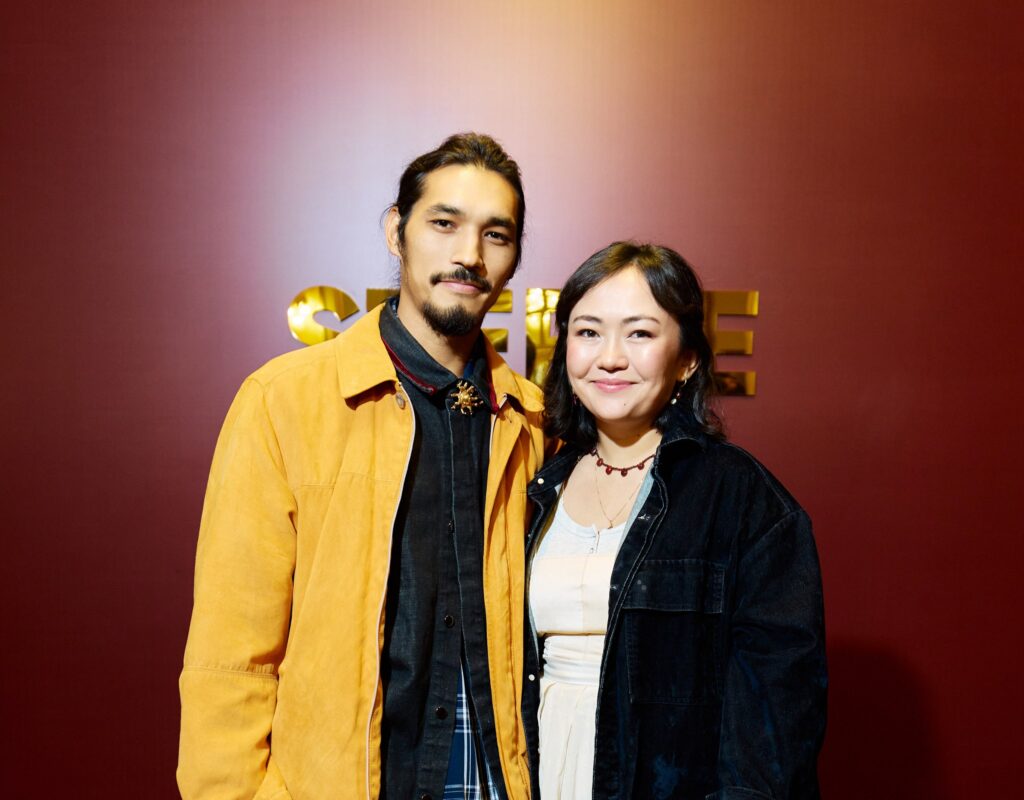
A halal Chinese Muslim restaurant in New York City is an unlikely setting for a concert by a highly acclaimed bard of the Turkmen tradition. Yet on a Saturday afternoon in Manhattan’s Kips Bay neighborhood, before an audience of attentive listeners and curious onlookers peering through the window, the multi-award-winning Mohammad Geldi Geldi Nejad filled Beef Up Noodle with sustained melodic phrases and guttural embellishments. At times, his dexterous strumming of the dutar, a two-stringed long-necked lute, deliberately mimicked the rhythm of galloping horse hooves central to the Turkmen bardic style. Mohammad was raised in the Turkmen community of Gonbad-e Kavus in northeastern Iran. At age ten, he became only the second musician ever to receive the honorary title Oghlan Bakhshi, meaning Child Bard. His musical education in Turkmen bardic traditions began in early childhood, before more formal training in Turkmenistan’s capital, Ashgabat. Turkmen culture, shaped by a nomadic heritage, extends across Turkmenistan, Iran, Afghanistan, Uzbekistan, and Kazakhstan, with smaller populations in Turkey, Iraq, and the North Caucasus. It draws on nomadic traditions where performance serves as a primary vehicle of cultural expression. Central Asian music and culture, carried by diasporic communities from these regions, has found a growing audience in the United States. Turkmen traditions, however, given the minuscule size of the Turkmen population in the U.S., remain largely unfamiliar to most audiences. [video width="848" height="478" mp4="https://timesca.com/wp-content/uploads/2025/12/WhatsApp-Video-2025-12-17-at-18.16.28.mp4"][/video] Even so, Mohammad has brought his music to audiences beyond Turkmenistan and Iran, performing in parts of Europe and the U.S., including recent concerts at the Lowell Folk Festival in Massachusetts and at Roulette in Brooklyn. At the latter, he offered Western listeners rare access to a musical lineage sustained within a family across generations. Performing under his honorific alias Oghlan Bakhshi, he appeared alongside his father, the gyjak, or spike fiddle, master Abdolghaffar Geldinejad, and his wife and regular musical collaborator, Zyyada Jumayeva, a dutar player who represents the female bardic tradition of Turkmenistan. His album Journey Across the Steppes is the first international release of Turkmen folk music in 30 years. His work has also been documented in a book series, The Music of Central Asia. At Beef Up Noodle, Mohammad’s performance, titled Songs of the Bakhshi: Turkmen Bardic Heritage, formed part of a broader curatorial landscape shaped by ethnomusicologist Mu Qian, whose work spans scholarship, publishing, and community-based music making. From Zayton to New York is the concert series he curates, exploring how music travels through histories of migration and exchange. Mohammad’s appearance opened a Central Asian trilogy within the series, to be followed by programs devoted to Kyrgyz and Kazakh musical traditions in early 2026. This trilogy represents one strand of Mu Qian’s wider mission, developed through the See & Sea Cultural Foundation, to support minority musicians and bring underrepresented musical cultures from across Asia into conversation with audiences beyond their places of origin. [caption id="attachment_41154" align="aligncenter" width="1283"] Mu Qian with Mohammad Geldi Geldi Nejad; image: Paul Adams[/caption] British expat Margaret Murray, an audience member whose chance meeting...

Kazakhstan’s Independence Day: Plenty to Cheer, More to Consider

As Kazakhstan prepares to celebrate its Independence Day on December 16th, The Times of Central Asia (TCA) sat down with its special correspondent, Javier M. Piedra, a banker, corporate executive, writer, and seasoned international development expert whose professional ties to Kazakhstan date back to 2000. Piedra lived in Kazakhstan for 16 years. Over that time, he headed KPMG’s M&A (2007 – 2012), set up a credit bureau - the only one in the region at the time - and was a senior advisor for a private equity fund. He also taught corporate finance at Narxoz University. Back in Washington, he later managed USAID’s multibillion-dollar Asia Bureau under Donald Trump. Drawing on decades of experience in financial consulting, international development, and regional policy, Piedra offers wide-ranging insights into the nation’s evolution since 1991. In this conversation, he reflects on the mindset of Kazakhstan’s leadership – especially in recent years – that has led to, despite challenges, to its achievements - from economic reforms and institutional development to social progress and an increasingly dynamic national outlook. He highlights milestones worth celebrating, offers guidance to the next generation, and provides nuanced commentary on religious freedom and the country’s ongoing development path. The views expressed in this interview are those of the speaker and do not necessarily reflect the editorial position of The Times of Central Asia. TCA: As Kazakhstan marks Independence Day on December 16, what core achievements of the country are most worth celebrating at this moment in its history? Piedra: On December 16th, I expect – and this is good news – President Tokayev to repeat what he said last year, i.e., “I am convinced that by maintaining our unity, tranquility and stability in society, we will overcome all challenges and reach new heights on the path of progress.” Put simply, Kazakhstan can stay unified and stable despite challenges if it commits to doing so. People need to hear this message because it is positive, and the record supports his optimism. It is worth celebrating the country’s positive attitude and confidence in the future. Kazakhstan’s greatest achievement since independence, despite forces pushing in the contrary direction, has been the ability of its multiethnic and multicultural society to flourish. Kazakhstan has preserved unity, strengthened friendships with neighbors, ensured economic freedoms, and inspired its youth with hope, despite trials, corruption, and human shortcomings. Kazakhstan’s dedication to unity is strengthened by its refusal to get pulled into unnecessary geopolitical ambitions or Great Power maneuverings that tend to rob countries of their sovereignty; this mindset is worth celebrating on Independence Day. TCA: You mention “confidence in the future.” What does that mean in the context of Independence Day? Piedra: The early days of Independence were rough, very rough, not only for Kazakhstan, but for the rest of the countries of Central Asia. Since independence in 1991, Kazakhstan has worked hard to build social and institutional structures that enable people to have greater “confidence in the future,” and there were many mistakes made, but Kazakhstan came...