• KZT/USD = 0.00216
  • TJS/USD = 0.10800
  • UZS/USD = 0.00008
  • TMT/USD = 0.29850
  • KZT/USD = 0.00216
  • TJS/USD = 0.10800
  • UZS/USD = 0.00008
  • TMT/USD = 0.29850
  • KZT/USD = 0.00216
  • TJS/USD = 0.10800
  • UZS/USD = 0.00008
  • TMT/USD = 0.29850
  • KZT/USD = 0.00216
  • TJS/USD = 0.10800
  • UZS/USD = 0.00008
  • TMT/USD = 0.29850
  • KZT/USD = 0.00216
  • TJS/USD = 0.10800
  • UZS/USD = 0.00008
  • TMT/USD = 0.29850
  • KZT/USD = 0.00216
  • TJS/USD = 0.10800
  • UZS/USD = 0.00008
  • TMT/USD = 0.29850
  • KZT/USD = 0.00216
  • TJS/USD = 0.10800
  • UZS/USD = 0.00008
  • TMT/USD = 0.29850
  • KZT/USD = 0.00216
  • TJS/USD = 0.10800
  • UZS/USD = 0.00008
  • TMT/USD = 0.29850
17 August 2026

Viewing results 1 - 6 of 6

Vance Personally Asked Zelensky to Halt CPC-Linked Tanker Strikes, FT Reports

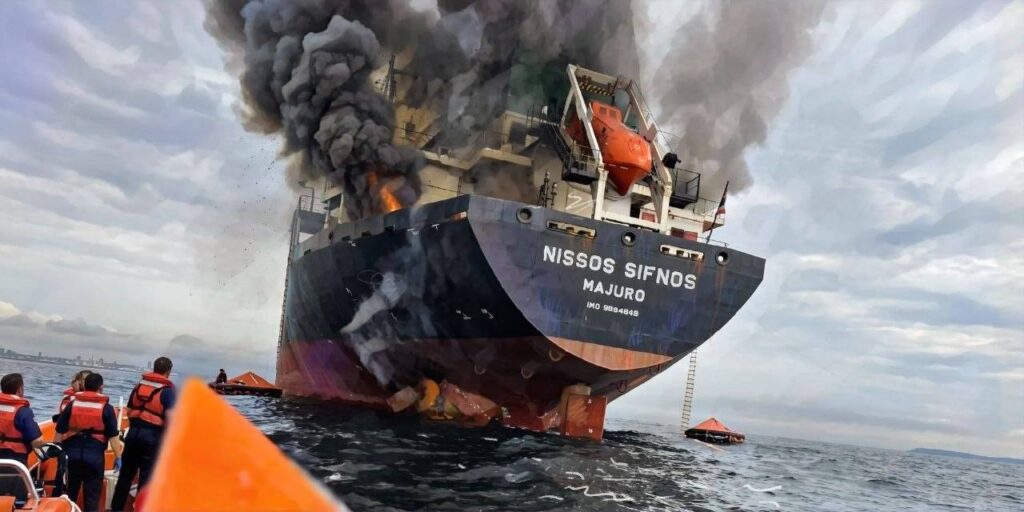
U.S. Vice President JD Vance personally asked Ukrainian President Volodymyr Zelensky on July 31 to halt attacks on oil tankers serving the Caspian Pipeline Consortium’s Black Sea terminal near Novorossiysk, the Financial Times reported on August 12. Citing Ukrainian officials and others familiar with the call, the newspaper said Kyiv had agreed not to target CPC infrastructure or non-Russian vessels unless they were under Ukrainian sanctions or carrying Russian oil or other Russian cargo. Ukraine has not struck tankers near the CPC terminal since the July 31 call. Vance’s intervention came after repeated July attacks had disrupted Kazakhstan’s main oil-export route, halted loading several times, and forced producers to cut output. Washington was also concerned that the attacks were destabilizing oil markets and harming U.S. commercial interests. A U.S. official confirmed to the FT that Washington had warned Kyiv against attacks on non-Russian vessels and CPC infrastructure, describing the pipeline as “a vital conduit of Kazakhstan-origin energy for European markets” and an alternative to Russian energy supplies. The latest incidents before the call came on July 30, when two more tankers were attacked. NISSOS SIFNOS was struck while loading Tengizchevroil crude at CPC’s SPM-3 mooring, while MARATHI was attacked while awaiting a berth about six nautical miles offshore, forcing CPC to stop loading again. The Vance-Zelensky call took place the following day. Washington had already warned Kyiv about attacks affecting U.S. and Kazakh economic interests. Ukraine’s ambassador to Washington at the time, Olha Stefanishyna, disclosed in February that the State Department had delivered a formal démarche after an earlier strike on Novorossiysk. On July 23, Representative Bill Huizenga, chair of the House Foreign Affairs Subcommittee on South and Central Asia, told TCA that Ukraine had an obligation to avoid legitimate allied energy exports and infrastructure, and that further strikes would "not be tolerated." The Wall Street Journal later reported that Chevron CEO Mike Wirth had raised the tanker attacks with Trump administration officials, after which Washington cautioned Ukraine against targeting non-Russian vessels in the Black Sea. By early August, the disruption was showing clearly in export data. Reuters reported on August 7 that CPC loadings in July fell more than 20% behind schedule to around 1.2 million to 1.3 million barrels per day. The reduction amounted to a loss of about 400,000 barrels per day of CPC Blend from international markets in July. Kazakhstan’s oil production fell 14% in July from June. CPC is the dominant route for Kazakhstan’s oil exports and normally handles roughly 1.5 million to 1.7 million barrels per day. The 1,511-kilometer pipeline runs from the Tengiz field through Russia to the Black Sea. Its shareholder structure also gives U.S. companies a substantial direct interest: Chevron owns 15%, while Mobil Caspian Pipeline Company, an ExxonMobil affiliate, owns 7.5%. Responsibility for the individual tanker attacks has remained politically sensitive. Russia has blamed Ukraine. Kyiv has not publicly claimed responsibility for attacks on vessels carrying predominantly Kazakh crude. According to the FT, the July 31 call resulted in a...
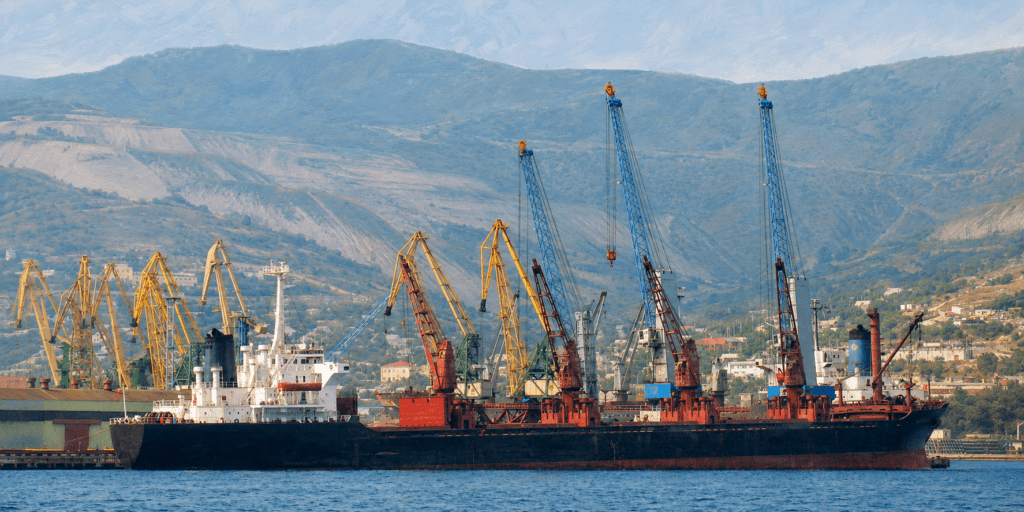
Four Tankers Load at CPC as Tengizchevroil Plans Larger Batumi Shipments

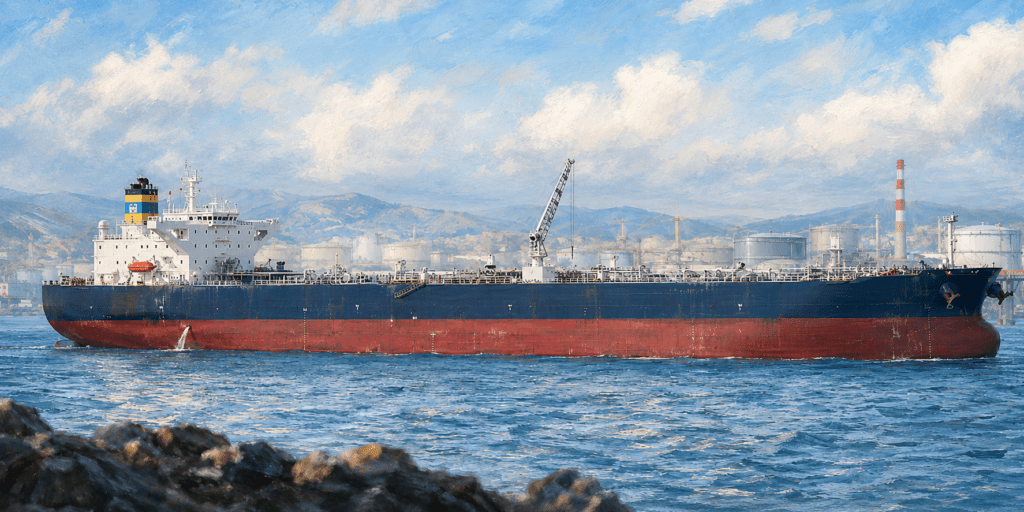
Four tankers have completed loading Kazakh crude at the Caspian Pipeline Consortium’s Black Sea terminal following the July 30 attacks, providing vessel-tracking confirmation that shipments restarted. Two have left the terminal area, while at least three more were waiting nearby, Bloomberg reported. Chevron CEO Mike Wirth said on July 31 that the pipeline was flowing and ships were being loaded. CPC has not issued a detailed notice covering the restart, but the completed cargoes confirm that tanker loading resumed, though throughput remains below normal. Kazakhstan’s Energy Ministry said CPC was receiving 100,000 metric tons of crude a day as of August 1, equivalent to about 730,000 barrels per day, after temporarily suspending its pipeline system on July 31. “The CPC continues to receive oil from shippers, while storage tanks are being filled,” the ministry said. It added that further increases would depend on tankers arriving on time for loading at the marine terminal. The offshore facility is technically capable of handling the volumes recorded before the attacks, but exports still depend on vessel availability and weather conditions. The daily charter rate for a tanker calling at the terminal reached $338,000 by the end of last week, nearly double its level a month earlier, according to Baltic Exchange data. Some shipowners were avoiding the terminal after repeated attacks on vessels loading or waiting nearby. An industry source familiar with operational data told Reuters that national oil and gas condensate output averaged about 1.85 million barrels per day in July, down 14% from 2.16 million barrels per day in June. Tengiz output fell 18% month on month, while Kashagan declined 25% and Karachaganak fell 18%, the source said. Tengiz was producing about 454,000 barrels per day on July 31, compared with a June average of 961,000 barrels per day. The Energy Ministry and the field operators had not confirmed those preliminary figures. CPC carries more than 80% of Kazakhstan’s oil exports and handles most production from Tengiz, Kashagan, and Karachaganak. The pipeline runs about 1,510 kilometers from western Kazakhstan through Russia to the terminal near Novorossiysk. Russia holds 31% of the consortium, while Kazakhstan holds 20.75%. Chevron owns 15%, and ExxonMobil holds 7.5%. Tengizchevroil is also expanding a smaller alternative route. The Chevron-led venture plans to send about 100,000 metric tons of Tengiz crude by rail to Georgia’s Batumi oil port terminal in August, Reuters reported, citing two industry sources. About 20,000 tons had moved through Batumi from the start of July, marking the first shipments on the route since March. The planned volume for August is equivalent to roughly 24,000 barrels per day, five times the July total, but small beside Tengiz’s normal output and the volumes CPC can carry. Batumi cannot replace the pipeline, though it provides an additional outlet if security problems again slow tanker arrivals near Novorossiysk. On August 3, the cargo ship Nadezhda was hit by a drone about 20 nautical miles from Novorossiysk, seriously injuring three crew members. The vessel was not reported to be carrying...

Chevron Says CPC Is Loading Tankers as Kazakhstan Restores Oil Intake

Chevron CEO Mike Wirth said that oil was flowing through the CPC pipeline and tankers were being loaded on July 31, one day after two vessels were attacked near its Black Sea terminal. Kazakhstan’s Energy Ministry said intake reached 100,000 metric tons a day from August 1 and rejected reports of a complete shutdown. “The pipeline is flowing. We’ve been loading ships this week,” Wirth said during Chevron’s second-quarter earnings call. He said two of CPC’s three single-point moorings were in service. The third was undergoing refurbishment and was expected to return during the third quarter. The ministry said CPC temporarily suspended pipeline system operations on July 31 but continued receiving crude and filling storage tanks. A complete shutdown “is not being considered,” it said. Further increases would depend on tankers arriving for loading near Novorossiysk. The two statements indicate that loadings restarted quickly after the July 30 attacks, but do not establish a full return to planned export volumes. CPC can receive crude while storage space remains available, but if tanker loadings fall behind, storage fills and producers must cut output as they did in late July. On August 2, OPEC+ raised Kazakhstan’s September target by 10,000 barrels per day to 1.628 million barrels. The increase formed part of a combined 188,000-barrel-per-day rise for Kazakhstan and six other producers. The group said countries that had exceeded their quotas since January 2024 would make up for the excess by producing less in future months. A separate OPEC+ monitoring committee, which includes Kazakhstan, stressed the “critical importance” of safeguarding international maritime routes and expressed concern about attacks on energy infrastructure. Its statement did not name CPC or the Black Sea incidents. For Kazakhstan, the higher quota may have little immediate effect if export flows remain constrained. Reuters has reported that OPEC+ may pause further increases after September while it reviews production capacity for quota baselines which will apply in 2027. The immediate risk is a repeat of late July, when disrupted loadings filled storage and forced sharp production cuts at Tengiz and other major fields. CPC loadings had resumed on July 27 after a week-long suspension. Three days later, two more tankers were attacked near the terminal. NISSOS SIFNOS was struck while loading Tengizchevroil crude at the SPM-3 offshore mooring, while MARATHI was hit while waiting for a berth about six nautical miles offshore. Both fires were extinguished, and no injuries to the crews or pollution were reported. Neither CPC nor Kazakhstan publicly identified an attacker. Ukraine’s drone forces later said they had struck four Russian tankers in the Black and Azov seas, but did not name the vessels or locations. The earlier stoppage had already demonstrated how swiftly export disruption can reach Kazakhstan’s oilfields. National oil and gas condensate production fell to about one million barrels per day on July 26, less than half the June average of 2.16 million barrels per day. CPC runs for about 1,510 kilometers from western Kazakhstan through Russia to the Black Sea. It handles...

CPC Halts Oil Loadings Again After Two More Tankers Attacked Near Novorossiysk

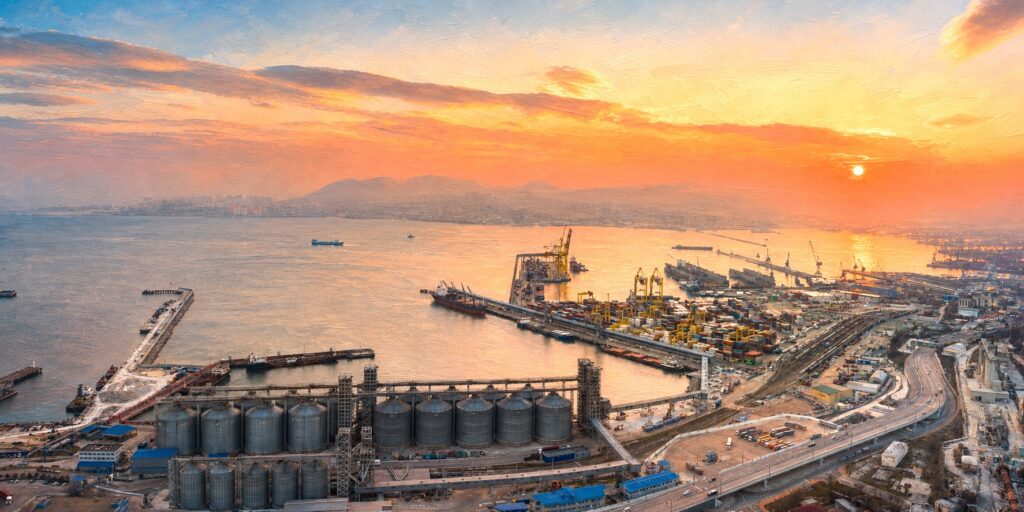
The Caspian Pipeline Consortium has stopped oil loading at its Black Sea terminal near Novorossiysk after two more tankers were attacked early on July 30. The suspension came only three days after Kazakhstan resumed exports through the route following a week-long disruption. The Marshall Islands-flagged NISSOS SIFNOS was attacked at 1:48 a.m. Moscow time while loading Tengizchevroil crude at single-point mooring SPM-3, CPC said. A drone hit the cargo deck near the manifolds used to receive oil. The strike caused a fire, which the crew extinguished with help from three CPC support vessels. CPC said no employees or contractors were injured, no oil spill occurred, and the crew did not request medical assistance or evacuation. Okeanis Eco Tankers, the vessel’s owner, said NISSOS SIFNOS sustained only minor damage, its crew was safe, and no spill or pollution occurred. The company said the tanker was continuing its voyage operations. The tanker MARATHI was also attacked while awaiting a berth at the CPC terminal, about six nautical miles, or eleven kilometres, offshore. Dynacom Tankers, the vessel’s operator, said it was struck by two projectiles of unknown origin. The resulting fire was extinguished by the crew, all of whom were safe and accounted for. No pollution was reported. Dynacom said it had activated its emergency response plan and remained in contact with the crew and the relevant authorities. “Oil loading has been stopped, while pipeline facilities are operating normally,” CPC said. The consortium did not identify who carried out either attack. No party had claimed responsibility when the suspension was announced. Ukraine’s drone forces later said they had struck four Russian tankers in the Black and Azov seas overnight but did not identify the vessels or locations. The statement therefore did not establish responsibility for the attacks on NISSOS SIFNOS or MARATHI. CPC said appeals from Kazakhstan and its foreign shareholders had been ignored. It said some representations were made through the U.S. State Department. On July 23, the chair of the House Foreign Affairs Subcommittee on South and Central Asia, Bill Huizenga, told The Times of Central Asia that further strikes affecting CPC infrastructure would “not be tolerated.” CPC said attacks near loading equipment could cause a major fire and oil spill. The consortium also warned of damage to Kazakhstan and to shippers including Chevron, ExxonMobil, Eni, TotalEnergies, and Shell. On July 27, CPC had restarted tanker loadings and resumed accepting oil from Kazakhstan after storage constraints forced producers to cut output. The July 30 incidents bring the number of tankers struck near or while serving the CPC terminal during July to at least eight. The sequence began with the Chevron-chartered Yasa Polaris on July 7. Nordic Zenith was hit on July 17. ASIA and NISSOS IOS were attacked while loading Kazakh crude on July 19. NELSA was struck at SPM-1 on July 20, and HERA was reported damaged while approaching the terminal on July 23. The earlier attacks repeatedly stopped loadings. CPC then stopped accepting crude, and tankers scheduled to collect...

Kazakhstan Resumes CPC Oil Exports After Output More Than Halves

Kazakhstan resumed oil exports through the Caspian Pipeline Consortium on July 27 after the consortium restarted accepting crude and loading tankers at its Black Sea terminal near Novorossiysk. The Energy Ministry said the SEAMAJESTY and MILOS tankers were loading crude supplied by Tengizchevroil at two of the terminal’s single-point moorings. CPC said its pipeline had been back online since 12:28 p.m. Moscow time. Loading operations resumed after a week-long suspension. The ministry said terminal operations would continue according to assessments of the security situation and compliance with safety requirements. It remains in contact with CPC management, oil producers, and other companies involved in the shipments. The restart followed the sharpest production decline recorded during the disruption. Kazakhstan’s oil and gas condensate output fell to about one million barrels per day on July 26, according to an industry source. That was less than half the June average of 2.16 million barrels per day. Production had already fallen by about 21% as of July 22, to 1.63 million barrels per day. Tengiz, Kazakhstan’s largest oilfield, bore the heaviest initial reduction. Its output dropped by 56%, from a July average of 925,000 barrels per day to about 406,000 barrels per day. By July 26, the cuts had spread across Kazakhstan’s three largest oil projects. Daily production at Tengiz, Kashagan, and Karachaganak fell by between 70% and 90% compared with June levels, according to an industry source. The Energy Ministry and the projects’ operators did not comment on the field-level figures. Producers reduced output after CPC restricted intake from Kazakhstan and suspended tanker loadings. Storage tanks at the terminal had reached capacity, leaving the pipeline system with little room to receive additional crude. The Energy Ministry described the reductions as a technical measure intended to keep production operations stable. The halt followed a series of drone attacks on tankers near the CPC terminal. Three vessels were struck on July 17 and 19, including two loading Kazakh oil. Loadings briefly resumed before another tanker, NELSA, was hit at a single-point mooring on July 20. No casualties or oil spills were reported. Kazakhstan condemned the attacks and said an agreed information-sharing mechanism intended to protect civilian vessels carrying CPC crude had been disregarded. The government described the incidents as a threat to international energy security and demanded an immediate halt. The 1,510-kilometer CPC pipeline carries crude from western Kazakhstan through Russia to the Black Sea. It handles more than 80% of Kazakhstan’s oil exports, including most production from Tengiz, Kashagan, and Karachaganak. The shutdown added to a difficult year for the sector. Kazakhstan produced 45.7 million tonnes of oil in the first half of 2026, down 8.4% year-on-year. The ministry expects full-year production of 98 million tonnes after lowering its previous target because of earlier Tengiz outages and CPC disruptions. It was not immediately clear how quickly output would return to earlier levels. The reopening restores Kazakhstan’s main export outlet, but the speed and scale of the cuts again exposed its dependence on infrastructure vulnerable to...

U.S. Eases Sanctions on Key Kazakh Oil Projects

The Caspian Pipeline Consortium (CPC), oil producer Tengizchevroil (TCO), and the Karachaganak field have been granted permission to resume services and conduct transactions related to their operational activities, following a United States Treasury Department decision to ease sanctions. The Tengiz and Karachaganak fields are located in Kazakhstan, and Kazakh oil is exported through the CPC system. In October, the U.S. Treasury added Russian oil giants Lukoil and Rosneft, along with 34 of their subsidiaries, to its latest package of sanctions. However, experts now suggest that the exemption of key projects in Kazakhstan could have a stabilizing effect on the country's oil sector and its broader economy. The U.S. Treasury’s Office of Foreign Assets Control (OFAC) issued General License No. 124B, allowing services and other transactions required to maintain the operations of the CPC, Tengizchevroil, and the Karachaganak project, even when sanctioned entities such as Lukoil and Rosneft are involved. The license does not permit any transactions related to the sale or transfer of shares in these projects. Kazakhstan’s Minister of Energy, Yerlan Akkenzhenov, confirmed on November 12 that the government is working to have the Karachaganak field fully exempt from the U.S. sanctions regime. The CPC system links oil fields in western Kazakhstan and parts of Russia with a marine terminal in Novorossiysk on Russia’s Black Sea coast. It remains the main export route for Kazakh oil, carrying more than 80% of the country’s crude. The system has an annual capacity of about 83 million tons. CPC shareholders include Kazakhstan, holding a combined 20.75% through KazMunayGas (19%) and Kazakhstan Pipeline Ventures LLC (1.75%). Other shareholders include Chevron Caspian Pipeline Consortium Company (15%), Lukoil International GmbH (12.5%), Mobil Caspian Pipeline Company (7.5%), Rosneft-Shell Caspian Ventures Limited (7.5%), BG Overseas Holdings Limited (2%), Eni International N.A. N.V. (2%), and Oryx Caspian Pipeline LLC (1.75%). The Russian government and Transneft also hold significant stakes. Tengizchevroil LLP, the operator of the Tengiz field, is a joint venture between Chevron (50%), ExxonMobil Kazakhstan Ventures Inc. (25%), KazMunayGas (20%), and Lukoil (5%). Tengiz is one of Kazakhstan’s largest oil fields, with reserves estimated at 3.1 billion tons. The Karachaganak field is among the world’s largest, with development carried out by the Karachaganak Petroleum Operating consortium. Shell and Eni serve as joint operators, and the partnership also includes Chevron (18%), Lukoil (13.5%), and KazMunayGas (10%). On November 13, it was reported that KazMunayGas is considering acquiring Lukoil’s stake in the Karachaganak project, reflecting efforts to manage shifting ownership dynamics under the sanctions environment.