• KGS/USD = 0.01144 0%
  • KZT/USD = 0.00198 -0%
  • TJS/USD = 0.10901 0%
  • UZS/USD = 0.00008 0%
  • TMT/USD = 0.28490 0%
  • KGS/USD = 0.01144 0%
  • KZT/USD = 0.00198 -0%
  • TJS/USD = 0.10901 0%
  • UZS/USD = 0.00008 0%
  • TMT/USD = 0.28490 0%
  • KGS/USD = 0.01144 0%
  • KZT/USD = 0.00198 -0%
  • TJS/USD = 0.10901 0%
  • UZS/USD = 0.00008 0%
  • TMT/USD = 0.28490 0%
  • KGS/USD = 0.01144 0%
  • KZT/USD = 0.00198 -0%
  • TJS/USD = 0.10901 0%
  • UZS/USD = 0.00008 0%
  • TMT/USD = 0.28490 0%
  • KGS/USD = 0.01144 0%
  • KZT/USD = 0.00198 -0%
  • TJS/USD = 0.10901 0%
  • UZS/USD = 0.00008 0%
  • TMT/USD = 0.28490 0%
  • KGS/USD = 0.01144 0%
  • KZT/USD = 0.00198 -0%
  • TJS/USD = 0.10901 0%
  • UZS/USD = 0.00008 0%
  • TMT/USD = 0.28490 0%
  • KGS/USD = 0.01144 0%
  • KZT/USD = 0.00198 -0%
  • TJS/USD = 0.10901 0%
  • UZS/USD = 0.00008 0%
  • TMT/USD = 0.28490 0%
  • KGS/USD = 0.01144 0%
  • KZT/USD = 0.00198 -0%
  • TJS/USD = 0.10901 0%
  • UZS/USD = 0.00008 0%
  • TMT/USD = 0.28490 0%
08 December 2025

Viewing results 1 - 6 of 52

Kazakhstan’s Caspian Sea Ports Increase Cargo Transportation

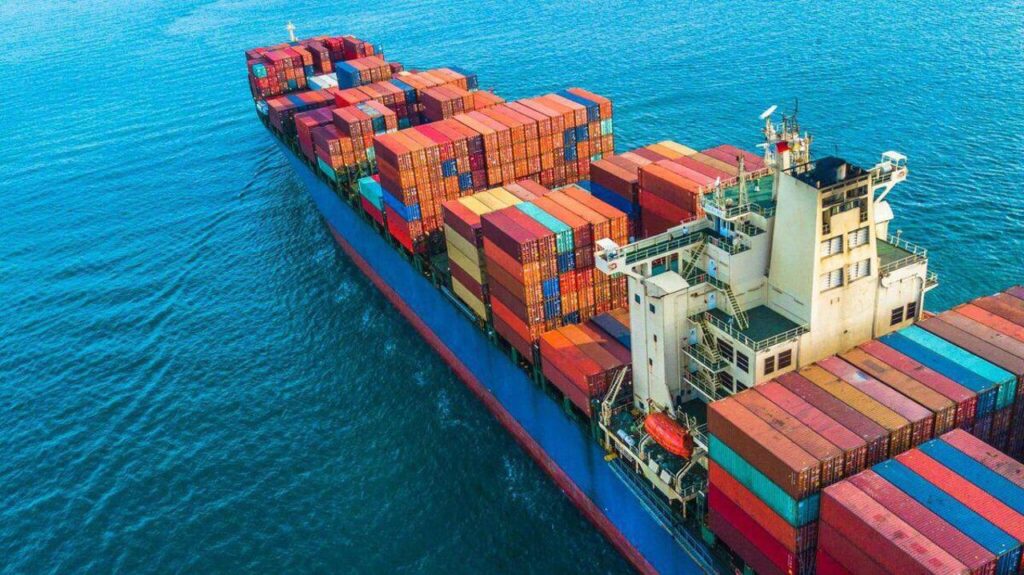
Kazakhstan’s Ministry of Transport has announced that from January to October 2024, the country’s Caspian Sea ports transported 6.2 million tons of cargo, reflecting a 3% increase compared to the same period last year. Transit cargo shipments saw even stronger growth, rising by 18%. Truck transshipment via the Kuryk port’s ferry complex increased by 22%, while container transportation through the Aktau port surged by 84%, with approximately 27,000 containers moved along the East-West transit route. During the same period, the Sarzha terminal at Kuryk port handled 55,000 tons of cargo, including non-ferrous metals, fertilizers, and barley, destined for Turkey and Iran. In October, a new grain terminal with an annual capacity of 1 million tons was inaugurated at the Kuryk port. Efforts to enhance the port’s capacity continue. The Times of Central Asia previously reported that Kazakhstan’s Ministry of Transport has undertaken dredging operations at the Kuryk port to ensure sufficient depth for ship access, bolstering the capacity of the Trans-Caspian International Transport Route (TITR). The dredging project will support further expansion of Kuryk’s terminal capacity, currently set at 6 million tons annually—4 million tons through its railway terminal and 2 million tons via its automobile terminal.

Kazakhstan, Azerbaijan and China Establish Joint Cargo Terminal in Baku

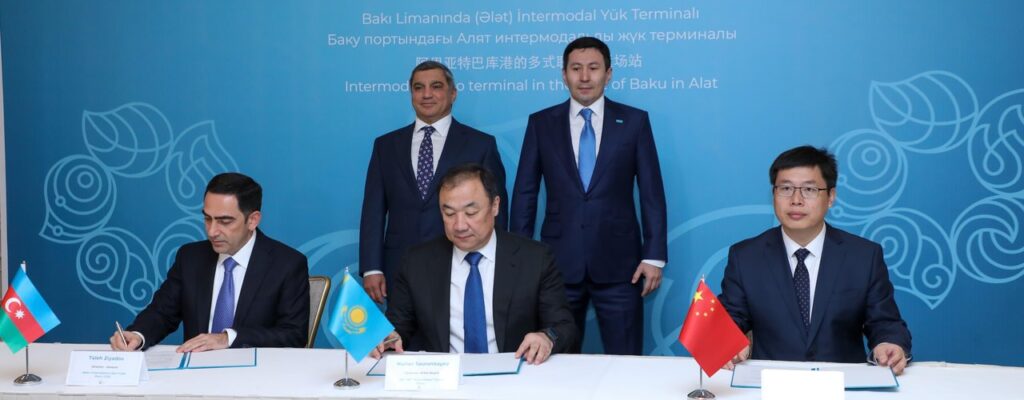
Azerbaijan, China, and Kazakhstan have signed an agreement to establish an intermodal cargo terminal in the Port of Alat in Baku, the Azerbaijani capital. The agreement was signed in Baku on November 12 by SK-AIH Investment Fund Ltd (Samruk-Kazyna, Azerbaijan Investment Holding), Kazakhstan Temir Zholy (Kazakhstan’s national railway company), Baku International Sea Trade Port (Azerbaijan), and Xi'an Free Trade Port Construction and Operation Co., Ltd (China). The project was made possible through Azerbaijan’s provision of a land plot, operational berths, and terminal facilities at the Port of Alat. This new terminal is expected to increase container train traffic between China and Europe along the Trans-Caspian International Transport Route (TITR), also known as the Middle Corridor, reducing delivery times, transportation costs, and transshipment time. The terminal will feature a universal cargo yard, a covered warehouse complex spanning 5,000 square meters, and a container yard with a capacity of over 1,000 containers. Kazakhstan and China plan to increase the volume of cargo transported along the TITR to 600 container trains per year by 2025–2026, with targets of 1,000 container trains in 2027 and 2,000 by 2029, according to Kazakhstan’s Ministry of Transport. In 2023, transit volumes between China and Europe through Kazakhstan reached 2.76 million tons—a 65% increase from 1.7 million tons in 2022. The TITR connects China and Europe via Central Asia and the Caucasus, bypassing Russia, offering a strategic link between the two regions.

Alstom to Supply 117 Locomotives to Kazakhstan

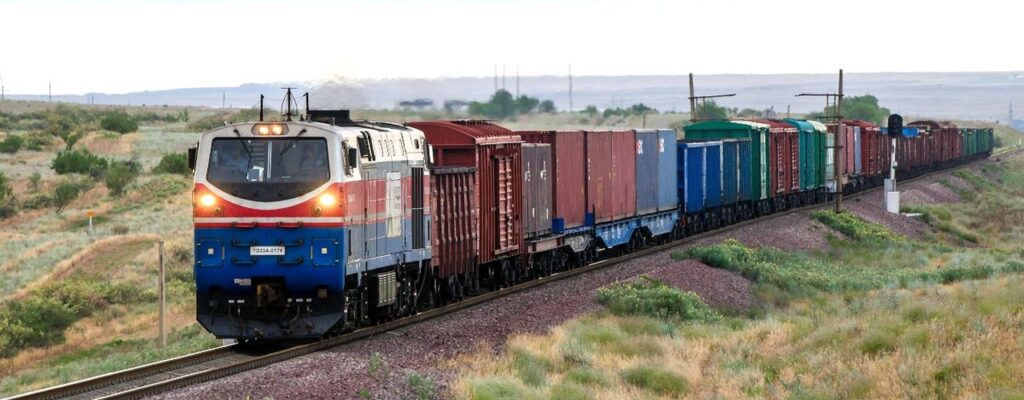
Kazakhstan’s national railway company, Kazakhstan Temir Zholy (KTZ), Electric Locomotive Assembly Plant, and France’s Alstom have agreed to supply 117 freight electric locomotives by 2028 and establish service centers for them. The document was signed at Paris's November 4 Kazakhstan-France Business Council meeting. These powerful electric locomotives, capable of hauling freight trains weighing up to 9,000 tons, will replace the outdated VL-80 locomotives of the 1980 model. The new locomotives' advantages include lower cost, more economical power consumption, high reliability, and lower maintenance costs. The French bank Société Générale will provide preferential financing for the purchase of the locomotives. Kazakhstan's railways play a strategic role in its economy. The country is a key transit hub for rail cargo transportation along the Trans-Caspian International Transport Route (TITR), also known as the Middle Corridor, which connects China and Europe. Today, more than 50% of freight in Kazakhstan is transported by rail. Kazakhstan Temir Zholy, the country’s national railway company, reported transporting more than 122 million tons of cargo from January to June 2024.

Kazakhstan and Russia Increase Rail Cargo Transportation to and from China

On October 18, Kazakhstan's Deputy Prime Minister Serik Zhumangarin, and Russia's Deputy Chairman of the Government Alexey Overchuk attended a meeting of the Intergovernmental Commission on Cooperation in Moscow, on Kazakhstan and Russia's transport and logistics sectors. As reported by the Kazakh government's press service, between January and September 2024, the volume of containers transported by rail from Russia to China through Kazakhstan, increased by 63% compared to the same period in 2023, while container transportation along the China-Europe-China route through Russia and Kazakhstan increased by 65%. During the meeting an agreement was made to further increase the flow of container trains on the China-Kazakhstan-Russia route by constructing the necessary transport infrastructure at the Selyatino rail station in the Moscow region. In April,  Kazakhstan’s national railway’s company Kazakhstan Temir Zholy (KTZ), Russia’s Slavtrans-Service JSC, and China’s Xian Free Trade Port Construction and Operation Co., Ltd began construction on a new transport and logistics center, CRK Terminal, at Selyatino, aimed at ensuring the efficient handling of cargo following the route Xi'an (China) - Dostyk/Altynkol (Kazakhstan) - Selyatino (Russia). The center is set to become an essential link in developing international transport corridors and increase the competitiveness of transportation through Kazakhstan. In 2023, the volume of cargo transported by rail between China and Russia through Kazakhstan amounted to 3.8 million tons, an increase of 35% compared to 2022. Kazakhstan also remains an important transit and transport link along the Trans-Caspian International Transport Route (TITR), which known as the Middle Corridor, connects China and Europe via Central Asia and the Caucasus.

China Officially Joins the Middle Corridor

It was announced during the 8th International Silk Road Expo in Xi’an in September 2024 that China will formally join the Middle Corridor under the guise of participation by the China Railway Container Transport Corporation (CRTC). This move signals a growing reliance on Central Asia’s trade-route infrastructure potential. China's shift to overland routes is part of a broader strategy to diversify away from traditional maritime routes through chokepoints like the Strait of Malacca, which carry geopolitical risk. Kazakhstan's strategic geographic location naturally makes it indispensable to China’s trade, and infrastructure projects currently underway represent a key component of the Middle Corridor’s potential. In July 2024, Kazakh President Kassym-Jomart Tokayev ratified agreements with China aimed at further developing the Middle Corridor, enhancing both road and rail infrastructure. The country has already been upgrading its rail infrastructure, modernizing dry ports like Khorgos on the Chinese border, and expanding transit facilities at the Caspian Sea port of Aktau. The increased flow of goods through Kazakhstan is evident: over 212 container block trains have passed through the country by September 2024, with the number projected to exceed 300 by the year’s end. These build-outs, and particularly Kazakhstan’s modernization of its railways, go hand-in-hand with the recently finished improvements along the Baku-Tbilisi-Kars (BTK) line, which connects Azerbaijan to Turkey via Georgia. The expansion of the BTK line's capacity from 1 million to 5 million tons per year has now been completed. As a result of all these efforts, the travel time for goods from China to the Black Sea has been reduced to just 10–12 days, highlighting the efficiency of the corridor. Azerbaijan also plays a crucial role in this economic ecosystem. Baku’s port of Alat serves as a critical transit point for cargo crossing between Central Asia and the South Caucasus. Azerbaijan’s collaboration with Kazakhstan, Georgia, and Turkey has led to significant investments in expanding port facilities and upgrading railway systems beyond the crucial BTK link mentioned above. The result is a smoother, more reliable flow of goods from China to Europe. Azerbaijan is winning its bet to become a regional logistics hub. In addition, a Chinese consortium recently secured the contract for the construction of the Anaklia deep-sea port in Georgia, a strategically important site on the eastern edge of the Black Sea. The project was initially awarded to a Georgian-American consortium, but was cancelled in 2020 due to political and legal disputes. Following a new tender process this year, the Chinese consortium emerged as the sole bidder. If supporting infrastructure is adequately developed and the Black Sea’s cargo transit capacity can be significantly enhanced, then the Anaklia port could become a critical node in the Middle Corridor, enhancing its role in Eurasian trade and bolstering regional connectivity. China’s increased reliance on Central Asian, trans-Caspian, and South Caucasus routes is not just about efficiency. It is also a strategic diversification to mitigate the risks posed by geopolitical instability in other regions. Traditional sea routes through maritime choke-points as well as overland routes like...

The Future of Transit in Kazakhstan

Increasing the volume of transit cargo through Kazakhstan is a strategic priority for the nation as it aims to become a transportation and logistics hub in Central Asia and the Caspian region, with its railways at the forefront of this effort. TCA spoke with Asem Mukhamedieva, Managing Director for New Projects at KTZ Express JSC, about the company’s current capabilities, prospects, and new projects in this direction.   Kazakhstan’s Role in Transit Cargo TCA: Kazakhstan, has become a vital land transportation corridor between Asia and Europe. How does Kazakhstan Temir Zholy (KTZ) contribute to further increasing transit cargo, and what trends have you observed? Mukhamedieva-  The volume of transit handled by KTZ Express in the first eight months of this year reached approximately 350,000 twenty-foot equivalent units (TEU). The China-Europe-China route saw a 36% increase, while the China to Central Asia route grew by 17%. Notably, the Trans-Caspian International Transport Route (TITR) dispatched 220 container trains, a twenty-fold increase from last year. TCA: What new routes have been launched, and what is KTZ doing to increase them? - KTZ is continuously expanding its transportation network and logistics services. One significant development is the Trans-Afghan route, which was launched this May. Under a pilot project, containers with aluminosilicate hollow microspheres were shipped from Pavlodar to Jebel Ali Port via Uzbekistan, Afghanistan, Pakistan, and the UAE. Offering competitive terms and tariffs has encouraged more cargo traffic along this route. In July, we cut delivery times in half — down to just five days — on the Xi’an-Altynkol-Tashkent route, compared to the previous 10-12 days. This success is largely due to the new terminal in Xi’an, built by KTZ and its Chinese partners. The terminal consolidates cargo from various Chinese provinces, streamlining logistics processes and significantly improving efficiency. We also launched several new logistics services to boost cargo traffic and strengthen international links. For example, in June, we introduced a regular South Korea-China-Kazakhstan-Central Asia route. We also reopened a previously unprofitable route from China to Iran and back, reducing costs by collaborating with Chinese partners.   The Growing Importance of the Trans-Caspian Route TCA: You mentioned the growth of the TITR. Could you elaborate on the regions of China involved, the types of cargo, and what steps are being taken to attract more shipments? -  The Trans-Caspian International Transport Route (TITR) has become a critical link in Eurasian logistics. This year, the route achieved remarkable growth. In September, we welcomed the 200th train dispatched via TITR at the Port of Aktau. Transit volumes for the first eight months of this year surpassed annual totals from previous years. Xi'an province leads in shipments, accounting for 57% of the total volume on this route. Other key provinces include Yiwu, Chongqing, Sanping, and Henan. Major markets for these shipments are Azerbaijan (62%), Georgia (23%), Turkey (7%), and EU countries (9%). Over 200 different commodity items were transported, with automobiles, components, textiles, and electronics making up 56% of the total. To maintain this momentum, we are working...