• KGS/USD = 0.01144 0%
  • KZT/USD = 0.00213 0%
  • TJS/USD = 0.10562 0%
  • UZS/USD = 0.00008 0%
  • TMT/USD = 0.28530 0%
  • KGS/USD = 0.01144 0%
  • KZT/USD = 0.00213 0%
  • TJS/USD = 0.10562 0%
  • UZS/USD = 0.00008 0%
  • TMT/USD = 0.28530 0%
  • KGS/USD = 0.01144 0%
  • KZT/USD = 0.00213 0%
  • TJS/USD = 0.10562 0%
  • UZS/USD = 0.00008 0%
  • TMT/USD = 0.28530 0%
  • KGS/USD = 0.01144 0%
  • KZT/USD = 0.00213 0%
  • TJS/USD = 0.10562 0%
  • UZS/USD = 0.00008 0%
  • TMT/USD = 0.28530 0%
  • KGS/USD = 0.01144 0%
  • KZT/USD = 0.00213 0%
  • TJS/USD = 0.10562 0%
  • UZS/USD = 0.00008 0%
  • TMT/USD = 0.28530 0%
  • KGS/USD = 0.01144 0%
  • KZT/USD = 0.00213 0%
  • TJS/USD = 0.10562 0%
  • UZS/USD = 0.00008 0%
  • TMT/USD = 0.28530 0%
  • KGS/USD = 0.01144 0%
  • KZT/USD = 0.00213 0%
  • TJS/USD = 0.10562 0%
  • UZS/USD = 0.00008 0%
  • TMT/USD = 0.28530 0%
  • KGS/USD = 0.01144 0%
  • KZT/USD = 0.00213 0%
  • TJS/USD = 0.10562 0%
  • UZS/USD = 0.00008 0%
  • TMT/USD = 0.28530 0%

Viewing results 1 - 6 of 82

Kazakhstan and China Boost Rail Trade via Middle Corridor Agreement

Kazakhstan and China have signed a renewed strategic agreement to strengthen rail connectivity and increase freight volumes along the Trans-Caspian International Transport Route (TITR), also known as the Middle Corridor. At a ceremony in Beijing, Kazakhstan Temir Zholy (KTZ) and China State Railway Group concluded a new Agreement on Comprehensive Strategic Cooperation, replacing the framework established in 2014. The updated agreement reflects evolving priorities in railway transport and logistics between the two countries. According to KTZ, the agreement aims to reinforce Kazakhstan’s role as a key logistics hub between East and West and expand the Middle Corridor’s capacity as an alternative trade route linking China and Europe. Surging Freight Volumes and Strategic Exports Rail freight between China and Kazakhstan continues to grow rapidly. From January to May 2025, cargo volumes reached 14.2 million tons, an 11% increase compared to the same period last year. Grain exports, in particular, surged by 46% to 1.6 million tons, underscoring Kazakhstan’s expanding role not only as a transit state but also as a supplier of strategic commodities such as agricultural products and raw materials. This growth aligns with Kazakhstan’s broader economic goals of trade diversification and regional integration. Zhetysu Terminal: A Key Infrastructure Milestone A critical component of the strengthened transport network is the Zhetysu container terminal in Almaty, inaugurated on June 10. Jointly developed by Kazakhstan and China, the terminal is expected to serve as a central logistics hub for the consolidation and distribution of Chinese cargo transported via rail and road. As previously reported by The Times of Central Asia, the terminal is positioned to become a key platform for transshipment along the TITR, further enhancing its competitiveness as a vital link in East-West trade flows. Strategic Implications for the Region As Kazakhstan accelerates transport infrastructure modernization and strengthens rail cooperation with China, the newly signed agreement is anticipated to deliver long-term benefits for regional connectivity, supply chain resilience, and Eurasian trade corridors. The enhanced focus on the Middle Corridor comes amid global efforts to diversify trade routes and reduce dependence on traditional corridors through Russia, reinforcing the geopolitical and economic significance of Kazakhstan’s transport strategy.

Kazakhstan Launches Construction of Strategic Center-West Highway Corridor

Kazakhstan has officially commenced construction of the long-anticipated Center-West highway corridor, a strategic infrastructure project designed to enhance national connectivity and boost the country’s transit capacity. The groundbreaking ceremony took place in the Kostanay region on June 14, marking a major milestone in the implementation of Kazakhstan’s national transport development strategy. According to the Ministry of Transport, the new highway will stretch 865 kilometers along the route Astana-Zhanteke-Egindikol-Arkalyk-Torgai-Irgiz. Once completed, the corridor will directly link the central and western regions of Kazakhstan and integrate into the Trans-Caspian International Transport Route (TITR), a critical freight corridor connecting China and Europe via Kazakh territory. One of the most significant logistical benefits of the project is a 573-kilometer reduction in travel distance between Astana and Irgiz, which is expected to substantially cut transit times and enhance freight movement efficiency. Construction began simultaneously in two directions: one from the town of Arkalyk toward Astana, and the other from the village of Torgai toward Irgiz. This dual-front approach is intended to accelerate the project timeline and streamline construction efforts across Kazakhstan’s expansive steppe terrain. Speaking at the launch event, Deputy Minister of Transport Satzhan Ablaliyev emphasized the strategic importance of the initiative. He noted that the corridor would not only improve national transport infrastructure and transit capabilities but also enhance regional interconnectivity and accessibility. Beyond its national scope, the project is expected to deliver substantial local benefits by boosting economic activity in adjacent areas. Increased mobility, expanded trade routes, and job creation, both during construction and in the long term, are among the anticipated outcomes. The Center-West highway corridor forms a key component of Kazakhstan’s broader strategy to modernize its transport network and solidify its role as a pivotal transit hub between East and West.

Kazakhstan: The Key Link Connecting China and Europe

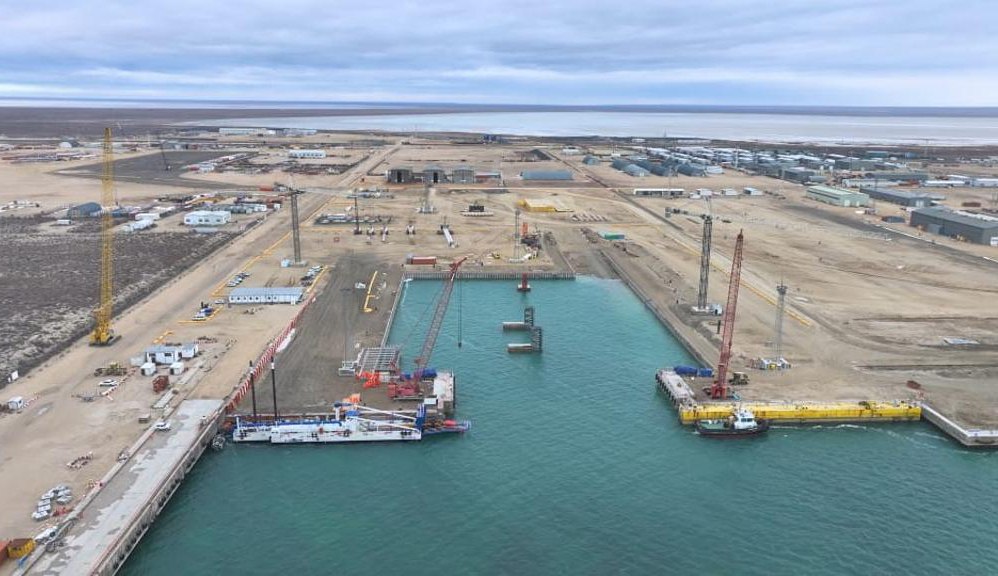
China is one of Kazakhstan’s key partners, particularly in the development of its transit potential, with Kazakhstan serving as a strategic gateway for goods moving from China to the Eurasian Economic Union, Central Asia, and the European Union. Today, more than 80% of freight transported by rail between China and Europe transits through Kazakhstan. Railway Connections This year marks the 35th anniversary of the connection between the railways of Kazakhstan and China when the Dostyk-Alashankou crossing became the first international transportation route established in the era of Kazakh independence. For many years, it remained the sole railway connection, until in 2012, a second international border crossing, Altynkol-Khorgos, was opened. Today, freight traffic through these two crossings continues to show consistent and significant growth. Last year, rail freight between the two countries exceeded 32 million tons, which is a historic high. In the first four months of 2025 alone, rail freight volume reached 11.4 million tons, a 13.3% increase compared to the same period in the previous year. According to Kazakhstan’s national railway company, Kazakhstan Temir Zholy (KTZ), the projected volume between the two countries for 2025 has been preliminarily agreed on at more than 33 million tons. To further increase capacity, Kazakhstan is building a second track on the Dostyk-Moyynty railway segment and constructing a bypass line around Almaty station. Both projects are scheduled for completion this year, which will boost throughput and significantly reduce delivery times for goods moving between Asia and Europe. Additionally, Kazakhstan is currently building the Bakhty-Ayagoz line, which will include the opening of a third border crossing, Bakhty-Chuguchak, which is expected to expand rail capacity with China by an additional 25 million tons. Maritime Development Kazakhstan’s maritime infrastructure on the Caspian Sea is a major focus of development and foreign investment. A key initiative currently underway is the creation of a container hub at the port of Aktau, being developed as a joint venture with the Chinese port of Lianyungang. Construction and installation work is actively in progress. According to the project plan, by the end of this year, the hub will feature a specialized cargo loading complex, a container terminal, and new cargo handling equipment. Once completed, the project is expected to increase container processing capacity from 140,000 TEU to 240,000 TEU, significantly enhancing Kazakhstan’s maritime logistics capabilities. Road Transport In addition to rail and sea, road transport is also a key pillar of Kazakhstan-China transportation cooperation. According to Kazakhstan’s Ministry of Transport, 2.8 million tons of cargo were moved by road for export/import purposes in 2024, a 41% increase from the previous year, whilst transit cargo volumes reached 3.6 million tons, marking a 68% year-on-year rise. In the first quarter of 2025 alone, road cargo volumes jumped by 83%, reaching 822,000 tons. A major driver of this growth is the continued development and operation of the Western Europe–Western China highway corridor. Kazakhstan is also considering the opening of two new border checkpoints to strengthen connectivity between the regions of East Kazakhstan and Almaty...

Kazakhstan’s Terminal in Xi’an Drives Surge in China-Europe Freight

Kazakhstan’s logistics terminal in Xi’an, a major transportation hub in China’s Shaanxi Province, has catalyzed a dramatic surge in container traffic along the Trans-Caspian International Transport Route (TITR), boosting Kazakhstan’s position as a critical player in regional trade. According to Kazakhstan Temir Zholy (KTZ), the national railway operator, freight volume from China via this corridor increased 33-fold in 2024. Operational since February 2024, the terminal has become a linchpin in cross-continental trade, enhancing the flow of goods between China and Europe through Kazakhstan. Xi’an hosts China’s largest dry port and is a pivotal launch point for freight to Europe. Over 30% of all container trains departing China for the European Union originate from Xi’an, while about 40% of China's imports from the Commonwealth of Independent States (CIS), which includes Kazakhstan and Russia, are routed through the city. The Kazakhstan terminal in Xi’an currently has an annual handling capacity of 133,000 twenty-foot equivalent units (TEU). In 2024, it processed over 276,000 tons of cargo, equivalent to approximately 23,000 TEU. In the first four months of 2025 alone, the terminal handled 10,524 TEU (or 126,288 tons). Plans are in place to expand throughput to 83,000 TEU annually by 2030. The terminal predominantly facilitates the shipment of vehicles and auto parts from top Chinese manufacturers including BYD, Geely, Chery, and Hongqi. It also processes large volumes of electronic goods, metal products, and consolidated cargo. This development underscores Kazakhstan’s growing strategic role in the TITR, a route increasingly seen as a vital alternative to the Northern Corridor passing through Russia. As trade dynamics shift, Kazakhstan continues to assert itself as a central transit hub connecting China with Central Asia and Europe.

Why Europe Is Betting Big on Kazakhstan’s Future

On April 3, Kazakhstan’s President Kassym-Jomart Tokayev met with European Commission President Ursula von der Leyen in Samarkand, ahead of the Central Asia–European Union summit. Although the meeting was brief, it came at a key moment, bringing into focus a set of shared economic and technological priorities that both sides increasingly treat as strategic. Tokayev made his position plain: Kazakhstan is looking to push forward in four core areas of cooperation with the EU: energy, industrial infrastructure, transport and logistics, and digital technology. Each of these lines up with the country’s broader goals for economic modernization. The two leaders also acknowledged recent steps toward a simplified EU visa regime for Kazakhstani nationals, which would ease movement for businesses and professionals in both directions. The meeting itself fits into a growing pattern. It builds on the first five-country Central Asia–EU leaders’ summit held in Astana back in October 2022. That gathering marked a turning point, putting the EU’s regional engagement on firmer institutional footing. It went beyond symbolic gestures and aimed at unlocking concrete investment opportunities. Since then, the EU has moved quickly to back up its commitments with financial and logistical support. Much of this has flowed through the Global Gateway initiative, a flagship program designed to channel European investment into infrastructure projects in developing and strategically situated economies. The European Bank for Reconstruction and Development (EBRD) has had a visible role in this process, running studies and financing projects across the transport, energy, and trade connectivity sectors. One EBRD-backed report, published in 2023, offered a striking projection: around €18.5 billion would be needed to scale container transport between the EU and Central Asia by a factor of eight. The goal was to go from fewer than 100,000 TEUs per year to roughly 865,000 by 2040. In response, the EU and the EBRD convened an Investors' Forum in early 2024, bringing in more than €10 billion in early-stage pledges. A second forum is now scheduled for 2025, with new focus areas, including mining, supply chains, and processing industries. During the Samarkand discussion, von der Leyen underlined the strategic significance of the Middle Corridor, also known as the Trans-Caspian International Transport Route (TITR). This project has been gaining traction in EU planning circles as an alternative to routes running through Russia or the Gulf. The corridor promises not only economic returns but greater resilience in east–west supply chains. Kazakhstan, by geography and by political posture, is positioned at the center of this shift. Its participation is not just beneficial but also structurally important. The timing of the meeting was also notable. Just a day earlier, Kazakhstan’s Ministry of Industry and Construction had announced a major find: a substantial deposit of rare earth elements at the Kuirektykol site. State-supported geological teams working in that region reported an estimated one million tons of potential material. Preliminary surveys from two zones, Irgiz and Dos 2, showed mineral content exceeding 0.1%, with some samples reaching as high as 0.25%. This level is a strong signal...

How Kazakhstan and Azerbaijan Are Rewiring the Middle Corridor

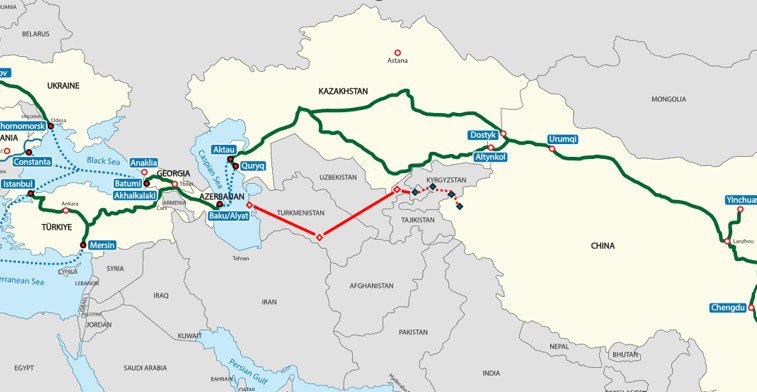
Kazakhstan's acceleration of its strategic alignment with Azerbaijan signals more than bilateral convergence. It reflects a deeper structural reconfiguration of Eurasian connectivity, a reconfiguration that is not additive but integrative. As documented in multiple announcements and institutional moves across March 2025, their cooperation has crossed the threshold from parallel development to systemic coordination. This evolving dynamic illustrates the emergence of a regionally endogenous axis that, without proclaiming itself as such, is shaping the wider functional geometry of Eurasia. At the material core of this shift is the Middle Corridor — the Trans-Caspian International Transport Route (TITR) — linking China to Europe via Central Asia, the Caspian Sea, and the South Caucasus. While long viewed as a technical alternative to the Northern and Southern corridors, the Middle Corridor is now exhibiting the dynamics of what in systems theory would be called self-amplifying dynamic feedback loops. (The technical term is “autopoiesis,” literally “self-creation” of “self-production.”) In particular, institutional feedback, infrastructure reinforcement, and regulatory adaptation are all feeding into one another in ways characteristic of an autonomously emergent macroregional logic. Kazakhstan’s announcement in December 2024 of the financing of a new terminal at Alat port in Azerbaijan, on which construction began in 2025, illustrates this logic in material form. Simultaneously, Kazakhstan is upgrading its Aktau port, backed by Chinese capital from Lianyungang, to triple its container throughput by 2028. This situation exemplifies the transformation of quantity into quality. Specifically, the upgrades are instantiating a network strategy that values not only volumes but also redundancy, flexibility, and strategic optionality. The new fiber-optic cable agreement signed in March 2025 further reinforces this convergence. A 380-kilometer undersea connection between Sumqayit and Aktau — part of the broader Digital Silk Road — will reduce latency between the two countries from hours to milliseconds. In system-theoretic terms, this is not merely a technical augmentation. It converts the corridor from a physical transit route into a distributed digital platform capable of supporting real-time adaptive coordination. This shift from “throughput” to “synchronization” is foundational. It also deepens the infrastructure-energy-information triad that has become characteristic of new macroregional systems. Kazakhstan’s expanded use of the Baku-Tbilisi-Ceyhan (BTC) pipeline, projected to carry 1.7 million tons of its oil in 2025, is not simply diversification. It is the strategic concretization of Azerbaijan’s role as a downstream node for Central Asian hydrocarbons. This is occurring alongside green transition signaling, including a modest floating solar project at Lake Boyukshor and a trilateral renewable energy agreement between Kazakhstan, Azerbaijan, and Uzbekistan. The repurposing of hydrocarbon corridors for hybrid energy flows is not substitution but overlay, in effect a dual-pathway system. Meanwhile, capital commitment is reinforcing the commercial aspect. A $300 million joint investment fund announced by the two countries has already designated the construction of an intermodal terminal at Alat as its inaugural project. Additional integration comes from the UAE-backed $50 million grain terminal at Kuryk, which will further diversify the system's carrying capacity by drawing agro-logistics into the corridor's functionality. In my recent article on the...