• KGS/USD = 0.01144 0%
  • KZT/USD = 0.00201 0%
  • TJS/USD = 0.10433 0%
  • UZS/USD = 0.00008 0%
  • TMT/USD = 0.28571 0%
  • KGS/USD = 0.01144 0%
  • KZT/USD = 0.00201 0%
  • TJS/USD = 0.10433 0%
  • UZS/USD = 0.00008 0%
  • TMT/USD = 0.28571 0%
  • KGS/USD = 0.01144 0%
  • KZT/USD = 0.00201 0%
  • TJS/USD = 0.10433 0%
  • UZS/USD = 0.00008 0%
  • TMT/USD = 0.28571 0%
  • KGS/USD = 0.01144 0%
  • KZT/USD = 0.00201 0%
  • TJS/USD = 0.10433 0%
  • UZS/USD = 0.00008 0%
  • TMT/USD = 0.28571 0%
  • KGS/USD = 0.01144 0%
  • KZT/USD = 0.00201 0%
  • TJS/USD = 0.10433 0%
  • UZS/USD = 0.00008 0%
  • TMT/USD = 0.28571 0%
  • KGS/USD = 0.01144 0%
  • KZT/USD = 0.00201 0%
  • TJS/USD = 0.10433 0%
  • UZS/USD = 0.00008 0%
  • TMT/USD = 0.28571 0%
  • KGS/USD = 0.01144 0%
  • KZT/USD = 0.00201 0%
  • TJS/USD = 0.10433 0%
  • UZS/USD = 0.00008 0%
  • TMT/USD = 0.28571 0%
  • KGS/USD = 0.01144 0%
  • KZT/USD = 0.00201 0%
  • TJS/USD = 0.10433 0%
  • UZS/USD = 0.00008 0%
  • TMT/USD = 0.28571 0%

Viewing results 1 - 6 of 67

Azerbaijan Is Bringing Uzbekistan into the Middle Corridor

The Treaty on Allied Relations between Azerbaijan and Uzbekistan, signed last month, formalizes their growing strategic partnership and signals a new phase in their deepening ties. Their relationship has gained momentum particularly as Azerbaijan has been prioritizing the expansion of its networks in the region since 2020. Uzbekistan now plays a significant role in Azerbaijan’s efforts to strengthen the Trans-Caspian International Trade Route (TITR, also known as the Middle Corridor), the key trade and infrastructure link among Central Asia, the South Caucasus, and Turkey.   Uzbekistan and the Middle Corridor Within the last year and a half, many international financial institutions have published comprehensive studies on the implementation of the TITR project. One of the most influential was organized by the European Bank for Reconstruction and Development (EBRD) in June 2023, in collaboration with the European Commission. It was an in-depth examination of existing and potential infrastructure and logistical networks across the region. The goal of the report was to determine the “most sustainable option” for efficient transport connections between Central Asia and Europe. This report identified a route that it called the Central Trans-Caspian Network (CTCN), running principally through southern Kazakhstan. This route leverages the already well-established infrastructure and logistical systems there, making it the most viable option for trade and transport in the region. In a separate and complementary report, published in November 2023, the World Bank noted that Uzbekistan’s rail connections with Kazakhstan might be improved, but it did not identify any potential projects. Nevertheless, the Darbaza–Maktaaral project in Kazakhstan, projected for completion in 2025, could be extended first to Kazakhstan’s Syrdarya station, whence a further branch line could run to Zhetysai on the border with Uzbekistan. That project would reduce congestion at the existing Saryagash border crossing, which connects to Keles in Uzbekistan, in the north of the Tashkent conurbation. It could increase transport capacity by as much as 10 million tons per year. Still, the project focuses only on increasing the level of bilateral trade, largely in foodstuffs and agricultural goods, and does not target Uzbekistan’s integration into the Middle Corridor. On the other hand, Azerbaijan has been working actively with Uzbekistan to integrate it into the Middle Corridor, without relying on routes through southern Kazakhstan. Their cooperation includes significant efforts to enhance infrastructure and logistics. Examples include joint ventures in logistics centers and, notably, inter-modal transport links between Samarkand and Baku. Such efforts are designed to offer Uzbekistan direct access to the Caspian Sea and European markets via Azerbaijan, largely bypassing Kazakhstan and building a stronger trade partnership within the trans-Caspian framework.   Uzbekistan’s Relations with Turkey Set the Context While this all started only a few years ago, a look back to 2016 when Uzbekistan’s President Islam Karimov died provides a more complete picture. After Shavkat Mirziyoyev succeeded Karimov, Uzbekistan began to open up from its diplomatic isolation. One of the first interested parties was Turkey. Both nations signaled interest in improving ties, and Turkish President Recep Tayyip Erdoğan began to take steps...
200th Container Train from China Arrives in Kazakhstan’s Aktau Port on Middle Corridor

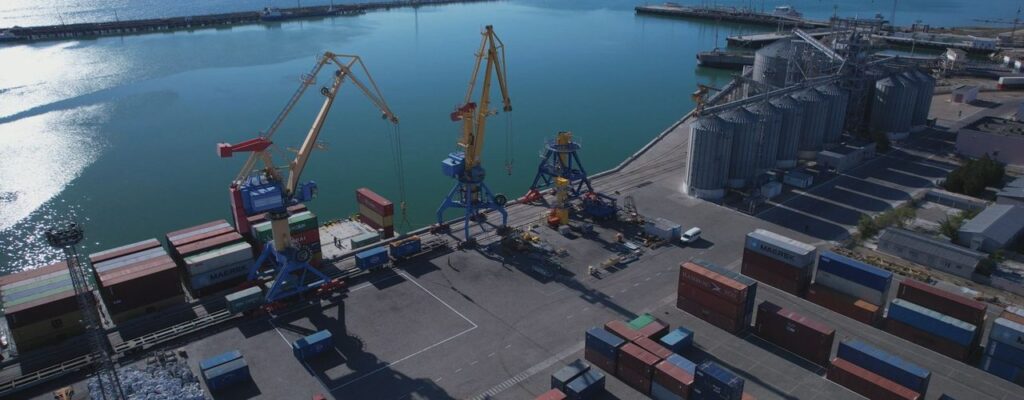
A container train from China arrived last week in the port of Aktau on Kazakhstan’s Caspian coast. Kazakhstan’s national railway company, Kazakhstan Temir Zholy, announced that it was the 200th container train since the beginning of 2024. Last year, 11 container trains went through Aktau Port along the Trans-Caspian International Transport Route (TITR), known as the Middle Corridor. The Middle Corridor is an 11,000-kilometer international multimodal transport corridor that runs from China to Europe via Kazakhstan, the Caspian Sea, Azerbaijan, Georgia, the Black Sea, and Turkey. The container train originally departed from the Kazakhstan terminal in Xi'an (China). From Aktau, it will depart for Azerbaijan on a barge across the Caspian Sea. The Kazakh terminal in Xi'an is an important logistics hub that consolidates cargo from various provinces of China. It has given a new impetus to the development of the TITR. In November 2023, Kazakhstan and China signed a number of agreements to develop the TITR, including a route for China-Europe container trains. Middle Corridor Multimodal Ltd. is a joint venture that was established at the Astana International Financial Center, bringing together the railway administrations of Kazakhstan, Azerbaijan, and Georgia to manage the route on a parity basis. The Kazakhstani terminal in the dry port of Xi'an opened in February 2024. It consolidates 40% of all container trains heading towards Kazakhstan, which has contributed to a significant increase in transit traffic along the TITR. Transportation along the TITR is growing steadily. In 2023, 2.8 million tons of cargo were transported along the route, compared to about 1.7 million tons in 2022. In the first seven months of 2024, the traffic totaled 2.56 million tons. By 2027, the capacity of the TITR is planned to increase to 10 million tons.

Uzbekistan and Bulgaria to Increase Middle Corridor Freight Transport

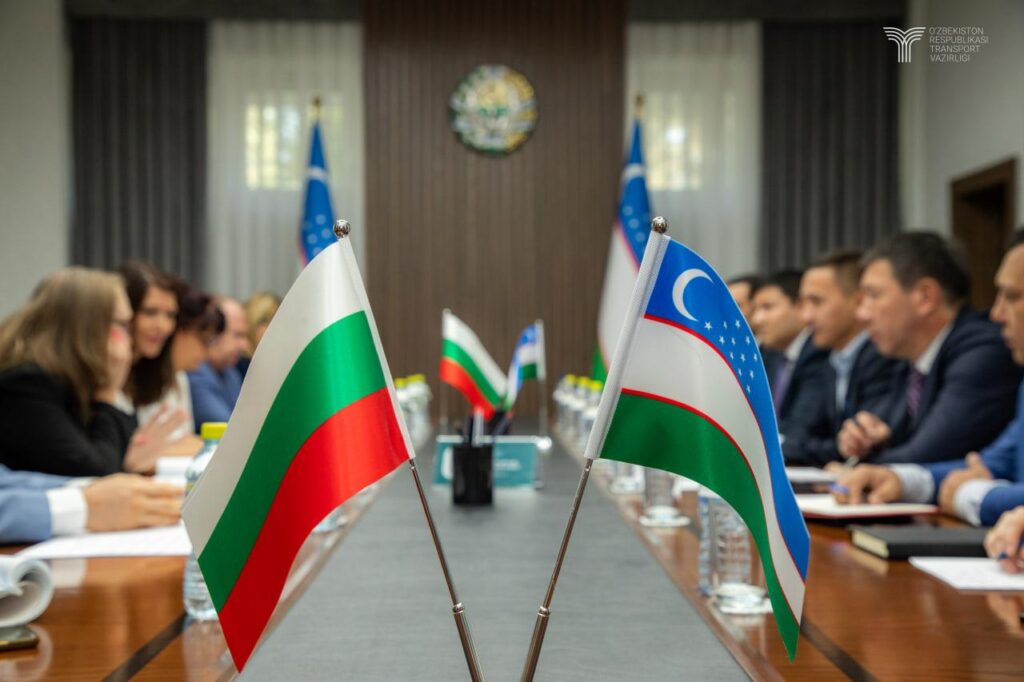
On 3-4 September, the Uzbek-Bulgarian Commission on International Road Transport met in Tashkent to discuss expanding bilateral cooperation in international freight transport by road and creating more favorable conditions for national carriers from both countries. As reported by the Uzbek Ministry of Transport, the agenda focused on increasing the volume of freight traffic to EU countries via Bulgaria, using the Trans-Caspian International Transport Route (TITR), also known as the Middle Corridor, which connects China and Europe via Central Asia and the Caucasus. After the meeting, the parties exchanged additional permit forms for trucks entering their countries for the remainder of 2024, and agreed to increase the issue of mutual permit forms 15-fold in 2025. The Uzbek Ministry added that to enhance cargo transportation to EU countries, an agreement had been made with Romania to waive the requirement of permits from April 1, 2024.

Middle Corridor Container Transit Through Kazakhstan Showing Dramatic Growth

Kazakhstan’s national railways company Kazakhstan Temir Zholy (KTZ) has announced that the volume of container transportation through the country is growing rapidly. In the first seven months of this year, rail container transportation from China to Europe through Kazakhstan along the Trans-Caspian International Transport Route (TITR) grew 14-fold compared to the same period last year, The TITR is a multimodal transport corridor connecting China and Europe by bypassing Russia, also known as the Middle Corridor. To develop it, Kazakhstan Temir Zholy, together with other stakeholders, is working to increase transportation volumes, improve services, and speed up cargo delivery. To date, the transportation time from Altynkol railway station on the Kazakh-Chinese border to Absheron (Azerbaijan) has been reduced to 9 days, to Poti/Batumi (Georgia) to 12 days, and to Constanta (Romania) via Poti/Batumi to 20–22 days. In 2023, KTZ and the railway administrations of Azerbaijan and Georgia established the Middle Corridor Multimodal Ltd. Joint Venture to improve multimodal services along the route. The joint venture provides a 'one-stop shop' service and guarantees delivery times and costs. KTZ is developing Kazakh port infrastructure in the Caspian Sea with the involvement of large international logistics companies.

Kazakhstan Reports Rise in Rail Cargo

Kazakhstan’s national railway company Kazakhstan Temir Zholy (KTZ) reports that from January-May 2024 it transported 102.4 million tons of cargo. Over 34.2 million tons of this cargo were exported by rail. During the first five months of the year, rail transportation of coal amounted to 40.6 million tons, including 30.3 million tons within the country. Over the same period, over 3.7 million tons of grain were transported by rail. Exports of oil by rail increased by 9.5% (2.3 million tons), ferrous metals by 5% (1.4 million tons), chemical fertilizers by 12% (over 550,000 tons), iron ore and manganese by 8.4% (4.7 million tons), and construction materials by 9% (142,000 tons). KTZ also reported that the Caspian port of Aktau handled over 5,100 shipping containers in May 2024, setting its own record for the monthly container handling volume. Over the five months of this year, 15,800 containers were handled, double the volume in the same period in 2023. “Since the beginning of the year, there has been a high growth in container traffic through the port of Aktau,” said the seaport’s chief dispatcher Vadim Novikov. “Container transit from China along the Trans-Caspian International Transport Route (TITR) accounted for the lion's share of the traffic, which has grown 10-fold due to the launch of the Kazakh-Chinese terminal in Xi'an.”    

Kazakhstan Works with Armenia and Azerbaijan for South Caucasus Peace

By Robert M. Cutler On May 10–11, Kazakhstan's President Kassym-Jomart Tokayev hosted peace talks between the Azerbaijani and Armenian foreign ministers. These constructive negotiations were strictly bilateral, with Kazakhstan absent from the room and only providing the venue for the meeting. The event illustrates the dedication by Tokayev and his foreign policy to regional stability and mediation. Kazakhstan has done this sort of thing in the past; it hosted Russia–Turkey–Iran talks over Syria until last year. It was also mentioned as a place for bilateral Russia–Ukraine negotiations, although that idea never materialized.   Armenia's Future is in the South Caucasus and Asia Tokayev had offered to provide the venue during his first official visit to Armenia, which took place on April 15 this year. His trip to Armenia may in retrospect be seen as a turning point. Former President Nursultan Nazarbayev had been forced to cancel a visit in 2016, following protests in Yerevan against Astana's support of Baku in the Karabakh conflict. Armenia’s participation in the new peace efforts, now under way for a couple of years, marks a significant shift after decades of rejecting such cooperation. It offers the prospect of renewed regional relations. Under Prime Minister Nikol Pashinyan, Armenia has lately been trying to shift its foreign policy, reaching out to Western countries such as France and the U.S. in order to decrease its long-standing dependence on (some would say, vassalage to) Russia. But Armenia is a state in the South Caucasus, not in Europe or America. For this reason, the state’s objective interests (as opposed to those of the far-flung diaspora) are geopolitically compatible with those of Azerbaijan and Turkey, and also of Kazakhstan more distantly. Astana’s ties with Baku and Ankara, and Azerbaijan’s strengthening of its own ties with Central Asia, reflect strategic manoeuvring in the region. These partnerships enhance Kazakhstan's and Turkey's roles in promoting stability and development in the South Caucasus. They consequently offer Armenia a new path to prosperity. Peace with Azerbaijan would lead to the lifting of the Turkish embargo on Armenia and open the possibility of Armenia's integration into the Trans-Caspian International Trade Route (TITR, "Middle Corridor"). Such an opening would further widen Armenia's diplomatic vistas and decrease its dependence on Russia. Turning to Europe and the U.S. can offer some advantages, but Armenia must be cautious of the influence of a bellicosely irredentist Armenian diaspora, whose interests are not first and foremost the well-being of Armenians living in Armenia. Prioritizing regional integration and cooperation with its South Caucasus neighbours and other TITR participants will enable Armenia proper to build a more stable and prosperous future.   Infrastructure and Connectivity Initiatives With the assistance of the international financial institutions, the European Union and Central Asia are developing the TITR as a critical trade corridor that will also contribute significantly to the prosperity and stability of the countries lying along its route. Azerbaijan and Kazakhstan have long been key players in the promotion and realization of this plan. The Middle Corridor,...