• KGS/USD = 0.01143 0%
  • KZT/USD = 0.00200 0%
  • TJS/USD = 0.10593 -0.19%
  • UZS/USD = 0.00008 0%
  • TMT/USD = 0.28575 0%
  • KGS/USD = 0.01143 0%
  • KZT/USD = 0.00200 0%
  • TJS/USD = 0.10593 -0.19%
  • UZS/USD = 0.00008 0%
  • TMT/USD = 0.28575 0%
  • KGS/USD = 0.01143 0%
  • KZT/USD = 0.00200 0%
  • TJS/USD = 0.10593 -0.19%
  • UZS/USD = 0.00008 0%
  • TMT/USD = 0.28575 0%
  • KGS/USD = 0.01143 0%
  • KZT/USD = 0.00200 0%
  • TJS/USD = 0.10593 -0.19%
  • UZS/USD = 0.00008 0%
  • TMT/USD = 0.28575 0%
  • KGS/USD = 0.01143 0%
  • KZT/USD = 0.00200 0%
  • TJS/USD = 0.10593 -0.19%
  • UZS/USD = 0.00008 0%
  • TMT/USD = 0.28575 0%
  • KGS/USD = 0.01143 0%
  • KZT/USD = 0.00200 0%
  • TJS/USD = 0.10593 -0.19%
  • UZS/USD = 0.00008 0%
  • TMT/USD = 0.28575 0%
  • KGS/USD = 0.01143 0%
  • KZT/USD = 0.00200 0%
  • TJS/USD = 0.10593 -0.19%
  • UZS/USD = 0.00008 0%
  • TMT/USD = 0.28575 0%
  • KGS/USD = 0.01143 0%
  • KZT/USD = 0.00200 0%
  • TJS/USD = 0.10593 -0.19%
  • UZS/USD = 0.00008 0%
  • TMT/USD = 0.28575 0%
22 February 2026

Viewing results 1 - 6 of 27

Tourism Master Plan for Almaty-Bishkek Economic Corridor Updated with Green Focus

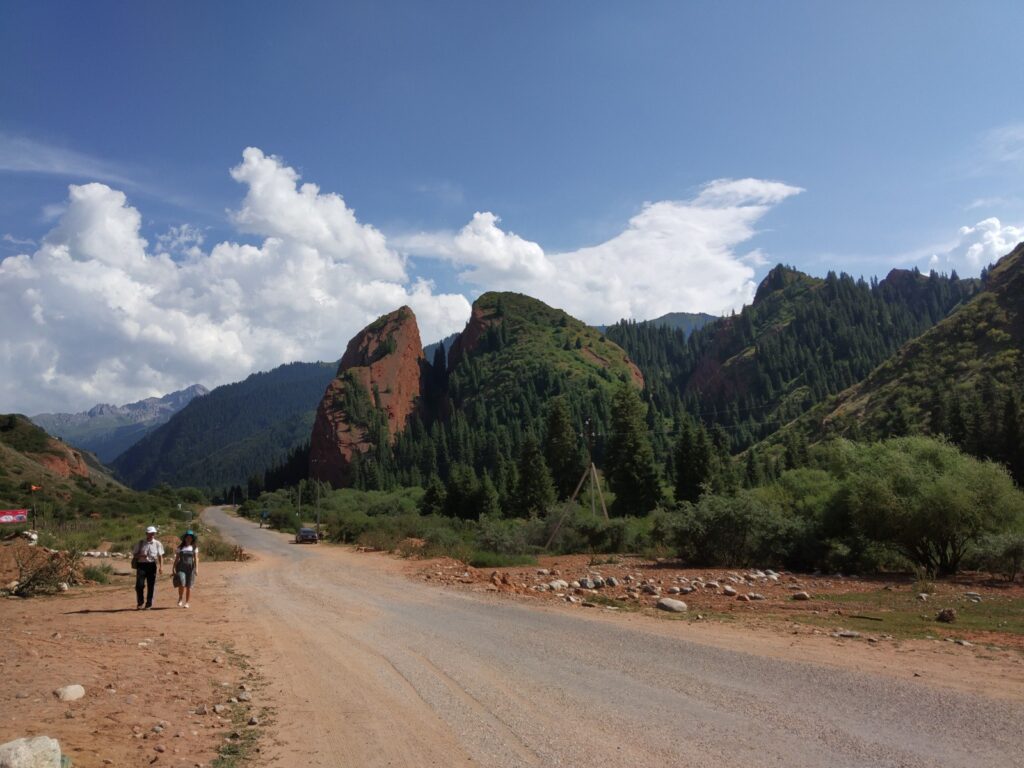
On February 12, Bishkek hosted a presentation of the green update to the tourism master plan for the Almaty-Bishkek Economic Corridor (ABEC) between Kazakhstan and Kyrgyzstan, a document prepared with the support of the Asian Development Bank (ADB). The event brought together representatives of Kyrgyz government agencies, officials from the Issyk-Kul and Chui regions bordering Kazakhstan, as well as members of tourism associations and international development partners. The ABEC tourism master plan was initially approved in 2019. According to Kyrgyzstan’s Ministry of Economy and Commerce, the updated version emphasizes three key areas. The first is green tourism, including the development of eco-tourism routes, sustainable accommodation facilities, hiking and cycling trails, and measures to reduce pressure on mountain ecosystems, lakes, and national parks. The second priority is sustainable development. This includes improving resource efficiency, introducing renewable energy sources, promoting green logistics, and reducing the carbon footprint of tourism-related activities. The third focus area is regional integration and connectivity. Planned measures include digitalizing border-crossing procedures, developing sustainable transport solutions, strengthening cross-border coordination, and creating more convenient tourist routes along the corridor. The updated master plan aims to attract investment and mobilize financial resources from the ADB, national governments, the private sector, and development partners to implement priority projects along the ABEC corridor. A central infrastructure component of the ABEC initiative is the proposed construction of an alternative highway linking Almaty, Kazakhstan’s largest city, with Lake Issyk-Kul, Kyrgyzstan’s leading tourist destination. Lake Issyk-Kul remains a major attraction for visitors from across the region and is particularly popular among Almaty residents seeking weekend or summer trips. Although the two locations are separated by only about 80 kilometers in a straight line, mountain ranges make direct travel difficult. The existing route passes through Bishkek, extending the journey to more than 460 kilometers and turning what could be a short trip into an approximately eight-hour drive to Cholpon-Ata, the largest resort town on the lake’s northern shore. The Times of Central Asia previously reported on long-standing plans to establish a more direct road between Almaty and Issyk-Kul. In 2007, Kazakhstan and Kyrgyzstan signed a memorandum of understanding for a route bypassing Bishkek, running through Uzynagash and Kemin and connecting directly to Cholpon-Ata. The project, however, stalled at an early stage. If completed, it would reduce the travel distance to approximately 260 kilometers and significantly shorten travel time. The project is currently at the stage of preparing a feasibility study.

The Potential and Problems of Tourism in Kazakhstan

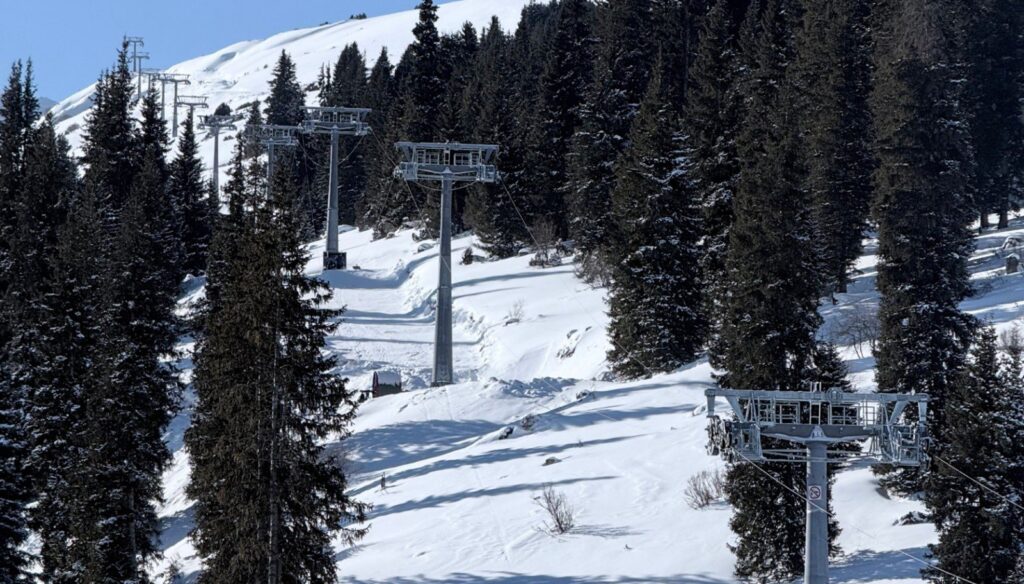
Kazakhstan boasts unique natural landscapes that could attract international visitors, and significantly enrich the country's economy. Each year, the government allocates increasing funds to support tourism. However, services and infrastructure in many tourist destinations still remain well below international standards. Undeniable Improvements According to Talgat Gazizov, Chairman of the Board of the national company Kazakh Tourism, more than 1,100 tours to Kazakhstan are currently available on 18 major online platforms across Europe and Asia – a threefold increase compared to 2023. This reflects growing interest among international tour operators. As previously reported by The Times of Central Asia, authorities are also weighing up the possibility of opening casinos in designated tourist zones, accessible exclusively to foreign citizens. In 2025, Kazakhstan invested nearly $2.5 billion in the development of its tourism sector, a 32% year-on-year increase. The number of tourists staying in accommodation facilities rose by 12%, surpassing 10 million. Kazakhstan also improved its position in the World Economic Forum’s global tourism index, climbing from 66th to 52nd place. The stated goal is to break into the top 50. Currently, 328 tourism investment projects are underway. Notable among them are the Oi-Karagai mountain resort, Hilton and Mandarin Oriental hotel complexes, the Zhibek Zholy entertainment complex, and the Keruen Inn roadside service chain. These projects are expected to create around 10,000 permanent jobs. A Comprehensive Development Plan for the Almaty Mountain Cluster includes expanding ski resorts and integrating them into a unified system. The celebrated Shymbulak ski base and Medeu high-altitude skating rink, both located near Almaty, are among the country’s most distinctive attractions. The plan envisions 30 new cable cars and 161 kilometers of ski slopes, aiming to boost annual tourist numbers from 1.8 million to 5 million. Authorities note that, globally, ski tourists spend seven times more than beach tourists. The Shchuchinsk-Borovskaya (Burabai) resort area is also a development priority. Infrastructure expansion around Lakes Katarkol, Maloye and Bolshoye Chebachye, and Zhukei is intended to ease pressure on Lakes Shchuchye and Borovoye. The number of inbound tourists to Burabai is projected to reach 94,000 by the end of 2029, with 32,500 people employed in the local tourism industry. In western Kazakhstan, development is planned along the Mangistau Peninsula, including Teply beach and Kendirli resorts on the Caspian Sea. Efforts are also underway to improve access to the striking rock formations of Bozhyr and Tamsha, which rival world-famous geological landmarks. Services and Infrastructure Lag Behind Despite progress, serious shortcomings persist, chief among them underdeveloped services. The lack of public toilets in tourist zones and along highways has been repeatedly highlighted. Government data shows that many resort areas in the Akmola, Karaganda, and Pavlodar regions, as well as in the Abai and Zhetysu regions, lack reliable water supply and central sewage systems. The use of well water remains a pressing concern. In the Abai region, some recreation centers are situated dangerously close to water sources. Lake Alakol, a popular summer destination, requires urgent shoreline reinforcement. Similar dredging work is also necessary in Caspian...

Switzerland Backs Winter Tourism Development in Kyrgyzstan

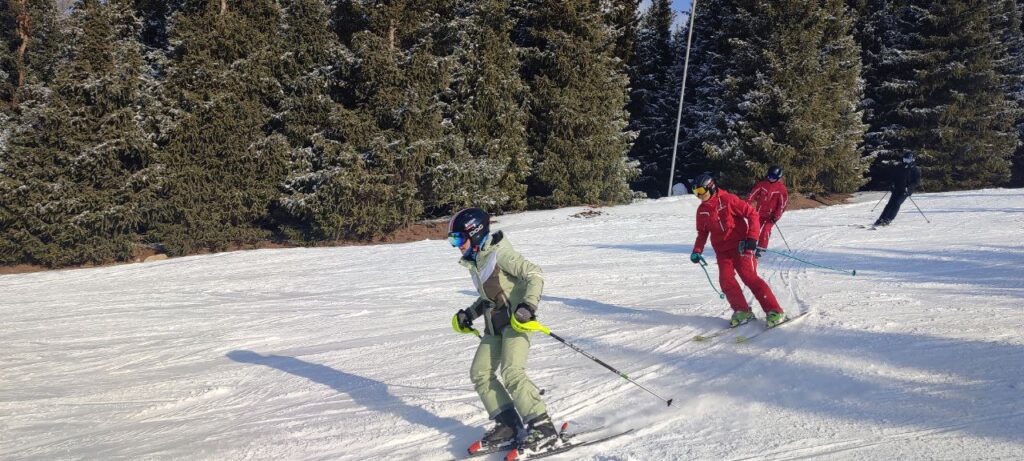
Switzerland is providing practical support to Kyrgyzstan in developing its winter tourism sector, with a strong focus on training professional staff. A program for ski instructor training is currently underway in the city of Karakol, Issyk-Kul region, with Swiss backing. Switzerland's ambassador to Kyrgyzstan, Sirocco Meserli, recently visited a cross-country skiing training session, a sport that has seen systematic development in Kyrgyzstan since 2022. According to Swiss diplomats, specialists from Switzerland have arrived to train Kyrgyz instructors and sports school coaches in modern international methods tailored for children, adults, and tourists. The initiative is part of the Sustainable Winter Tourism project, funded by the Swiss government. The final stage of this year’s training sessions with Swiss experts is currently taking place. [caption id="attachment_42787" align="aligncenter" width="300"] @TCA[/caption] Meserli stated that the program covers skiing techniques, instructional methods, tourist engagement, and safety protocols. “Infrastructure development is important, but qualified personnel who can provide a high level of service and a positive tourist experience play a decisive role,” he said. The project introduces international training standards for instructors at the Admission, Aspirant, and Instructor levels, commonly used in alpine skiing and snowboarding training globally. The Swiss side has emphasized the project’s long-term goals: not only to train instructors but also to lay the foundation for winter sports as a sustainable economic sector, fostering growth in tourist traffic, job creation, and service offerings during the winter season. [caption id="attachment_42788" align="aligncenter" width="300"] @TCA[/caption] Kyrgyz experts see high potential in this area. Approximately 94% of Kyrgyzstan’s territory is mountainous, and new ski resorts are actively being developed across the country. “Skiing is becoming popular. Young people are eager to learn. All instructors speak Kyrgyz, Russian, and English, and demand for training has grown significantly,” ski instructor Daniyar Toichbek told The Times of Central Asia. Karakol remains Kyrgyzstan’s primary ski destination. During the winter season, numerous rental shops operate in the city, where a full set of ski equipment can be rented for about $35, making winter recreation accessible to both locals and international visitors.

Kyrgyzstan to Launch Unified Digital Tourism Platform to Attract Foreign Visitors

Kyrgyzstan is preparing to launch a unified Digital Tourism Platform designed to simplify travel procedures and strengthen the country’s appeal to foreign tourists. At a government meeting on January 26, Chairman of the Cabinet of Ministers Adylbek Kasymaliev pointed to long-standing structural challenges in the tourism sector, including fragmented services for visas, logistics, and insurance, as well as the absence of a centralized coordination mechanism. “Tourists should not face bureaucracy and language barriers at every stage. A single-window platform must integrate government services, private-sector offerings, and payment instruments from entry to exit,” Kasymaliev stated. He directed the Department of Tourism, the Ministry of Digital Development, and the Ministry of Finance, in coordination with the Tunduk State Portal of Electronic Services, to secure funding and oversee the platform’s technical implementation. Tourism’s economic contribution is steadily increasing. In 2025, the sector accounted for 4.3% of Kyrgyzstan’s GDP, with nearly 10 million tourist arrivals, according to Adilet Januzakov, Director of the Tourism Support and Development Fund, speaking on Sputnik Radio. Januzakov noted a shift in government policy from maximizing tourist numbers to improving infrastructure and service standards. The aim is to create comfortable conditions for a wide range of travel experiences, from ecotourism and camping to premium hospitality. Key initiatives include the construction of an Olympic village on Lake Issyk-Kul, the development of ski resorts and amusement parks, and the continued digitalization of tourist routes, such as integrating eco-trails into the 2GIS navigation system. Authorities also plan to implement a national classification system for hotels and guesthouses, designed to increase market transparency and provide consistent service quality for visitors. According to the National Statistical Committee, revenue from foreign tourists exceeded $813 million between January and September 2025, making tourism one of Kyrgyzstan’s key non-resource sectors.

The Illusion of Chinese Investment in Kazakhstan

Concerns about how Chinese businesses operate abroad — and the challenges already confronting Kazakhstani entrepreneurs — have resurfaced following a recent letter to the prime minister from an association of oil service companies reporting price dumping. Despite these developments, Kazakhstani experts remain hesitant to discuss the negative effects of China’s growing influence in the country’s real economy. Technological Dependence The reluctance is unsurprising. Astana’s official policy seeks broad rapprochement with Beijing, spanning economic, political, and cultural spheres. Given the power imbalance, Kazakhstan avoids public statements that might offend its wealthier partner, particularly in the media, which China monitors closely. As a result, the recent complaint by the PetroCouncil — an oil and gas association representing more than 150 domestic service companies — about dumping by foreign, mainly Chinese, firms has been met with silence from local experts. In a letter addressed to Prime Minister Olzhas Bektenov, the PetroCouncil warned that foreign firms, particularly from China, have been offering services to major Kazakhstani enterprises at prices 60–70% below market value. This, they argue, is forcing out local businesses, reducing Kazakhstani content, eroding tax revenue and employment, diminishing engineering expertise, and threatening industrial safety. We asked PetroCouncil Managing Director Daniel Zholdybaev why foreign companies have come to dominate Kazakhstan’s oil and gas sector and whether the competence of local personnel or service providers is a factor. According to Zholdybaev, the dominance is rooted in how foreign operators first entered Kazakhstan’s market: by bringing their own technologies. This created long-term dependency not only on their expertise but also on foreign suppliers. “Chevron, for instance, maintains a vetted list of approved suppliers, and wherever the company operates, it only works with those on that list,” Zholdybaev explained. While Kazakhstan continues to develop domestic manufacturing capabilities, local firms are still barred from participating in high-risk operations such as work on wells with extreme pressure or temperature conditions. Zholdybaev noted that Kazakhstan’s three major fields — Tengiz, Karachaganak, and Kashagan — account for 90 percent of oil and gas imports. The operators of these projects are mainly Western companies. Russia, due to international sanctions, plays only a marginal role in procurement despite maintaining a presence in Kazakhstan. However, it is Chinese companies, actively welcomed by the state, that have introduced the issue of price dumping. Chinese firms operating in Kazakhstan’s oil and gas industry maintain closed procurement systems, sourcing goods and services almost exclusively from Chinese suppliers. As a result, Chinese investment brings minimal benefit to Kazakhstan’s economy. Even construction contracts often return to China. Russian observers, typically sensitive to Central Asia’s dealings with China and the United States, have also remained largely silent on this issue. A rare exception was political analyst Yuri Baranchik, who posted a sharply critical comment on his Telegram channel: “This is a clear example of what happens when Chinese companies are allowed full access to the domestic market,” he wrote. “They dump prices to bankrupt local businesses, monopolize the sector, and then dictate terms. Now the Kazakh government must figure...

New “Air Gates”: How Two Airports Will Transform Eastern Kazakhstan

The construction of new airports in the Katon-Karagai and Zaisan districts of eastern Kazakhstan is entering its final phase. For these remote region, once accessible only by winding mountain roads, the arrival of runways, terminals, and control towers marks a historic milestone. But these projects are more than just transportation infrastructure. They are poised to become engines of regional development, restoring the area's appeal to both tourists and investors. An Airport in the Mountains Katon-Karagai is the heart of Kazakhstan’s Altai region. Between the villages of Belkaragai and Ornek, a large-scale construction effort is underway to build a modern airport complex. Spanning 266 hectares, the project includes a 2,260 meter runway, a terminal, a command-and-control center, and state-of-the-art navigation and meteorological equipment. According to project manager Nurzhan Eskendirov, 80% of the work is now complete. “Next summer, we will lay the final layer of asphalt. This airport is not just a construction project, it’s a new chapter in the region’s history,” he told TSA. [caption id="attachment_38662" align="aligncenter" width="300"] @gov.kz[/caption] For local residents, the construction has become the event of the decade. Workers from across the country have joined the effort. “The nature here is simply amazing,” said one of the builders, Manash Baigonov. “I want people from all over the world to be able to see it.” Katon-Karagai is renowned for its pristine lakes, snow-covered peaks, and protected nature reserves. The airport will drastically reduce travel time, making the region far more accessible to tourists who previously faced hours of rugged road travel. Zaisan: The Eastern Gateway In the Zaisan district, another major airport project is nearing completion near the village of Satpay. The runway and apron are fully finished, the drainage system is being finalized, and terminal and control tower construction is ongoing. This airport is expected to play a vital role in expanding cross-border tourism and logistics. Currently, Zaisan receives about 20,000 tourists annually, a number that could increase four- to five-fold once the airport opens. Regular flights are planned to Ust-Kamenogorsk, Almaty, and Astana, with future international routes to Urumqi in China and Lake Kanass. This would position Zaisan as Kazakhstan’s “eastern gateway,” linking the country to China not only by road, but also by air. “The airport is creating new routes, but more importantly, it’s creating meaning,” said one of the project’s designers. “It’s not just a runway, it’s the take-off of a region.” [caption id="attachment_38663" align="aligncenter" width="300"] @gov.kz[/caption] From Roads to People Airport development is also driving broader infrastructure upgrades. A new road to the village of Urunkhaika on Lake Markakol, planned in partnership with China’s Heilongjiang Province Bada Road, will connect even more of Altai’s secluded landscapes to the broader transport network. Until now, many of these areas were accessible only by footpaths. These infrastructure projects are transforming not just the regional map, but daily life. In Katon-Karagai, which was once served only by narrow serpentine roads and sporadic buses, officials are now preparing for the arrival of investors, climbers, photographers, and nature lovers....