• KGS/USD = 0.01144 0%
  • KZT/USD = 0.00215 0%
  • TJS/USD = 0.10640 0%
  • UZS/USD = 0.00008 0%
  • TMT/USD = 0.28530 0%
  • KGS/USD = 0.01144 0%
  • KZT/USD = 0.00215 0%
  • TJS/USD = 0.10640 0%
  • UZS/USD = 0.00008 0%
  • TMT/USD = 0.28530 0%
  • KGS/USD = 0.01144 0%
  • KZT/USD = 0.00215 0%
  • TJS/USD = 0.10640 0%
  • UZS/USD = 0.00008 0%
  • TMT/USD = 0.28530 0%
  • KGS/USD = 0.01144 0%
  • KZT/USD = 0.00215 0%
  • TJS/USD = 0.10640 0%
  • UZS/USD = 0.00008 0%
  • TMT/USD = 0.28530 0%
  • KGS/USD = 0.01144 0%
  • KZT/USD = 0.00215 0%
  • TJS/USD = 0.10640 0%
  • UZS/USD = 0.00008 0%
  • TMT/USD = 0.28530 0%
  • KGS/USD = 0.01144 0%
  • KZT/USD = 0.00215 0%
  • TJS/USD = 0.10640 0%
  • UZS/USD = 0.00008 0%
  • TMT/USD = 0.28530 0%
  • KGS/USD = 0.01144 0%
  • KZT/USD = 0.00215 0%
  • TJS/USD = 0.10640 0%
  • UZS/USD = 0.00008 0%
  • TMT/USD = 0.28530 0%
  • KGS/USD = 0.01144 0%
  • KZT/USD = 0.00215 0%
  • TJS/USD = 0.10640 0%
  • UZS/USD = 0.00008 0%
  • TMT/USD = 0.28530 0%

Viewing results 1 - 6 of 338

“Winter Begins in Karakol”: Kyrgyzstan Launches Ski Season with Cultural Events

The winter tourist season has officially opened in Karakol, Kyrgyzstan, long considered one of Central Asia’s top destinations for active winter tourism. The city is traditionally the first in the country to open its ski slopes, and this year’s launch was not merely technical, but a full-scale event aimed at boosting both domestic and international tourism. A festive program was held at the ski base, featuring music and dance performances, as well as the launch of the “Jaryk Fest” festival. Local artisans hosted master classes in felt-making, showcasing clothing and souvenir production. This crafts section played an important role in positioning the region as a cultural as well as an adventure destination. [caption id="attachment_40525" align="aligncenter" width="402"] @TCA[/caption] “Jaryk Fest is a celebration of light, snow, and vivid emotions. It’s timed to coincide with the opening of the winter season across Kyrgyzstan. We even have a slogan: ‘Winter begins in Karakol,’” said Ulukbek Almakebek, manager of the Karakol ski resort, in an interview with The Times of Central Asia. According to the organizers, the resort continues to draw tourists from Russia and Kazakhstan, but recent years have seen a notable rise in visitors from Europe and Southeast Asia, a trend that Kyrgyzstan is actively encouraging by expanding its winter tourism offerings. Skiers highlight Karakol’s unique terrain as one of its main attractions. Many of the trails pass through dense coniferous forests, creating picturesque and varied descents not found at other regional resorts. Erdenet Kasymov, director of the Kyrgyzstan Tourism Department, noted that winter tourism is rapidly diversifying. In addition to traditional skiing and hot springs, European tourists are increasingly opting for mountain hiking and horseback riding. [caption id="attachment_40526" align="aligncenter" width="396"] @TCA[/caption] “Tourists from South Korea and India are particularly drawn to snowshoeing in deep snow. It’s a relatively new form of recreation, but one that’s quickly gaining popularity,” Kasymov said. One emerging trend is winter yachting on Issyk-Kul Lake. Because the lake does not freeze in winter, it offers an extended season and opportunities for new types of recreation. Two modern yachts have already been acquired for the region, and work is ongoing to restore older vessels and build docks and piers. This approach aligns with a vision outlined by President Sadyr Japarov, a native of the Issyk-Kul region, who has previously called for moving beyond the traditional separation of “winter” and “summer” tourism. According to Japarov, Kyrgyzstan is building a model of year-round tourism designed to take advantage of the country’s diverse natural offerings.

New “Air Gates”: How Two Airports Will Transform Eastern Kazakhstan

The construction of new airports in the Katon-Karagai and Zaisan districts of eastern Kazakhstan is entering its final phase. For these remote region, once accessible only by winding mountain roads, the arrival of runways, terminals, and control towers marks a historic milestone. But these projects are more than just transportation infrastructure. They are poised to become engines of regional development, restoring the area's appeal to both tourists and investors. An Airport in the Mountains Katon-Karagai is the heart of Kazakhstan’s Altai region. Between the villages of Belkaragai and Ornek, a large-scale construction effort is underway to build a modern airport complex. Spanning 266 hectares, the project includes a 2,260 meter runway, a terminal, a command-and-control center, and state-of-the-art navigation and meteorological equipment. According to project manager Nurzhan Eskendirov, 80% of the work is now complete. “Next summer, we will lay the final layer of asphalt. This airport is not just a construction project, it’s a new chapter in the region’s history,” he told TSA. [caption id="attachment_38662" align="aligncenter" width="300"] @gov.kz[/caption] For local residents, the construction has become the event of the decade. Workers from across the country have joined the effort. “The nature here is simply amazing,” said one of the builders, Manash Baigonov. “I want people from all over the world to be able to see it.” Katon-Karagai is renowned for its pristine lakes, snow-covered peaks, and protected nature reserves. The airport will drastically reduce travel time, making the region far more accessible to tourists who previously faced hours of rugged road travel. Zaisan: The Eastern Gateway In the Zaisan district, another major airport project is nearing completion near the village of Satpay. The runway and apron are fully finished, the drainage system is being finalized, and terminal and control tower construction is ongoing. This airport is expected to play a vital role in expanding cross-border tourism and logistics. Currently, Zaisan receives about 20,000 tourists annually, a number that could increase four- to five-fold once the airport opens. Regular flights are planned to Ust-Kamenogorsk, Almaty, and Astana, with future international routes to Urumqi in China and Lake Kanass. This would position Zaisan as Kazakhstan’s “eastern gateway,” linking the country to China not only by road, but also by air. “The airport is creating new routes, but more importantly, it’s creating meaning,” said one of the project’s designers. “It’s not just a runway, it’s the take-off of a region.” [caption id="attachment_38663" align="aligncenter" width="300"] @gov.kz[/caption] From Roads to People Airport development is also driving broader infrastructure upgrades. A new road to the village of Urunkhaika on Lake Markakol, planned in partnership with China’s Heilongjiang Province Bada Road, will connect even more of Altai’s secluded landscapes to the broader transport network. Until now, many of these areas were accessible only by footpaths. These infrastructure projects are transforming not just the regional map, but daily life. In Katon-Karagai, which was once served only by narrow serpentine roads and sporadic buses, officials are now preparing for the arrival of investors, climbers, photographers, and nature lovers....

Insider’s View: Cooperation Between Uzbekistan and the United States in Tourism

In recent years, relations between the Republic of Uzbekistan and the United States of America in the field of tourism have reached a qualitatively new level. The foundation of this cooperation lies in the systematic efforts of the Tourism Committee to implement the provisions of the “Road Maps” aimed at strengthening bilateral ties, expanding tourism exchanges, and attracting American investment into the sector. The period of 2018–2019 became a turning point in enhancing the tourism dialogue between the two countries. Uzbekistan welcomed experts from the International Association of Tourism Professionals, led by H. Luis Lorenzo Gutierrez, representatives of “PBS” and “ABC” television channels, as well as a delegation from the Congress of Bukharian Jews of the USA and Canada. During the same period, the Tourism Committee organized a series of visits by well-known American bloggers Mark Wiens and Sonny Side, thanks to which millions of viewers around the world were introduced to Uzbekistan’s gastronomic and cultural richness. An important step was the introduction of American online booking services — Booking.com, Expedia, Hotels.com, and Tripadvisor. By the end of 2018, 886 hotels across the country had been connected to these platforms, significantly improving Uzbekistan’s accessibility for American travelers. Since 2019, special attention has been paid to promoting Uzbekistan’s tourism potential through U.S. media and digital platforms. Within the framework of the “World Influencers Congress 2019” forum, more than 20 leading American bloggers arrived in Tashkent, including the “Devin Super Tramp” team, which filmed a short movie titled “Aladdin” in Bukhara and Khiva. These projects not only enhanced Uzbekistan’s visibility on global social media but also helped build its image as a safe and welcoming destination. Cooperation in professional training also developed in parallel. Edward Castley, Vice President of the American Hotel & Lodging Association (AHLA), conducted master classes for university and college instructors, sharing U.S. best practices in training tourism industry professionals. During the COVID-19 pandemic in 2020, an online conference was held with the assistance of the Embassy of Uzbekistan in Washington, D.C., bringing together leading American travel companies — ASTA, Intrepid Travel, G Adventures, and others. The participants discussed measures to restore tourist flows and improve traveler safety. In subsequent years, American media outlets such as The New York Times, National Geographic, and Foreign Policy became increasingly active in covering the country’s tourism potential. Joint media collaborations, including Mystery Box’s 2021 production and CNN’s 2023 documentary The Spirit of Samarkand, have been instrumental in highlighting the cultural heritage and contemporary life of Uzbekistan’s historic cities. In recent years, Uzbekistan–U.S. cooperation in tourism has acquired strategic importance. In 2024, Chairman of the Tourism Committee Umid Shadiev met with U.S. Ambassador Jonathan Henick to discuss prospects for developing green tourism and workforce training. The participation of the Uzbek delegation in prestigious exhibitions — Miami World Travel Expo 2024 and New York Travel and Adventure Show 2025 — opened new opportunities for promoting the country’s tourism brand. Notably, Uzbekistan was recognized as the “Best New Exhibitor” at the New York event. The...

Tourism at Kyrgyzstan’s Lake Issyk-Kul Shows Steady Growth

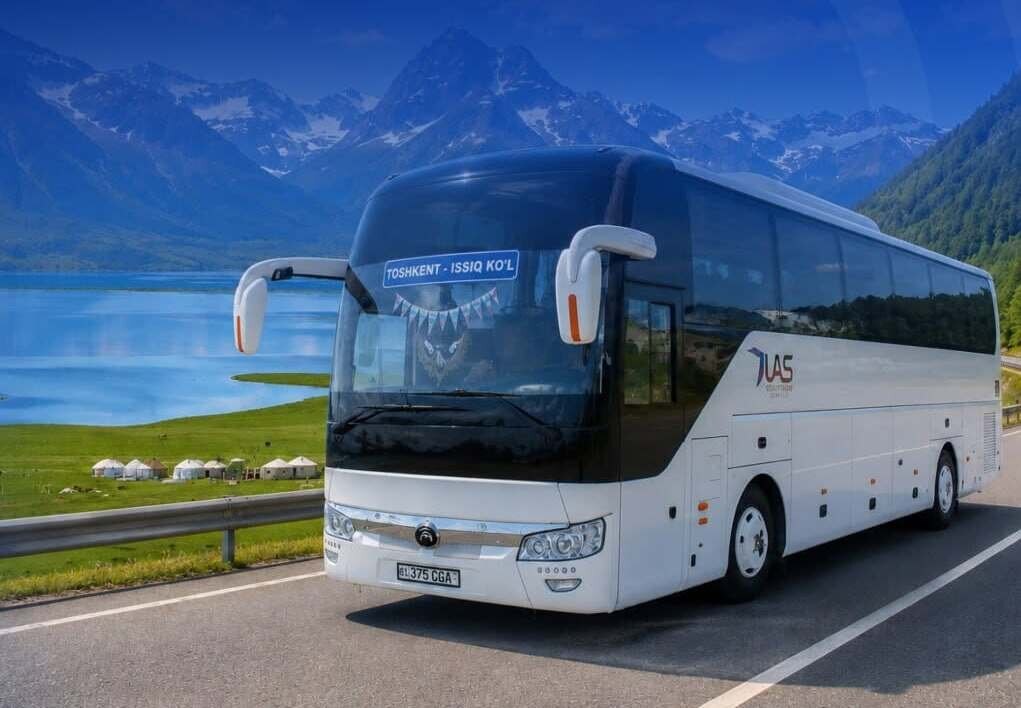
Tourism remains a vital sector of Kyrgyzstan’s economy, contributing significantly to regional development and employment. The Issyk-Kul region continues to serve as the country’s premier tourism hub, anchored by Lake Issyk-Kul, its most popular destination for both domestic and international visitors. According to data from the Ministry of Economy and Commerce and the 2GIS mapping service, tourism activity in the Issyk-Kul region has tripled over the past six years. By the end of August 2025, which marked the close of the summer resort season, the volume of tourist services along the lake’s shores had increased threefold compared to 2019. In 2019, the region hosted 627 hotels and guesthouses. By 2025, that number had grown to 1,833. The highest concentration of accommodations is found in Cholpon-Ata (377), the neighboring village of Bosteri (336), the regional capital Karakol (196), and Balykchy (27). Food service establishments have seen similar growth. The number of cafes and restaurants has nearly tripled from 360 in 2019 to 963 in 2025. Karakol leads with 170 establishments, followed by Cholpon-Ata (157), Bosteri (142), and Balykchy (84). Nationwide, Kyrgyzstan received over 3.7 million tourists in 2024, a 1.3-fold increase compared to 2023, according to the National Statistical Committee. Of these, 2.4 million were served by the organized tourism sector, including hotels and resorts, while 1.3 million stayed in the unorganized sector, such as guesthouses and private homes. The Issyk-Kul region accounted for a substantial share of this total. In 2024, approximately 714,000 visitors were accommodated in the organized sector, and over 1.2 million in the unorganized one. Tourism has become a key driver of small and medium-sized enterprises in the region, generating employment and enhancing the investment climate. In 2024, Kyrgyzstan’s tourism industry attracted more than $11 million in foreign direct investment, with Issyk-Kul playing a central role in that growth.

Kazakhstan to Count Tourists Using Mobile Data

Kazakhstan’s Bureau of National Statistics will begin tracking tourist flows in the country’s resort areas using anonymized mobile data, the agency’s head Maksat Turlubaev announced at the Digital Bridge 2025 international forum. Turlubaev noted that recent amendments to the country’s laws “On State Statistics” and “On Communications” now provide a legal foundation for using anonymized mobile data for statistical purposes, aligning with international best practices. Among the key applications will be the generation of real-time information on domestic and international tourist flows. Currently, Kazakhstan’s tourism statistics are compiled through surveys of accommodation facilities and households, as well as data from the Border Service of the National Security Committee and the Ministry of Ecology. These traditional methods, however, face limitations, including incomplete coverage, high respondent burden, and delays in data collection. Following the implementation of the new legislation, a pilot project was launched this summer in partnership with Estonian firm Positium and with support from the World Bank. The initiative analyzed a 5% anonymized sample of data from mobile operator Kcell, covering the period from July 2023 to June 2024, to assess domestic tourist flows. The results far surpassed those of traditional survey methods. “Mobile data analysis showed that the number of domestic tourists reached 107.6 million, compared to 7.8 million in official statistics,” said Turlubaev. “In the Alakol resort area in southeastern Kazakhstan, mobile data recorded 658,200 visitors, 2.4 times higher than official figures. Mobile data allows us not only to count tourists, but to capture a comprehensive, objective picture of internal mobility and real travel patterns. It accounts for short-term and informal visitors not reflected in traditional methods, highlights seasonal trends, and shows the impact of holidays on tourism activity. This gives us a valuable tool for management, infrastructure planning, and evaluating the economic impact of tourism.” The methodology Kazakhstan plans to adopt aligns with recommendations from the UN World Tourism Organization (UNWTO) and the International Telecommunication Union (ITU). It offers enhanced accuracy, near real-time analytics, reduced respondent burden, and the capacity to model tourist and migration flows using artificial intelligence. “This marks a major step in building a modern, digital statistical agency,” Turlubaev added. As previously reported by The Times of Central Asia, Kazakhstan recorded a 62% rise in tourists from five Arab countries in 2024, reflecting broader efforts to diversify and modernize its tourism sector.

Tourism in Tajikistan: Five Years of Progress and Persistent Barriers

Five years ago, Canadian researcher Christian Bleuer identified 25 key obstacles hindering the growth of Tajikistan’s tourism sector. Since then, the industry has made measurable progress but many challenges remain unresolved. Digitalization and Initial Progress Significant strides have been made in digital infrastructure. The introduction of electronic visas, online services, and the availability of eSIM cards has improved access for international travelers. Dushanbe has witnessed the opening of new hotels and restaurants, an expansion of taxi services in major cities, and the reconstruction of sections of the M41 highway. Other positive steps include training programs for tour guides, the creation of tourist information centers in Dushanbe, Khorog, and other cities, and growing competition in the hospitality and restaurant industries. Experts also note that travel bloggers and social media have, in some cases, done more to improve the country’s image than official marketing campaigns. Partial Improvements While services have improved in urban areas, regional disparities persist. Tourists can now find decent hotels and cafes in major cities, but service quality outside these hubs remains inconsistent. The e-visa system has streamlined entry procedures, although public awareness of the platform is still low. Digital tools such as Google Maps and mobile apps assist navigation in urban centers, but coverage remains sparse outside Dushanbe and Khujand. Financial infrastructure has also improved, with more ATMs available in the capital. However, access to foreign currency remains a barrier. Aviation has seen some progress under the "Open Skies" policy, with new routes to China and Uzbekistan launched, though high airfares continue to deter potential visitors. Ongoing Challenges Several systemic issues continue to hamper tourism development. Connectivity remains weak: Tajikistan ranks 117th globally for fixed internet speed and lags behind regional peers in mobile data performance, averaging under 24 Mbps. Environmental concerns also diminish the visitor experience. Litter is visible not only in rural areas but even in Dushanbe. Transport remains problematic, with the Jirgatal border crossing closed to foreigners and the Pamir Highway via the Khaburabad Pass largely inaccessible during winter months. A national ban on drones restricts opportunities for photo and video tourism. Additionally, poor coordination among tour operators, taxi drivers, and hoteliers prevents the formation of a unified tourism strategy. Structural Constraints Some limitations are more difficult to overcome. Tajikistan’s geography, landlocked and bordering Afghanistan, poses accessibility challenges. The country also lacks the architectural heritage that makes neighboring Uzbekistan a dominant player in regional cultural tourism. Urban development trends further complicate matters. The demolition of historical buildings and widespread tree-cutting in Dushanbe have eroded the capital’s aesthetic appeal. Tajikistan’s Tourism Development Strategy to 2030 acknowledges the sector’s underperformance. Its contribution to the global tourism market remains modest, constrained by low investment, weak infrastructure, and uneven service quality. Nevertheless, experts believe the sector holds untapped potential. Tourism could create employment opportunities for young people and help reduce labor migration. Realizing this potential will require stronger private sector involvement, upgraded services, and more effective international promotion.