• KGS/USD = 0.01144 0%
  • KZT/USD = 0.00216 0%
  • TJS/USD = 0.10659 0%
  • UZS/USD = 0.00008 0%
  • TMT/USD = 0.28530 0%
  • KGS/USD = 0.01144 0%
  • KZT/USD = 0.00216 0%
  • TJS/USD = 0.10659 0%
  • UZS/USD = 0.00008 0%
  • TMT/USD = 0.28530 0%
  • KGS/USD = 0.01144 0%
  • KZT/USD = 0.00216 0%
  • TJS/USD = 0.10659 0%
  • UZS/USD = 0.00008 0%
  • TMT/USD = 0.28530 0%
  • KGS/USD = 0.01144 0%
  • KZT/USD = 0.00216 0%
  • TJS/USD = 0.10659 0%
  • UZS/USD = 0.00008 0%
  • TMT/USD = 0.28530 0%
  • KGS/USD = 0.01144 0%
  • KZT/USD = 0.00216 0%
  • TJS/USD = 0.10659 0%
  • UZS/USD = 0.00008 0%
  • TMT/USD = 0.28530 0%
  • KGS/USD = 0.01144 0%
  • KZT/USD = 0.00216 0%
  • TJS/USD = 0.10659 0%
  • UZS/USD = 0.00008 0%
  • TMT/USD = 0.28530 0%
  • KGS/USD = 0.01144 0%
  • KZT/USD = 0.00216 0%
  • TJS/USD = 0.10659 0%
  • UZS/USD = 0.00008 0%
  • TMT/USD = 0.28530 0%
  • KGS/USD = 0.01144 0%
  • KZT/USD = 0.00216 0%
  • TJS/USD = 0.10659 0%
  • UZS/USD = 0.00008 0%
  • TMT/USD = 0.28530 0%

Viewing results 1 - 6 of 39

Kazakhstan Pushes to Unlock Private Investment as IFC Backs Reform Drive

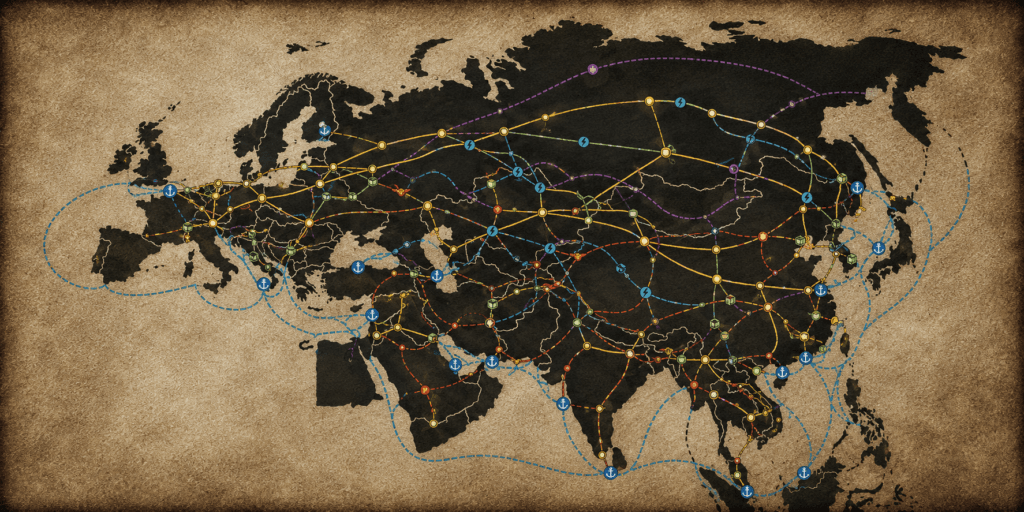
Kazakhstan is positioning itself as a more attractive destination for private investment, as authorities push to expand infrastructure, improve access to capital, and strengthen its role along key Eurasian trade routes. In an interview with The Times of Central Asia, Lisa Kaestner, the new Regional Director for Türkiye, Kazakhstan, and Uzbekistan at the International Finance Corporation (IFC), outlines how the World Bank Group’s private sector arm plans to support that shift, from backing transport corridors to mobilizing capital for businesses and infrastructure projects. TCA: Since taking up your new role, how has your career path and leadership experience shaped your approach to this position? Kaestner: I joined IFC as Resident Representative in Georgia in 1999, and that early experience shaped how I approach working directly with local partners and stakeholders. Since then, I've held several leadership roles across IFC and the World Bank, primarily in Eastern Europe and Central Asia, while also expanding into Africa, where I led advisory services to governments across Eastern and Southern Africa — working across sectors like agribusiness, tourism, housing, technologies and financial services to support private sector-led growth. More recently, I served as Country Manager for Ukraine and earlier also Moldova, where I led IFC's strategic work on expanding support for businesses and financial institutions and helping lay the groundwork for private sector participation in Ukraine’s reconstruction. In March 2026, I stepped into my current role as Director overseeing IFC's activities in Türkiye, Kazakhstan, and Uzbekistan, focused on mobilizing private investment and advancing reforms in close partnership with governments and the private sector. TCA: How do you assess the investment attractiveness of Kazakhstan at present? Kaestner: Kazakhstan presents a compelling investment story. The country benefits from a strategic geographic position at the heart of Eurasia, significant natural resources, and a government that has demonstrated a genuine commitment to reform and private sector development. From our point of view, several factors stand out as particularly encouraging. Kazakhstan has made meaningful progress in strengthening financial sector regulation and advancing infrastructure development. At the same time, we recognize that challenges remain. One key factor is the dominant role of the state in the economy, which represents roughly 40% of GDP, especially in major sectors like natural resources, electricity, telecommunications, and infrastructure. In this regard, we support the government’s efforts to increase private sector participation through privatization, IPOs, and public-private partnerships (PPPs). Additionally, maintaining steady progress on governance, transparency, and the rule of law remains crucial for sustaining investor confidence in the long term. Diversifying the economy away from commodity dependence — while significant strides have been made — remains a priority, as does deepening domestic capital markets to reduce reliance on external financing. Broader reforms are needed to achieve stable economic growth and improve the business climate, which will allow Kazakhstan to reach the level of developed countries. Significant efforts to develop the Trans-Caspian Transport Corridor (TCTC)—also known as the Middle Corridor, which is becoming increasingly important as an alternative trade route between Asia and Europe are...

Opinion: Trump Has Golden Opportunity to Launch C6+1 on Sidelines of UN

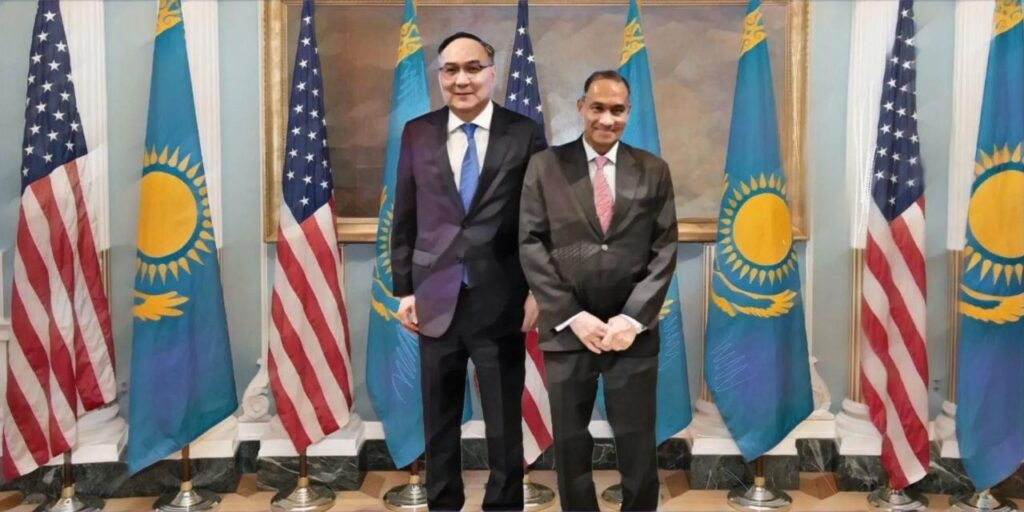
Representatives of the five Central Asian states — Kazakhstan, Uzbekistan, Kyrgyzstan, Tajikistan, and Turkmenistan — along with Azerbaijan, are expected in New York for the United Nations General Assembly in September. Historically, meetings between the Central Asian states and the United States – the C5+1 – have taken place on the sidelines of the United Nations. It is the most natural and logistically efficient venue for President Donald Trump to re-engage with the C5 partners he hosted at the White House last November. As of now, only foreign ministers are expected to attend the UNGA. But this could change if Trump extends an invitation to the leaders, according to a Central Asian diplomatic source. This time, however, he has the opportunity to add Azerbaijan, transforming the format into a C6+1. Baku has already been invited to participate as a full member in Central Asian gatherings, and Washington should build on that momentum. Azerbaijan is uniquely positioned: close to both Israel and Turkey – two of America’s most important regional partners – it sits astride one of the most important connectivity corridors linking Europe and Asia. Its inclusion would turn the C5+1 into a genuinely trans‑Caspian framework that reflects the emerging realities of Eurasian integration. The move would also link two major diplomatic achievements of Trump’s second term: the launch of the Trump Route for International Peace and Prosperity (TRIPP), a 43-km strategic transit corridor connecting mainland Azerbaijan to its Nakhchivan exclave through Armenia, and Trump’s elevation of the C5+1 to a White House-level summit. While TRIPP was discussed at the C5+1 meeting in November, bringing Azerbaijan into the next gathering would allow the administration to present itself as the architect of a new Eurasian trade and energy map. Strategically, a C6+1 format carries significant implications for great-power competition with China. This is because Central Asia is so crucial to Beijing’s grand strategy. In its recently adopted 15th five-year plan, neighborhood diplomacy is listed as the top priority — ahead of relations with major powers or developing countries. Beijing seeks to build a “community with a shared future” with 17 neighboring states, including all five in Central Asia, to “create a favorable external environment” for national rejuvenation, as Foreign Minister Wang Yi has stated. For China, Central Asia is a vital “hinterland” for energy and resource security, and a buffer against maritime disruptions. The United States does not need to dominate the Eurasian Heartland or force Central Asian states to choose between Washington and Beijing. It simply needs to ensure that any Chinese westward access runs through a vast landmass of countries that maintain constructive relations with the United States. A C6+1 format helps shape that environment without confrontation. A stable Middle Corridor – the energy and trade route running through Central Asia, across the Caspian Sea and through Azerbaijan to Turkey and the Mediterranean – also benefits America's energy-hungry allies in Asia, such as Japan and South Korea. Both increasingly look to Kazakhstan as an alternative oil supplier as they...

The Iran War Is Repricing Central Asia’s Connectivity

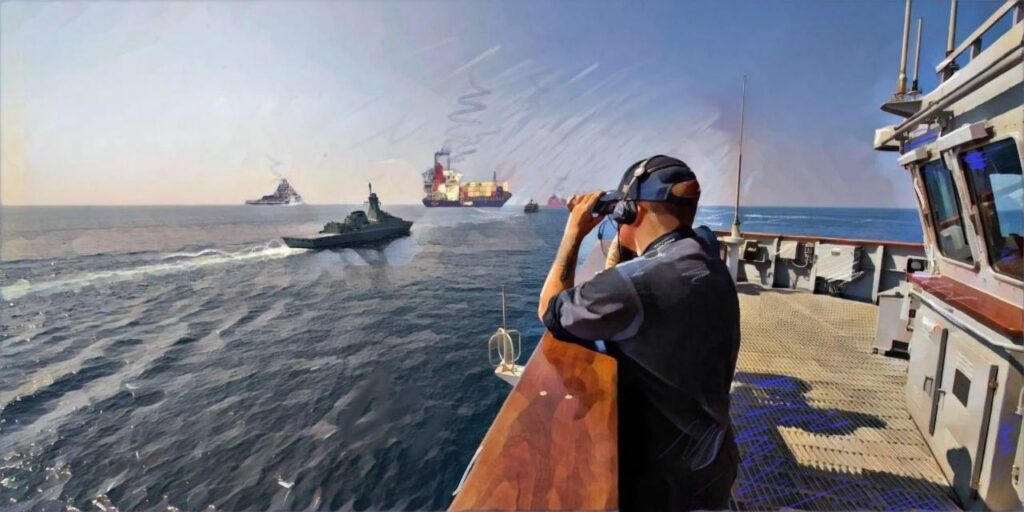
Europe’s aviation regulator has extended its current conflict-zone bulletin for the Middle East and Persian Gulf through April 10 and continues to advise operators to avoid Iranian and adjacent airspace at all altitudes. Reuters reported soon after that the squeeze on normal flight paths was pushing more traffic into narrower routes, notably over Azerbaijan and Central Asia. The Strait of Hormuz, meanwhile, has not returned to normal commercial use. A limited number of exempted vessels have crossed, but passage remains selective, politicized, and uncertain rather than routine. The question, consequently, is no longer only whether Central Asia has alternatives to single-route dependence but whether those alternatives remain commercially usable, taking into account the increased risk, delay, insurance, fuel burn, and congestion. What has changed is the cost of maintaining reliable connectivity. The Cost of Reliability The Iran conflict imposes higher operating costs on the wider Eurasian air corridor that is now taking displaced traffic. EUROCONTROL estimates that about 1,150 flights a day continue to be affected by re-routing linked to the Middle East crisis. These add roughly 206,000 kilometers of flying and 602 tons of extra fuel burn per day. Maritime trends are similar. In March, war-risk premiums in or near the Gulf had risen more than tenfold in some cases, with hull war premiums moving from about 0.25% of vessel value to as much as 3%. Air-freight rates on some routes rose by as much as 70% as shippers redirected urgent cargo away from disrupted sea lanes and restricted airspace. Higher surcharges and narrower margins for operational error can make routes lose commercial value even if they remain formally open. The wider macroeconomic setting has also made resilience more expensive. Higher oil prices make every detour costlier, raising freight charges, power costs, and production costs across the region’s trading partners. Even where Central Asian cargo does not move through Iranian waters, the same pattern is still present. Asian policymakers were already confronting a combined oil-price and currency shock at a moment when roughly 80% of the oil shipped through Hormuz normally goes to Asia. The World Bank’s March food and nutrition security update notes that around 20% of global oil supplies and about one-third of global fertilizer trade transit the Strait of Hormuz. Urea prices, for example, surged by nearly 46% month on month between February and March 2026. Importers in Central Asia, as well as in Europe and the South Caucasus, remain under pressure from higher household food costs and tighter producer margins. The price of resilience is now showing up in increased costs for farm inputs, food costs, and household budgets. How the Burden Falls Kazakhstan remains the best placed in the region to absorb the shift. The CPC pipeline still carries about 80% of Kazakhstan’s oil exports; oil income contributes 52% of the state budget. Earlier disruptions had constrained Kazakhstan to reroute 300,000 tons of crude, and the country continues to rely on supplementary outlets such as Ust-Luga, the Baku–Tbilisi–Ceyhan pipeline, and China when its main...

Iran Conflict Drives Food Price Pressures Across Central Asia

The war around Iran is beginning to push up food price risks in Central Asia as disruptions to shipping through the Strait of Hormuz raise fertilizer and fuel costs, while Tehran’s halt to some food exports adds pressure in regional markets. The impact is not manifesting as shortages, but as rising costs across the systems that produce, move, and sell food. The United Nations has warned that the crisis is disrupting one of the world’s most important trade corridors for energy and agricultural supplies. A large share of global fertilizer trade passes through the Strait of Hormuz, and reduced shipping traffic is tightening supply and pushing up prices. Higher fuel costs are adding a second layer of pressure on farmers and transport networks. Fertilizer and fuel are among agriculture’s highest costs. Even modest increases can compress margins quickly, forcing farmers to cut usage or pass costs on, with pressure moving through to retail prices. Central Asia is particularly exposed to this shift in costs. The region relies on imported fuel and fertilizers, and depends on long, multi-stage transport routes. When costs increase at any point in that chain, they accumulate before goods reach markets. The second layer of pressure comes from Iran itself. On March 3, Tehran imposed a ban on exports of food products as part of wartime economic measures. Reporting in Tajikistan indicates that the move could affect the availability and pricing of goods such as dairy, sugar, fruit, and spices, particularly in wholesale and lower-cost retail markets. Iran is not a dominant supplier, but plays a role in specific markets. Tajikistan is the clearest example. Tajikistan has also expanded its economic relationship with Iran in recent years, supported by cooperation in industry and transport. Iranian goods are widely present in retail supply chains, and trade between the two countries has grown steadily in recent years. That growth is part of a broader trend. Iran’s economic ties with Central Asia have expanded under new trade arrangements and bilateral initiatives. Kazakhstan and Iran have discussed increasing trade turnover to $3 billion, reflecting the rising use of Caspian routes and port infrastructure, which are now under threat. [caption id="attachment_46480" align="aligncenter" width="1600"] Aralsk Bazaar. Rising transport and fertilizer costs are beginning to push up food prices across the region. Image: Michael J. Bland[/caption] Transport adds a third layer of pressure. As risks rise across the Middle East, airlines and freight operators are avoiding large swathes of Iranian airspace and surrounding routes, forcing rerouting and raising costs across supply chains. European aviation safety authorities have issued conflict-zone bulletins warning of heightened risks in the region, and carriers have adjusted accordingly. Rerouting increases fuel use, extends journey times, and raises insurance costs. Those increases affect cargo as well as passengers, and over time, higher logistics costs feed into the price of imported goods, including food. On land, the same pattern is visible. As southern routes become less predictable, more freight is shifting toward the Trans-Caspian International Transport Route - the Middle Corridor -...

Caspian Escalation Raises Stakes for Central Asia

Central Asia, which has increasingly sought to present itself as a coordinated actor on the global political stage, has until recently maintained a cautious, non-aligned stance regarding the escalation in the Middle East. However, attacks affecting infrastructure in the Caspian region have altered the diplomatic balance. The Caspian Sea is a critical transit zone for Central Asia, linking Kazakhstan and Turkmenistan to Azerbaijan and onward to European and Middle Eastern markets. It forms part of key east–west and north–south trade corridors that have gained importance since Russia’s war in Ukraine disrupted traditional transit routes. In recent years, regional dynamics have also been shaped by Azerbaijan’s growing engagement with Central Asian states, including its formal inclusion in the expanded Central Asian consultative format, which has effectively evolved from the C5 into the C6. Baku has played an important role in regional connectivity. It has developed close relations with both Turkey and Israel, factors that influence geopolitical calculations in the Caspian basin, which directly borders Kazakhstan and Turkmenistan. This growing alignment has reinforced efforts to develop the Middle Corridor across the Caspian, linking Central Asia to Europe via the South Caucasus. Turkey maintains political, economic, and cultural influence in Kazakhstan, Kyrgyzstan, and Uzbekistan through the Organization of Turkic States. Russian political discourse has at times portrayed this cooperation as part of a broader pan-Turkic geopolitical project, a characterization widely dismissed by officials and analysts in Central Asia. Nevertheless, Astana and Baku continue to maintain strong relations with Ankara, a development that has periodically caused concern in Moscow. Under President Kassym-Jomart Tokayev, Kazakhstan has also strengthened ties with Gulf states. Qatar, Kuwait, the United Arab Emirates, and Saudi Arabia have become significant investors in the country’s economy. In this context, Iranian attacks on Gulf states not directly involved in the conflict have shaped Astana’s diplomatic positioning during the current crisis. Reports of drone attacks widely blamed on Iran targeting the Azerbaijani exclave of Nakhchivan have further heightened regional tensions. At the initial stage of the escalation, Kazakhstan’s response was largely limited to diplomatic contacts with regional leaders. At the same time, several Central Asian countries, along with Azerbaijan, expressed concern over the humanitarian consequences of the conflict and began dispatching aid to Iran. Azerbaijan sent nearly 30 tons of food and medical supplies on March 10, followed by another 82 tons of humanitarian aid on March 18. Uzbekistan delivered approximately 120 tons of humanitarian supplies, including flour, vegetable oil, sugar, and canned food, according to regional media reports. Turkmenistan also sent humanitarian aid consisting of medicines, medical supplies, and other goods, primarily intended for children. The Tajik government reported sending a convoy of 110 heavy trucks carrying humanitarian cargo to Iran, with a total weight of 3,610 tons. The diplomatic environment shifted further after Israeli air strikes on March 18 targeting Iranian naval facilities in the Caspian Sea. According to Israeli military statements cited by international media, the targets included a major port of the Iranian Navy, where, reportedly, "dozens of ships were destroyed,”...

Central Asia Faces an Arc of Instability to the South

Until a few weeks ago, looking south from Central Asia, observers of the region saw nothing but opportunities for connectivity. Admittedly, Iran on one side and the area between Afghanistan and Pakistan on the other have never been known for their stability. However, the current situation sees two serious conflicts on the southern border of Central Asia, which risk representing an arc of instability that will be difficult to overcome. While the global energy implications of the ongoing war in the Middle East, which began following the joint attack by the United States and Israel on Iran, are likely to be felt for months to come, the greatest risk for the Central Asian region is related to connectivity. This could also compromise significant efforts made in this regard by regional governments. Consider, for example, the recent trip to Pakistan by Kazakh President Kassym-Jomart Tokayev, which focused on the possibility of building a railway from Pakistani ports to Kazakh territory via Afghanistan and Turkmenistan. For much of the past decade, Central Asian governments have invested heavily in opening southern trade routes to global markets. Railways through Afghanistan, port access through Iran, and new logistics corridors to Pakistan were meant to reduce dependence on northern routes and expand the region’s economic options. The sudden emergence of conflicts along the southern frontier now raises questions about how secure those connections will be. The Times of Central Asia spoke with Peter Frankopan, author and Professor of Global History at Oxford University, about the potential implications of the two wars on Central Asia’s southern border. According to him, the main risk is not related to connectivity, but to contagion: “The key issue is about the safety of civilians and the protection of infrastructure in Central Asia,” he told TCA. “In times like these, nothing can be ruled out. With Iran lashing out at neighbors and realizing that attacks on oil, gas and more give it leverage, it is not hard to see what might come next. Second, of course, are threats to national economies. Wars create winners and losers. One can see a boom for some people in Central Asian states, but plenty of pressures, especially on inflation.” Indeed, the economic repercussions of the Middle East conflict are already being felt in the region, particularly in Turkmenistan, which maintains some of the closest trade ties with Iran and shares a long border with the country. Frankopan does not see any particular differences in terms of the danger to Central Asia posed by what is happening in Iran and between Pakistan and Afghanistan: “Clearly, instability in Afghanistan is an immediate concern, but it is not related to Iran and will have its own velocity and rhythms. But the risks of expanding violence and terrorism, of refugees, of narcotics and other illicit trafficking are real - and may well get worse.” Regarding connectivity, one of the topics that Central Asian governments pay the most attention to, according to Frankopan, the current situation should not be considered an...