• KZT/USD = 0.00222
  • TJS/USD = 0.10830
  • UZS/USD = 0.00008
  • TMT/USD = 0.29760
  • KZT/USD = 0.00222
  • TJS/USD = 0.10830
  • UZS/USD = 0.00008
  • TMT/USD = 0.29760
  • KZT/USD = 0.00222
  • TJS/USD = 0.10830
  • UZS/USD = 0.00008
  • TMT/USD = 0.29760
  • KZT/USD = 0.00222
  • TJS/USD = 0.10830
  • UZS/USD = 0.00008
  • TMT/USD = 0.29760
  • KZT/USD = 0.00222
  • TJS/USD = 0.10830
  • UZS/USD = 0.00008
  • TMT/USD = 0.29760
  • KZT/USD = 0.00222
  • TJS/USD = 0.10830
  • UZS/USD = 0.00008
  • TMT/USD = 0.29760
  • KZT/USD = 0.00222
  • TJS/USD = 0.10830
  • UZS/USD = 0.00008
  • TMT/USD = 0.29760
  • KZT/USD = 0.00222
  • TJS/USD = 0.10830
  • UZS/USD = 0.00008
  • TMT/USD = 0.29760
13 October 2026

Viewing results 1 - 6 of 641

Kazakhstan’s Foreign Minister Visits Caucasus to Expand Trade and Transit Ties

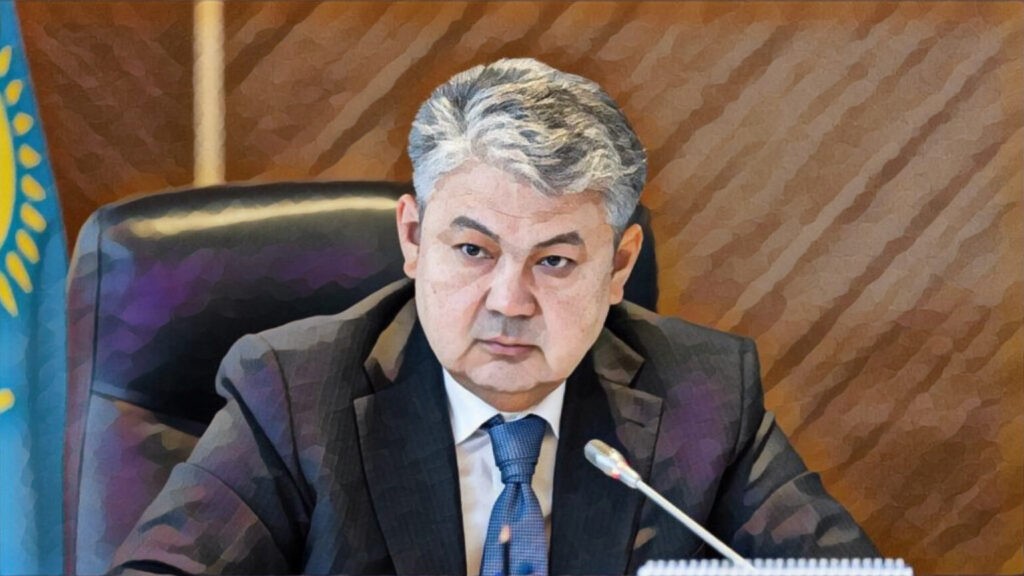
Kazakhstan’s Foreign Minister, Yermek Kosherbayev, conducted a diplomatic tour of the South Caucasus, Armenia, Azerbaijan, and Georgia, as part of Astana’s efforts to strengthen trade and economic ties, expand investment cooperation, and develop key transit routes between Central Asia and Europe. Armenia: Trade, Investment, and Digitalization In Yerevan, Kosherbayev held meetings with Prime Minister Nikol Pashinyan, President Vahagn Khachaturyan, and Foreign Minister Ararat Mirzoyan. He conveyed greetings from Kazakh President Kassym-Jomart Tokayev and highlighted the high level of bilateral cooperation. “Thanks to the efforts of the leaders, bilateral relations between Kazakhstan and Armenia have reached a qualitatively new level,” Kosherbayev said. He noted that the evolving geopolitical situation creates new opportunities for both economies. Kazakhstan reaffirmed its interest in long-term supplies of agricultural products, including grain and meat, as well as in expanding transport links and launching direct flights. The two sides discussed the implementation of the Roadmap for Trade and Economic Cooperation for 2026-2030. More than 100 enterprises with Kazakh capital are registered in Armenia, while over 400 Armenian companies operate in Kazakhstan, indicating growing business activity. Artificial intelligence, digitalization, nuclear energy, pharmaceuticals, higher education, and healthcare were identified as priority areas for cooperation. Particular attention was given to the establishment of a branch of the TUMO educational center in Astana. Azerbaijan: Energy and Transport Corridors In Azerbaijan, Kosherbayev met with President Ilham Aliyev and Foreign Minister Jeyhun Bayramov. Discussions focused on strengthening allied relations and expanding cooperation in energy, industry, and logistics. “Kazakh-Azerbaijani relations are characterized by steady and progressive development and possess significant potential. We express our firm commitment to further strengthening our alliance with brotherly Azerbaijan,” the minister said. Bilateral trade has increased sharply over the past five years, reaching $470.7 million in 2025. The two sides agreed to work toward raising this figure to $1 billion. Particular attention was paid to the development of the Trans-Caspian International Transport Route, a key element in diversifying Kazakhstan’s export routes. For Astana, Azerbaijan is the pivotal Caspian link in the westward corridor connecting Kazakhstan to the South Caucasus and on to European markets. The parties also discussed projects to lay a fiber-optic communication line and a subsea power cable across the Caspian Sea to strengthen regional energy and digital connectivity. These projects fit a broader strategy to connect Central Asian energy and data infrastructure more closely with Azerbaijan and, through it, with Europe. In addition, both sides highlighted opportunities to expand the transit of Kazakh energy resources through Azerbaijani territory, alongside growing cultural, humanitarian, and educational exchanges. Georgia: Investment and a Logistics Hub The final stop was Georgia, where the minister met with President Mikheil Kavelashvili and Foreign Minister Maka Bochorishvili. “Kazakhstan views Georgia as a reliable political and economic partner in the South Caucasus,” Kosherbayev said. The officials noted positive momentum in economic cooperation. Kazakh investment in Georgia has exceeded $600 million, with companies active in logistics, energy, and finance. Georgia’s importance to Kazakhstan lies not only in bilateral trade and investment, but in its role as...

Turkmenistan Opens the Door a Little Wider to Europe

Turkmenistan has historically been a difficult partner to deal with. The Turkmen government’s isolationist policies run counter to deep cooperation with any foreign party, but the Turkmen authorities seem to now perceive that these policies are costing them opportunities and revenue. In one of the latest shifts in foreign policy, Turkmenistan appears to be warming up relations with the European Union, though currently, the EU has its own reasons to boost interaction with Turkmenistan. Let’s Meet For decades, the EU and many other countries and international organizations have gone through frustrating efforts to establish a reliable relationship with Turkmenistan. Ashgabat’s form of governance is based on a cult of personality, a supposedly infallible leader capable of protecting the country from the evils of the outside world. The UN recognition in December 1995 of Turkmenistan’s neutrality was used by its government to seal off the country. It would normally be easy for the rest of the world to ignore Turkmenistan. However, Turkmenistan possesses the planet’s fourth-largest proven natural gas reserves, and it is located on what is developing into a key global trade route. On March 20, the European Investment Bank’s (EIB) regional representative for Central Asia, Olivier Kueny, complimented Turkmenistan for its “ambitions in transport and… projects that reduce greenhouse gases.“ Kueny noted that, “with direct access to the Caspian Sea, [Turkmenistan] is a key node” of the Trans-Caspian International Transport Corridor (TITR). He hinted the EIB could be interested in investing in Turkmenistan’s “rail, road, rolling stock and port infrastructure [that] could help reduce the cost and time needed to move goods between continents.“ On March 26, Charlotte Adriaen, the head of the EU division for Central Asia and Afghanistan, met in Ashgabat with Turkmenistan’s Deputy Foreign Minister, Myahri Byashimova, to discuss energy cooperation. The two also reviewed EU programs for sustainable energy, trade, and digital connectivity. On the same day, there was also a “New Horizons for Connectivity, Investment and Sustainable Growth” Turkmenistan-EU business forum in Ashgabat. Turkmenistan’s Minister of Finance and Economy, Mammetguly Astanagulov, addressed more than 200 delegates attending the forum, telling them his country is ready to expand trade, transport, and energy cooperation with the EU. Astanagulov noted EU-Turkmenistan trade increased from $1.1 billion in 2024 to $2.1 billion in 2025. EU Ambassador to Turkmenistan Beata Peksa also spoke at the forum. She noted Turkmenistan’s growing role in global transport corridors between Europe and Asia and said the EU is seeking to work more closely with Turkmenistan on improving investment conditions in the country. Peksa also mentioned helping Turkmenistan improve regulatory frameworks and investment in modern technologies to increase efficiency in moving cargo. On April 1, Adriaen met with representatives from Turkmenistan’s State Service of Maritime and River Transportation at the Turkmenbashi International Seaport on the Caspian coast to discuss the port’s role in the TITR and projects at the Balkan shipbuilding yard. And on April 7, the European Bank for Reconstruction and Development (EBRD) co-sponsored an “Export Experience Exchange” conference in Ashgabat, the aim...

Afghanistan Aims to Increase Trade with Central Asia to $10 Billion

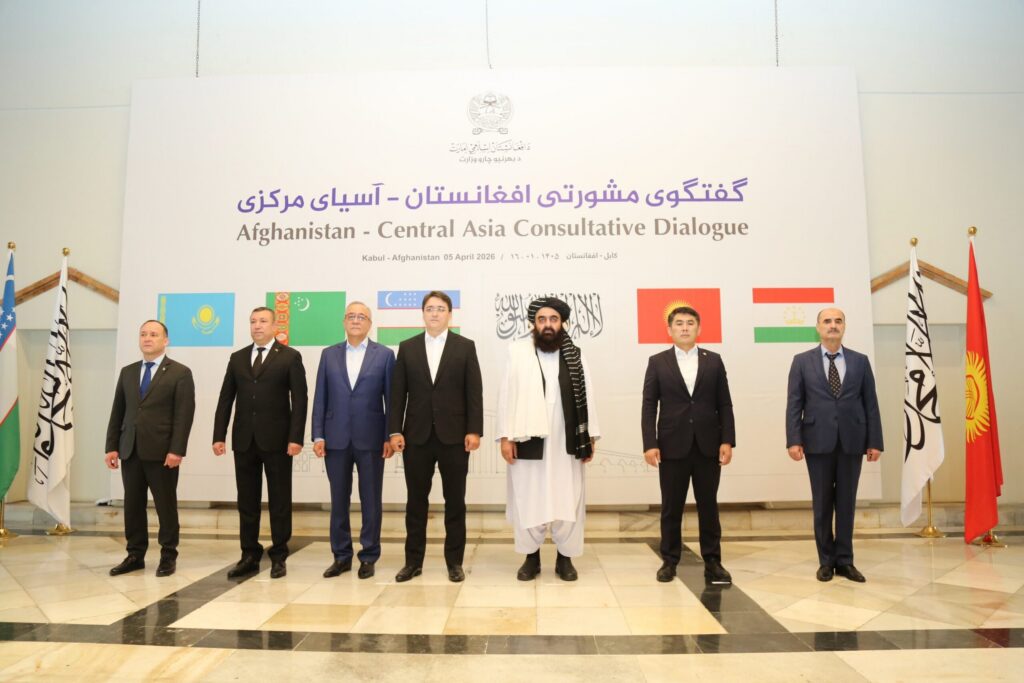
Afghanistan aims to increase trade with Central Asian countries to $10 billion over the next three to four years, Foreign Minister Amir Khan Muttaqi said at a meeting in Kabul. According to Muttaqi, Afghanistan’s trade turnover with countries in the region reached approximately $2.7 billion in 2025, marking a significant increase compared to previous years. The statement was made during a consultative dialogue involving representatives from Kazakhstan, Uzbekistan, Kyrgyzstan, Tajikistan, and Turkmenistan, focused on regional cooperation, trade, and the development of transit routes. Muttaqi said Afghanistan intends to leverage its geoeconomic position to connect Central Asia with markets in South and West Asia. Among key projects, he highlighted the TAPI gas pipeline, which is currently under construction. Afghan authorities are seeking to expand economic ties despite ongoing international sanctions affecting the banking sector, which continue to constrain investment inflows. At the same time, Russia remains the only country to have officially recognized the Taliban government that came to power in 2021. Several countries, including China, India, Turkey, and the United Arab Emirates, maintain a diplomatic presence in Kabul. Landlocked Central Asian countries view southern routes through Afghanistan as an alternative to northern corridors via Russia, which have been complicated by sanctions. Afghanistan shares a border of more than 2,300 km with Tajikistan, Uzbekistan, and Turkmenistan, and continues to face security challenges, including threats from extremist groups, drug trafficking, and irregular migration. However, Muttaqi said the situation along the borders remains generally stable. Earlier reports indicated that Kazakhstan is exploring the possibility of investing in rare earth metal mining in Afghanistan. The national company Tau-Ken Samruk is conducting laboratory analysis of samples collected in Afghanistan and Rwanda.

Istanbul Strait Rail Project to Boost Trade Along Trans-Caspian Transport Route

On March 31, the World Bank approved a $2 billion loan for the Istanbul North Rail Crossing Project (INRAIL), aimed at strengthening railway connectivity across the Istanbul Strait (Bosphorus) and reinforcing Türkiye’s role as a key logistics hub linking Europe, Asia, and the Middle East. With the Baku-Tbilisi-Kars railway, Turkey serves as a key node in the Trans-Caspian International Transport Route (TITR), also known as the Middle Corridor. The route connects China and Europe via Kazakhstan, the Caspian Sea, the South Caucasus, and Turkey. Turkey's major rail corridors passing through Istanbul, including the Middle Corridor, the Iraq Development Road, and the Turkey-EU corridor, are essential for international trade but currently face a significant bottleneck at the Bosphorus. INRAIL will involve the construction of a 127-kilometer electrified, high-capacity railway line providing a new overland rail crossing of the strait. The project will utilize the rail-ready Yavuz Sultan Selim Bridge and bypass central Istanbul, increasing both freight and passenger capacity while reducing logistics costs and improving reliability across national and intercontinental transport corridors, including the TITR. Once operational, rail freight capacity across the Bosphorus is expected to increase from approximately 3 million tons per year to as much as 50 million tons, significantly improving transit times, reliability, and predictability for freight operators. “By removing a critical rail bottleneck at the Istanbul Strait and enhancing the resilience and efficiency of rail infrastructure, Turkey is boosting its competitiveness and reinforcing its role as a logistics hub,” said Humberto Lopez, World Bank Country Director for Turkey. “INRAIL will also generate benefits for the wider region by connecting to international corridors such as the Middle Corridor and the Development Road, facilitating trade between Europe, Central Asia, and the Gulf.” The project aligns with Kazakhstan and Türkiye’s broader efforts to develop the Middle Corridor. In July 2025, Kazakhstan’s national railway operator, Kazakhstan Temir Zholy (KTZ), and TCDD Taşımacılık A.Ş. signed a cooperation agreement to enhance freight transportation along the TITR. The agreement aims to improve the route’s efficiency and competitiveness by launching regular rail services between Kazakhstan and Turkey, increasing freight volumes along the Baku-Tbilisi-Kars railway, and expanding cargo flows between China and Europe. KTZ has also held discussions with Mersin International Port, part of PSA International, on expanding cooperation to strengthen the Middle Corridor and develop more efficient multimodal logistics links between Asia and Europe. KTZ Chairman Talgat Aldybergenov reaffirmed both sides’ commitment to ensuring stable freight volumes and highlighted Mersin’s role as a strategic transshipment hub for the corridor. To further strengthen the logistics chain, Kazakhstan has proposed leveraging the potential of KPMC, a joint venture between KTZ and PSA International, which is already involved in developing multimodal services along the Xi’an-Istanbul route.

Uzbekistan and Afghanistan Establish Business Council to Boost Trade

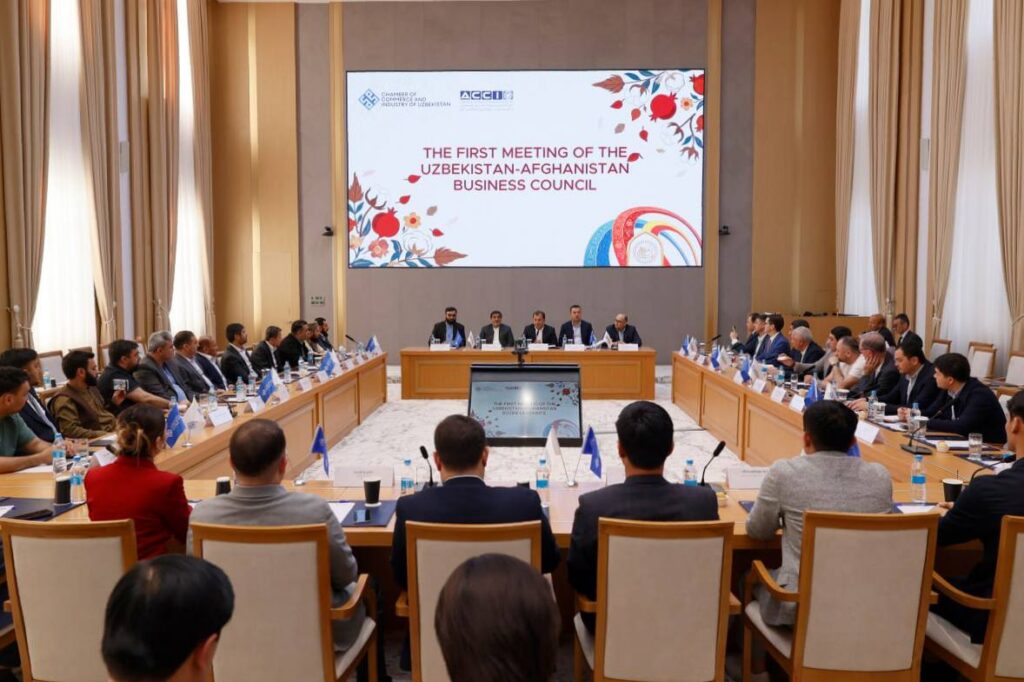
Uzbekistan and Afghanistan have established a joint Business Council aimed at strengthening trade and economic cooperation, according to Uzbekistan’s Chamber of Commerce and Industry. The council was formally launched on March 26 during a meeting in Tashkent attended by a delegation led by Mohammad Karim Hashimi, chairman of the Afghanistan Chamber of Commerce and Investment. The inaugural session brought together representatives from both countries’ business communities and relevant institutions. The council comprises 32 members. On the Uzbek side, participants include officials from the Chamber of Commerce and Industry and representatives of sectoral associations. The Afghan delegation includes members of the Chamber of Commerce and Investment as well as executives from leading private companies. Discussions focused on expanding bilateral trade, fostering direct business-to-business cooperation, and launching new joint projects. Priority sectors identified for collaboration include construction materials, pharmaceuticals, food production, textiles, electrical engineering, and petroleum products. Both sides set a target of increasing bilateral trade to $5 billion in the near term. To support this goal, they agreed on several priority measures, including expanding export capacity, introducing digital customs systems, improving financial and insurance services, and increasing transparency in trade procedures. Participants also emphasized the importance of regularly organizing exhibitions, business forums, and business-to-business meetings to strengthen ties between entrepreneurs and facilitate partnerships. Chairman of Uzbekistan’s Chamber of Commerce and Industry, Davron Vakhobov, highlighted the significance of the initiative, noting that it would help establish direct dialogue between businesses, create new partnerships, and boost investment activity. The creation of the Business Council builds on recent growth in economic ties between the two countries. Uzbekistan has described its relationship with Afghanistan as “friendly and constructive,” with bilateral trade reportedly increasing 2.5 times over the past five years-from $653 million in 2021 to $1.7 billion in 2025.

Uzbekistan and Russia Focus on Trade and Transit at Termez Meeting

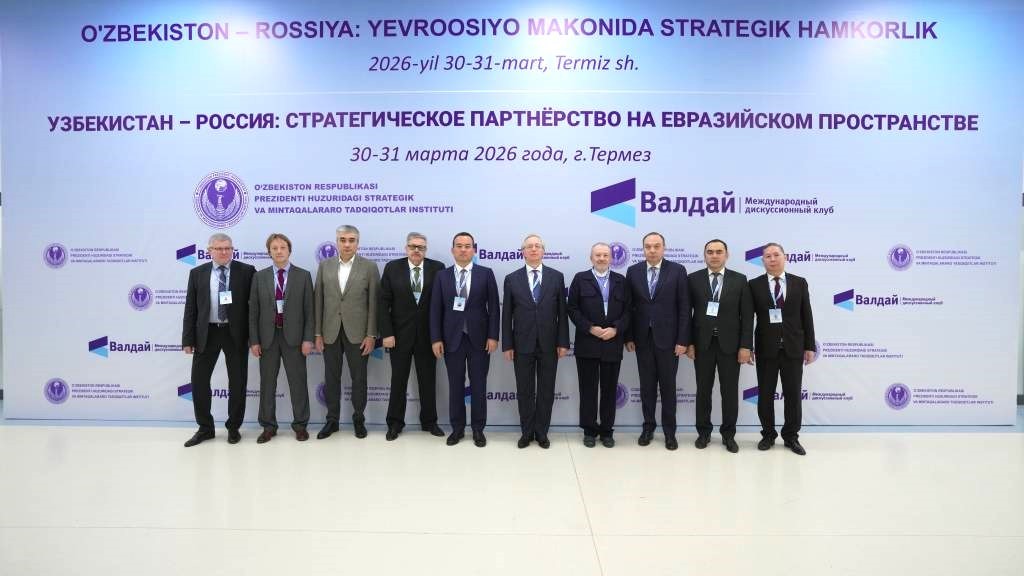
Uzbekistan and Russia used a conference in Termez on March 30–31 to highlight the breadth of their relationship, from trade and industrial projects to transport links and regional planning. The meeting was organized by Uzbekistan’s Institute for Strategic and Regional Studies and Russia’s Kremlin-linked policy forum, the Valdai Discussion Club. Participants included Russian Deputy Foreign Minister Mikhail Galuzin, Uzbek Deputy Foreign Minister Bobur Usmanov, ISRS director Eldor Aripov, Russian Ambassador Alexei Yerkhov, and other Uzbek and Russian officials, analysts, and business representatives. The meeting comes at a time of shifting regional dynamics, as Central Asian states recalibrate ties with Russia while managing new economic and political pressures from multiple directions. Termez sits by the Friendship Bridge on Uzbekistan’s border with Afghanistan and has become one of Tashkent’s main platforms for trade, logistics, and diplomacy aimed southward. The conference program focused on transport, infrastructure, interregional ties, and industrial cooperation, so the location matters. This aligns Uzbekistan’s relationship with Russia with a wider push for new routes across Eurasia and toward South Asia. The economic backdrop is also substantial. Official Uzbek figures put bilateral trade with Russia at around $13 billion in 2025, making Russia Uzbekistan’s second-largest trading partner after China. Uzbek reporting says that trade has grown sharply since 2017, with Russian investment in Uzbekistan approaching $5 billion. Officials have described the relationship as moving beyond simple trade toward industrial cooperation, technological partnerships, and longer value chains. The conference emphasized the growing role of direct regional links. Uzbek officials highlighted more than 200 regional initiatives worth over $4 billion and identified Tatarstan as a key partner in industry, petrochemicals, engineering, information technology, and education. Projects linked to the Himgrad industrial park model and branches of Kazan Federal University in Uzbekistan show how cooperation now extends through regions, universities, and industrial zones, not just central governments. Energy remains a key part of the relationship. As previously reported by The Times of Central Asia, on March 24, Uzbekistan and Russia advanced work on Uzbekistan’s planned nuclear power project in the Jizzakh region. Uzbekistan’s nuclear agency, Uzatom, and Russia’s Rosatom signed new documents and began initial concrete works for a small-capacity unit, describing the step as moving the project into a new implementation phase. Transit formed another major part of the agenda. Uzbek reporting states that participants discussed modernizing northern routes and developing a southern route through Afghanistan toward ports on the Indian Ocean. This fits Uzbekistan’s longer effort to turn Termez into a logistics hub for Afghan and South Asian trade. The city hosts the Termez International Trade Center, designed to simplify border trade and business access. The timing also reflects wider regional pressures. TCA previously reported that the war involving Iran is placing a strain on southern routes and increasing the importance of alternative corridors. In that context, a Russia–Uzbekistan meeting focused on trade and transport in Termez underscores how both countries are linking bilateral cooperation to shifting regional logistics. The meeting in Termez did not produce a major treaty or a...