• KGS/USD = 0.01144 0%
  • KZT/USD = 0.00202 0%
  • TJS/USD = 0.10448 -0.19%
  • UZS/USD = 0.00008 0%
  • TMT/USD = 0.28490 0%
  • KGS/USD = 0.01144 0%
  • KZT/USD = 0.00202 0%
  • TJS/USD = 0.10448 -0.19%
  • UZS/USD = 0.00008 0%
  • TMT/USD = 0.28490 0%
  • KGS/USD = 0.01144 0%
  • KZT/USD = 0.00202 0%
  • TJS/USD = 0.10448 -0.19%
  • UZS/USD = 0.00008 0%
  • TMT/USD = 0.28490 0%
  • KGS/USD = 0.01144 0%
  • KZT/USD = 0.00202 0%
  • TJS/USD = 0.10448 -0.19%
  • UZS/USD = 0.00008 0%
  • TMT/USD = 0.28490 0%
  • KGS/USD = 0.01144 0%
  • KZT/USD = 0.00202 0%
  • TJS/USD = 0.10448 -0.19%
  • UZS/USD = 0.00008 0%
  • TMT/USD = 0.28490 0%
  • KGS/USD = 0.01144 0%
  • KZT/USD = 0.00202 0%
  • TJS/USD = 0.10448 -0.19%
  • UZS/USD = 0.00008 0%
  • TMT/USD = 0.28490 0%
  • KGS/USD = 0.01144 0%
  • KZT/USD = 0.00202 0%
  • TJS/USD = 0.10448 -0.19%
  • UZS/USD = 0.00008 0%
  • TMT/USD = 0.28490 0%
  • KGS/USD = 0.01144 0%
  • KZT/USD = 0.00202 0%
  • TJS/USD = 0.10448 -0.19%
  • UZS/USD = 0.00008 0%
  • TMT/USD = 0.28490 0%

Viewing results 1 - 6 of 182

U.S. Special Envoy and Deputy Secretary of State to visit Central Asia

The U.S. Department of State has published a statement announcing that the Special Envoy for South and Central Asia, Sergio Gor, and Deputy Secretary of State Christopher Landau will travel to Kazakhstan and Uzbekistan from October 26 to October 30. According to the statement, "Special Envoy Gor and Deputy Secretary Landau will meet with Kazakh and Uzbekistani government counterparts to discuss a wide range of economic and security issues. The United States will continue to work with our Central Asian counterparts to strengthen relations and expand commercial ties. We look forward to enhancing bilateral cooperation between our countries and also recognizing ten years of U.S.-Central Asian partnership through the C5+1 diplomatic platform." No further details were provided in the announcement. Gor was born as Sergio Gorokhovsky on November 30, 1986, in Tashkent, Uzbekistan, which was part of the Soviet Union at the time. Gor's lawyer, Robert Garson, confirmed by email that his client was born in Tashkent. The previously unannounced visit is a continuation of recent talks held by the leaders of Astana and Tashkent with President Trump, and comes in the wake of new sanctions imposed on Russia last week, which directly affect countries in the region. In addition, last week, the U.S. Congressional Foreign Affairs Panel asked U.S. President Donald Trump to host a meeting in Washington, D.C. with leaders from Central Asia by the end of 2025.

Congressional Panel Urges Trump to Host C5+1 Summit This Year

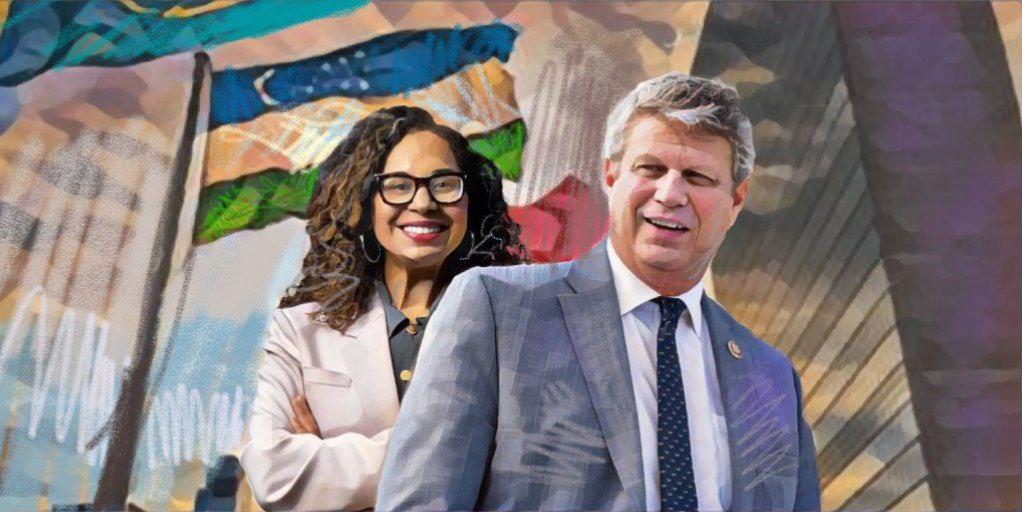
A U.S. congressional foreign affairs panel is asking U.S. President Donald Trump to host a meeting in Washington, D.C. with leaders from Central Asia by the end of 2025.   The proposal was made in an October 20 letter to Trump by Bill Huizenga, a Michigan Republican who chairs the House’s South and Central Asia Subcommittee, and Sydney Kamlager-Dove of California, the senior Democrat on the subcommittee.  The two representatives said that such a summit would mark the 10th anniversary of the C5+1 diplomatic forum and highlight the importance of Central Asia following Trump’s meetings with Uzbek President Shavkat Mirziyoyev and Kazakh President Kassym-Jomart Tokayev on the sidelines of the U.N. General Assembly last month. Multi-billion-dollar business deals were announced in connection with those meetings.  Established in 2015, the C5+1 formula refers to the United States and the five Central Asian countries of Kazakhstan, Kyrgyzstan, Tajikistan, Turkmenistan, and Uzbekistan. “A Leaders’ Summit with meaningful outcomes will strengthen regional cooperation and maximize the diplomatic potential of the 10th anniversary, setting the tone for strengthened U.S. engagement in the region for the rest of your presidency,” the representatives said in the letter to Trump. They said a meeting would advance U.S. priorities in Central Asia, “including security cooperation, economic ties, soft power, and good governance,” they said.  The letter noted U.S. interests such as the development of critical minerals, including tungsten, antimony, lithium, and rare earth elements; the full repeal of the Jackson-Vanik amendment, a Cold War-era law that imposes some restrictions on trade with several countries in Central Asia; and counterterrorism efforts against the regional branch of the Islamic State group.  “We also hope to see new agreements with the Central Asian countries to bolster people-to-people ties and expand U.S. soft power, such as additional American Peace Corps volunteers and the expansion of educational and cultural exchange programs, while addressing the accreditation issue surrounding U.S.-sponsored journalists and other U.S.-funded news broadcasters.  The Trump administration, however, has taken steps to cut most U.S. foreign aid programs, dismantling the U.S. Agency for International Development. USAID had been active in Central Asia. The administration has also cut aid for U.S.-funded domestic and international broadcasters. Analyst Temur Umarov wrote in the Carnegie Politika publication that Central Asia has found it relatively easy to work with the Trump administration.  “Business interests can be used to attract Washington’s attention, and there is no longer any need for demonstrative distancing from Russia or commitment to democratic reforms,” Umarov said.  He said that Uzbekistan and Kazakhstan have hoped to hold C5+1 anniversary events in their capitals, with top leaders in attendance. If that happens, Trump would be the first sitting U.S. president to visit any of the five Central Asian countries. 

U.S. Senate Confirms Julie Stufft as Ambassador to Kazakhstan

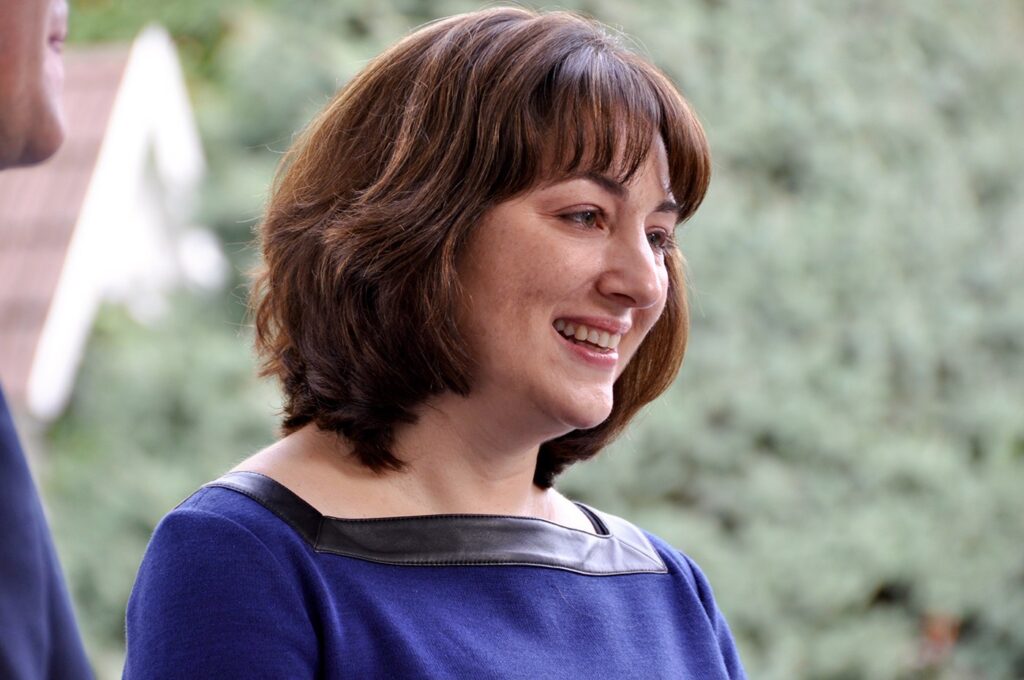
On October 7, the United States Senate confirmed Julie Stufft as the new U.S. Ambassador to Kazakhstan, approving her nomination by a vote of 51 to 47, and marking the first new U.S. envoy to Astana under President Donald Trump. A career diplomat and Senior Foreign Service Minister-Counselor, Stufft previously served as Deputy Assistant Secretary for Visa Services. During her July 2025 confirmation hearing, Stufft outlined her priorities, citing the security of U.S. citizens, energy cooperation, and critical minerals partnerships as top priorities. “If confirmed, my primary task will be to ensure the safety of all Americans in Kazakhstan, including my embassy and consulate staff,” she said. Stufft emphasized Kazakhstan’s strategic importance as a key U.S. partner in Central Asia, highlighting opportunities for expanded economic cooperation, particularly in energy and critical minerals. “Today, we stand on the threshold of a new era of trade and energy cooperation with Kazakhstan, a world leader in uranium production, a major oil exporter, and a holder of vast reserves of critical minerals,” she said. Stufft added that she intends to collaborate with the Bureau of Economic, Energy, and Business Affairs, the U.S. International Development Finance Corporation, the Export-Import Bank, and the private sector to deepen bilateral economic ties and promote U.S. prosperity. Stufft’s confirmation received some bipartisan support, with Senators Jeanne Shaheen (D-NH) and Steve Daines (R-MT) praising her professional experience and diplomatic capabilities. She succeeds Daniel Rosenblum, who retired in December 2024 after 28 years of service in the State Department. Her nomination was formally submitted by the White House and approved by President Donald Trump in the summer of 2025. Stufft is a career diplomat and a member of the Senior Foreign Service. Before her appointment, she served at the Bureau of Consular Affairs. Her previous overseas postings include assignments in Russia, Poland, Ethiopia, Moldova, and Djibouti. She also served on the National Security Council, coordinating efforts to protect Americans during the COVID-19 pandemic. Stufft holds degrees from Case Western Reserve University and Duke University. She speaks Russian, Romanian, French, and Polish. In 2023, she received the Presidential Award for Distinguished Service and has earned seven State Department awards over her career. “We must actively oppose violence against women and girls,” she said, underscoring her commitment to gender equality as part of U.S. foreign policy. Stufft is a fellow of the International Women's Forum (2021-2022) and participated in the MIT Center for International Studies’ Seminar XXI program (2014-2015).

S. Paul Kapur Confirmed as U.S. Assistant Secretary for South and Central Asian Affairs

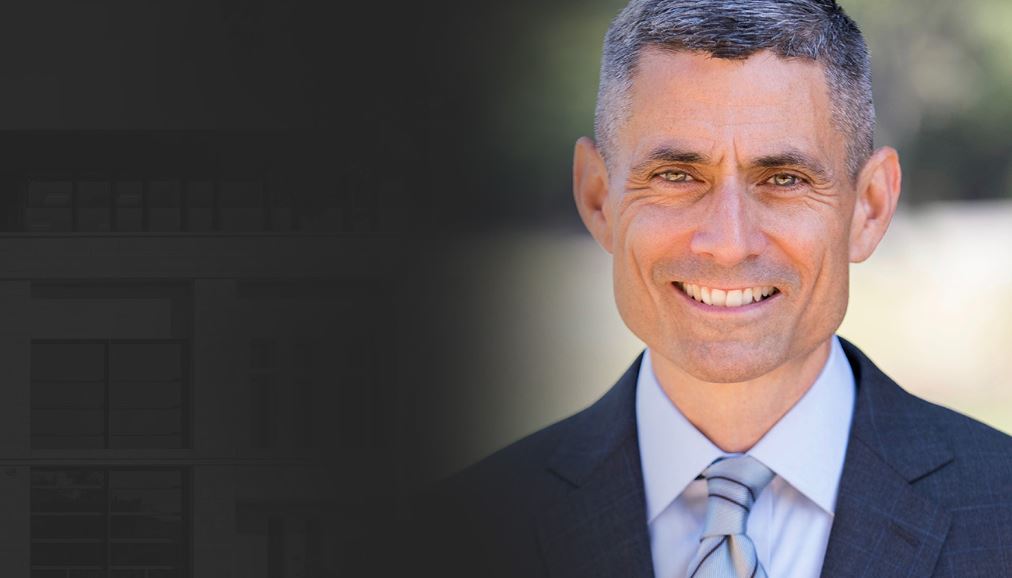
The U.S. Senate has confirmed political scientist S. Paul Kapur as Assistant Secretary of State for South and Central Asian Affairs to lead the State Department bureau that oversees relations with Afghanistan, Pakistan, India, Sri Lanka, Bangladesh, Nepal, Maldives, Bhutan, and the five Central Asian republics. The position carries responsibility for guiding U.S. diplomacy across the region, coordinating security and development strategy, and advising on policy toward regional powers such as China and Russia. Kapur, 56, is an Indian American scholar known for his work on nuclear deterrence and South Asian security. He was born in New Delhi to an Indian father and an American mother, but grew up in the United States. After studying the region in graduate school, he pursued an academic career, earning a doctorate in political science from the University of Chicago and a bachelor’s degree from Amherst College. Kapur taught at Claremont McKenna College and Stanford University before joining the U.S. Naval Postgraduate School, where he is a professor of national security affairs and runs U.S.–India strategic dialogues for the Department of Defense. Paul Kapur, a seasoned academic and security specialist, now takes a post that places him at the center of Washington’s engagement with Kazakhstan, Kyrgyzstan, Tajikistan, Turkmenistan, and Uzbekistan. His confirmation fills a key regional portfolio in the Trump administration, which may shape how the United States approaches Central Asia within its broader regional strategy. Kapur’s portfolio covers both South and Central Asia, but his confirmation has been closely watched in the five republics that straddle the heart of Eurasia. Central Asian governments and business leaders are eager to see whether the new Assistant Secretary will continue Washington’s traditional emphasis on security partnerships or shift toward deeper economic and investment ties. Kapur brings a distinguished scholarly pedigree and deep expertise in international security. He has written extensively on nuclear deterrence, South Asian security, and great-power competition. While much of his work focuses on India, Pakistan, and U.S. grand strategy, he has also examined how India manages its relationships with larger powers such as the United States and China - an enduring middle-power dynamic. That perspective is particularly relevant to Kazakhstan, an emerging middle power, and to Central Asia acting collectively, which is seeking to balance Russian and Chinese influence. During his confirmation hearing, Kapur emphasized that U.S. engagement in Central Asia will focus on advancing the sovereignty and territorial integrity of the regional states. He noted that, if confirmed, he would leverage the C5+1 framework and bilateral partnerships to pursue cooperation in areas such as energy, critical minerals, counterterrorism, combating transnational crime, and developing physical and digital infrastructure. His remarks reflected a commitment to strengthening regional independence and stability while deepening practical cooperation with the United States. For Central Asian governments, Kapur’s arrival comes at a time of shifting geopolitics. Russia’s war in Ukraine has unsettled long-standing assumptions, while China’s Belt and Road Initiative continues to expand Beijing’s economic influence. The United States has not always prioritized matching these dynamics. However, Kapur’s testimony...

Washington and Tashkent Push for More Trade and Investment

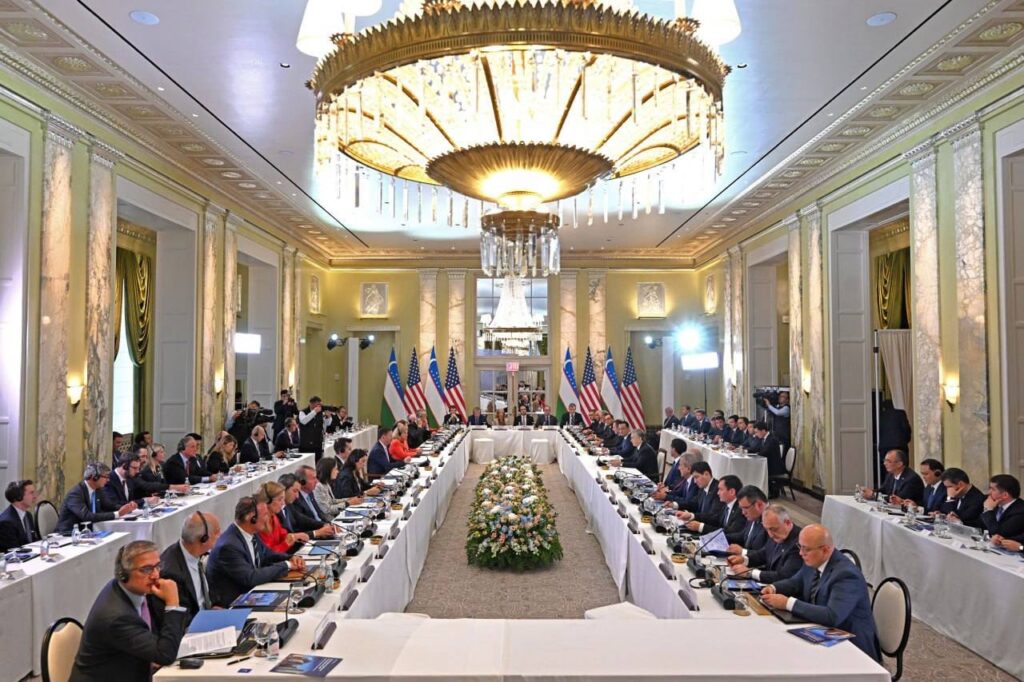
Speaking at the United Nations in New York on September 23, President Mirziyoyev of Uzbekistan made it clear that he no longer adheres to his predecessors’ post-Soviet policies of isolation and ‘go-it-alone’ economic development strategy - those days are over. Uzbekistan today - or so the evidence suggests - is more open for business than at any time in its history, with the caveat that deals must be win-win, strategic, fair, and reciprocal. Though it’s unclear what that precisely entails, both Washington and Tashkent are clearly working to accelerate capital and trade flows. “[Our] top-priority goal”, Mirziyoyev said at the United Nations, “is to fundamentally transform the lives of each and every family and citizen in our country, to enhance human dignity and wellbeing.” These are not mere words, but stand at the core of Uzbekistan’s efforts to build a new nation on the back of its - until recently - entirely archaic Soviet era socio-economic institutional structures and often ossified old ways of thinking. With this in mind, the main event of Mirziyoyev’s recent New York visit - besides his meeting with President Trump - was the high-level US-Uzbekistan investment roundtable with senior executives of major U.S. corporations and financial institutions. The roundtable was more than just symbolic. Its strong turnout underscored both the U.S. and Uzbek commitment to advancing joint initiatives in key sectors, including strategic minerals, transport infrastructure, energy, and smart agriculture.  Top executives from Boeing, Citigroup, BNY Mellon, NASDAQ, Nvidia, Mastercard, Visa, General Motors, Jefferies, Oppenheimer, Cleveland Clinic, Cargill, and other U.S. corporations descended on the meetings in force, clearly eager to court the president and his team. [caption id="attachment_37146" align="aligncenter" width="1280"] Image: president.uz[/caption] At their face-to-face meeting, President Trump personally congratulated Mirziyoyev on the landmark $8 billion Boeing-Uzbekistan Airways deal, projected to generate over 35,000 U.S. jobs – that in itself is not news. Rather, the NY business roundtable appears to have signaled that the American business community is more than just sniffing around for deals. Undoubtedly, a key force behind this growing interest is Washington’s expanding engagement with Uzbekistan. Highlighting Washington’s strategic swing towards Uzbekistan, Mirziyoyev, Sergio Gor, U.S. Special Envoy for South and Central Asian Affairs, and William Kimmitt, Under Secretary of Commerce for International Trade, attended the signing ceremony of bilateral agreements, which ranged from transport, logistics and AI to mining, healthcare, and financial services. Their presence helped move discussions from initial interest to serious dealmaking. To dispel investor uncertainty related to sovereign risk and other hidden booby traps often embedded in cross-border investment agreements, Mirziyoyev declared: “I assure you, I personally guarantee the success of U.S. companies operating in Uzbekistan. At the Ministry of Investments, a dedicated Deputy Minister for U.S. Affairs has been appointed. He will accompany you 24/7.” While this makes plain Uzbekistan’s shift from aid recipient to active economic player, it’s also an attempt to shore up “investor butterflies” who are wary of corruption and shaky legal remedies in the event of contract disputes. Moreover, recognizing that companies...

Kazakhstan Backs Trump’s Gaza Peace Initiative

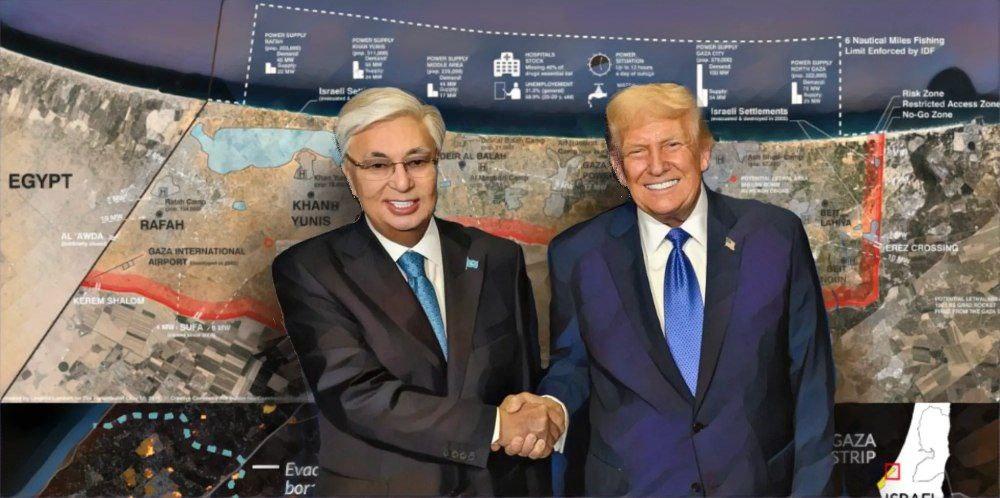
Kazakhstan has expressed support for President Donald Trump’s Comprehensive Peace Plan aimed at ending the conflict in Gaza. In a statement on X, Presidential Press Secretary Ruslan Zheldibay wrote that President Kassym-Jomart Tokayev considers the initiative a “unique opportunity” and “an important step toward resolving the situation in the Middle East, strengthening interstate trust, and establishing lasting and just peace in this region.” By describing the initiative as an “important step” rather than a definitive solution, Kazakhstan leaves room for diplomatic flexibility and avoids alienating partners that hold divergent views on Gaza. At the same time, the public endorsement is a clear gesture of support for the Trump administration’s leadership in addressing the central conflict of the Middle East, marking a notable moment where Astana aligns itself with Washington’s effort to shape the regional peace agenda. [caption id="attachment_36799" align="aligncenter" width="581"] Ruslan Zheldibay, President Tokayev’s press secretary, announced the position in a post on X[/caption] Trump’s Comprehensive Peace  Plan, released by the White House on September 29, 2025, ties Gaza’s governance to the broader framework of the Abraham Accords, proposing regional security guarantees, economic reconstruction measures, and expanded Arab participation as part of an effort to extend the accords’ realignment across the Middle East. Trump has repeatedly urged world leaders to expand the Abraham Accords, including appeals to Saudi Arabia, discussions with Israel’s Netanyahu, and even suggesting that Iran could join. At the 80th United Nations General Assembly (UNGA) last week, President Kassym-Jomart Tokayev pointed to the Abraham Accords as proof that reconciliation is possible in the Middle East. This endorsement is consistent with Tokayev’s broader diplomatic messaging and positions Kazakhstan as the only Central Asian state publicly backing the accords as a pathway to normalization at the UN meeting. Separately, UNGA week also saw Wabtec announce a $4.2 billion order from Kazakhstan’s national railway, a deal in line with Trump’s ‘America First’ policy that underscored the commercial dimension of U.S. engagement. The Gaza statement follows Tokayev’s remarks last week about the United Nations after technical failures during Trump’s UNGA appearance. Tokayev described the incident as “an extremely dangerous incident” and “a most serious shortcoming — one might even say a failure — of the UN Secretariat and the relevant services and departments.” He noted that, “The decision to conduct an investigation has already been made and is correct.” He linked the investigation into the failure to broader questions about the UN’s credibility, echoing Trump’s frustrations with the institution. Alongside these public remarks, Tokayev has made changes to Kazakhstan’s diplomatic team, recalling the ambassador to Washington and appointing a new foreign minister. While the reshuffle followed Tokayev’s return from New York, it also appears to reflect a deliberate recalibration of Kazakhstan’s diplomatic apparatus, with the new team brought in to carry forward these emerging foreign policy priorities. Taken together, these moves highlight Kazakhstan’s shift toward a more visible diplomacy, with Astana’s decisions increasingly aligned with Washington. By endorsing Trump’s Comprehensive Peace Plan, Tokayev has signaled a convergence with the former U.S....