• KGS/USD = 0.01144 0%
  • KZT/USD = 0.00205 0%
  • TJS/USD = 0.10782 0%
  • UZS/USD = 0.00008 0%
  • TMT/USD = 0.28490 0%
  • KGS/USD = 0.01144 0%
  • KZT/USD = 0.00205 0%
  • TJS/USD = 0.10782 0%
  • UZS/USD = 0.00008 0%
  • TMT/USD = 0.28490 0%
  • KGS/USD = 0.01144 0%
  • KZT/USD = 0.00205 0%
  • TJS/USD = 0.10782 0%
  • UZS/USD = 0.00008 0%
  • TMT/USD = 0.28490 0%
  • KGS/USD = 0.01144 0%
  • KZT/USD = 0.00205 0%
  • TJS/USD = 0.10782 0%
  • UZS/USD = 0.00008 0%
  • TMT/USD = 0.28490 0%
  • KGS/USD = 0.01144 0%
  • KZT/USD = 0.00205 0%
  • TJS/USD = 0.10782 0%
  • UZS/USD = 0.00008 0%
  • TMT/USD = 0.28490 0%
  • KGS/USD = 0.01144 0%
  • KZT/USD = 0.00205 0%
  • TJS/USD = 0.10782 0%
  • UZS/USD = 0.00008 0%
  • TMT/USD = 0.28490 0%
  • KGS/USD = 0.01144 0%
  • KZT/USD = 0.00205 0%
  • TJS/USD = 0.10782 0%
  • UZS/USD = 0.00008 0%
  • TMT/USD = 0.28490 0%
  • KGS/USD = 0.01144 0%
  • KZT/USD = 0.00205 0%
  • TJS/USD = 0.10782 0%
  • UZS/USD = 0.00008 0%
  • TMT/USD = 0.28490 0%

Viewing results 1 - 6 of 30

Mirziyoyev Invites Trump to Visit Uzbekistan

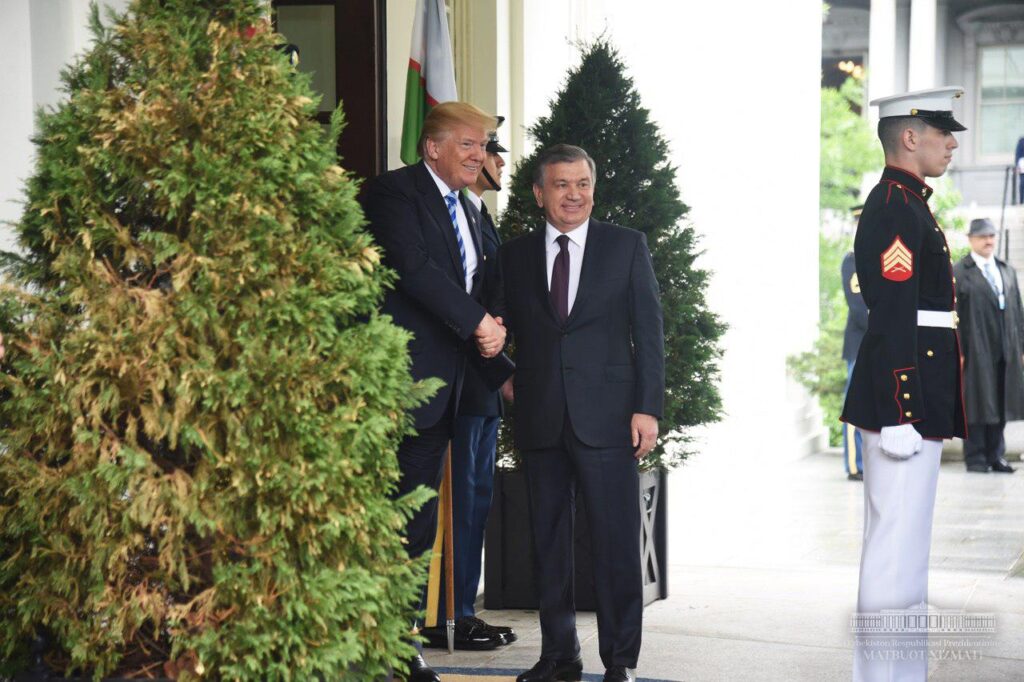
Uzbekistan’s President Shavkat Mirziyoyev has extended his congratulations to Donald Trump on his inauguration as the 47th President of the United States by inviting him to visit Uzbekistan. Mirziyoyev's press secretary, Sherzod Asadov, made the announcement. Republican candidate Donald Trump won the November 2024 U.S. presidential election and was sworn into office on January 20, 2025. In his congratulatory letter, Mirziyoyev expressed confidence that the United States, under Trump’s leadership, would continue to enhance its global influence and prestige. He commended the country’s economic strength and vital role in international affairs. The letter also highlighted Uzbekistan’s appreciation for the United States’ consistent support of its independence, sovereignty, and territorial integrity. Mirziyoyev voiced optimism for a new era of strategic partnership between the two nations during Trump’s presidency. He stressed the importance of deepening bilateral ties and expanding collaboration through bilateral and multilateral platforms. President Mirziyoyev also invited Trump to visit Uzbekistan, a gesture aimed at strengthening the relationship between the two countries. Mirziyoyev visited the United States in 2018 during Trump’s previous term as president. When the two leaders met at the White House, Trump remarked on Uzbekistan’s growing influence: “The authority of Uzbekistan is growing. It’s an honor for us to meet with you in the White House.” In addition to Uzbekistan, other Central Asian leaders congratulated Trump on his inauguration. Kazakhstan’s President Kassym-Jomart Tokayev sent a telegram expressing confidence in the continued development of mutually beneficial cooperation between Kazakhstan and the United States, particularly concerning energy, nuclear non-proliferation, and international security.
Uzbekistan Plans to Strengthen Strategic Partnership with the U.S.

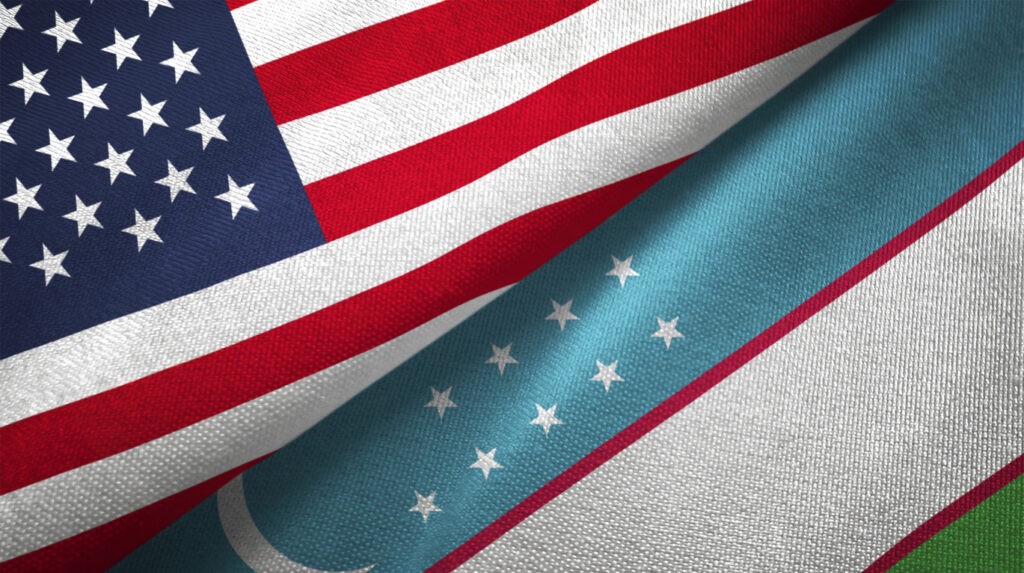
Uzbekistan is actively working to deepen its strategic partnership with the United States. The draft state program for 2025, currently under public discussion, outlines several measures to strengthen these ties. The Ministry of Foreign Affairs, led by Acting Minister Bakhtiyor Saidov, is tasked with expanding bilateral cooperation by the end of 2025. Key initiatives include a high-level visit to the U.S. and the inaugural round of the Enhanced Strategic Partnership Dialogue in Tashkent. The program also aims to bolster collaboration within the “C5+1” format, which features a ministerial meeting, working group discussions, and a summit in Samarkand to mark the format’s 10th anniversary. The program also emphasizes increasing inter-parliamentary cooperation, attracting investors from the Americas, and promoting trade and investment through business forums, exhibitions, and events. Additionally, it prioritizes enhanced security collaboration and sustaining Uzbekistan's strong rankings in U.S. human rights reports. Daniel Runde, Senior Vice President of the Center for Strategic and International Studies, recently urged U.S. policymakers to prioritize relations with Uzbekistan. He described the country as a pivotal partner in maintaining regional stability and countering the influence of Russia and China. Despite geopolitical challenges, including Russia’s invasion of Ukraine and escalating competition with China, Runde highlighted the strategic importance of strengthening ties with Uzbekistan. Uzbekistan's relationship with the U.S. is longstanding. In 2018, President Shavkat Mirziyoyev met with then-President Donald Trump at the White House. Trump lauded Uzbekistan’s rising global stature during the visit, calling it "an honor" to host Mirziyoyev.

Tokayev on Kazakhstan’s Future: Reforms, Diplomacy, and Global Leadership

In an interview with the Kazakh newspaper Ana Tili, President Kassym-Jomart Tokayev discussed pressing domestic and international policy issues shaping Kazakhstan's development. Tokayev highlighted Kazakhstan’s role as a stabilizing force in the international arena during a time of heightened geopolitical tensions. “My main goal is to strengthen the economic potential, sovereignty, and international position of our state. From the very beginning of my presidency, I have taken full responsibility for the decisions I make and their consequences. I cannot and do not want to work any other way,” Tokayev stated. [caption id="attachment_27253" align="aligncenter" width="750"] Image: Akorda[/caption] Reflecting on Qantar - Building a Just Kazakhstan Tokayev addressed the January 2022 unrest - Qantar - describing the upheaval as a consequence of deep-rooted social injustice and political stagnation. “Three years after Qantar, most of our citizens understand that the unprecedented unrest was driven by social inequality, political stagnation, and the self-serving ambitions of the conspirators,” Tokayev said, warning against the spread of misinformation surrounding the events and emphasized that decisive action was necessary to preserve Kazakhstan’s sovereignty. Tokayev reiterated his commitment to creating a fairer Kazakhstan where all citizens are equal before the law. “Justice is not universal equalization. My course on the fair distribution of national wealth does not mean total expropriation or redistribution of property and assets. Such a policy would lead to degradation and chaos. Instead, we aim to eliminate illegal privileges and return unlawfully acquired assets to the state as part of our modernization strategy,” the president said. Relations with Nazarbayev While acknowledging the achievements of Nursultan Nazarbayev, Kazakhstan’s first president, Tokayev also critiqued certain aspects of his leadership. “After resigning but remaining chairman of the Security Council, he often held meetings with key officials, creating confusion and sparking rumors of dual power. This situation led some to claim that the Elbasy Institute should supersede presidential authority,” Tokayev noted. He further revealed that Nazarbayev had considered returning to power in 2021, citing his strong ties to Moscow. Advancing Political Reforms and International Relations Tokayev pointed to the successful implementation of key political reforms, emphasizing greater openness and the activation of public participation. “The concept of ‘Strong President, Influential Parliament, Accountable Government’ best suits Kazakhstan’s political system. However, achieving this fully requires sustained effort,” Tokayev explained, reaffirming his belief that a presidential system remains the optimal governance model for Kazakhstan. Tokayev also elaborated on relations with major powers, including Russia, China, and the United States, underscoring the importance of Kazakhstan’s partnership with Russia, highlighting their shared border and deep economic ties. “President Putin is an experienced statesman who values Kazakhstan’s strategic importance as Central Asia’s largest economy. Our constant communication fosters stability in Eurasia,” Tokayev said. He described Kazakhstan’s cooperation with China as dynamic and multifaceted, elevating their relationship to the level of an "eternal strategic partnership." Tokayev also mentioned his conversation with  U.S. President-elect Donald Trump, noting Trump’s positive view of Kazakhstan as a strategic partner. Nuclear Power Plans, Middle Powers and Global Stability On nuclear energy, Tokayev...

Opinion: What Will a New Trump Presidency Mean for Central Asia?

During his first presidency, Donald Trump introduced a foreign policy approach that recalibrated U.S. engagement with Central Asia, a region strategically critical yet overshadowed by the influence of China and Russia. Trump’s policies, targeting the collective challenge of CRINK (China, Russia, Iran, and North Korea), aimed to foster regional autonomy and counter external dependency. This policy shift, aimed at countering the global influence of CRINK has extended to the vital region of Central Asia. Further, it is geographically wedged between Russia and China and serves as a critical bridge for U.S. interests. The CRINK nations, in their regional strategies, have made substantial inroads in Central Asia. Additionally, each nation is pursuing influence through economic, political, or military avenues. China’s Belt and Road Initiative (BRI) and Russia’s Eurasian Economic Union, for instance, have been noted as major forces reshaping Central Asian economies as well as infrastructure. In 2013, the BRI of China was launched, which has channeled billions into roads, railways, and other infrastructure projects in Central Asia, seeking to create new trade routes connecting Asia to Europe. On the other side, Russia has promoted its Eurasian Economic Union as a trading bloc that has aimed at fostering economic integration among Central Asia and neighboring countries. These initiatives have provided economic incentives for Central Asia but also intensified its reliance on external powers, particularly China and Russia​. During his presidency, Trump emphasized a CRINK-focused strategy, which prioritized Central Asia's sovereignty and reduced dependency on China and Russia. This strategy laid the groundwork for U.S. engagement in the region, influencing current policy directions. In 2020, Trump’s administration unveiled a comprehensive strategy for Central Asia, marking the first such effort in over two decades. The policy emphasized U.S. support for border security and defense collaboration, including financial aid to Tajikistan and military training for Kazakhstan and Uzbekistan. These measures, though initiated under Trump, continue to shape current U.S. approaches to combating terrorism and fostering regional stability. For example, the U.S. has established the C5+1 initiative as a dialogue platform between the United States and the five Central Asian nations (Kazakhstan, Uzbekistan, Kyrgyzstan, Turkmenistan, and Tajikistan). It was developed further to promote mutual goals in regional security, economic development, and environmental resilience​. Security cooperation is a vital aspect of this U.S. strategy which has given the threats of terrorism and also potential instability at CRINK’s peripheries (Sciutto, 2024). In particular, Afghanistan’s proximity to Central Asia poses both risks as well as opportunities for these nations. The U.S. has provided financial support to Tajikistan to strengthen border security and counter drug trafficking. Furthermore, while also assisting Kazakhstan and Uzbekistan with training and equipment to improve their defense capabilities the US has financially supported the nation. This military cooperation has aimed to prevent the encroachment of extremist groups like ISIS, which could exploit regional instability and threaten U.S. interests​. Trump’s presidency emphasized private sector investments as an alternative to China’s Belt and Road Initiative. Although modest compared to China’s commitments, these investments reflected an effort to...

Kazakhstan’s Middle Power Strategy Captures U.S. Focus in Trump-Tokayev Talks

On December 5, a telephone conversation took place between Kazakhstan's President Kassym-Jomart Tokayev and U.S. President-elect Donald Trump. According to Akorda, the official residence of the Kazakh president, Tokayev congratulated Trump on his election and both leaders expressed a commitment to strengthening their strategic partnership in trade, investment, and nuclear non-proliferation. They also agreed to maintain regular contact to sustain the momentum of bilateral cooperation. Kazakhstan as a Mediator This brief but significant interaction has fueled speculation that Trump may view Kazakhstan as a potential mediator in negotiations between Russia and Ukraine. International expert Arkady Dubnov has suggested that Astana could become a platform for dialogue involving Trump, Vladimir Putin, and Volodymyr Zelensky, or other high level representatives. This aligns with Kazakhstan’s diplomatic efforts to promote mediation and its firm belief that the ongoing conflict can only be resolved at the negotiating table. Tokayev and the Role of Middle Powers Under Tokayev’s leadership, Kazakhstan has consolidated its status as a “Middle Power.” The term gained prominence in May during Tokayev’s Singapore Lecture, part of a prestigious series organized by the Yusof Ishak Institute (ISEAS). In his speech, “Kazakhstan and the Role of Middle Powers: Promoting Security, Stability, and Sustainable Development,” Tokayev emphasized the risks of global polarization and the need for middle powers to act against a new Cold War. Tokayev revisited this concept in an article for the French newspaper Figaro, highlighting the growing influence of middle powers amidst the deadlock faced by global superpowers, such as the United States and China. Tokayev wrote, “The economic and political importance of these countries is growing, and their balanced and constructive position is becoming an advantage in the face of global uncertainty.” At the Astana Think Tank Forum in October, Tokayev reiterated this idea, calling for the reform of the UN Security Council to amplify the voices of regional and middle powers. “The Security Council is in a deadlock, and we need to find a way out,” Tokayev stated. Trump's Strategy Trump’s outreach to Tokayev appears to validate these concepts. Following his election, Trump has engaged with the leaders of regional and middle powers, including India, Israel, Canada, and South Korea, signaling a possible strategy to build a coalition of such nations for his proposed reforms to the global security architecture. Kazakhstan's balanced and constructive foreign policy, combined with its emphasis on multilateralism, positions it as an effective interlocutor in global conflicts. Tokayev’s vision of middle powers as mediators may prove instrumental in shaping a more inclusive and cooperative international order.

Tracing Ties: Donald Trump’s Diplomatic Legacy with Kazakhstan

Away from his business dealings, the official relationship between U.S. President-elect Donald Trump and the Central Asian republic began under the first president of Kazakhstan, Nursultan Nazarbayev. On January 17, 2018, Trump received Nazarbayev at the White House on an official visit, praising the existing relations between the two nations. “I’m thrilled that you’re here. Everyone deeply respects you. We have a wonderful relationship between our countries. Now, Kazakhstan is in a perfect situation. It is a great honor for us to receive you. What you have done for your country is truly remarkable,” Trump stated. It is widely-believed that during this visit, Nazarbayev warned Trump of the upcoming transition of power in Kazakhstan, naming Kassym-Jomart Tokayev as his successor. On June 25, 2019, following Kazakhstan’s presidential election, Trump sent a congratulatory telegram to Tokayev. “We have made great progress in our bilateral relations over the years, and I am confident that the spirit of our cooperation will continue to strengthen. It is gratifying that American businesses continue to open new opportunities to expand economic cooperation with Kazakhstan,” Trump wrote. According to the Akorda press service, the White House head noted that the U.S. intended to continue collaborating to promote an expanded strategic partnership with Kazakhstan. “I look forward to working with you to advance our deepened strategic partnership to counter common challenges; the United States values a strong partnership with Kazakhstan. It will continue to work with you and the people of Kazakhstan to advance our shared interests in Central Asia and globally. I wish you every success in your work,” Trump said in his message. Summarizing the Trump presidency’s impact on Central Asia in February 2021, renowned Kazakh economist, Zhandos Temirgali, emphasized his opinion that the “Trump administration has been prudent enough to maintain and develop the C5+1 format for cooperation with Central Asia, initiated in 2015 by the Obama administration, which was established in response to China’s One Belt, One Road initiative, and soon proposed a more global alternative: the Blue Dot Network. Over the years of Trump’s presidency, the C5+1 format has established itself as a reliable platform that unites the region’s states at the highest level in their pursuit of strategic cooperation with the leader of the [United States.].”