• KGS/USD = 0.01144 0%
  • KZT/USD = 0.00215 0%
  • TJS/USD = 0.10680 0.19%
  • UZS/USD = 0.00008 0%
  • TMT/USD = 0.28530 0%
  • KGS/USD = 0.01144 0%
  • KZT/USD = 0.00215 0%
  • TJS/USD = 0.10680 0.19%
  • UZS/USD = 0.00008 0%
  • TMT/USD = 0.28530 0%
  • KGS/USD = 0.01144 0%
  • KZT/USD = 0.00215 0%
  • TJS/USD = 0.10680 0.19%
  • UZS/USD = 0.00008 0%
  • TMT/USD = 0.28530 0%
  • KGS/USD = 0.01144 0%
  • KZT/USD = 0.00215 0%
  • TJS/USD = 0.10680 0.19%
  • UZS/USD = 0.00008 0%
  • TMT/USD = 0.28530 0%
  • KGS/USD = 0.01144 0%
  • KZT/USD = 0.00215 0%
  • TJS/USD = 0.10680 0.19%
  • UZS/USD = 0.00008 0%
  • TMT/USD = 0.28530 0%
  • KGS/USD = 0.01144 0%
  • KZT/USD = 0.00215 0%
  • TJS/USD = 0.10680 0.19%
  • UZS/USD = 0.00008 0%
  • TMT/USD = 0.28530 0%
  • KGS/USD = 0.01144 0%
  • KZT/USD = 0.00215 0%
  • TJS/USD = 0.10680 0.19%
  • UZS/USD = 0.00008 0%
  • TMT/USD = 0.28530 0%
  • KGS/USD = 0.01144 0%
  • KZT/USD = 0.00215 0%
  • TJS/USD = 0.10680 0.19%
  • UZS/USD = 0.00008 0%
  • TMT/USD = 0.28530 0%

Viewing results 1 - 6 of 13

U.S.-Kazakhstan Tungsten Venture Advances as Critical Minerals Cooperation Deepens

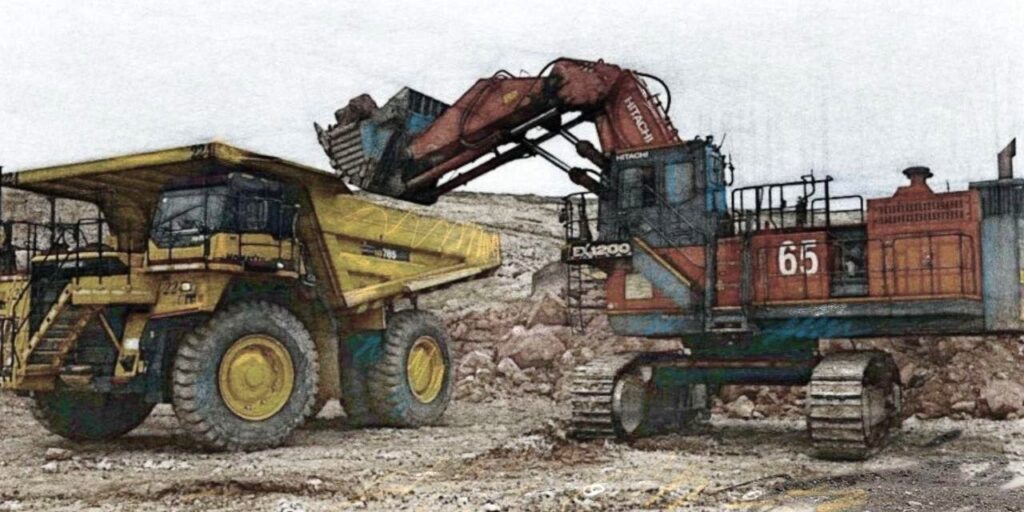
A U.S.-linked critical minerals venture in Kazakhstan is moving forward with plans to develop one of the world’s largest undeveloped tungsten resources, strengthening cooperation between Washington and Astana at a time of growing demand for secure mineral supply chains and greater Western interest in Central Asia’s strategic minerals base. Skyline Builders Group Holding Ltd. and Cove Kaz Capital Group LLC have announced a merger agreement that would create Kaz Resources Inc., a Nasdaq-listed company focused on tungsten, rare earths, and other critical minerals. The combined company is expected to trade under the ticker symbol “KAZR,” subject to shareholder and regulatory approvals and other closing conditions. The transaction builds on cooperation between Cove Kaz Capital and Kazakhstan’s national mining company, Tau-Ken Samruk. Cove Kaz has acquired a majority interest in Severniy Katpar LLP, which holds licenses for the Northern Katpar and Upper Kairakty tungsten projects in Kazakhstan’s Karaganda mining district, while Tau-Ken Samruk retains a minority stake, giving Kazakhstan’s state mining sector continued participation in the project. The Financial Times has reported that Donald Trump Jr. and Eric Trump held indirect stakes in Skyline Builders, the Nasdaq-listed company that has agreed to combine with Cove Kaz Capital. The reported investments were made through a Dominari-affiliated vehicle before the business combination. The report has drawn scrutiny because of the project’s connection to U.S. critical minerals policy and potential U.S. government-backed financing. The report cites no evidence that the Trump sons influenced the project award or the financing process. A spokesperson for Donald Trump Jr. said he is a passive investor, has no operational role, and does not engage with the federal government on behalf of companies in which he invests or advises. Eric Trump did not respond to requests for comment reported by the Financial Times. The Export-Import Bank of the United States and the U.S. International Development Finance Corporation have issued letters of interest indicating potential financing support for the project. Such letters are preliminary expressions of interest, not final loan approvals, binding commitments, or government contracts, and any financing would remain subject to due diligence, agency approvals, and other conditions. The projects are strategically significant because tungsten is widely used in defense, aerospace, industrial manufacturing, and advanced technologies. The United States has identified tungsten as a critical mineral and has sought to diversify supply chains amid heavy global dependence on China. Kazakhstan’s tungsten deposits hold significant potential, but many remain at an early stage of development, requiring substantial investment and time before production can scale. Even so, the country has begun to emerge as a meaningful producer, with public and industry estimates pointing to Kazakhstan becoming a top-three producer in 2025 after the launch of the Boguty deposit, behind China and Vietnam. The Association of Mining and Metallurgical Enterprises has cited production of around 2,400 tons of tungsten in 2025. The country’s rising role in the global market coincides with a sharp increase in tungsten prices. Following export restrictions imposed by China in February 2025, prices rose sharply through 2025...

Uzbekistan Joins a U.S. Critical Minerals Implementation Track

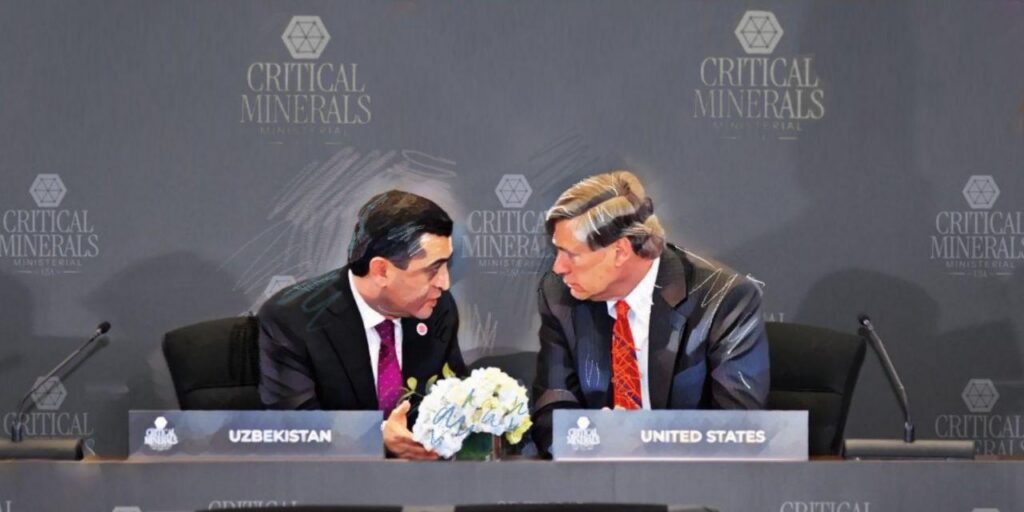
On February 4, 2026, in Washington, D.C., Uzbekistan’s Foreign Minister Bakhtiyor Saidov and U.S. Deputy Secretary of State Christopher Landau signed an intergovernmental Memorandum of Understanding (MoU) on securing supply chains for critical minerals and rare earth elements, spanning both mining and processing. A further agreement signed on February 19 brought implementation and financing to the foreground. The U.S. International Development Finance Corporation (DFC) signed “heads of terms” (i.e., commercial principles and essential terms of a proposed future agreement) for a Joint Investment Framework and outlined a proposed joint holding company. An agreement to establish an “investment platform” was exchanged in the presence of Uzbekistan’s President Shavkat Mirziyoyev. These agreements are not a single mining deal. They combine a political instrument with a financing-and-structuring track that is intended to yield a small set of projects that can be financed and built, and they treat processing capacity and supporting infrastructure not as optional add-ons but as core deliverables. They also provide a path for early projects to full review and financing while connecting them to longer-term offtake structures that match Washington’s newer supply-shock tools, including “Project Vault.” What the MoU Changes The MoU’s immediate purpose is to align government priorities for critical minerals across the value chain while setting expectations that will later shape which financing and partners are feasible. The press agency of Uzbekistan’s foreign ministry emphasized “responsible partnership” and “long-term development” as part of the public framing, placing governance and reputational risk on the same plane as the geological givens. The MoU also leaves several items deliberately unresolved in public form. These include project annexes, deposit designations, and operational timelines. That document design-choice pushes the next phase of bilateral cooperation into working-level scoping and sequencing, where only a small number of candidate projects can be advanced into full review. At the ministerial-level meeting, Washington clarified why it was framed as supply-chain security rather than commodity trade. Secretary of State Marco Rubio noted that critical minerals are inputs for infrastructure, industry, and defense, while Vice President J.D. Vance stressed the expansion of production across partner networks. As previously reported by The Times of Central Asia, this framing is part of a broader repositioning of U.S. engagement in Central Asia, where diplomatic formats are increasingly paired with mechanisms intended to generate trackable transactions and private-sector follow-through. For Uzbekistan, what is attractive about this cooperation is the potential to convert resource endowment into a lever for industrial development, rather than treating extraction as the endpoint. President Shavkat Mirziyoyev has publicly valued the country’s underground wealth at roughly $3 trillion. He has linked rising global demand for technological minerals to the case for higher value-added activity around strategic reserves, including lithium and tungsten. The same logic supports a commercially open posture. For Tashkent’s other investors, buyers, and processing partners, Uzbekistan’s diversification toward U.S.-linked capital signals non-exclusivity. Turning the MoU Into Projects The next phase is practical. A candidate project will advance only if investors and public lenders can transparently evaluate its licensing and...

Kazakhstan Deepens Its Critical Minerals Push

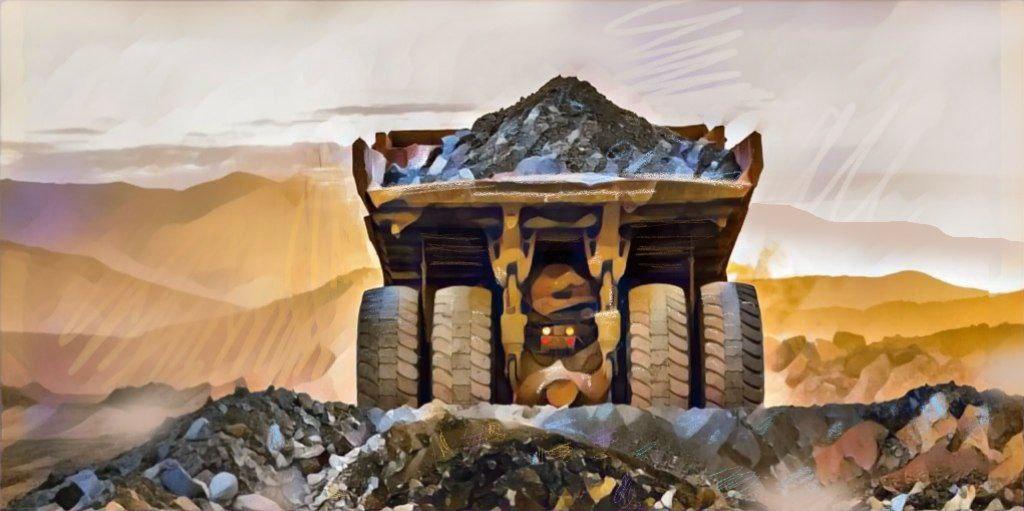
Kazakhstan is pushing a new phase of geological exploration, and the early results suggest that the country’s critical minerals profile is deepening. The Ministry of Industry and Construction says the area of mapped and studied subsoil will rise from about 2.1 to 2.2 million square kilometers by 2026. Exploration work completed in 2024 across eleven sites has produced new resource forecasts in Abai, East Kazakhstan, Karaganda, and Kostanay. The distribution matters as much as the tonnages: rare earths and other strategic metals appear across multiple regions, while gold prospects stand out in Kostanay. Five deposits have been added to the national register, alongside newly booked reserves of gold, copper, manganese, and phosphorites. Kazakhstan’s mineral importance was already widely recognized; this round of findings measurably strengthens that judgment. Four Regions Drive a Wider Metal Mix The most recent round of results from the national survey program is notable for the geographic spread and metals mix. The 2024 work across eleven sites also produced new forecasts of precious, rare, and strategic metals in Abai, East Kazakhstan, Karaganda, and Kostanay, according to the Ministry of Industry and Construction. In the Abai Region, geologists have outlined forecast resources of about 3,200 tonnes of beryllium, 1,100 tonnes of yttrium, and 200 tonnes of niobium. The mix points to advanced-manufacturing relevance, not a single-commodity profile. East Kazakhstan adds a second, larger beryllium signal, with newly identified deposits estimated at roughly 20,600 tonnes of beryllium and 600 tonnes of tungsten. That pairing reinforces an emerging pattern in which the northeast and east of the country are presenting not just rare-earth potential but a broader suite of strategic inputs. The largest rare-earth figures in this announcement sit in the Karaganda Region. Early estimates there indicate roughly 935,400 tonnes of lanthanoids, alongside prospective resources of copper, yttrium, gallium, and molybdenum. This is consistent with the earlier 2025 reporting that has repeatedly placed central Kazakhstan at the center of the country’s renewed rare-earth narrative. Kostanay Region stands out on the precious metals side. Forecast gold resources there are reported at about 17,500 tonnes, with prospective copper resources also identified. The December update also marks formal follow-through: five new deposits have been added to the national register, with newly booked reserves that include 98 tonnes of gold, 36,000 tonnes of copper, 11 million tons of manganese, and more than 1.3 million tonnes of phosphorites. Taken together, these regionally distributed findings give added empirical weight to a view already present in earlier coverage: Kazakhstan’s mineral importance was established; the survey now suggests a widening and deepening strategic profile rather than a single episodic discovery. Kazakhstan Treats Geological Knowledge as Policy The December 8 update also fits a pattern visible through 2025: the state is treating geological knowledge as a policy tool. Earlier this year, the Geology Committee described plans to expand subsurface study coverage by early 2026, while late-2025 government reporting reiterated the 2.2 million square kilometer objective as a presidential instruction tied to industrial priorities. What separates the current cycle from...

U.S. Backs Private Bid for Kazakhstan’s Tungsten

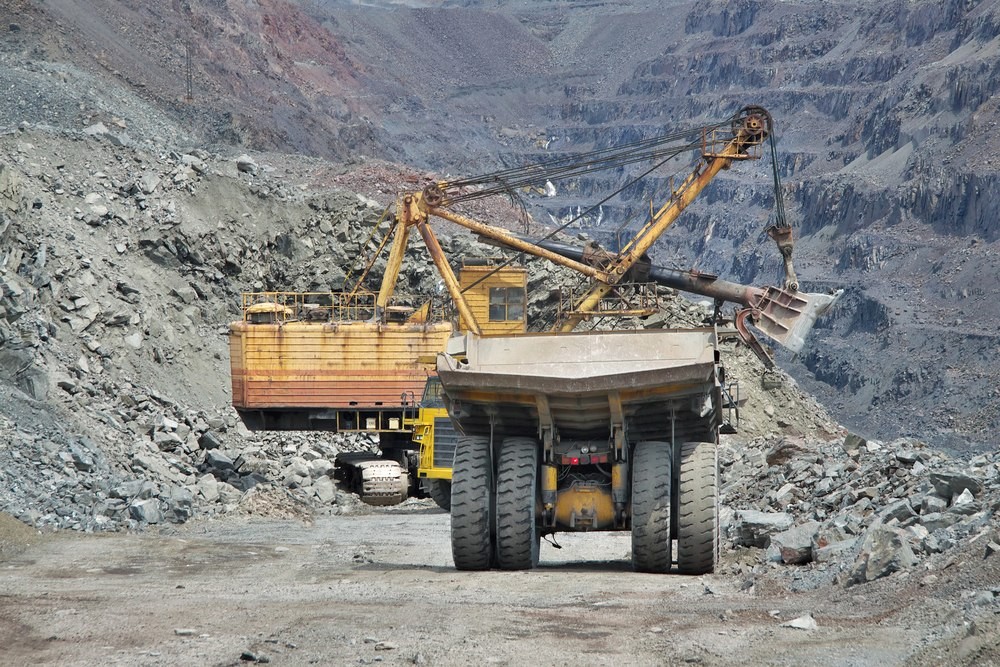
The United States is facilitating a private American bid by Cove Kaz Capital Group LLC for Kazakhstan’s Upper Kairakty and North Katpar tungsten deposits, in competition with state-backed Chinese bidders. Tungsten is not a rare earth element, but it is a critical raw material. In particular, it underpins armor-piercing ammunition, penetrators, and high-temperature tooling used across aerospace and industrial manufacturing. Reporting indicates direct engagement by senior U.S. officials and active coordination with Kazakhstan’s sovereign-wealth ecosystem. The metal’s significance elevates the commercial negotiation into a strategic policy. The policy driver is diversification away from China’s dominance along the mine-to-powder supply chains. China accounts for well over four-fifths of global tungsten production and processing, and tightened export controls in 2025 have upset pricing and availability. The U.S. has established a procurement deadline of 2027 to avoid sourcing from China or Russia for covered defense uses. All this adds urgency to securing non-Chinese volumes. Kazakhstan’s revived tungsten sector includes a newly opened processing plant, with destinations not yet announced for the concentrate to be produced. The country thus offers a practical non-Chinese source of tungsten. Strategic Stakes and Principal Actors The American role would be one of facilitation and financing, rather than ownership. The administration has supported talks linking Cove Kaz to Kazakhstan’s Samruk-Kazyna and relevant mining entities. Commerce Secretary Howard Lutnick is mentioned as a key interlocutor. Potential financial tools include the U.S. International Development Finance Corporation (DFC) and the Export-Import Bank. Insurance (EXIM), guarantees, or direct loans from these institutions would offset pricing and risk advantages historically offered by Chinese bidders. The U.S. government’s approach is to enable a private operator to compete without placing federal equity as an asset. Kazakhstan’s Samruk-Kazyna and its mining arm Tau-Ken Samruk coordinate with the national exploration company Qazgeology. Kazakhstan has pursued a wider critical-minerals investment agenda, signaling its openness to joint ventures and privatization pathways under a special legal regime that provides a familiar legal and compliance framework for Western partners. That structure streamlines licensing and dispute resolution and has already been used for joint ventures in other critical minerals projects. China remains the current market leader, dominating tungsten mining, ammonium paratungstate (APT) conversion, and downstream powders and carbides. Beijing’s 2025 export controls cover tungsten, tightening an already narrow global market and raising the policy value of non-Chinese options. Reports of Chinese interest in Vietnam’s Nui Phao tungsten complex underscore that non-Chinese sources face active competition, framing Kazakhstan’s appeal to Western buyers. The Assets and Kazakhstan’s Capacity Rebuild Kazakhstan suspended tungsten production after the 1990s but has moved over the past several years to re-establish a mine-to-processing base, with corporate and ministerial communications emphasizing the strategic nature of these deposits for long-term development. Upper Kairakty (also rendered as Verkhneye or Upper Kayrakty) and North Katpar sit in the Karaganda Region and feature repeatedly in Samruk-linked materials as the top tungsten prospects. Upper Kairakty is by itself the world’s largest tungsten deposit, and represents over two-thirds of the total tungsten reserves across the ex-Soviet territories. One...

Tungsten Production in Almaty

Kazakhstan’s Minister of Industry and Construction Kanat Sharlapaev met representatives from Jiaxing International Resources Investment LTD on April 3rd to discuss progress on the extraction of tungsten at Bugutinskoe in the Almaty region. The new mine and processing plant, scheduled for completion by the end of 2024, are expected to create 1,000 jobs. The project involves the extraction and processing of 3.3 million tons of tungsten ores to produce a 65% tungsten concentrate. A feasibility study is also being conducted for the construction of a deep-processing complex, which will process a further 65% tungsten concentrate into 88.5% ammonium paratungstate and high-purity tungsten carbide.