• KZT/USD = 0.00219
  • TJS/USD = 0.10860
  • UZS/USD = 0.00008
  • TMT/USD = 0.29850
  • KZT/USD = 0.00219
  • TJS/USD = 0.10860
  • UZS/USD = 0.00008
  • TMT/USD = 0.29850
  • KZT/USD = 0.00219
  • TJS/USD = 0.10860
  • UZS/USD = 0.00008
  • TMT/USD = 0.29850
  • KZT/USD = 0.00219
  • TJS/USD = 0.10860
  • UZS/USD = 0.00008
  • TMT/USD = 0.29850
  • KZT/USD = 0.00219
  • TJS/USD = 0.10860
  • UZS/USD = 0.00008
  • TMT/USD = 0.29850
  • KZT/USD = 0.00219
  • TJS/USD = 0.10860
  • UZS/USD = 0.00008
  • TMT/USD = 0.29850
  • KZT/USD = 0.00219
  • TJS/USD = 0.10860
  • UZS/USD = 0.00008
  • TMT/USD = 0.29850
  • KZT/USD = 0.00219
  • TJS/USD = 0.10860
  • UZS/USD = 0.00008
  • TMT/USD = 0.29850
22 November 2026

Viewing results 1 - 6 of 160

International University of Turkic States Established in Tashkent

Uzbekistan is to establish the International University of Turkic States in Tashkent. The university aims to strengthen political, economic, cultural, and humanitarian ties among Turkic states. The institution will offer specialized training in engineering, construction, logistics, information technology, healthcare, agriculture, and the food industry, as well as economic and social sciences. Educational programs will be developed in collaboration with leading universities in Turkey, ensuring international academic standards. The university is a non-governmental higher education institution, jointly founded by the Councils of Higher Education of Uzbekistan and Turkey. Starting in the 2025/2026 academic year, its curricula will be based on those of Turkish universities ranked in the top 1,000 globally. A Step Toward Deeper Turkic Cooperation The university’s establishment represents another milestone in strengthening cooperation among the Organization of Turkic States (OTS). Founded in 2009, the OTS includes Azerbaijan, Kazakhstan, Kyrgyzstan, Turkey, Uzbekistan, and Turkmenistan, with Hungary and the Turkish Republic of Northern Cyprus holding observer status. Over the past decade, economic ties among OTS members have significantly expanded, with trade volume surpassing $45 billion in 2024. According to the Turkish Ministry of Finance, by the end of 2024, the combined economies of the Turkic states reached an estimated $1.9 trillion, with a population of 178 million. In a related development, The Times of Central Asia reported that in September 2024, the Astana-based Turkic Academy finalized the Common Turkic Alphabet, a Latin-based script consisting of 34 letters. Originally proposed by linguists in 1991, the alphabet aims to enhance mutual understanding and cooperation among Turkic-speaking nations while preserving their linguistic heritage.


Uzbekistan to Receive Advanced ANKA Drones from Turkish Defense Company TUSAŞ

Uzbekistan will soon receive ANKA drones from Turkish defense company TUSAŞ, according to the SavunmaSanayiST portal. Deliveries are expected to begin in the coming days, though Uzbekistan has not disclosed details regarding the number of drones, their cost, or the terms of the agreement. Originally developed by Turkish Aerospace Industries (TAI) for the Turkish Armed Forces in the early 2000s, ANKA drones were initially designed for surveillance and reconnaissance. Over time, they have been upgraded with advanced radar systems, precision weaponry, and satellite communication capabilities. The first model, Anka-A, was introduced in 2010, with the Turkish Air Force signing its first contract for the drones in 2013. Subsequent improvements have equipped the drones with a national mission computer, an advanced flight control system, synthetic aperture radar, and a friend-or-foe identification system. TAI currently offers the Anka-B and Anka-S models, while the Anka-I variant was specifically developed for Turkey’s National Intelligence Organization for signals intelligence. As of March 2021, ANKA drones had accumulated over 90,000 flight hours. Uzbekistan has been steadily modernizing its defense forces. Last year, U.S. News ranked Uzbekistan 19th globally in military strength, the highest ranking among Central Asian countries. The acquisition of ANKA drones is expected to further enhance Uzbekistan’s surveillance and defense capabilities, reinforcing its position as a regional military power.

Two Turkmen Citizens Arrested in Istanbul for Counterfeit Alcohol Production

Turkish authorities have detained two Turkmen citizens in Istanbul for their alleged involvement in the production and distribution of counterfeit alcoholic beverages, according to Turkish news agency NTV. The arrests come in the wake of a serious public health crisis in Istanbul, where 38 people have been poisoned by counterfeit alcohol within the past 24 hours. Of those hospitalized, 11 have tragically died. The suspects were reportedly operating in the Ziya Gökalp district of Istanbul. During a search of their residence, police discovered approximately 50 liters of counterfeit alcohol, 36 narcotic pills, fake migrant identification cards, and a large quantity of medical supplies. The Istanbul police have launched a comprehensive investigation into the incident. Authorities have revealed that 26 of those hospitalized due to poisoning were foreign nationals, underscoring the broader impact of the counterfeit alcohol trade. The Consulate General of the Republic of Uzbekistan in Istanbul has confirmed that six Uzbek citizens have died as a result of consuming the counterfeit alcohol. Among the deceased are five men and one woman. Further details about the investigation and potential charges against the detained suspects are awaited.

Istanbul Prosecutors Seek Lengthy Sentences for Suspects in Crocus City Attack

The Istanbul Prosecutor’s Office has demanded prison sentences ranging from 7.5 to 15 years for five Central Asians accused of involvement in last spring's terrorist attack on the Crocus City concert hall in Moscow. This information was reported by the Anadolu news agency. The detainees - identified as Hafizjon Usmanov, Muteullo Asoyev, Rahmatullo Solikov, Muhammadrahim Faizov, and Hamza Muhammed - are accused of providing instructions and logistical support to the perpetrators of the attack. They allegedly promised 800,000 rubles (approximately $7,240) and new identity documents in exchange for carrying out the attack. According to Anadolu, the suspects were in contact with Shamsiddin Fariduni and Saidakrami Rachabalizoda, who are believed to have been directly involved in the attack. One of the detainees reportedly shared an apartment in Istanbul’s Avcılar district with Fariduni. Evidence presented by prosecutors includes correspondence between one of the suspects and a perpetrator. In the messages, the suspect proposed planting a bomb at the Vegas shopping center, promising an advance payment of 100,000 rubles and an additional 700,000 rubles upon completion of the act. The terrorist attack on Crocus City Hall in March last year claimed the lives of 144 people and injured 551 others. The main suspects in the case are citizens of Tajikistan, with reports indicating that 12 individuals have been arrested in connection with the attack. The Istanbul investigation sheds further light on the broader network behind the attack, pointing to an international web of operatives and support personnel.

Uzbek Products to Reach Europe and Africa Through Turkish Port

Uzbek diplomats recently visited Turkey’s Kocaeli region to strengthen trade and economic ties, holding discussions with local officials and business leaders. The meetings addressed opportunities for expanding cooperation in trade, economic, cultural, educational, and humanitarian sectors. Uzbek representatives highlighted ongoing reforms in Uzbekistan and the incentives available to foreign investors in its free economic zones. Key figures in the talks included Kocaeli’s Mayor Tahir Büyükakın, Regional Governor Ilhami Aktash, Regional Industrial Chamber Head Ayhan Zeytinoğlu, and Gebze Güzeller Industrial Zone Director Adem Ceylan. Mayor Büyükakın provided an overview of Kocaeli’s economic and social strengths, while Ayhan Zeytinoğlu expressed interest in boosting bilateral economic collaboration. Zeytinoğlu proposed facilitating exchanges between Uzbek and Turkish business delegations to foster stronger partnerships. Adem Ceylan suggested establishing a dedicated logistics center for Uzbek investors within the Gebze Industrial Zone. The center would provide storage facilities for Uzbek-made goods and serve as a gateway for exporting products to Europe and Africa via the Gebze seaport. The visit concluded with an agreement to organize a business forum in the Kocaeli region. The planned forum will feature a delegation of Uzbek entrepreneurs, aimed at enhancing bilateral and regional cooperation.

With Russia Under Scrutiny, Kazakhstan Promises Thorough Investigation into AZAL Crash

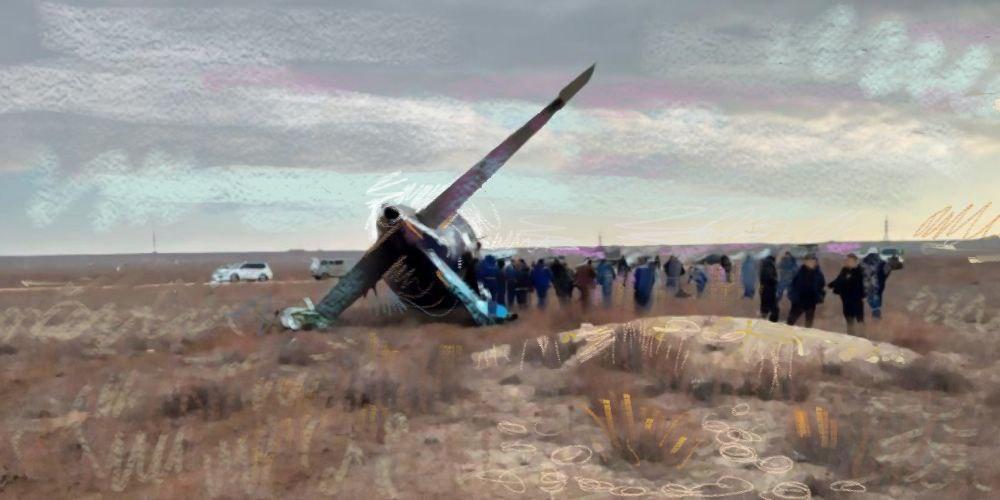
The investigation of the fatal crash of an Azerbaijan Airlines plane in Kazakhstan after it diverted from Russia is a major international test for Kazakh authorities, who have promised a full and impartial inquiry even as the theory that Russian air defenses had fired on the aircraft gains traction. Kazakhstan, which is in charge of the probe of the crash that killed 38 people near the Caspian Sea city of Aktau on Wednesday, has cautioned against a rush to judgment before all the evidence has been assessed. But it must navigate emerging tensions between Azerbaijan and Russia, which have put forth conflicting narratives about what happened, as well as the possible challenge of collecting evidence from the plane’s original destination of Grozny, the capital of Russian Chechnya.  Azerbaijan and Russia say they are collaborating with the investigation by Kazakhstan, which comes amid geopolitical rifts over Russia’s full-scale invasion of Ukraine and the efforts of countries in Central Asia to balance their interests among major trading partners and rival powers.  In a sign of the growing international complexity of the crash inquiry, Turkish Transport Minister Abdulkadir Uraloğlu said Friday that his ministry was dispatching an eight-person team to Baku, Azerbaijan’s capital, “to examine all aspects of the incident” at the request of Azerbaijan's civil aviation authorities. Also, a team from the Brazilian company that produced the Embraer 190 plane has arrived in Kazakhstan to help with the investigation.   On Friday, Kazakh President Kassym-Jomart Tokayev updated his Azerbaijani counterpart, Ilham Aliyev, on the investigation and and “assured that the Kazakh side will make every effort to ensure a comprehensive and objective clarification of all the circumstances of the air crash,” Tokayev’s office said. The two leaders agreed that their governments will stay in close contact during the investigation.  Azerbaijan Airlines, meanwhile, said on Friday that preliminary results of the investigation showed that the Brazil-produced Embraer 190 plane on the Baku-Grozny route had crashed because of “physical and technical external interference,” a possible reference to an attack by the city’s air defenses and alleged communications jamming at a time when Russian authorities said there was a threat from Ukrainian military drones.  The airline, also known by the acronym AZAL, said it had suspended flights from Baku to a total of 10 Russian cities because of concerns about flight safety.  Also Friday, Dmitry Yadrov, head of Russia’s Federal Air Transport Agency, gave an account of the circumstances surrounding the crash that did not address the airline’s version.  Yadrov said the plane was unable to land in Grozny because of a restriction requiring all aircraft to leave the area due to alleged Ukrainian attempts to attack civilian infrastructure there, according to Russia’s state-run news agency RIA Novosti. There was dense fog around the airport and the Azerbaijan Airlines plane tried to land twice before deciding to proceed across the Caspian Sea to Aktau, he said.  Some commentators in Azerbaijan have expressed frustration with varying initial accounts from Russian official sources of what caused the crash,...