• KGS/USD = 0.01143 0%
  • KZT/USD = 0.00201 0%
  • TJS/USD = 0.10510 -0.28%
  • UZS/USD = 0.00008 0%
  • TMT/USD = 0.28575 0%
  • KGS/USD = 0.01143 0%
  • KZT/USD = 0.00201 0%
  • TJS/USD = 0.10510 -0.28%
  • UZS/USD = 0.00008 0%
  • TMT/USD = 0.28575 0%
  • KGS/USD = 0.01143 0%
  • KZT/USD = 0.00201 0%
  • TJS/USD = 0.10510 -0.28%
  • UZS/USD = 0.00008 0%
  • TMT/USD = 0.28575 0%
  • KGS/USD = 0.01143 0%
  • KZT/USD = 0.00201 0%
  • TJS/USD = 0.10510 -0.28%
  • UZS/USD = 0.00008 0%
  • TMT/USD = 0.28575 0%
  • KGS/USD = 0.01143 0%
  • KZT/USD = 0.00201 0%
  • TJS/USD = 0.10510 -0.28%
  • UZS/USD = 0.00008 0%
  • TMT/USD = 0.28575 0%
  • KGS/USD = 0.01143 0%
  • KZT/USD = 0.00201 0%
  • TJS/USD = 0.10510 -0.28%
  • UZS/USD = 0.00008 0%
  • TMT/USD = 0.28575 0%
  • KGS/USD = 0.01143 0%
  • KZT/USD = 0.00201 0%
  • TJS/USD = 0.10510 -0.28%
  • UZS/USD = 0.00008 0%
  • TMT/USD = 0.28575 0%
  • KGS/USD = 0.01143 0%
  • KZT/USD = 0.00201 0%
  • TJS/USD = 0.10510 -0.28%
  • UZS/USD = 0.00008 0%
  • TMT/USD = 0.28575 0%

Viewing results 1 - 6 of 19

U.S. to Pause Immigrant Visa Processing; Central Asia Affected

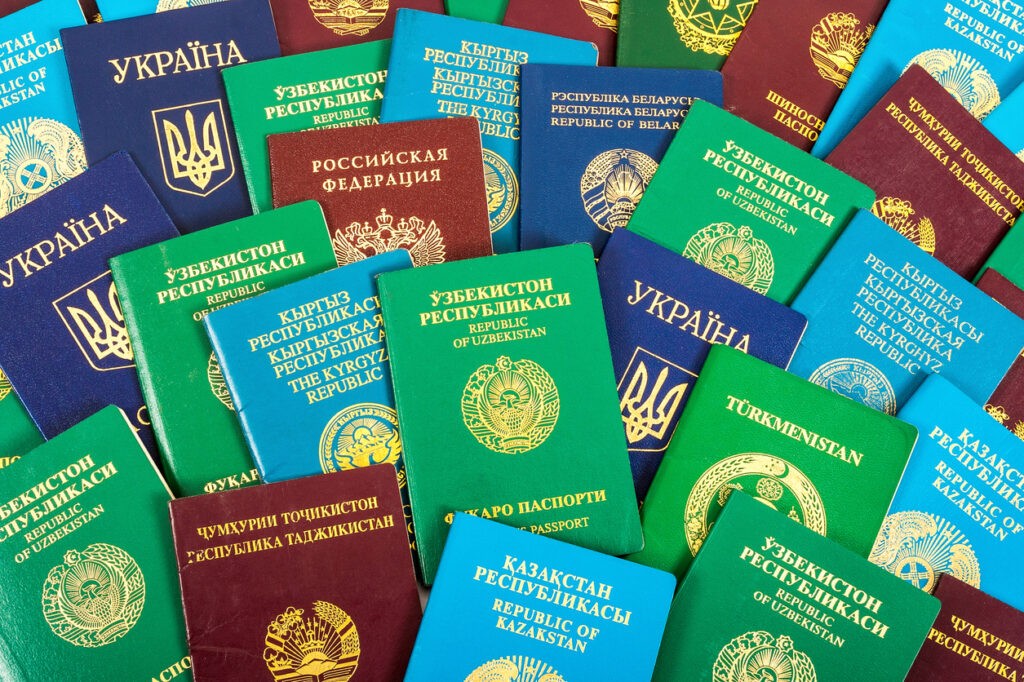
The U.S. State Department said on Wednesday that it will stop immigrant visa processing from 75 countries, and some reports said the affected nations include several in Central Asia.   The measure is part of a broad crackdown on immigration that has unfolded during the second term of U.S. President Donald Trump, who has said many people from other countries are threatening U.S. security and taking advantage of American resources. Critics say immigration raids and some other administration initiatives have gone too far, actually making U.S. cities less safe and violating basic rights.   “The State Department will pause immigrant visa processing from 75 countries whose migrants take welfare from the American people at unacceptable rates. The freeze will remain active until the U.S. can ensure that new immigrants will not extract wealth from the American people,” the U.S. agency said on X.  “The pause impacts dozens of countries – including Somalia, Haiti, Iran, and Eritrea – whose immigrants often become public charges on the United States upon arrival,” the State Department said. “We are working to ensure the generosity of the American people will no longer be abused.” The statement did not list all the countries affected by the new measure, which takes effect on January 21. Nor did it say how long the pause will last.  However, Fox News Digital, which reported that it had seen a State Department memo about the new policy, published a list of what it said were the 75 affected countries. It included Kazakhstan, Kyrgyzstan, and Uzbekistan. Tajikistan and Turkmenistan were not on the list. Some other media outlets reported the same information.  The State Department policy appeared to be partly linked to a Minnesota scandal in which dozens of people, including many Somali-Americans, were convicted of defrauding the state of welfare funds. Minneapolis, Minnesota’s biggest city, is currently a flashpoint for tension and protests over U.S. Immigration and Customs Enforcement (ICE) operations.   The new State Department measure does not apply to non-immigrant visas, which would include people traveling to the United States for tourism or business. But additional restrictions are also in place for people seeking those temporary visas.  Nationals from 38 countries, including Kyrgyzstan, Tajikistan, and Turkmenistan, are subject to U.S. visa bonds under a State Department policy. The policy took effect for citizens from Turkmenistan on January 1 and will be implemented for nationals from Kyrgyzstan and Tajikistan starting on January 21.
Uzbekistan Government Warns Citizens of Immigration Checks in U.S.

Uzbekistan is urging its citizens in the United States to carry proof of legal immigration status at all times, saying U.S. immigration authorities have intensified operations on federal highways across the U.S. in recent days. Uzbekistan’s Ministry of Foreign Affairs said on Thursday that some people detained in those operations “have been reported in connection with the use of multiple driver’s licenses or suspicions related to terrorism.” The warning came a day after two members of the West Virginia National Guard were shot near the White House in what President Donald Trump called an act of terrorism. Trump said late Thursday that one had died; the other was in critical condition. U.S. officials identified the alleged shooter as an Afghan man who had driven across the U.S., from Washington state to the capital of Washington, D.C., in order to carry out the attack. The suspect was arrested. U.S. authorities conducting immigration inspections check on driver’s licenses, the English-language proficiency of drivers, work authorization documents and other paperwork, according to the Uzbek ministry statement. It said U.S. authorities have broad powers of enforcement on federal highways.  

Kazakhstan Strengthens Role as U.S. Key Trade Partner in Central Asia

Kazakhstan has emerged as the United States’ primary economic partner in Central Asia, accounting for the vast majority of regional exports to the U.S. and serving as the leading destination for American imports, according to Finprom.kz. While Central Asia’s share of total U.S. trade remains small, Kazakhstan’s role within the region is increasingly dominant. Kazakhstan Accounts for Over 96% of Central Asia’s U.S. Exports In 2024, Kazakhstan was responsible for 96.7% of Central Asia’s exports to the United States, totaling approximately $2.4 billion out of a regional total of $2.5 billion. Uzbekistan, the next largest exporter, contributed just $44.4 million. The trend is similar for U.S. goods entering the region. Kazakhstan imported $1.1 billion worth of U.S. goods in 2024, or 62.3% of all American exports to Central Asia. Uzbekistan followed with $380.8 million, while Turkmenistan and Tajikistan imported $82.2 million and $56.8 million, respectively. Despite this strong bilateral exchange, Central Asia remains a small player in U.S. global trade. In 2024, the U.S. recorded $3.27 trillion in goods imports and $2.06 trillion in exports, according to U.S. Census Bureau data. Even so, U.S.–Kazakhstan trade has grown meaningfully in recent years. Between 2019 and 2024, the U.S. share of Kazakhstan’s total trade rose from 2.3%  to around 3%. Bilateral trade peaked in 2024 at $4.2 billion, the highest level in six years, with U.S. exports to Kazakhstan accounting for 53.2% of the total. Trade Growth and 2025 Downturn That growth slowed sharply in 2025. From January to August, total trade between the two countries fell to $2.1 billion, a 25.8% drop compared to the same period in 2024. Kazakhstan’s exports to the U.S. accounted for much of the decline, falling to $749.7 million in the first nine months of the year - about half the level recorded the previous year. Oil and oil products saw the steepest drop, falling 3.5 times to $269.1 million. Exports of uranium, silver, ferroalloys, tantalum, and titanium also declined, though these remain important categories. By contrast, U.S. exports to Kazakhstan remained relatively stable. Goods shipments fell just 4.8% year-on-year, totaling approximately $1.7 billion from January through September. U.S. exports to Kazakhstan continue to consist primarily of high-value manufactured goods, including vehicles, aircraft, agricultural machinery, computers, telecommunications equipment, and medical devices. Pharmaceuticals stood out in 2025, with American shipments of medicines and vaccines more than doubling to $249.3 million in the first nine months of the year. Investment and Business Cooperation Deepen Alongside trade, investment, and business cooperation between the two countries is also deepening. According to the Kazakh Prime Minister’s office, more than 600 companies with U.S. capital were operating in the country as of late 2025 – a large increase over the previous year. The number of Kazakh-American joint ventures rose by 5.6% over the same period. U.S. companies are active in a range of sectors, including IT, manufacturing, education, consulting, and trade. While the United States is not among Kazakhstan’s top trading partners by volume, the relationship is seen as strategically important. Amid...

Uzbekistan Introduces Visa-Free Travel for U.S. Citizens Starting January 2026

Uzbekistan will implement a visa-free regime for U.S. citizens beginning January 1, 2026, according to a presidential decree signed on November 3, 2025. The announcement was reported by UzA, the country’s official state news agency. Under the new policy, American citizens will be permitted to stay in Uzbekistan for up to 30 days without a visa from the date of entry. The measure aims to strengthen trade, economic, cultural, and humanitarian ties between the two countries, while also enhancing tourism. Since 2021, Uzbekistan has allowed visa-free entry for tourists aged 55 and older from the United States and several other nations, with a maximum stay of 30 days, according to Kun.uz. The expansion of this policy to include all U.S. citizens marks a major step in promoting bilateral travel and business engagement. The proposal to lift visa requirements for U.S. nationals was first introduced in May 2025 through a presidential decree focused on boosting foreign tourist inflows. The same document instructed the Ministry of Foreign Affairs to initiate negotiations with Washington on easing visa conditions for Uzbek citizens traveling to the United States. In a related development, the Uzbek government recently extended visa-free entry to citizens of six more countries, Bahrain, Qatar, Kuwait, Oman, Saudi Arabia, and Jordan, following a Cabinet of Ministers decision issued on October 21.

Kazakhstan’s Rail Deal – A Long Way from Soviet-Era Locomotives

The roots of the $4.2 billion deal in which American firm Wabtec will provide 300 locomotives for Kazakhstan’s growing railway infrastructure emerged soon after the country’s 1991 independence, when the new government needed to upgrade its decaying Soviet-built locomotives.  Pennsylvania-based GE Transportation, a major producer of railway equipment, helped with the modernization program in the mid-1990s and continued business with Kazakhstan in the following decades. In 2019, Wabtec, a transportation and technology company, bought GE Transportation. Wabtec celebrated the deal that was announced on Monday during Kazakh President Kassym-Jomart Tokayev’s visit to New York for the U.N. General Assembly.  How big was the deal?    The agreement has been described in different shades of magnitude. The U.S. Commerce Department said it was “the largest locomotive deal in history” – Wabtec said it was the largest in Wabtec’s history – and the Kazakh government and media have generally steered clear of historical references.  Other big international railway deals include a 3 billion euro Siemens project in India that was announced in January 2023. Under that deal, the German company is to deliver 1,200 electric locomotives and provide 35 years of full service maintenance. In March this year, France-based Alstom said it had delivered 500 electric locomotives to Indian Railways, part of a 3.5 billion euro contract to deliver 800 locomotives for freight service. That contract was signed in 2015.  Who gets the credit?  U.S. Commerce Secretary Howard Lutnick described the deal with Kazakhstan as “President Trump’s America First trade policy in action.” Still, GE Transportation, which later became part of Wabtec, has been a key part of Kazakhstan’s railway industry for years. The company modernized hundreds of diesel freight locomotives decades ago and later transferred technology to Kazakhstan, developing engineering skills that could be used to build new trains.   Wabtec acquired full ownership of a manufacturing facility in Astana in 2023 and says it has exported locomotives to countries including Tajikistan, Mongolia, Moldova and Ukraine. “I mean, it’s great,” Evan A. Feigenbaum, a former U.S. State Department official, said of this week’s deal in a post on X.  “But GE and Wabtec have been doing a locomotive business in and with Kazakhstan for 20 years. I was in the Bush Administration as the deputy assistant secretary of State overseeing Central Asia and was giving speeches and talks about locomotives and Kazakhstan back then…” Feigenbaum said.  Kazakhstan’s decision to make a big agreement with Wabtec fits with its policy of developing ties with a wide range of diplomatic and business partners. Alstom, of Europe, and Chinese locomotive maker CRRC are also significant players in Kazakhstan’s railway industry.  What does the deal mean for Kazakhstan? A lot. Railways underpin the economy. Rail transport accounts for about 64% of Kazakhstan’s total freight turnover, far more than other forms of transport such as air and road, according to Kazakh railway officials. Kazakhstan is one of the biggest countries in the world, ranging from its Chinese and Russian borders in the east to the Caspian Sea in the...

Kazakhstan Showcases Middle Power Role in Washington D.C.: Kazakh Ambassador Ashikbayev Spreads the Message

Like it or not, the world is moving away from unipolar dominance and entering an era of multipolarity where national interests increasingly counter the globalist ambitions of some major powers. In this evolving landscape, as the major powers adjust to new geopolitical realities, an increasing number of states are becoming more comfortable operating autonomously as sovereign nations. Against this backdrop, Kazakhstan is emerging as a middle power, conscious all the same of the risks associated with remaining neutral in the oft-times bitter rivalries between major powers. Over the past twenty years, Kazakhstan has consistently signaled that it will not be drawn into the strategic maneuverings of foreign powers, instead pursuing its own national interests in a measured fashion – rather like the other Central Asian states – so as not to undermine regional stability.  Accordingly, Astana offers good offices to foster dialogue and reconciliation among countries and blocs affected by conflict and/or heightened strategic competition. Murat Nurtleu, Kazakhstan’s Foreign Minister, underscores just that point: “In this era of geopolitical competition, Kazakhstan’s role as a bridge between East and West is more vital than ever.” These words not only highlight Kazakhstan’s confidence and expanding role as a rising middle power but aim to mitigate the potential consequences of great power overreach, whether in Central Asia or elsewhere. In a recent interview in Washington DC with this writer, Ambassador Yerzhan Ashikbayev of Kazakhstan to the United States elaborated: “Kazakhstan is a middle power, which means, broadly speaking, a country that holds an influential position in the international system, especially in Eurasia. Maintaining peaceful relations with our neighbors – major, middle, and minor powers – is a top priority for us. We work to shape outcomes beyond our own borders, keeping in mind our national interests, always fostering friendly and mutually beneficial ties – a modus vivendi – with our neighbors.” It is well-known that Astana’s global diplomatic strategy prioritizes fair trade and aims to strengthen inter-regional economic ties – especially in transport, logistics, finance, and communications. It views economic development – with an emphasis on building an economically stable middle class across ethnicities – as key to national unity and regional stability. It is less known that Kazakhstan, in its diplomatic pragmatism, winces at unequal power relations, preferring to focus on long-term equity outcomes over short-term efficiency in matters of economic development. Ambassador Ashikbayev emphasizes that “Kazakhstan’s foreign policy opens space where dialogue can flourish. Guided by pragmatism, we will concentrate on practical matters like communication, quality investment flows, fair commerce, energy, and critical minerals.” He insists that “for the international system to flourish, it should function well for all, promoting peace and the common good for the majority. That is what we export - peace.” U.S. Secretary of State Marcio Rubio also emphasizes the need to keep peace front and center: “President [Trump] wants to end wars.  He’s not a fan of wars.  He thinks wars are a waste of time and a waste of lives.  And we’re going to continue to do everything we can and engage...