• KGS/USD = 0.01144 0%
  • KZT/USD = 0.00203 0%
  • TJS/USD = 0.10563 -0.09%
  • UZS/USD = 0.00008 0%
  • TMT/USD = 0.28490 0%
  • KGS/USD = 0.01144 0%
  • KZT/USD = 0.00203 0%
  • TJS/USD = 0.10563 -0.09%
  • UZS/USD = 0.00008 0%
  • TMT/USD = 0.28490 0%
  • KGS/USD = 0.01144 0%
  • KZT/USD = 0.00203 0%
  • TJS/USD = 0.10563 -0.09%
  • UZS/USD = 0.00008 0%
  • TMT/USD = 0.28490 0%
  • KGS/USD = 0.01144 0%
  • KZT/USD = 0.00203 0%
  • TJS/USD = 0.10563 -0.09%
  • UZS/USD = 0.00008 0%
  • TMT/USD = 0.28490 0%
  • KGS/USD = 0.01144 0%
  • KZT/USD = 0.00203 0%
  • TJS/USD = 0.10563 -0.09%
  • UZS/USD = 0.00008 0%
  • TMT/USD = 0.28490 0%
  • KGS/USD = 0.01144 0%
  • KZT/USD = 0.00203 0%
  • TJS/USD = 0.10563 -0.09%
  • UZS/USD = 0.00008 0%
  • TMT/USD = 0.28490 0%
  • KGS/USD = 0.01144 0%
  • KZT/USD = 0.00203 0%
  • TJS/USD = 0.10563 -0.09%
  • UZS/USD = 0.00008 0%
  • TMT/USD = 0.28490 0%
  • KGS/USD = 0.01144 0%
  • KZT/USD = 0.00203 0%
  • TJS/USD = 0.10563 -0.09%
  • UZS/USD = 0.00008 0%
  • TMT/USD = 0.28490 0%
20 February 2026

Viewing results 1 - 6 of 54

Kazakhstan Strengthens Role as U.S. Key Trade Partner in Central Asia

Kazakhstan has emerged as the United States’ primary economic partner in Central Asia, accounting for the vast majority of regional exports to the U.S. and serving as the leading destination for American imports, according to Finprom.kz. While Central Asia’s share of total U.S. trade remains small, Kazakhstan’s role within the region is increasingly dominant. Kazakhstan Accounts for Over 96% of Central Asia’s U.S. Exports In 2024, Kazakhstan was responsible for 96.7% of Central Asia’s exports to the United States, totaling approximately $2.4 billion out of a regional total of $2.5 billion. Uzbekistan, the next largest exporter, contributed just $44.4 million. The trend is similar for U.S. goods entering the region. Kazakhstan imported $1.1 billion worth of U.S. goods in 2024, or 62.3% of all American exports to Central Asia. Uzbekistan followed with $380.8 million, while Turkmenistan and Tajikistan imported $82.2 million and $56.8 million, respectively. Despite this strong bilateral exchange, Central Asia remains a small player in U.S. global trade. In 2024, the U.S. recorded $3.27 trillion in goods imports and $2.06 trillion in exports, according to U.S. Census Bureau data. Even so, U.S.–Kazakhstan trade has grown meaningfully in recent years. Between 2019 and 2024, the U.S. share of Kazakhstan’s total trade rose from 2.3%  to around 3%. Bilateral trade peaked in 2024 at $4.2 billion, the highest level in six years, with U.S. exports to Kazakhstan accounting for 53.2% of the total. Trade Growth and 2025 Downturn That growth slowed sharply in 2025. From January to August, total trade between the two countries fell to $2.1 billion, a 25.8% drop compared to the same period in 2024. Kazakhstan’s exports to the U.S. accounted for much of the decline, falling to $749.7 million in the first nine months of the year - about half the level recorded the previous year. Oil and oil products saw the steepest drop, falling 3.5 times to $269.1 million. Exports of uranium, silver, ferroalloys, tantalum, and titanium also declined, though these remain important categories. By contrast, U.S. exports to Kazakhstan remained relatively stable. Goods shipments fell just 4.8% year-on-year, totaling approximately $1.7 billion from January through September. U.S. exports to Kazakhstan continue to consist primarily of high-value manufactured goods, including vehicles, aircraft, agricultural machinery, computers, telecommunications equipment, and medical devices. Pharmaceuticals stood out in 2025, with American shipments of medicines and vaccines more than doubling to $249.3 million in the first nine months of the year. Investment and Business Cooperation Deepen Alongside trade, investment, and business cooperation between the two countries is also deepening. According to the Kazakh Prime Minister’s office, more than 600 companies with U.S. capital were operating in the country as of late 2025 – a large increase over the previous year. The number of Kazakh-American joint ventures rose by 5.6% over the same period. U.S. companies are active in a range of sectors, including IT, manufacturing, education, consulting, and trade. While the United States is not among Kazakhstan’s top trading partners by volume, the relationship is seen as strategically important. Amid...
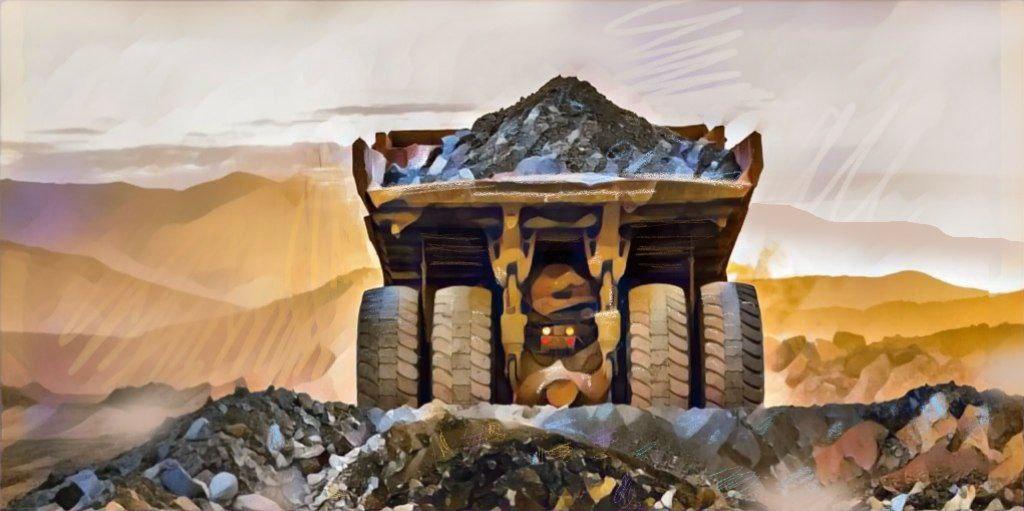
Kazakhstan Courts Global Investment with Critical Minerals and Green Energy Push

Since gaining independence, Kazakhstan has established itself as a reliable global supplier of raw materials. Today, the country's economic structure is evolving as it positions itself as a high-added-value hub for industrial production. These developments are closely tied to Kazakhstan’s transition to a green economy and its role in global supply chains for critical minerals. Creating a Favorable Investment Climate Kazakhstan has taken significant steps to create a transparent, predictable investment environment and enhance its business competitiveness. Among these measures is the introduction of investment agreements that guarantee legislative stability for up to 25 years for large projects exceeding $60 million. The legal framework has also undergone reforms, procurement procedures have been modernized, and judicial reforms have created separate cassation courts and redefined the Supreme Court’s role. These reforms have drawn the attention of international investors and rating agencies. In 2024, Moody’s upgraded Kazakhstan’s long-term credit rating to the highest level in the country's history, citing macroeconomic stability and policy predictability. In the first nine months of 2025, GDP grew by 6.3%, while investment in fixed capital rose by 13.5% to reach $26 billion. Moody’s analysts also highlighted Kazakhstan’s stronger economic outlook compared to other hydrocarbon-exporting nations, attributing this to ongoing reforms that enhance the country’s competitiveness. One key driver is the rapid development of the transport and logistics sector, particularly through the Trans-Caspian International Trade Route, also known as the Middle Corridor. This corridor is attracting foreign investors across a range of non-oil sectors, including automotive, pharmaceuticals, food production, and construction materials. Kazakhstan is also home to the Astana International Financial Centre (AIFC), a platform that operates under English common law. The AIFC offers tax exemptions, simplified labor regulations, and digital arbitration. It currently ranks first in Eastern Europe and Central Asia in the Global Financial Centres Index. More than 4,200 companies from 80 countries, including over 60 American firms, are registered with the AIFC. Strategic Projects Take Shape Kazakhstan’s diversification strategy and focus on critical minerals were prominently showcased during the 8th Kazakhstan Global Investment Roundtable (KGIR-2025), held in Astana in October. The event attracted over 1,000 participants from 55 countries, resulting in the signing of 49 agreements worth $7.5 billion. A key session focused on critical minerals and the energy transition, signaling the country’s long-term growth trajectory. Among the highlights was a meeting between the government and Mohammad Vahid Sheikhzadeh Najjar, CEO of FakoorSanat Tehran Engineering Co., to explore cooperation in mining and metallurgy, including new technologies for processing mineral raw materials. Sheikhzadeh Najjar noted that the global market for critical minerals, currently valued at $328 billion, is expected to double by 2032. He emphasized that Kazakhstan is well-positioned to lead this growth. Environmental initiatives, such as a project to process 55 billion tons of mining waste, offer additional economic potential. Meanwhile, Chinese investor Zhang Jintao, founder of Chengdu Sepmem Energy, proposed a long-term plan to develop an LNG cluster in Kazakhstan. The project envisions a nationwide network of LNG plants and supporting infrastructure to reduce emissions...

U.S. Backs Private Bid for Kazakhstan’s Tungsten

The United States is facilitating a private American bid by Cove Kaz Capital Group LLC for Kazakhstan’s Upper Kairakty and North Katpar tungsten deposits, in competition with state-backed Chinese bidders. Tungsten is not a rare earth element, but it is a critical raw material. In particular, it underpins armor-piercing ammunition, penetrators, and high-temperature tooling used across aerospace and industrial manufacturing. Reporting indicates direct engagement by senior U.S. officials and active coordination with Kazakhstan’s sovereign-wealth ecosystem. The metal’s significance elevates the commercial negotiation into a strategic policy. The policy driver is diversification away from China’s dominance along the mine-to-powder supply chains. China accounts for well over four-fifths of global tungsten production and processing, and tightened export controls in 2025 have upset pricing and availability. The U.S. has established a procurement deadline of 2027 to avoid sourcing from China or Russia for covered defense uses. All this adds urgency to securing non-Chinese volumes. Kazakhstan’s revived tungsten sector includes a newly opened processing plant, with destinations not yet announced for the concentrate to be produced. The country thus offers a practical non-Chinese source of tungsten. Strategic Stakes and Principal Actors The American role would be one of facilitation and financing, rather than ownership. The administration has supported talks linking Cove Kaz to Kazakhstan’s Samruk-Kazyna and relevant mining entities. Commerce Secretary Howard Lutnick is mentioned as a key interlocutor. Potential financial tools include the U.S. International Development Finance Corporation (DFC) and the Export-Import Bank. Insurance (EXIM), guarantees, or direct loans from these institutions would offset pricing and risk advantages historically offered by Chinese bidders. The U.S. government’s approach is to enable a private operator to compete without placing federal equity as an asset. Kazakhstan’s Samruk-Kazyna and its mining arm Tau-Ken Samruk coordinate with the national exploration company Qazgeology. Kazakhstan has pursued a wider critical-minerals investment agenda, signaling its openness to joint ventures and privatization pathways under a special legal regime that provides a familiar legal and compliance framework for Western partners. That structure streamlines licensing and dispute resolution and has already been used for joint ventures in other critical minerals projects. China remains the current market leader, dominating tungsten mining, ammonium paratungstate (APT) conversion, and downstream powders and carbides. Beijing’s 2025 export controls cover tungsten, tightening an already narrow global market and raising the policy value of non-Chinese options. Reports of Chinese interest in Vietnam’s Nui Phao tungsten complex underscore that non-Chinese sources face active competition, framing Kazakhstan’s appeal to Western buyers. The Assets and Kazakhstan’s Capacity Rebuild Kazakhstan suspended tungsten production after the 1990s but has moved over the past several years to re-establish a mine-to-processing base, with corporate and ministerial communications emphasizing the strategic nature of these deposits for long-term development. Upper Kairakty (also rendered as Verkhneye or Upper Kayrakty) and North Katpar sit in the Karaganda Region and feature repeatedly in Samruk-linked materials as the top tungsten prospects. Upper Kairakty is by itself the world’s largest tungsten deposit, and represents over two-thirds of the total tungsten reserves across the ex-Soviet territories. One...

Kazakhstan Presents Economic Growth Strategy in Washington

On October 15, Kazakhstan's Deputy Prime Minister Serik Zhumangarin presented the country’s new proactive economic growth strategy to leading American businesses during a roundtable hosted by the U.S.-Kazakhstan Business Council (USKZBC) at the U.S. Chamber of Commerce in Washington, D.C. The meeting served as a key platform for dialogue ahead of the annual meetings of the World Bank and the International Monetary Fund. The U.S. delegation included Khush Choksy, Senior Vice President for the Middle East, Turkey, and Central Asia at the U.S. Chamber of Commerce, along with executives from major corporations such as Chevron, ExxonMobil, Citi, Mastercard, Boeing, Bechtel, and LanzaJet. Zhumangarin highlighted the longstanding commercial ties between the two countries, noting that over 600 American companies currently operate in Kazakhstan, including General Electric, Pfizer, Honeywell, Coca-Cola, and John Deere. “Kazakhstan is an attractive country for American business. Our GDP this year will exceed $330 billion, approximately 60% of Central Asia’s total economy,” Zhumangarin stated, adding that GDP per capita at the end of 2024 surpassed $14,000, and $44,000 in terms of purchasing power parity. The government is aiming to raise total GDP to $450 billion by 2029. Zhumangarin emphasized that Kazakhstan’s financial indicators remain strong, with national debt at about 22.2% of GDP - around $61 billion - a level comparatively lower than in most global economies. Over the past two decades, the country has attracted more than $400 billion in foreign direct investment. According to Zhumangarin, less than one-third of that has gone into the raw materials sector, with the remainder directed to manufacturing, construction, transport, finance, and insurance. Kazakhstan has recorded steady economic growth exceeding 5% for three consecutive years - 5.1% in 2023, 5% in 2024, and 6.3% in the first nine months of 2025. International credit rating agencies S&P, Fitch, and Moody’s have maintained Kazakhstan’s investment-grade ratings, with S&P upgrading its outlook to “Positive” and Moody’s assigning a “Baa1” rating. Zhumangarin outlined a new economic strategy aimed at maintaining annual growth between 5% and 6%. Central to the plan is strengthening development finance institutions and launching large-scale projects in value-added sectors such as raw material processing, agriculture, and mechanical engineering. “The total investment potential of these sectors is estimated at over $100 billion,” he said. Priority industries include railway and automotive manufacturing, fertilizer production, waste processing, and the development of rare earth elements. Energy and municipal infrastructure are also major areas of focus, with projects worth $100 billion planned over the next five years. “We invite leading international companies with deep industry expertise. Their participation will boost production efficiency, generate employment, and reinforce Kazakhstan’s image as a reliable investment destination,” Zhumangarin added. The U.S. Chamber of Commerce, the world’s largest business association, represents over 3 million companies and 830 industry associations. The USKZBC comprises dozens of corporations active in Kazakhstan, including names such as Chevron, ExxonMobil, Fluor, Apple, GE, Bechtel, Boeing, and Mastercard. In 2024, trade between the U.S. and Kazakhstan reached $4.2 billion. More than 720 enterprises with American participation are registered in...

Kazakhstan’s Emerging Role in Global Rare-Earth Supply Chains

October 10 was one of the most consequential days for global trade policy and one of the most volatile for world markets since the U.S.–China tariff conflict first reignited. After China announced tighter export controls on rare earths, U.S. President Donald J. Trump first posted on Truth Social that “there seems to be no reason” anymore for him to meet with the Chinese leader Xi Jinping at the APEC summit in two weeks' time. Several hours later, the official White House account on X posted a message from Trump that he had learned that "effective November 1st, 2025, [China will] impose large-scale Export Controls [sic] on virtually every product they make, and some not even made by them." He then followed with the declaration that the U.S. will impose a 100% tariff on Chinese imports starting November 1, "or sooner," and launch export controls on critical software. As Washington and Beijing escalate their economic confrontation, the scramble for stable rare-earth supply chains has broadened beyond East Asia. Attention is shifting to Central Asia, where mineral potential and trade corridors align with the broader effort to reduce dependence on China. Kazakhstan has drawn particular attention, not as a single solution, but as a state seeking to leverage its Soviet-era industrial base and access to the Caspian to help meet emerging supply chain needs. Although Kazakhstan has made the most progress in translating its mineral reserves into a functioning mining industry, it remains part of a broader regional effort to diversify away from a single external partner, most notably China. Other Central Asian states are testing their own capabilities to meet global supply chain demands, though most remain constrained by infrastructure, financing, or lack of processing capability. Kazakhstan’s Position in the Emerging Supply Realignment On reserves, Kazakhstan’s rare-earth potential is rooted as much in continuity as it is in discovery. Decades of geological mapping under Soviet administration established its mineral profile, and recent joint surveys by Kazgeology and private firms have both confirmed and expanded those earlier findings. New delineated deposits in the east and center of the country, including the Zhana Kazakhstan site in Karagandy, have reinforced its status as a prospective non-Chinese source of critical materials, with verified concentrations of neodymium, praseodymium, dysprosium, terbium, and samarium. If current resource estimates are validated, the Zhana Kazakhstan deposit could rank among the largest rare-earth reserves in the world. These elements are essential inputs for high-efficiency magnets used in electric vehicles, wind turbines, and advanced defense systems. The U.S. Department of Defense classifies these rare earths as “critical defense materials,” a designation that underscores their strategic relevance rather than any immediate shift in supply. Both the Pentagon and the Defense Logistics Agency have begun increasing stockpiles and exploring alternative processing sources, but for now, the question in Kazakhstan is not geological endowment, which is established, but the terms under which that endowment can be brought to market. On processing capacity, Kazakhstan’s experience in large-scale mining of uranium, copper, and other critical minerals has...

Kazakhstan Backs Trump’s Gaza Peace Initiative

Kazakhstan has expressed support for President Donald Trump’s Comprehensive Peace Plan aimed at ending the conflict in Gaza. In a statement on X, Presidential Press Secretary Ruslan Zheldibay wrote that President Kassym-Jomart Tokayev considers the initiative a “unique opportunity” and “an important step toward resolving the situation in the Middle East, strengthening interstate trust, and establishing lasting and just peace in this region.” By describing the initiative as an “important step” rather than a definitive solution, Kazakhstan leaves room for diplomatic flexibility and avoids alienating partners that hold divergent views on Gaza. At the same time, the public endorsement is a clear gesture of support for the Trump administration’s leadership in addressing the central conflict of the Middle East, marking a notable moment where Astana aligns itself with Washington’s effort to shape the regional peace agenda. [caption id="attachment_36799" align="aligncenter" width="581"] Ruslan Zheldibay, President Tokayev’s press secretary, announced the position in a post on X[/caption] Trump’s Comprehensive Peace  Plan, released by the White House on September 29, 2025, ties Gaza’s governance to the broader framework of the Abraham Accords, proposing regional security guarantees, economic reconstruction measures, and expanded Arab participation as part of an effort to extend the accords’ realignment across the Middle East. Trump has repeatedly urged world leaders to expand the Abraham Accords, including appeals to Saudi Arabia, discussions with Israel’s Netanyahu, and even suggesting that Iran could join. At the 80th United Nations General Assembly (UNGA) last week, President Kassym-Jomart Tokayev pointed to the Abraham Accords as proof that reconciliation is possible in the Middle East. This endorsement is consistent with Tokayev’s broader diplomatic messaging and positions Kazakhstan as the only Central Asian state publicly backing the accords as a pathway to normalization at the UN meeting. Separately, UNGA week also saw Wabtec announce a $4.2 billion order from Kazakhstan’s national railway, a deal in line with Trump’s ‘America First’ policy that underscored the commercial dimension of U.S. engagement. The Gaza statement follows Tokayev’s remarks last week about the United Nations after technical failures during Trump’s UNGA appearance. Tokayev described the incident as “an extremely dangerous incident” and “a most serious shortcoming — one might even say a failure — of the UN Secretariat and the relevant services and departments.” He noted that, “The decision to conduct an investigation has already been made and is correct.” He linked the investigation into the failure to broader questions about the UN’s credibility, echoing Trump’s frustrations with the institution. Alongside these public remarks, Tokayev has made changes to Kazakhstan’s diplomatic team, recalling the ambassador to Washington and appointing a new foreign minister. While the reshuffle followed Tokayev’s return from New York, it also appears to reflect a deliberate recalibration of Kazakhstan’s diplomatic apparatus, with the new team brought in to carry forward these emerging foreign policy priorities. Taken together, these moves highlight Kazakhstan’s shift toward a more visible diplomacy, with Astana’s decisions increasingly aligned with Washington. By endorsing Trump’s Comprehensive Peace Plan, Tokayev has signaled a convergence with the former U.S....