ASTANA — On June 11, Sylvain Gehler, Chairman of the Board of the Ust-Kamenogorsk Titanium and Magnesium Plant (UKTMP), and Assem Mamutova, the company’s CEO, spoke with The Times of Central Asia during the Astana Mining and Metallurgy Congress (AMM). He outlined their plans to strengthen the company’s international footprint, with the United States emerging as a priority market.
During the meeting, Gehler highlighted UKTMP’s ambition to further solidify its position as a leading aerospace-grade titanium supplier, building on six decades of operations and what Kazakh officials describe as roughly one-fifth of the global aerospace titanium market. “The combination of Kazakhstan’s resource base, UKTMP’s decades of experience, and the increasing importance of secure supply chains creates a strong platform for future growth. We are committed to remaining a trusted partner for aerospace customers around the world,” Gehler said.
UKTMP, based in eastern Kazakhstan, is among the world’s largest vertically integrated titanium producers, controlling the entire production chain from raw materials to finished products. The company’s products are used in aviation, medicine, shipbuilding, petrochemicals, and nuclear industries. Among its international partners are Boeing, Airbus, Safran, General Electric, and other leading manufacturers.
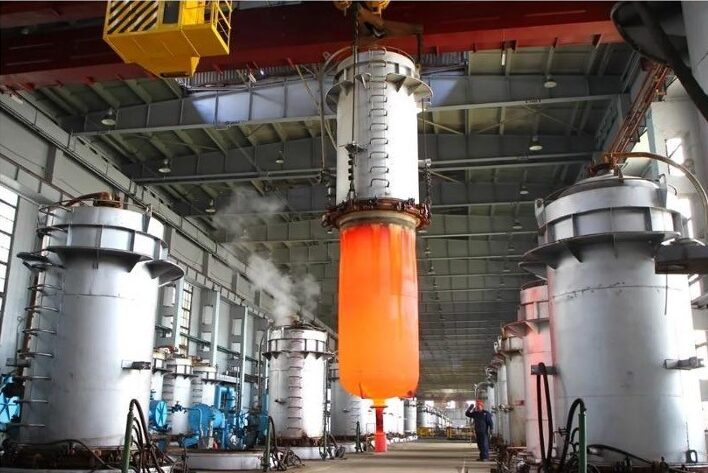
UKTMP -Titanium sponge at the end of the distillation process
Gehler emphasized that “delivering consistent, high-quality titanium products reflects our commitment to rigorous standards and positions us to meet rising demand for resilient, transparent supply chains while expanding in key markets.”
The company’s long-term development plans and initiatives aim at reinforcing Kazakhstan’s standing in the global titanium industry. According to Gehler, “UKTMP’s investment program through 2033 includes 25 projects worth more than $520 million, including construction of a new titanium sponge facility that would significantly expand production capacity.” Currently, UKTMP has 30 types of titanium alloys.
Titanium and its alloys combine a high melting point, high electrical resistivity, exceptional strength-to-weight ratio, corrosion resistance in air and seawater, and non-magnetic behavior. It is also lightweight—its specific gravity is approximately 56% that of steel—biologically inert, and readily formed under pressure, making titanium a versatile structural material widely used in advanced industries.
United States Demand for Titanium
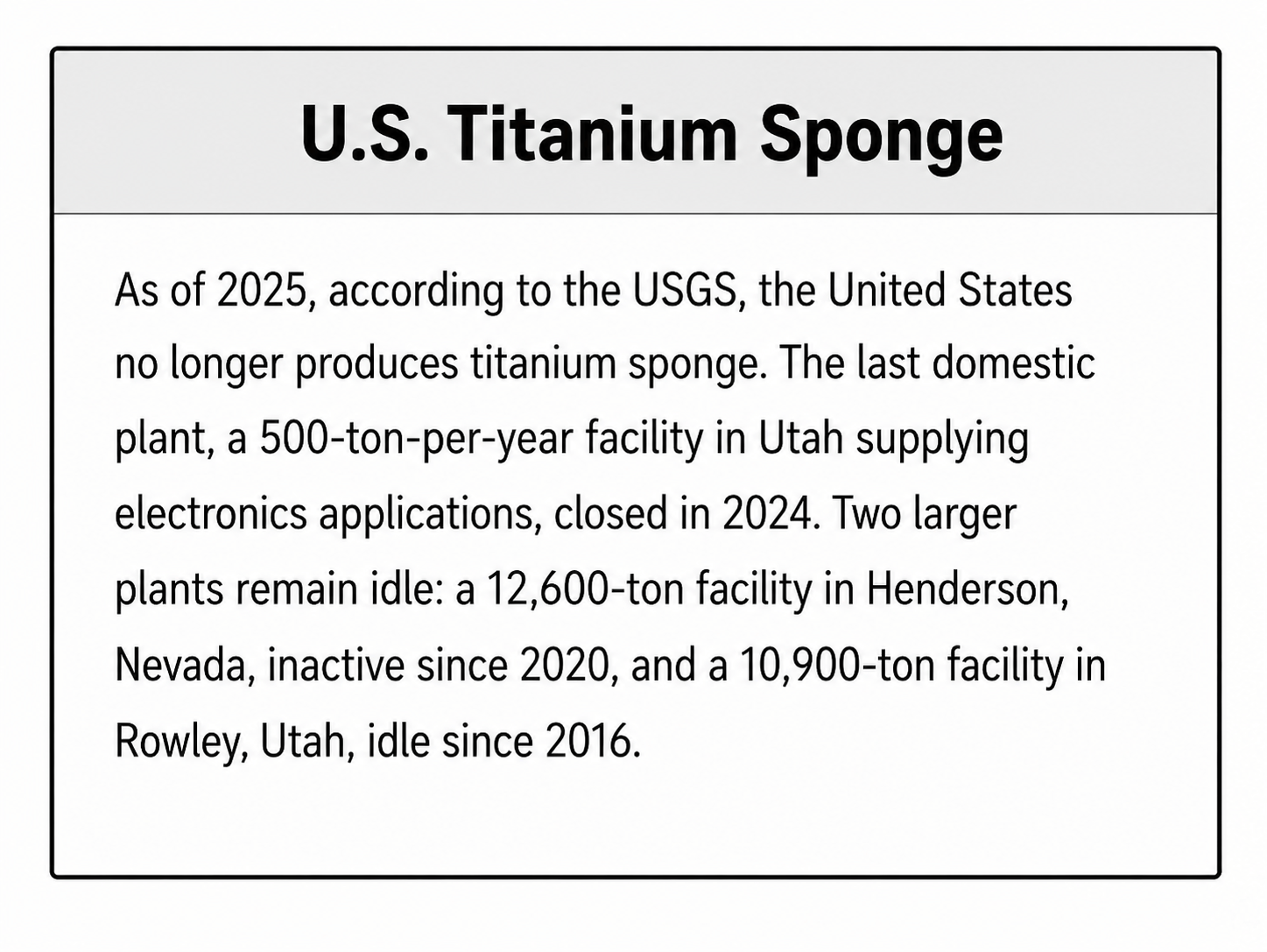
The American aerospace and defense sectors rely heavily on titanium, while disruptions to traditional supply chains following sanctions on Russia have heightened interest in alternative suppliers. Kazakhstan has emerged as one of the countries helping fill that gap.
Source: USGS
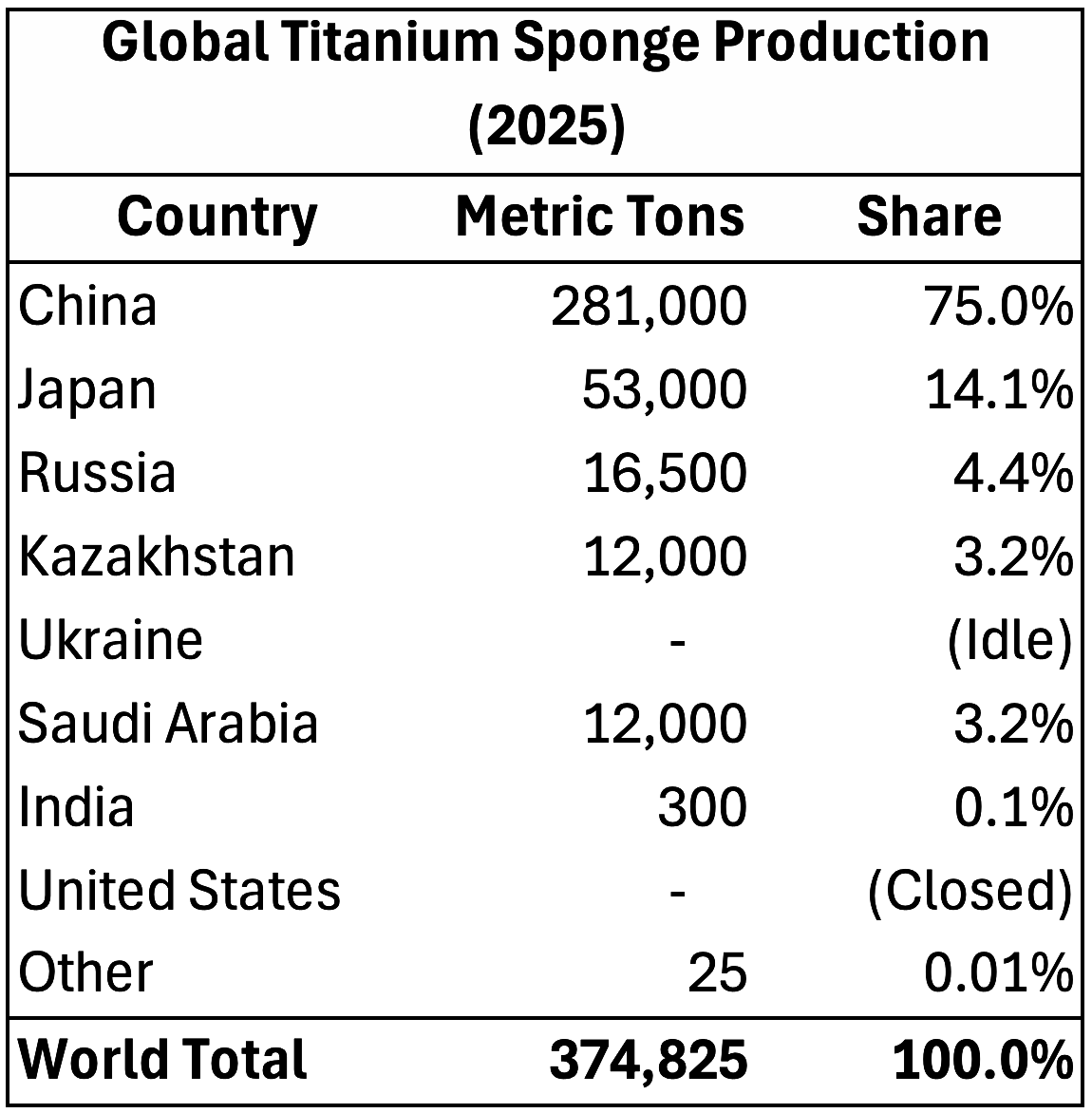
Industry analysts note that the United States currently lacks domestic titanium sponge production and remains dependent on imports. In 2025 through July, Japan supplied 73% of U.S. titanium sponge imports, while Kazakhstan and Saudi Arabia each supplied 13%. This strategic reliance underpins the favorable treatment the U.S. currently gives to Kazakh titanium, since heavy supply restrictions would adversely impact the U.S. aerospace and defense industries. This has not always been the case.
For UKTMP, deeper access to the U.S. market represents not only a commercial opportunity but the makings of a strategic partnership. Increasing sales to American customers would further anchor Kazakhstan within Western aerospace and other supply chains at a time when demand for high-grade titanium continues to rise.
USGS, UKTMP and Industry Sources
Tariff Issues and Section 232 of the Trade Expansion Act of 1962
To ensure economic resilience on processed critical minerals, the Trump Administration has repeatedly used Section 232 tariffs to protect against threats to national security and to strengthen manufacturing sectors critical to national and economic security.
In antidumping and countervailing-duty proceedings initiated in 2017, the U.S. Commerce Department examined whether Kazakh titanium sponge producers received unfair subsidies or sold products below fair value. Commerce ultimately retained the longstanding 15% import duty dating back to the Soviet era. At the time, Titanium Metals Corporation (TIMET), a U.S.-based titanium producer and the leading U.S. integrated titanium manufacturer, was still producing titanium sponge in the United States. TIMET no longer produces titanium sponge – the primary raw material used to make titanium metal products.
In March 2019, the White House initiated a Section 232 review of titanium sponge imports after a TIMET petition, assessing national security implications for a key defense and aerospace material. The investigation found that imports threatened to impair national security, with the U.S. then importing roughly two-thirds of the sponge metal it required, largely from Japan.
On February 27, 2020, President Trump, in his Memorandum on the Effects of Titanium Sponge Imports on National Security, agreed with the U.S. Commerce Department’s determination that titanium sponge imports posed a national security concern but declined to impose Section 232 tariffs or quotas. Instead, Trump established a working group comprising the U.S. Department of Commerce, the Department of Defense, and other national security agencies to identify ways to strengthen the domestic titanium supply chain without disrupting aerospace and defense firms reliant on imported sponge.
Within industry circles around 2020–2021, many aerospace and defense stakeholders argued that Japanese and Kazakh titanium sponge came from trusted allies, China’s expanding production posed the real strategic risk, and that restricting Kazakh imports could weaken U.S. supply chains by limiting access to reliable non-Chinese material.
The Biden Administration
After taking office in 2021, the Biden administration published the Report on the Effect of Imports of Titanium Sponge on the National Security: An Investigation Conducted Under Section 232 of the Trade Expansion Act of 1962, as Amended. The Trump-era titanium working group then largely dropped out of public view, while U.S. critical minerals policy shifted toward broader supply chain resilience, stockpiles, and industrial support rather than targeted titanium tariff measures.
US-Kazakhstan Trade Issues
Nevertheless, industry observers point to several possible avenues for overcoming import uncertainties and trade-related barriers. While the United States may still seek to reinvigorate titanium mining, processing, and production in the first instance, the United States and Kazakhstan, for example, could pursue sector-specific agreements to formalize Kazakhstan’s status as a trusted supplier of titanium and other critical minerals.
Another avenue would be to deepen downstream cooperation with U.S. firms through joint ventures, long-term supply contracts, and/or increased investment in value-added titanium products. Such arrangements could reinforce the case that Kazakh titanium directly supports American industrial and national security priorities.
Greater alignment in regulatory frameworks and certification processes could streamline access to U.S. markets and lessen the administrative costs faced by exporters.
According to Gehler, “reactivating the federal titanium working group created during President Trump’s first term could help reassess tariffs and other trade restrictions on Kazakh titanium sponge and ingot.”
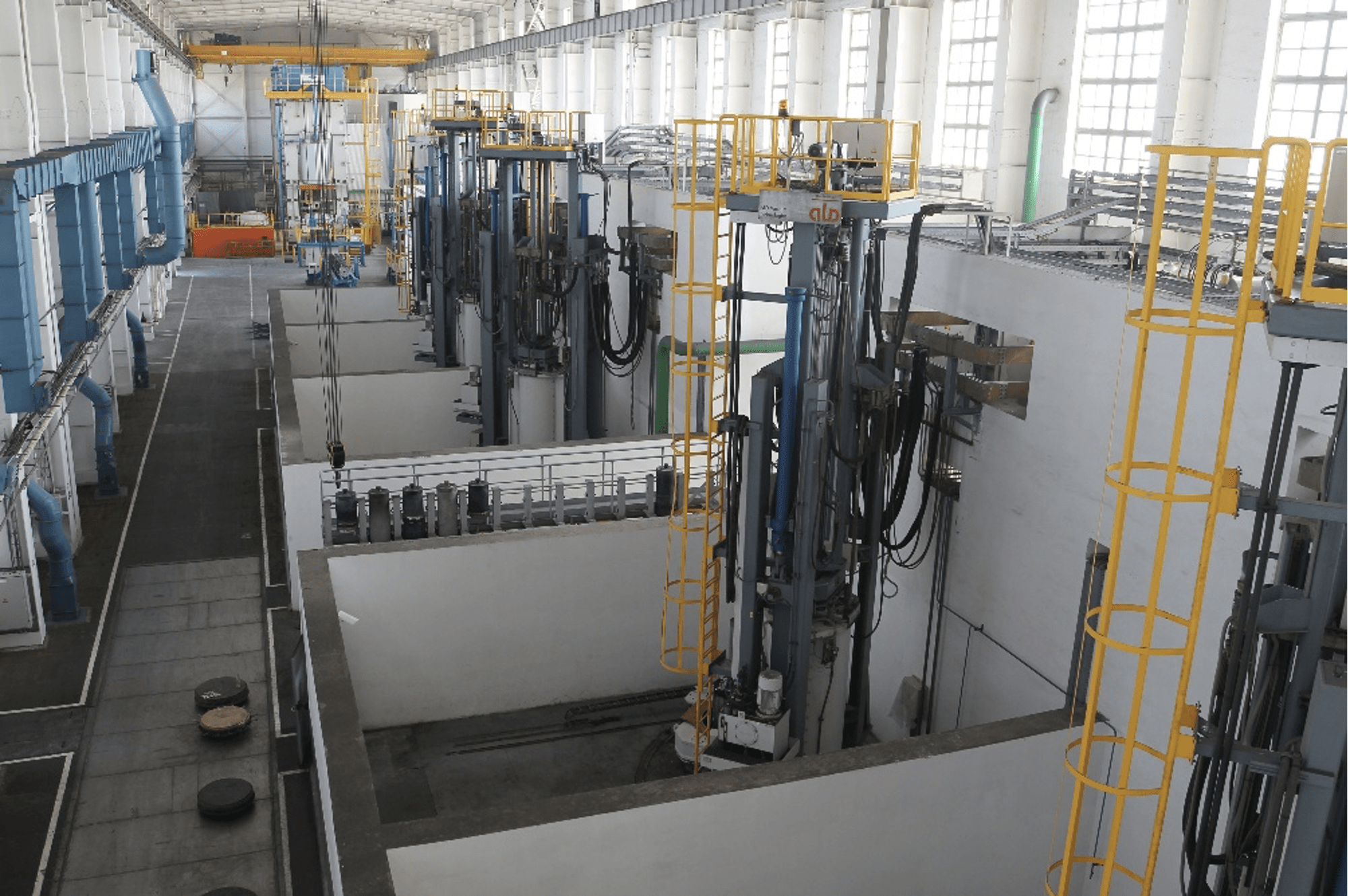
UTKMP Melting Workshop
Overall Direction
For Kazakhstan, the implications reach well beyond a single commodity. Astana increasingly regards critical minerals as a cornerstone of the country’s economic diversification agenda. At this year’s AMM gathering, government officials underscored Kazakhstan’s role as a supplier of various strategic materials, with titanium featuring especially prominently.
As global competition for critical minerals intensifies, UKTMP is counting on its established reputation, long-standing aerospace ties, and Kazakhstan’s expanding role in global supply chains to create new opportunities. For Gehler and Mamutova, expanding access to the U.S. market is not just about exports but about securing Kazakhstan’s role in next-generation industrial partnerships while strengthening U.S. supply chains.
Gehler concluded: “UKTMP is actively seeking to expand its commercial footprint in the United States, reflecting our long-term commitment to deeper industrial and supply chain partnerships in the American market. As we advance these efforts, we are encouraged by the prospect of a tariff and tax environment that supports critical minerals and greater trade efficiency, reduces administrative compliance costs, and enhances the competitiveness of Kazakh exports.”
A broader U.S. trade-policy date could come on July 24, 2026, when the temporary import surcharge imposed under Section 122, under “Imposing a Temporary Import Surcharge to Address Fundamental International Payments Problems,” is set to expire.
Whether Washington extends the measure, replaces it, or allows it to expire remains to be seen. The measure is not titanium-specific, but it could affect the titanium trade unless exemptions apply.