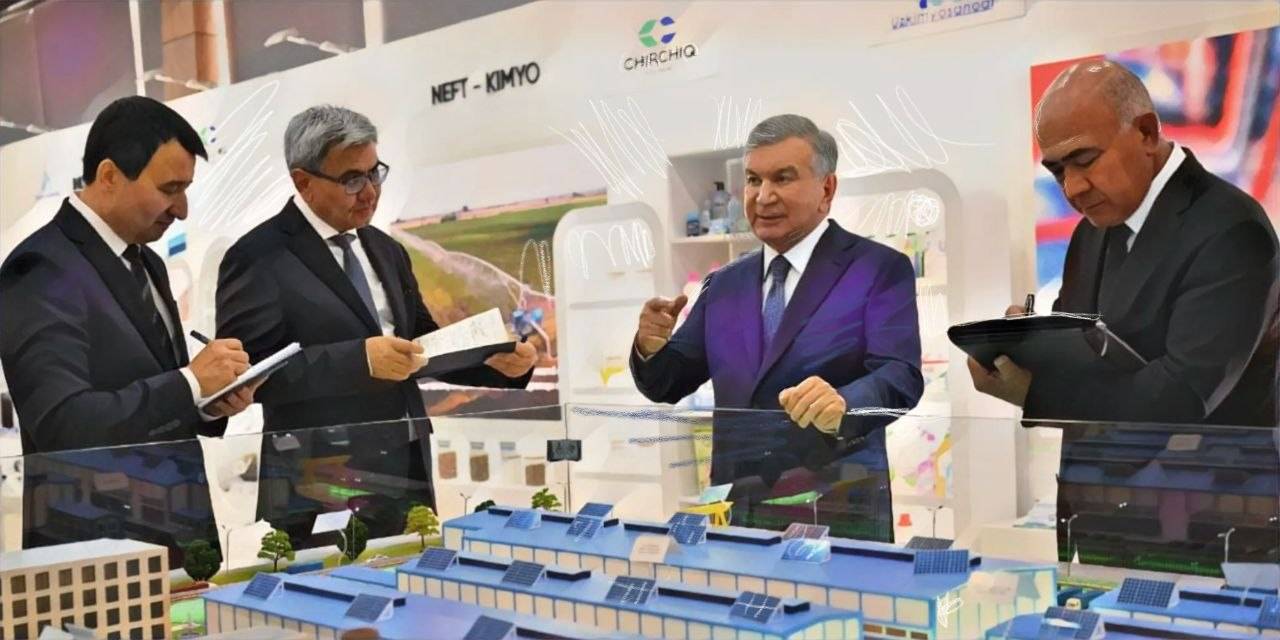
Uzbekistan has placed a $4.2 billion critical minerals program at the center of its industrial policy, as Tashkent seeks to turn Soviet-era mining strengths into higher-value production for modern supply chains. The country has long sold metals and minerals, but the program reviewed by President Shavkat Mirziyoyev on June 15 puts more emphasis on refining, laboratory work, skilled workers, and finished industrial goods.
The new 2026-2030 program, which sets out 120 projects, aims to lift critical minerals output to $1 billion by 2028 and $2 billion by 2030. The first tranche, planned for this year, covers 12 projects worth $166 million and production of high-purity selenium, tellurium, and rhenium. It also includes 21 import-substituting products, including powder metallurgy auto parts and sulfuric acid.
The plan landed as investors gathered in Tashkent for the Fifth Tashkent International Investment Forum. Mirziyoyev used the forum to make a broader reform pitch. “We are always open to investors interested in cooperating with Uzbekistan and ready for an equal and mutually beneficial partnership,” he said in his opening speech. He also announced plans for a Tashkent International Financial Center with zero rates for profit tax, value-added tax, property tax, and customs duties.
Critical minerals give that investment pitch a clearer focus. Global buyers are looking for supplies that do not depend on a handful of processing hubs, while resource-rich countries want more of the value to stay at home. Uzbekistan is trying to move into that field with metals it already produces, especially tungsten and molybdenum, and with smaller but valuable materials used in electronics, aerospace, energy equipment, and advanced manufacturing.
The Uzbekistan Technological Metals Complex, known as TMK or UzTMK, is the state vehicle for much of this work. The company says its portfolio includes tungsten, molybdenum, rhenium, graphite, selenium, tellurium, lithium, nickel, and cobalt. Its stated model is “mine-metal-market,” meaning a chain from extraction to metal products and buyers.
The June 15 package adds practical details. Uzbekistan wants more than concentrates and semi-finished goods. The presidential briefing listed metal powders, alloys, rods, wire, industrial parts, and finished products. For tungsten and molybdenum, that means deeper processing inside Uzbekistan rather than sending value abroad.
Chirchik, east of Tashkent, is set to play a larger role. The government plans to expand the Metals of the Future technopark and build up an R&D center there. The site is designed to support start-ups, commercialize applied research, and produce high-purity metals. A planned nano-analysis laboratory would process up to 1,000 samples a day once fully operational. Officials say it could replace $6.5 million in imported analytical services and generate $4 million through service exports.
The lab is one of the more practical parts of the program. Mining projects need more than deposits and investment pledges. They need reliable samples, resource estimates that meet international standards, steady power, and proven processing methods. A credible laboratory in Chirchik would not remove all those risks, but it would make it easier to move from geological data to financed projects.
Global demand is moving in Uzbekistan’s direction. A June update from UN Trade and Development said demand for lithium is projected to rise by 353% between 2024 and 2040, while graphite demand could rise by 131%. Copper, nickel, lithium, cobalt, and rare earth elements are increasingly tied to electric vehicles, battery storage, renewable energy equipment, semiconductors, and data centers.
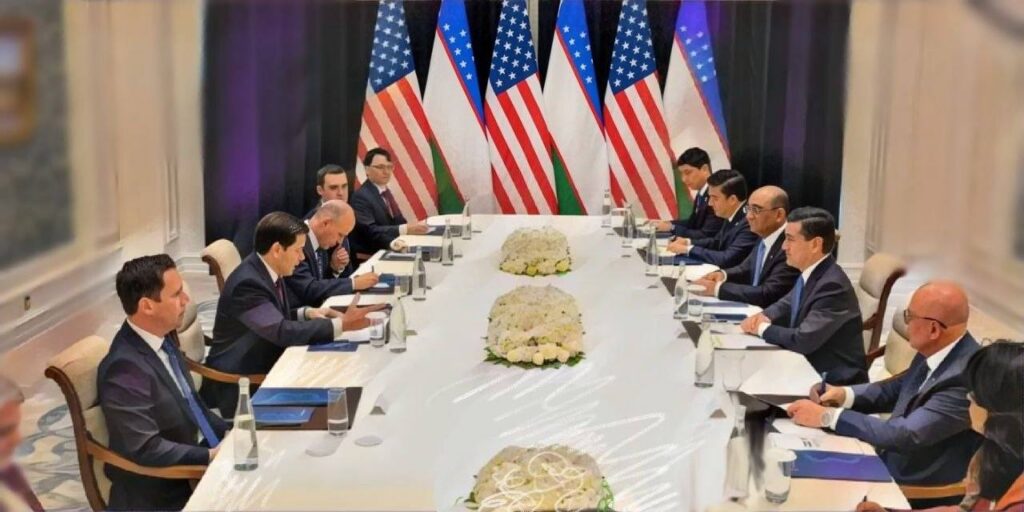
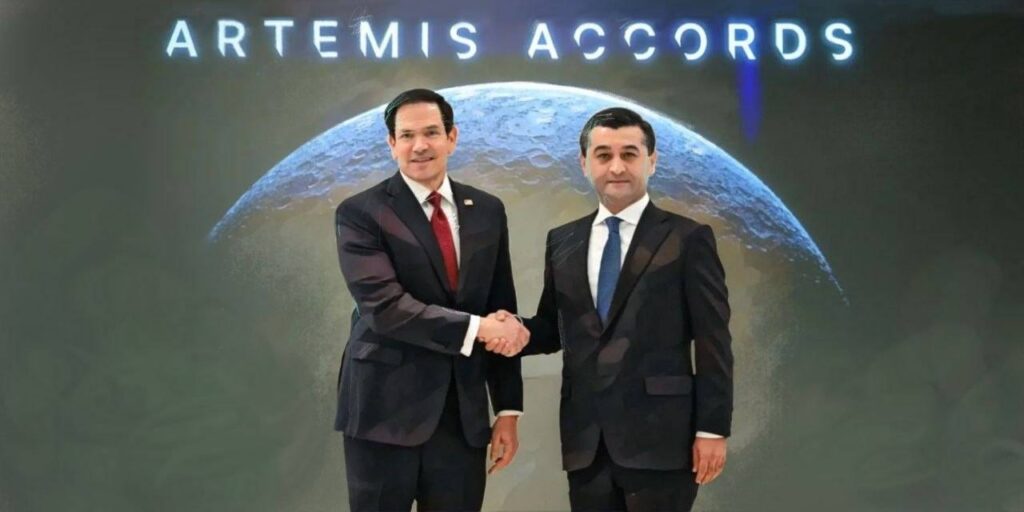
That demand has pulled Washington deeper into Central Asia. In February, the United States and Uzbekistan signed a Joint Investment Framework for exploration, extraction, and processing. The framework also proposed a U.S.-Uzbekistan Joint Investment Holding Company for future minerals and infrastructure projects, moving the two sides from broad mineral diplomacy toward project implementation.
The U.S. financing push became more concrete on June 16. DFC launched a U.S.-Uzbekistan Joint Investment Platform in Tashkent with EXIM Bank and Uzbek officials. The platform will focus on energy, infrastructure, critical minerals, transport and logistics, and advanced manufacturing. “Today’s announcement is the first step toward investments that advance both U.S. and Uzbek priorities,” DFC chief executive Ben Black said. He called the Trans Caspian region “one of the most strategically significant economic corridors in the world.”
Uzbekistan is also trying to make the entry point clearer for U.S. companies. During the U.S.-Uzbekistan Business Forum, Investment, Industry, and Trade Minister Laziz Kudratov proposed a special economic zone tailored for American firms. The sectors named for deeper cooperation included critical minerals, fertilizers, pharmaceuticals, and textiles.
The local regulatory picture has improved. The new Law on Subsoil took effect on February 2, 2025, with EBRD support for mining-sector reform. Investors will look beyond the text for license security, clear fiscal terms, water and power access, transport links, environmental rules, and predictable dispute resolution. Those issues will decide whether a project can attract long-term financing.
Uzbekistan also needs enough trained specialists to staff the new plants, laboratories, and research centers. The government says a dual education system has started with Tashkent State Technical University, and metallurgy and materials science departments have been created at the Technological Metals Complex. Sixty-four students are already undertaking practical training there. That is a start, but not enough for 120 projects.
Uzbekistan is not alone in trying to move up the minerals chain. An OECD regional policy study said the region has strong mineral potential but remains heavily shaped by state-owned enterprises. It also said Uzbekistan has the world’s eleventh-largest copper reserves, and is advancing lithium and molybdenum production.
The main hurdle is turning announcements into plants. Tashkent has announced a large number of industrial and infrastructure plans in recent years, and investors now want to see projects with permits, feasibility studies, engineering partners, and buyers. For critical minerals, buyers can be as important as lenders. Before signing a long-term deal, they need clear product grades, purity levels, delivery schedules, and environmental standards.
The $4.2 billion package is still a map of intent, but its early markers are specific: the 12 projects planned this year, the first high-purity selenium, tellurium, and rhenium output, the Chirchik lab, and the first deals under the new U.S.-Uzbek investment platform. If those steps are delivered, Uzbekistan can claim more than mineral potential. It can begin to show that Central Asia can process more of its own strategic metals and sell higher-value products to global industries.
See our complete special coverage of the developments strengthening Central Asia’s role in U.S. mineral supply chains.