• KGS/USD = 0.01144 0%
  • KZT/USD = 0.00205 0%
  • TJS/USD = 0.10784 0%
  • UZS/USD = 0.00008 0%
  • TMT/USD = 0.28490 0%
  • KGS/USD = 0.01144 0%
  • KZT/USD = 0.00205 0%
  • TJS/USD = 0.10784 0%
  • UZS/USD = 0.00008 0%
  • TMT/USD = 0.28490 0%
  • KGS/USD = 0.01144 0%
  • KZT/USD = 0.00205 0%
  • TJS/USD = 0.10784 0%
  • UZS/USD = 0.00008 0%
  • TMT/USD = 0.28490 0%
  • KGS/USD = 0.01144 0%
  • KZT/USD = 0.00205 0%
  • TJS/USD = 0.10784 0%
  • UZS/USD = 0.00008 0%
  • TMT/USD = 0.28490 0%
  • KGS/USD = 0.01144 0%
  • KZT/USD = 0.00205 0%
  • TJS/USD = 0.10784 0%
  • UZS/USD = 0.00008 0%
  • TMT/USD = 0.28490 0%
  • KGS/USD = 0.01144 0%
  • KZT/USD = 0.00205 0%
  • TJS/USD = 0.10784 0%
  • UZS/USD = 0.00008 0%
  • TMT/USD = 0.28490 0%
  • KGS/USD = 0.01144 0%
  • KZT/USD = 0.00205 0%
  • TJS/USD = 0.10784 0%
  • UZS/USD = 0.00008 0%
  • TMT/USD = 0.28490 0%
  • KGS/USD = 0.01144 0%
  • KZT/USD = 0.00205 0%
  • TJS/USD = 0.10784 0%
  • UZS/USD = 0.00008 0%
  • TMT/USD = 0.28490 0%

Viewing results 1 - 6 of 6

Kyrgyz PM Courts Investors in Tashkent With Call for Shared Regional Future

Tashkent (June 17): Speaking to a packed audience at the opening of the fifth Tashkent International Investment Forum, Kyrgyz Prime Minister Adylbek Kasymaliev, chairman of the Cabinet of Ministers and head of the Presidential Administration, opened his remarks with a sober assessment of the global landscape: "The global economy is undergoing a period of profound transformation: a technological revolution, an energy transition, the reshaping of global supply chains, growing demand for critical minerals, and the need to ensure food security are together creating new conditions of international competition while also opening new opportunities for cooperation." Despite global uncertainty, Kasymaliev argued that success would favor countries willing to cooperate and move quickly: "the countries that benefit most are those that make decisions faster, establish clear rules, and remain open to long-term partnership." In this context, Kasymaliev cast Tashkent as much more than a venue for dialogue. "Today, Tashkent is once again becoming a platform for discussing the common future of the region," he said, noting that mutual benefit offered a better path than zero-sum competition. His remarks rested on the premise that Central Asian states gain more from unity than from going it alone, and that the region's economic trajectory now hinges on its members' willingness to act as partners rather than rivals. Kasymaliev placed Kyrgyzstan's outlook within the National Development Program through 2030, which he said is built around accelerated industrialization, export expansion, digital transformation, and deeper regional integration, with the explicit goal of moving the country into the ranks of upper-middle-income states by decade's end. He cited 2025 GDP growth of 11% as evidence the strategy is already bearing fruit. Kasymaliev then outlined six government priorities for cooperation and investment. The first is critical minerals, with an emphasis on moving beyond raw extraction toward processing and component manufacturing for green energy. The second is energy, where new renewable producers receive a five-year profit tax exemption, and officials are pursuing hydropower, solar, wind, and eventually hydrogen. The third is agribusiness and food security, centered on agro-processing, greenhouse complexes, and cold storage aimed at export markets in Central Asia, the Middle East, South Asia, and China. The fourth is transport and logistics, anchored by the China-Kyrgyzstan-Uzbekistan railway. "As our President has emphasized, it is a strategic bridge between countries and markets," Kasymaliev said, a corridor expected to cut delivery times to as little as ten days. The fifth priority is the digital economy, built around a newly enacted Digital Code and an effort to draw venture capital into the country's startup ecosystem. The sixth is capital markets, including plans to list state-owned enterprises through IPOs and the creation of the Tamchy Special Financial Investment Territory on Lake Issyk-Kul, designed as a regional hub for international capital under its own distinct legal regime. Running through all six priorities was a broader argument about timing: in a period of technological upheaval, energy transition, and shifting supply chains, the states that move fastest and cooperate most openly stand to capture the largest share of...

Data, Minerals, and the New Tashkent: Uzbekistan Pitches Its Next Growth Phase at Investment Forum

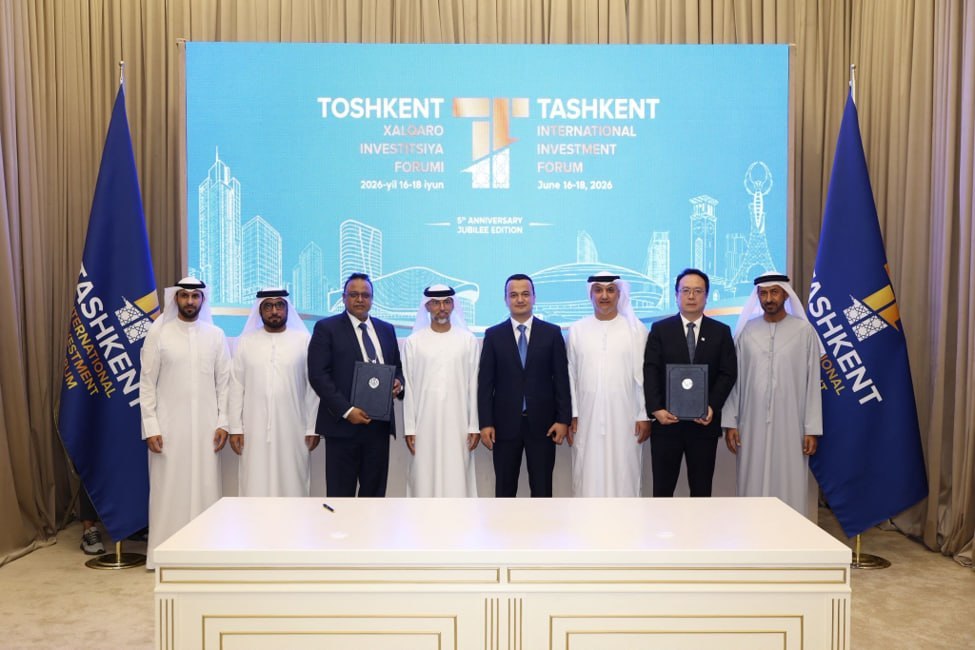
Uzbekistan used the opening of this year’s Tashkent International Investment Forum to make a broader pitch than investment alone: the country is presenting itself as a platform for data-driven governance, value-added mineral processing, and large-scale urban development. The fifth Tashkent International Investment Forum is being held in the Uzbek capital from June 16-18, bringing together government officials, international financial institutions, business leaders, and investors as Uzbekistan seeks to reinforce its position as one of Central Asia’s leading investment destinations. Held under the theme “Investment Resilience: New Frontiers, New Partnerships,” TIIF 2026 comes as Uzbekistan continues to promote reforms aimed at attracting capital, expanding industrial production, developing digital infrastructure, and moving higher up global value chains. Mirziyoyev Sets Out Investment Priorities Addressing the forum on June 17, President Shavkat Mirziyoyev presented Uzbekistan’s recent economic performance as evidence of growing investor confidence. He said the country had attracted more than $150 billion in foreign investment in recent years, including $123 billion over the past five years. According to the president, nearly 4,000 foreign guests from more than 100 countries are attending this year’s forum, reflecting its expanding international profile. The event brought together heads of state, prime ministers, representatives of international financial institutions, and business executives from around the world. Mirziyoyev said Uzbekistan remained committed to creating a favorable investment environment through reforms designed to protect investors’ rights and broaden economic opportunities. He said GDP grew by 7.7% in 2025, foreign investment reached $43 billion, international reserves exceeded $70 billion, and Uzbekistan rose 14 places in the Index of Economic Freedom, joining the group of economies classified as “moderately free.” He also emphasized the pace of economic growth. Four years ago, he said, Uzbekistan set a target of reaching a $100 billion economy by the end of 2026; now, he said, GDP is expected to exceed $180 billion this year. Mirziyoyev also announced plans to establish the Tashkent International Financial Center, a tax- and customs-free zone operating under a special legal regime based on English common law principles. He said the center would offer zero rates on profit tax, value-added tax, property tax, and customs duties, while guaranteeing free capital movement and payments in any currency. Delta Y: A Data Infrastructure Startup Looks to Uzbekistan One of the companies drawing attention at the forum was Delta Y, a Lisbon-based data infrastructure startup seeking to help governments and cities turn fragmented information into practical decision-making tools. Founded in 2025, Delta Y describes itself as a “data infrastructure layer” for governments, institutions, and advisory firms. Its goal is to use data engineering and artificial intelligence to turn disconnected datasets into usable analysis. Co-founder Afonso Carvas said the idea emerged from his experience working with data teams in technology companies and from a broader question: whether governments and cities could gain access to the same quality of data infrastructure used by leading global companies. That question eventually led the company to Uzbekistan. Why Uzbekistan? Carvas said Delta Y first began looking at Uzbekistan after a...

Mirziyoyev Says Uzbekistan’s Doors Will “Always Remain Open” as Fifth Tashkent Investment Forum Begins

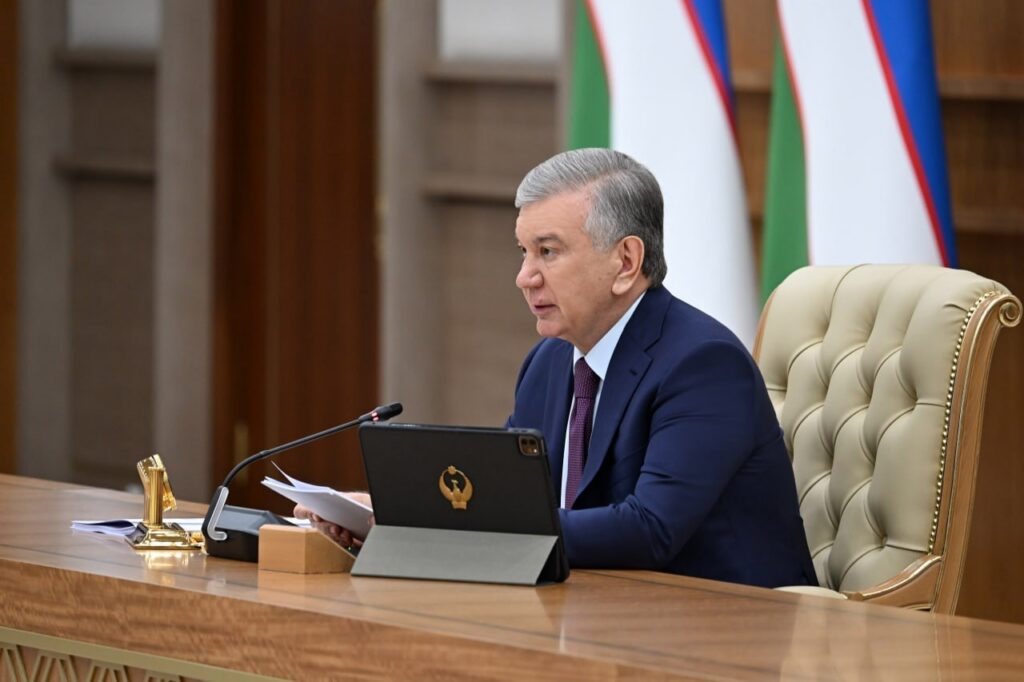
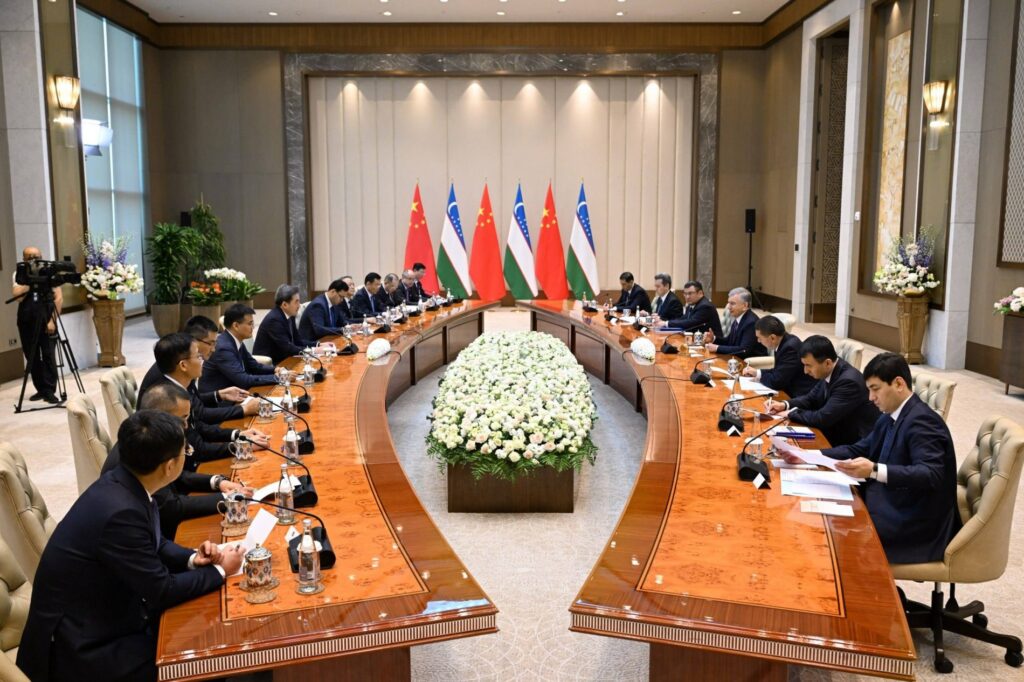
TASHKENT, June 17 — President Shavkat Mirziyoyev opened the Fifth Tashkent International Investment Forum (TIIF) on Wednesday with a message aimed squarely at the nearly 4,000 mostly foreign delegates packed into the hall: Uzbekistan's doors are open, and the country intends to keep them that way. Speaking under this year's theme, "Investment Resilience: New Frontiers, New Partnerships," Mirziyoyev framed the forum as more than a transactional venue for capital, but as a platform to initiate and deepen long-term mutually beneficial partnerships. He described what he called the "Tashkent investment spirit" — a phrase he used to capture the event's evolution into what he called a symbol of shared success between Uzbekistan and the partners willing to back it. The sentiment ran through his closing remarks, where he told the room that “the most important partner in turning ambitious plans into reality is an investor who arrives with good intentions. Therefore, the doors of New Uzbekistan will always remain open to foreign investors who come to our country with trust and ideas.” The guest list underscored the forum's growing diplomatic prowess. Mirziyoyev personally thanked Albanian President Bajram Begaj, Russian Prime Minister Mikhail Mishustin, Belarusian Prime Minister Aleksandr Turchin, Azerbaijani Prime Minister Ali Asadov, Kazakh Prime Minister Olzhas Bektenov, Kyrgyz Cabinet Chairman Adylbek Kasymaliev, and Tajik Prime Minister Kokhir Rasulzoda, alongside senior representatives from the EBRD, the New Development Bank, the World Bank, the IFC, the Asian Development Bank, the Asian Infrastructure Investment Bank, and the European Investment Bank. Mirziyoyev cited a series of economic indicators to support the message. Uzbekistan has secured more than $150 billion in foreign investment since launching reforms, with $123 billion arriving in the last five years. In 2025, GDP expanded by 7.7%, foreign investment climbed to $43 billion, and reserves rose above $70 billion. According to Mirziyoyev, the economy is on track to exceed $180 billion this year, comfortably outpacing the $100 billion goal announced at the first forum four years ago — a sign, he said, of sustained momentum, underscored by a 14-position improvement in the Index of Economic Freedom. The pledges come as Uzbekistan seeks to deepen the economic opening launched under Mirziyoyev, with officials using the forum to market legal guarantees, capital-market reforms and new infrastructure projects to foreign investors. Mirziyoyev structured the rest of his address around six priorities. The first centers on legal guarantees for investors, anchored by the new Tashkent International Financial Center — a zero-tax-rate zone for corporate income, VAT, property, and customs duties, governed by English common law and backed by an independent commercial court staffed with foreign judges. The second targets capital markets, building on $16 billion in international bond placements and the recent National Investment Fund listing, which he called the London Stock Exchange's largest IPO in five years, with sovereign “sukuk issuance” planned next. The third priority is industrial value addition. Here, Mirziyoyev pointed to Uzbekistan's $3 trillion in estimated subsoil wealth and announced that foreign investment will be extensively channeled into the "Metals of...

Uzbekistan’s $4.2 Billion Critical Minerals Plan Aims to Turn Raw Materials Into Industry

Uzbekistan has placed a $4.2 billion critical minerals program at the center of its industrial policy, as Tashkent seeks to turn Soviet-era mining strengths into higher-value production for modern supply chains. The country has long sold metals and minerals, but the program reviewed by President Shavkat Mirziyoyev on June 15 puts more emphasis on refining, laboratory work, skilled workers, and finished industrial goods. The new 2026-2030 program, which sets out 120 projects, aims to lift critical minerals output to $1 billion by 2028 and $2 billion by 2030. The first tranche, planned for this year, covers 12 projects worth $166 million and production of high-purity selenium, tellurium, and rhenium. It also includes 21 import-substituting products, including powder metallurgy auto parts and sulfuric acid. The plan landed as investors gathered in Tashkent for the Fifth Tashkent International Investment Forum. Mirziyoyev used the forum to make a broader reform pitch. “We are always open to investors interested in cooperating with Uzbekistan and ready for an equal and mutually beneficial partnership,” he said in his opening speech. He also announced plans for a Tashkent International Financial Center with zero rates for profit tax, value-added tax, property tax, and customs duties. Critical minerals give that investment pitch a clearer focus. Global buyers are looking for supplies that do not depend on a handful of processing hubs, while resource-rich countries want more of the value to stay at home. Uzbekistan is trying to move into that field with metals it already produces, especially tungsten and molybdenum, and with smaller but valuable materials used in electronics, aerospace, energy equipment, and advanced manufacturing. The Uzbekistan Technological Metals Complex, known as TMK or UzTMK, is the state vehicle for much of this work. The company says its portfolio includes tungsten, molybdenum, rhenium, graphite, selenium, tellurium, lithium, nickel, and cobalt. Its stated model is “mine-metal-market,” meaning a chain from extraction to metal products and buyers. The June 15 package adds practical details. Uzbekistan wants more than concentrates and semi-finished goods. The presidential briefing listed metal powders, alloys, rods, wire, industrial parts, and finished products. For tungsten and molybdenum, that means deeper processing inside Uzbekistan rather than sending value abroad. Chirchik, east of Tashkent, is set to play a larger role. The government plans to expand the Metals of the Future technopark and build up an R&D center there. The site is designed to support start-ups, commercialize applied research, and produce high-purity metals. A planned nano-analysis laboratory would process up to 1,000 samples a day once fully operational. Officials say it could replace $6.5 million in imported analytical services and generate $4 million through service exports. The lab is one of the more practical parts of the program. Mining projects need more than deposits and investment pledges. They need reliable samples, resource estimates that meet international standards, steady power, and proven processing methods. A credible laboratory in Chirchik would not remove all those risks, but it would make it easier to move from geological data to financed projects. Global demand...

Uzbekistan Hosts Fourth Tashkent International Investment Forum, Seals $26.6 Billion in New Investment

From June 9-12, the Uzbek capital hosted the Fourth Tashkent International Investment Forum (TIIF), attracting more than 2,500 participants from 93 countries. Among the attendees were ministers, global corporate leaders, financial institutions, and economic experts. The forum served as a strategic platform for promoting Uzbekistan’s investment climate, advancing its reform agenda, and strengthening global partnerships. Laziz Kudratov, Uzbekistan’s Minister of Investment, Industry and Trade, underscored the country’s progress as an emerging regional investment hub. “Over the last seven years, major reforms have been carried out to liberalize the economy, improve the business climate, and create favorable conditions for investors,” he stated. Uzbekistan has drawn more than $90 billion in foreign direct investment in recent years, contributing to a 6.5% GDP growth in 2024. A Vision for 2030 The government’s “Uzbekistan 2030” development strategy aims to raise national GDP to $200 billion by the end of the decade. Foreign investment is central to achieving this target, and forums like TIIF are integral in showcasing Uzbekistan as a stable and attractive investment destination. This year’s forum concluded with the signing of investment agreements worth $26.6 billion. Since TIIF’s inception in 2022, it has facilitated 357 investment deals valued at $44 billion. Of these, 57 projects have been completed, with 263 others in development. Saudi Arabia led new investment commitments with $10.7 billion, followed by China ($7 billion), Russia ($5.5 billion), the UAE ($4.6 billion), Turkey ($3.6 billion), Germany ($3.4 billion), and France ($2 billion). Rising Global Interest Coinciding with the forum was the release of a new Investor Perception Report by Montfort Eurasia. The report highlights a threefold increase in interest from U.S. and UK investors in Central Asia and the Caucasus since 2023. Improved investor awareness and sectoral potential were cited as key drivers of this surge. John Mann, Director at Montfort Eurasia, emphasized Uzbekistan’s potential: “One opportunity that stood out to me was mining. A new mining law passed earlier this year has created a solid framework for foreign companies, particularly those interested in critical minerals.” Mann also identified pharmaceuticals, agriculture, and urban development as promising sectors, and stated that Uzbekistan’s geographic position is ideal for regional manufacturing hubs. According to Montfort’s data, U.S. and UK investors now rate their understanding of the region at 7.36 out of 10, up from 4.92 in 2023. “There’s definitely been progress,” Mann noted. “More executives are showing interest in emerging markets, and there’s a better understanding of this region. However, concerns remain around investment security and political stability.” Despite such concerns, 47% of surveyed investors expressed strong interest in Central Asia, up sharply from 15.5% last year. Leading sectors included industrial and manufacturing (63.5%), oil and gas (57.9%), and mining and natural resources (49.2%). Regional Integration and Vision In his address to the forum, President Shavkat Mirziyoyev highlighted that trade with neighboring countries has increased 3.5 times over the past eight years, reaching nearly $13 billion. To accelerate regional economic integration, he proposed developing a “Concept of an Integrated Region for Investment and...

Mirziyoyev Proposes Regional Investment Concept as Trade Hits $13 Billion

President Shavkat Mirziyoyev opened the Fourth Tashkent International Investment Forum on June 10 with a wide-ranging address emphasizing deeper global cooperation, peaceful conflict resolution, and renewed investment in green energy, digital transformation, and regional integration. His remarks underscored Uzbekistan’s economic ambitions and its aspiration to be a constructive global actor, according to the presidential press service. “We welcome more than 7,500 delegates today, including nearly 3,000 foreign guests from around 100 countries,” Mirziyoyev said. “This is a true expression of respect for our country and a sign of mutual trust.” Dignitaries included presidents and prime ministers from Bulgaria, Slovakia, Kazakhstan, Kyrgyzstan, Tajikistan, Azerbaijan, and senior officials from Russia and Turkmenistan. Also in attendance were leaders of major financial institutions such as the European Bank for Reconstruction and Development and the New Development Bank. Addressing Global Challenges Mirziyoyev painted a sobering picture of current global instability. “The global arms race is intensifying,” he noted, citing a 50% increase in military spending since 2010, now totaling $2.5 trillion. He criticized the erosion of international law and diplomacy, citing food insecurity, poverty, and climate change as growing threats. He also condemned the humanitarian crisis in Gaza: “In the 21st century, the death of so many innocent people before our eyes cannot be justified,” he said, urging a fair resolution in line with international law. On Ukraine, he reiterated Uzbekistan’s position that the conflict must be resolved through diplomacy. Mirziyoyev also advocated for continued engagement with Afghanistan, stressing that “stability and economic development in Afghanistan are key factors for long-term progress in the entire region.” Economic Vision and Sustainability Turning to economic progress, Mirziyoyev highlighted that Uzbekistan’s GDP has doubled over the past eight years and is on track to reach $200 billion by 2030. In 2023 alone, Uzbekistan attracted $35 billion in investment and exported goods worth $27 billion. He pointed to major improvements in global rankings: a 48-place rise in the Index of Economic Freedom, a 28-spot climb in Harvard’s Economic Complexity Index, and a recent S&P credit rating upgrade from “stable” to “positive.” He outlined four strategic priorities for sustainable growth: 1. Green Energy Transition Uzbekistan has attracted $6 billion in foreign direct investment in renewable energy, with electricity production rising from 59 to 82 billion kilowatt-hours and projected to exceed 120 billion by 2030. Green energy will make up 54% of the total by then. New measures include privatizing power grids, issuing green certificates and carbon credits, and joining international carbon markets. A new climate investment platform, “Green Uzbekistan”, will be launched this year. 2. Digital Transformation and Artificial Intelligence Mirziyoyev said IT exports are expected to reach $1 billion in 2025, with plans to increase fivefold by 2030. Uzbekistan has climbed 17 spots in the International AI Readiness Index and is developing a national AI model reflecting its cultural identity. Infrastructure plans include 20 new data centers and a national cloud platform, alongside the “One Million AI Leaders” initiative to build future digital skills. 3. Financial Sector Modernization Uzbekistan...