• KGS/USD = 0.01144 0%
  • KZT/USD = 0.00199 0%
  • TJS/USD = 0.10857 -0.18%
  • UZS/USD = 0.00008 0%
  • TMT/USD = 0.28571 0%
  • KGS/USD = 0.01144 0%
  • KZT/USD = 0.00199 0%
  • TJS/USD = 0.10857 -0.18%
  • UZS/USD = 0.00008 0%
  • TMT/USD = 0.28571 0%
  • KGS/USD = 0.01144 0%
  • KZT/USD = 0.00199 0%
  • TJS/USD = 0.10857 -0.18%
  • UZS/USD = 0.00008 0%
  • TMT/USD = 0.28571 0%
  • KGS/USD = 0.01144 0%
  • KZT/USD = 0.00199 0%
  • TJS/USD = 0.10857 -0.18%
  • UZS/USD = 0.00008 0%
  • TMT/USD = 0.28571 0%
  • KGS/USD = 0.01144 0%
  • KZT/USD = 0.00199 0%
  • TJS/USD = 0.10857 -0.18%
  • UZS/USD = 0.00008 0%
  • TMT/USD = 0.28571 0%
  • KGS/USD = 0.01144 0%
  • KZT/USD = 0.00199 0%
  • TJS/USD = 0.10857 -0.18%
  • UZS/USD = 0.00008 0%
  • TMT/USD = 0.28571 0%
  • KGS/USD = 0.01144 0%
  • KZT/USD = 0.00199 0%
  • TJS/USD = 0.10857 -0.18%
  • UZS/USD = 0.00008 0%
  • TMT/USD = 0.28571 0%
  • KGS/USD = 0.01144 0%
  • KZT/USD = 0.00199 0%
  • TJS/USD = 0.10857 -0.18%
  • UZS/USD = 0.00008 0%
  • TMT/USD = 0.28571 0%
05 December 2025

Viewing results 1 - 6 of 18

Turkmenistan Expands Educational Partnership with UK’s AQA

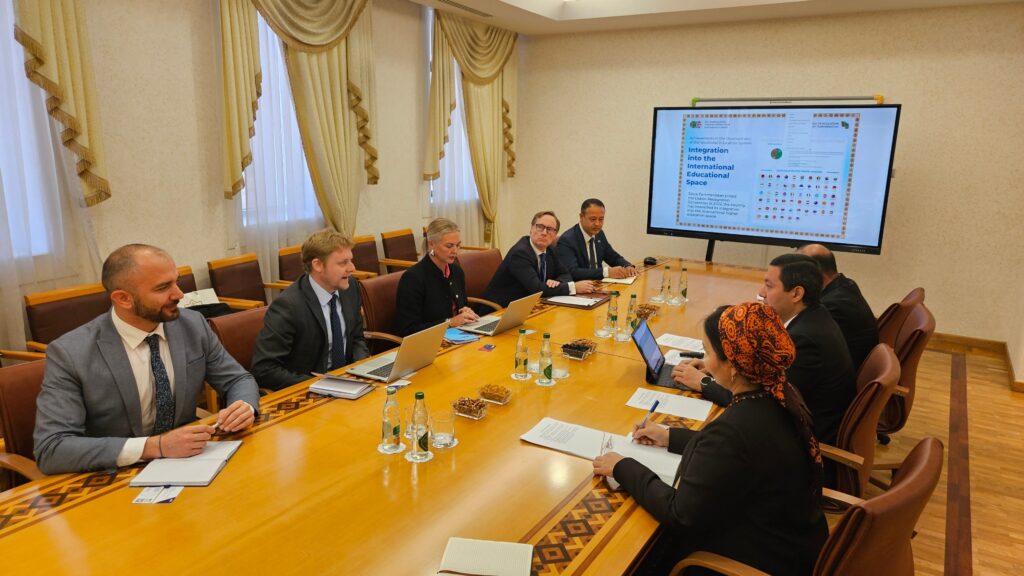
The Ministry of Education of Turkmenistan has held an official meeting with representatives of AQA Global Assessment Services, a leading UK-based organization specializing in educational assessment. The AQA delegation included Sean Crowley, Director of International Business Development; Anna Green, Director of Assessment Systems; and regional consultant Vali Huseyn. Deputy Minister of Education Azat Ataev emphasized Turkmenistan’s interest in deepening strategic cooperation with AQA, particularly in introducing modern methods of academic evaluation. “Our key task is to improve the quality of education and ensure it fully meets the needs of the labor market,” Ataev said. Regional Experience AQA has led numerous educational reform initiatives globally, including across Central Asia. In Uzbekistan, the organization contributed to the development of a new model for senior school graduation exams, aligning national assessments with international standards. In Kazakhstan, AQA supported the transition to a criteria-based assessment system, which formed the basis for updated qualification requirements. Experts note that such reforms increase trust in national diplomas, improve transparency, and make education systems more competitive and aligned with labor market demands. Prospects for Cooperation During the meeting in Ashgabat, both sides discussed several areas for collaboration, including: the introduction of modern examination platforms digital analytics of learning outcomes development of qualification standards training of teachers and administrators in examination processes Particular emphasis was placed on methodological support and establishing a systematic approach to educational planning. According to participants, the adoption of international best practices will help Turkmenistan build a sustainable, data-driven model of educational development.

How Can Britain Benefit From the Middle Corridor?

On July 2nd, a roundtable held at the House of Lords, the upper chamber of the British parliament, brought together diplomats, trade envoys, logistics professionals, and academics to promote the Middle Corridor – the overland route connecting China to Europe via Kazakhstan, the Caspian Sea, Azerbaijan, Georgia, and Turkey. The session aimed to highlight the strategic and economic case for British involvement in the corridor. However, in a crowded political landscape, the pitch struggled to gain airtime. On the same day, British economic minister Rachel Reeves shed tears in parliament’s lower chamber, sparking fears of political instability, and, a few miles away, the Wimbledon tennis season had just begun. In short, Westminster and the British media were elsewhere. Nonetheless, speakers made their case for the corridor’s importance to China-Europe freight. The Middle Corridor has gained attention as an alternative to the Northern Corridor – a rail network that runs from China through Kazakhstan, Russia, and Belarus, all members of the Eurasian Economic Union (a shared customs zone). The Northern route could, in theory, deliver goods from China to Europe in as little as ten days. But its viability has been damaged by Russia’s invasion of Ukraine and the sanctions regime that followed. Since then, cargo traffic along the Middle Corridor has surged. “Before the war in Ukraine, 99% of goods travelled along the northern corridor, and just 1% along the Middle Corridor,” said Dr Chris Brooks, Global Director of Risk, Quality and Compliance at Bertling Logistics. “Now it’s about 90% along the Middle Corridor.” In raw numbers, the increase has been stark. Back in 2021, cargo volume transported through the Middle Corridor was around 800,000 tonnes; that stood at 4.5 million tonnes at the end of 2024. “It is never going to be an alternative to the maritime route,” Brooks said, estimating that even with major investment, capacity would top out at around 16,000 tonnes per month, which is dwarfed by maritime trade between China and Europe, which totals around 800,000 tonnes a month. However, he did call the route a “strategic insurance policy,” citing its neutrality, flexibility, and compliance with Western sanctions. For automotive, electric, and fast-moving consumer goods (FMCG) with short shelf lives, the route will prove particularly useful. “Whether you're going through the Red Sea or around the Cape of Good Hope, maritime typically takes anything between 35 and 52 days. The Northern Russian corridor is 10 to 20 days. The Middle Corridor can actually do similar.” But Brooks added that infrastructure and the weather remain limiting factors, meaning that lead times are anything between 14 and 45 days, with some shipments taking up to two months. “We have as many as 400 trucks queuing up… not because of customs – they’re just queuing to get onto the ferry from Baku to Kazakhstan… Drivers are waiting anything from one week to one month,” he said, adding his concerns that the corridor also has limited capacity to move large cargo. [caption id="attachment_33653" align="aligncenter" width="960"] Image: middlecorridor.com[/caption] Many speakers...

UK Organization to Launch Social-Emotional Education Programs for Uzbek Children

The UK-based non-profit organization Think Equal is preparing to launch social-emotional education programs for young children in Uzbekistan, according to a report from the Dunyo Information Agency. The initiative was announced following a meeting at the Uzbek Embassy with Think Equal founder and executive director, Leslee Udwin. During the discussion, Udwin presented the organization’s educational model, which is designed to foster empathy, emotional literacy, self-regulation, critical thinking, and peaceful conflict resolution skills in early childhood. The program targets children aged 3 to 6 and is already in use in several countries, including India, Kenya, Canada, Australia, South Africa, Mexico, Singapore, and the United Kingdom. The 30-week curriculum features three 30-minute lessons per week and employs illustrated books, activity guides, and interactive games to teach emotional and relational skills. At the conclusion of the meeting, attendees expressed support for holding a follow-up session with Uzbekistan’s Ministry of Preschool and School Education to explore a potential partnership. Regional Focus on Child Wellbeing The announcement comes amid broader efforts to improve child welfare across Central Asia. Last month, the “Dialogue for Children: Central Asia and UNICEF” conference in Tashkent spotlighted regional cooperation in pediatric care. Health ministers from Kazakhstan and Uzbekistan discussed initiatives to expand collaboration, with Kazakhstan proposing the establishment of an international academic hub for childhood cancer treatment and announcing the opening of a new Proton Therapy Center in Astana. The facility is expected to treat up to 800 patients annually and will be accessible to children from Uzbekistan, including those from the autonomous Republic of Karakalpakstan.

Kyrgyzstan Seeks to Expand Labor Quotas for Work in the UK

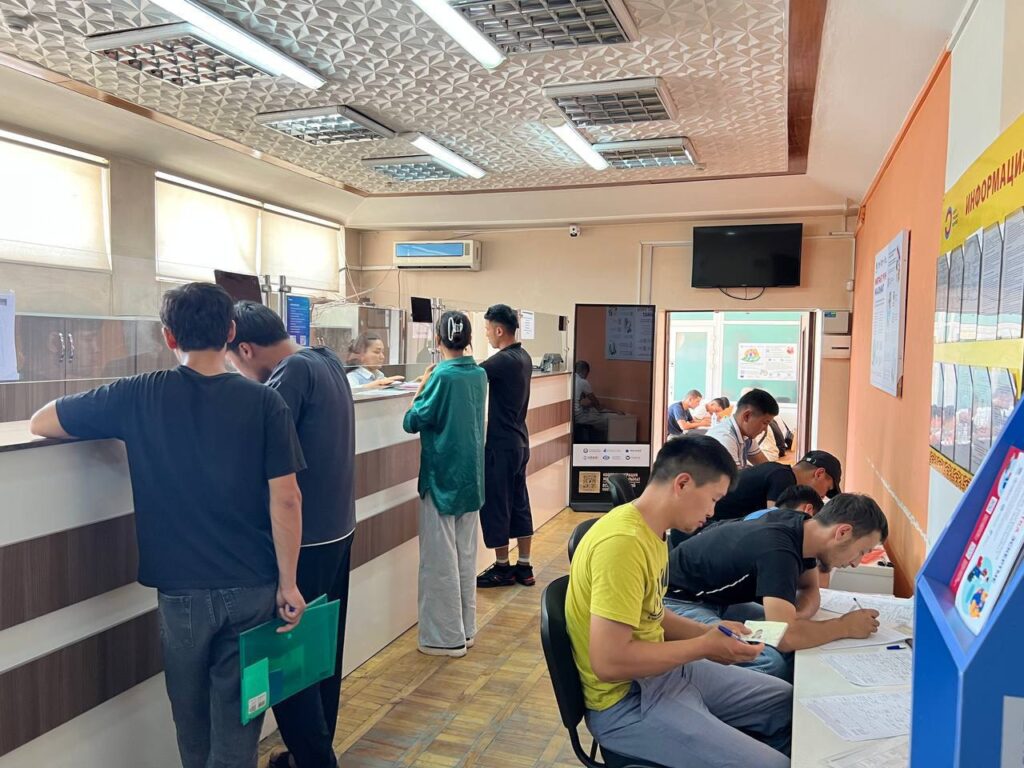
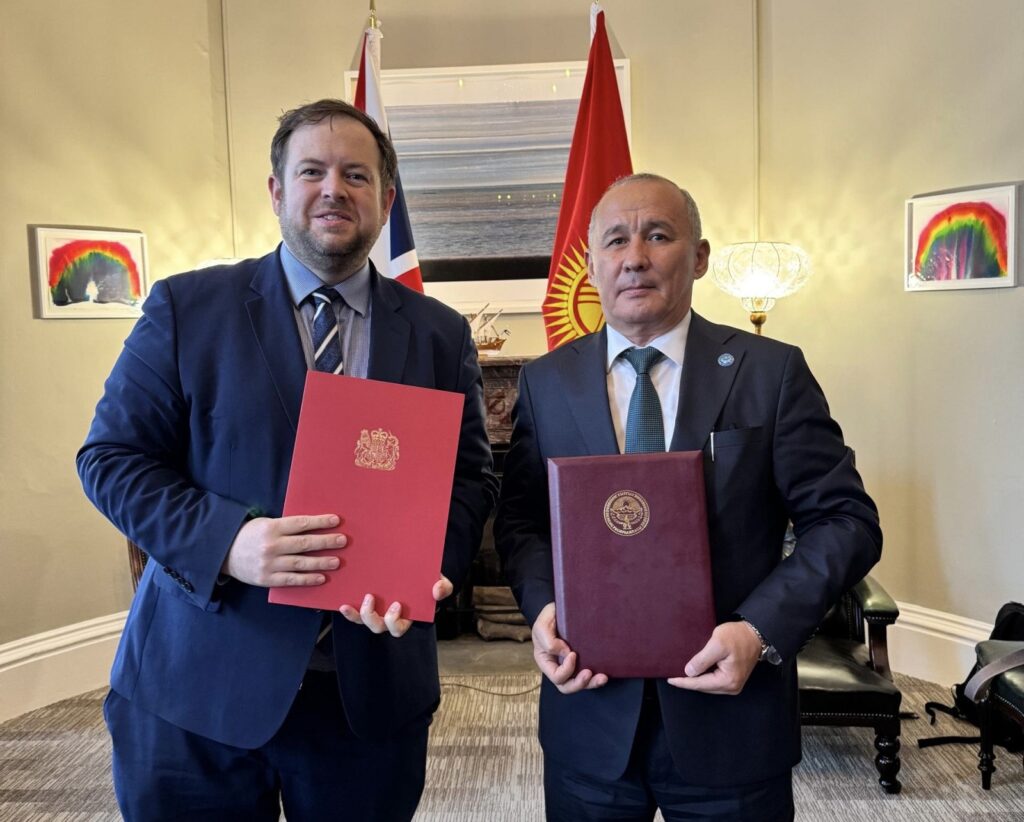
Seventeen thousand Kyrgyz citizens are expected to work in the United Kingdom this year under a state-sponsored employment program, according to Ulan Jusupov, Kyrgyzstan’s ambassador to the UK. Jusupov made the announcement during a session of the Jogorku Kenesh, the Kyrgyz parliament. Addressing lawmakers, the ambassador noted that the number of Kyrgyz nationals seeking employment in the UK continues to grow each year, driven by more favorable working conditions compared to those in other European countries and Russia, where nearly 90% of Kyrgyz migrant workers are currently employed. “In 2022, 4,500 of our citizens went to work in England. That number rose to 7,500 in 2023, and in 2024 it has increased to 10,000,” Jusupov said. The Times of Central Asia has previously reported on the challenges Kyrgyz labor migrants face in Europe, with many choosing to leave Russia due to frequent legal issues and labor disputes. As a result, an increasing number are turning to the Center for Employment of Citizens Abroad (CTHR) for assistance in securing work in alternative destinations. In 2022, CTHR signed a memorandum of cooperation with British recruitment company AGRI-HR to facilitate seasonal employment for Kyrgyz nationals in the UK. While AGRI-HR primarily focuses on jobs in the agricultural sector, CTHR also offers a range of vacancies in a range of other places, including Slovakia, the Middle East, Southeast Asia, and Russia. According to CTHR, other favorable countries for Kyrgyz workers include Germany, Italy, France, South Korea, and the United Arab Emirates. Most opportunities in these regions are in agriculture and related fields, and Kyrgyz citizens can legally work there under established programs. During the parliamentary session, members of the Committee on International Affairs, Defense, Security, and Migration urged Jusupov to enhance the embassy’s efforts in safeguarding the rights and interests of Kyrgyz labor migrants in the UK. Lawmakers also called for an increase in labor quotas and requested that the embassy conduct educational outreach for prospective workers, informing them about British culture, labor ethics, and legal rights prior to their departure.

Meet the Kyrgyz Woman Behind the Vaccine Revolution

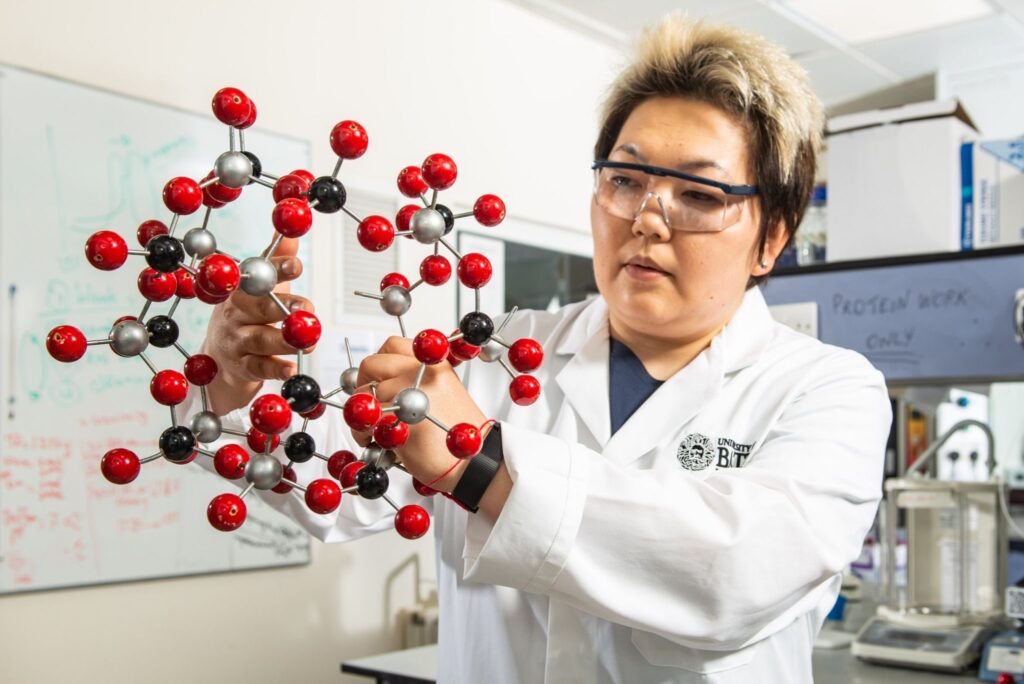
COVID-19 exposed numerous challenges humanity has yet to address, with one of them being directly related to tackling potential future pandemics. A key aspect of this is vaccines, which have to be transported in refrigerated units. This allows them to maintain their effectiveness and safety, the so-called "cold chain infrastructure" saving them from becoming unusable. This complex transportation requirement, however, results in millions of people missing out on potentially life-saving vaccines. But does it have to be this complicated? “Motherhood changes people, irreversibly. For me it was not just becoming a parent, but it also influenced the direction of my research,” Asel Sartbaeva wrote in her 2018 article, ‘Vaccines: The End of the Cold War?’ “When my daughter was only a few days old, I took her to the doctors to be vaccinated with the BCG vaccine (against tuberculosis). The doctor took the vaccine out of the fridge and administered it directly. That’s when I asked: ‘why must vaccines be refrigerated?’ and then the natural follow-up question, ‘can I help to make them stable at room temperatures?’” Born and raised in Kyrgyzstan, Asel Sartbaeva “currently wears several hats”, as her LinkedIn profile says. She is an award-winning interdisciplinary chemist, Reader in Chemistry (Associate Professor) at the University of Bath, and the first Central Asian to obtain a PhD from University of Cambridge. Sartbaeva is also the CEO and Co-Founder of EnsiliTech, a startup with a technology that allows vaccines and other biopharmaceuticals to be stored and transported at room temperature. EnsiliTech was launched in 2022 as a project at the University of Bath, and was built on over a decade of Sartbaeva’s research into ensilication – the technique of fitting vaccine components with a silica coat to stop them from spoiling outside of refrigerated temperatures. In December 2022, EnsiliTech successfully raised £1.2 million in an oversubscribed pre-seed funding round led by Science Angel Syndicate and the Fink Family Office with co-investment from QantX, Elbow Beach Capital, angel investors and Innovate UK. In 2023, the startup won a £1.7 million grant from the British government’s Department of Health and Social Care to develop the first thermally stable mRNA vaccine in the world, to combat Hantavirus, which is found in Asia and South America. In the same year, the new startup attracted their first customer, a Global Top 10 animal vaccine company based in the EU, which paid EnsiliTech to thermally stabilise three of their vaccines. Currently, Ensilitech is planning to licence their ensilcation technology to several customers and internally developing thermally stable vaccines and antibodies. Along with her scientific and business goals, Sartbaeva is also passionate about the wider participation and girls and the women’s empowerment movement. “We need to show girls that science isn’t boring and is a great choice for girls who have a natural passion for science,” she says. In 2021, Sartbaeva became the ambassador for UNICEF’s Girls in Science programme, launched in 2020 to empower 500 girls from new settlements and rural areas so they could excel...

Half a World Away: Central Asian Workers on British Farms

Few countries have more patriotic supermarkets than Britain. Whether it’s a sortie through the sausage section, or browsing the fruit aisle, customers are almost guaranteed to be confronted with the red, white and blue of the Union Jack. In a country not famed for its food, it’s perhaps strange to see the national flag given such prominence. The practice is far less common in continental Europe. Nevertheless, over the past decade there has been a push, propelled by an odd alliance of environmentalists and nationalists, to source homegrown food. Retailers have cottoned onto this and seem glad to leave the customer with the warm, bucolic feeling that they have aided embattled farmers, reduced their carbon footprint, and even helped to correct the country’s balance of payments deficit by buying British. “Supermarkets get more than just the profit margin for the [British] fruit they sell,” says Dr Lydia Medland, a research fellow at Bristol University. “We call it farmwashing: they get publicity, they get kudos; they use this ripe, fresh, local image to sell more products.” There’s only one snag. The people who pick the fruit and vegetables which are then packaged up with British flags, are not exactly local. [caption id="attachment_28497" align="aligncenter" width="1600"] British flags adorn food packaging in the country's supermarkets.Images: Yvonne Mould (left); Elke Morgan (center and right)[/caption] Central Asia and Britain: An Unlikely Match Seasonal workers have been traveling to the island of Britain for over a hundred years. In the nineteenth century, farmers would travel across the Irish Sea to help bring in the harvest. However, in the late 1990s, the number of people arriving on seasonal visas began to rise significantly. This was followed in the 2000s by a spike in workers from Europe, taking advantage of visa-free access to Britain’s labor market under the auspices of the European Union. They served as a pool of flexible, cheap workers for a farming industry that was being increasingly squeezed by the buying power of the country’s major supermarket chains. When Britain voted to leave the EU in 2016, the farming industry panicked at the prospect of losing much of this cut-price labor force. They successfully lobbied the government to relaunch the Seasonal Worker Visa program on a trial basis. Originally designed in the 1940s for European students, the scheme was repackaged to empower private recruitment agencies to hire workers from across the world to work in the fields for six months a year. When the visa debuted in 2018, 2,500 people came. By 2021 – the year that freedom of movement between Britain and the EU officially ended – the government had already raised the quota to 30,000. At the other end of Europe, the collapse in the value of the Russian Ruble since the start of 2023, combined with a crackdown on foreign laborers, has seen a mass exodus of Central Asians from Russia. By October 2024, there were around 30% fewer migrants in the country than there were on the eve of the Covid-19...