• KGS/USD = 0.01144 0%
  • KZT/USD = 0.00200 0%
  • TJS/USD = 0.10494 -0.28%
  • UZS/USD = 0.00008 0%
  • TMT/USD = 0.28490 -0.28%
  • KGS/USD = 0.01144 0%
  • KZT/USD = 0.00200 0%
  • TJS/USD = 0.10494 -0.28%
  • UZS/USD = 0.00008 0%
  • TMT/USD = 0.28490 -0.28%
  • KGS/USD = 0.01144 0%
  • KZT/USD = 0.00200 0%
  • TJS/USD = 0.10494 -0.28%
  • UZS/USD = 0.00008 0%
  • TMT/USD = 0.28490 -0.28%
  • KGS/USD = 0.01144 0%
  • KZT/USD = 0.00200 0%
  • TJS/USD = 0.10494 -0.28%
  • UZS/USD = 0.00008 0%
  • TMT/USD = 0.28490 -0.28%
  • KGS/USD = 0.01144 0%
  • KZT/USD = 0.00200 0%
  • TJS/USD = 0.10494 -0.28%
  • UZS/USD = 0.00008 0%
  • TMT/USD = 0.28490 -0.28%
  • KGS/USD = 0.01144 0%
  • KZT/USD = 0.00200 0%
  • TJS/USD = 0.10494 -0.28%
  • UZS/USD = 0.00008 0%
  • TMT/USD = 0.28490 -0.28%
  • KGS/USD = 0.01144 0%
  • KZT/USD = 0.00200 0%
  • TJS/USD = 0.10494 -0.28%
  • UZS/USD = 0.00008 0%
  • TMT/USD = 0.28490 -0.28%
  • KGS/USD = 0.01144 0%
  • KZT/USD = 0.00200 0%
  • TJS/USD = 0.10494 -0.28%
  • UZS/USD = 0.00008 0%
  • TMT/USD = 0.28490 -0.28%

Viewing results 1 - 6 of 9

Taliban Dismiss Thousands of Tajik and Uzbek Fighters

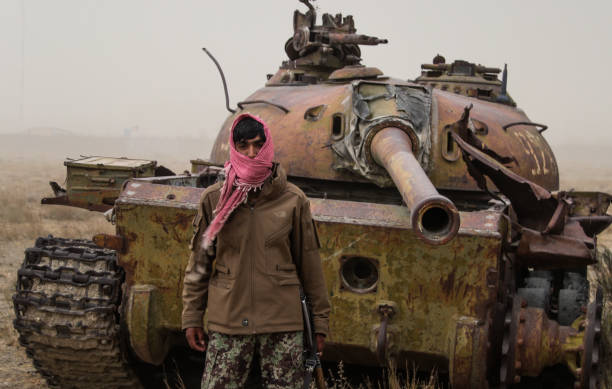
The United Nations Security Council has released a new assessment on Afghanistan, revealing that the Taliban have reduced their security forces by approximately 20%. According to Afghanistan International, which cited the UN document, thousands of ethnic Tajik and Uzbek fighters have been dismissed, particularly in provinces where these groups made up a significant portion of Taliban ranks. The downsizing order reportedly came from Taliban leadership and was attributed to budgetary constraints. While the UN document does not explicitly state that the dismissals were ethnically motivated, it notes that the concentration of personnel cuts in Tajik and Uzbek-majority provinces, most notably Badakhshan, Kapisa, Parwan, and Takhar, has raised concerns about possible ethnic discrimination. Taliban officials have previously justified the reduction by claiming their security apparatus had become excessively large. However, the UN warned that the force reduction is occurring amid rising security threats, especially from Islamic State Khorasan Province (ISKP). According to the report, ISKP has ramped up operations by leveraging modern technologies, including artificial intelligence, to create training materials, some of which reportedly instruct on the assembly of improvised explosive devices. UN sanctions monitors cautioned that this technological advancement, combined with a diminished Taliban security presence, could heighten instability across the country. Although the Taliban have conducted operations against ISKP since early 2025, the extremist group remains resilient. The UN also highlighted that the Taliban continue to publicly deny ISKP’s presence in Afghanistan while simultaneously accusing neighboring countries of supporting the group. Despite this, the Taliban have sought international counterterrorism assistance to confront ISKP. The report estimates that more than 20 international and regional terrorist organizations remain active in Afghanistan. These include Al-Qaeda, Tehrik-i-Taliban Pakistan, the Turkistan Islamic Movement, the Islamic Movement of Uzbekistan, and Jamaat Ansarullah. According to the UN, the Taliban have incorporated some former members of these groups into local security units, prompting concerns about ideological alignment and infiltration. The document further notes that advanced weaponry and military equipment are entering Afghanistan through cross-border smuggling and black market channels. Reports have also emerged of drone attacks targeting military sites in Pakistan. The Taliban are allegedly seeking technical support to expand their drone capabilities, with some countries reporting possible Al-Qaeda involvement in drone production sites in Logar and Kabul. Tensions also flared along the Tajik-Afghan border in late October. Armed clashes were reported on October 25 between Tajik border guards and Taliban fighters in the Davanga district of Shahr-e Buzurg, located in Badakhshan province. The confrontation reportedly stemmed from a dispute over water diversion from the Amu Darya river. The presence of Chinese-operated gold mining facilities in the area has further complicated the region’s security dynamics.
Kyrgyzstan UN Security Council Bid Gains Backing from Central Asian Neighbors

In a show of regional unity, the presidents of all of the Central Asian countries have endorsed Kyrgyzstan’s candidacy for a non-permanent seat on the United Nations Security Council for the 2027–2028 term. The joint appeal was announced on December 4 at a UN press briefing in New York by Uzbekistan’s Permanent Representative, Ulugbek Lapasov, who called on UN member states to support the bid. According to Lapasov, the endorsement reflects the region’s intent to strengthen its voice in international peace and security efforts. Kyrgyzstan’s Permanent Representative to the UN, Aida Kasymalieva, welcomed the unified support from neighboring states. Kasymalieva said the move reflects “a shared commitment to peace, dialogue, and a constructive multilateral approach,” and emphasized that her country, if elected, would serve as “a responsible and principled” Council member that amplifies the voices of smaller and developing nations. A Regional Campaign with Global Aspirations Kyrgyzstan first announced its intention to seek a Security Council seat in 2017. The campaign gathered momentum in 2024, when President Sadyr Japarov told the UN General Assembly that it was time to correct the “historical injustice” of dozens of UN member states - Kyrgyzstan among them - never having served on the Council. Japarov also called for broader representation, especially for African countries, and pledged that Kyrgyzstan would work to make the Council more effective, transparent, and inclusive. In April 2025, Kyrgyzstan officially launched its campaign with a reception at UN Headquarters in New York. Foreign Minister Jeenbek Kulubaev outlined Bishkek’s core priorities: conflict prevention, sustainable development for landlocked and mountainous nations, nuclear disarmament, and support for UN reform. The event drew diplomats from over 150 UN member states. The bid has become a central part of Bishkek’s foreign policy agenda, with senior officials describing it as a long-term investment in the country’s diplomatic standing. The vote for the 2027–2028 non-permanent seats will take place during the UN General Assembly session in June 2026, as scheduled under UN election procedures. Local media have reported that Kyrgyzstan’s main competitor for the Asia-Pacific seat is the Philippines, which has also announced its candidacy. This would not be the first time a Central Asian state has held a seat on the Council. Kazakhstan was elected for the 2017–2018 term, becoming the first country from the region to do so. Its campaign emphasized nuclear disarmament, regional security, and representing the interests of landlocked developing countries. Kyrgyzstan has framed its candidacy similarly, not just as a national endeavor, but as a platform for regional engagement on a global stage. Domestic Challenges, Global Aspirations While Kyrgyzstan pushes for a seat at the UN’s most powerful decision-making body, concerns persist over the country’s democratic trajectory. Once considered the most open society in Central Asia, Kyrgyzstan has seen a decline in civil liberties in recent years, with growing restrictions on independent media, increased pressure on NGOs, and a pattern of centralized political control under President Japarov. In 2021, Kyrgyzstan adopted a new constitution that expanded presidential powers and weakened checks and...

President Tokayev: Kazakhstan Charts Its Own Course

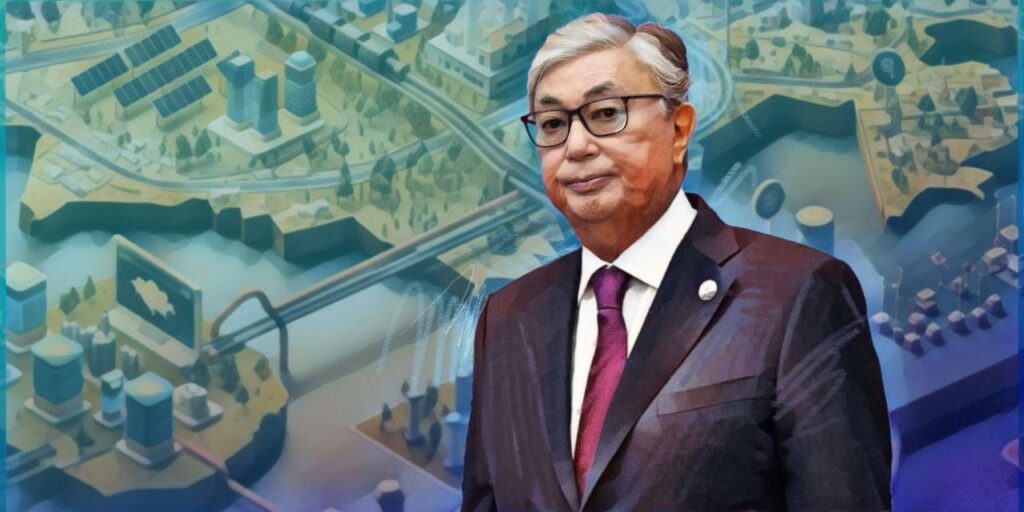
In a rare, candid interview with Al Jazeera, President Kassym-Jomart Tokayev of Kazakhstan projected a steady, pragmatic vision for his country’s future, portraying it as a stabilizing force amid turbulent global currents. Tokayev explained how his government is navigating complex pressures at home and abroad, from economic modernization and digital transformation to balancing ties with Russia, China, Europe, and the United States. The message was one of controlled ambition: Kazakhstan will not be rushed, but rather steer a measured course of reform and integration, balancing domestic stability with global engagement. Tokayev opened the interview by acknowledging the obstacles facing Kazakhstan’s domestic reforms, notably the global pandemic and the war in Ukraine. These external shocks, he explained, have tested the country’s resilience and delayed the delivery of the “New Kazakhstan” that he promised three years ago. Yet he remained firm in his commitment to a gradual but determined path forward. “We must be frank, we must be pragmatic, but at the same time we need to be very much bold,” he said. Domestically, Tokayev defended his record on political reform, including the legalization of opposition parties and the introduction of a one-term presidency of seven years. “I have already announced that I will step down” in 2029, he said, adding that this was “a demand of my people.” This latter move is unprecedented in the region. Tokayev characterized Kazakhstan’s laws as “quite democratic,” dismissing criticisms from organizations like the Organisation for Security and Co-operation in Europe and Human Rights Watch as biased and detached from the country’s political and historical context. "I don't believe that we should follow recommendations of human rights organizations nowadays," he said, also mentioning foreign funders behind certain NGOs, which he left unnamed. Acknowledging the need for further reforms, particularly in media freedom and civil liberties, Tokayev made clear that stability remains the overriding priority. “Without stability, there will be no reforms, no modernization, no transformation of our society,” he said. Tokayev emphasized Kazakhstan's commitment to a “law and order” strategy to promote greater stability, where the laws fully comply with international standards. Tokayev's remarks on measured progress typify his leadership style, which admits the complexity of transformation while setting pragmatic goals. His program of a “fair and just Kazakhstan” reflects his awareness of domestic discontent with wealth disparities that simmer beneath the surface of economic expansion. The country's economy remains dominated by hydrocarbon fuels, which account for over half of exports. Tokayev’s vision of transforming Kazakhstan into a “non-hydrocarbon country” by 2060 strikes a pragmatic note. “Coal in our domestic energy balance accounts for 73%. We cannot give up coal just overnight,” he said, signaling both realism and the limits of immediate energy transition. The diversification of transport routes — including the Trans-Caspian International Transport Route (the Middle Corridor) and the Baku-Tbilisi-Ceyhan pipeline — aligns with his goal of mitigating overdependence on Russia and ensuring economic security amid global uncertainty. Tokayev’s foreign policy strikes a careful balance between continuity and adaptation. While acknowledging Kazakhstan’s reliance on...

Tokayev Backs Expansion of UN Security Council for Greater Global Representation

Kazakhstan's President Kassym-Jomart Tokayev has called for expanding the United Nations Security Council to better reflect contemporary global dynamics. Speaking at the Astana International Forum (AIF), he emphasized that reforming the UN’s most powerful body is essential to restoring trust and maintaining international peace and security. The Security Council currently consists of 15 members, five permanent (the United States, China, Russia, France, and the United Kingdom) and ten non-permanent members elected for two-year terms by the UN General Assembly. “Kazakhstan supports the expansion of the UN Security Council to include broader regional representation,” Tokayev stated. “This year, we celebrate the 80th anniversary of the United Nations. Founded in 1945 by 51 states in the aftermath of a devastating global war, the UN envisioned a more peaceful and secure world. Today, it has grown to 193 member states.” Tokayev criticized the Council’s structure as outdated. “The gap between institutional design, frozen in the post-World War II era, and modern realities undermines both trust in the UN and its effectiveness. Critical decisions affecting billions should not rest in the hands of only a few,” he argued. He called for a structural overhaul of the Council to ensure its continued relevance, emphasizing that major powers must recommit to the foundational principles of peace, security, and respect for the territorial integrity of all nations. Highlighting the scale of current global unrest, Tokayev noted that 52 countries were in active armed conflict last year. The economic toll from these hostilities reached an estimated US$19 trillion, approximately 13.5% of global GDP. “Beyond the staggering numbers lies a more troubling reality,” he said. “Modern conflicts are becoming longer, more complex, and increasingly involve non-state actors. Many are rooted in deep historical and structural contradictions.” Tokayev emphasized the growing role of so-called “middle powers” in shaping a fairer and more inclusive world order. “Middle powers must be ready to assume greater responsibility in rethinking global governance,” he concluded. As previously reported by The Times of Central Asia, the 2025 Astana International Forum, themed “Uniting Minds, Shaping the Future,” gathered global leaders, international organizations, investors, businesspeople, and policy experts in Kazakhstan’s capital.

Kyrgyzstan Presents its Candidacy for UN Security Council

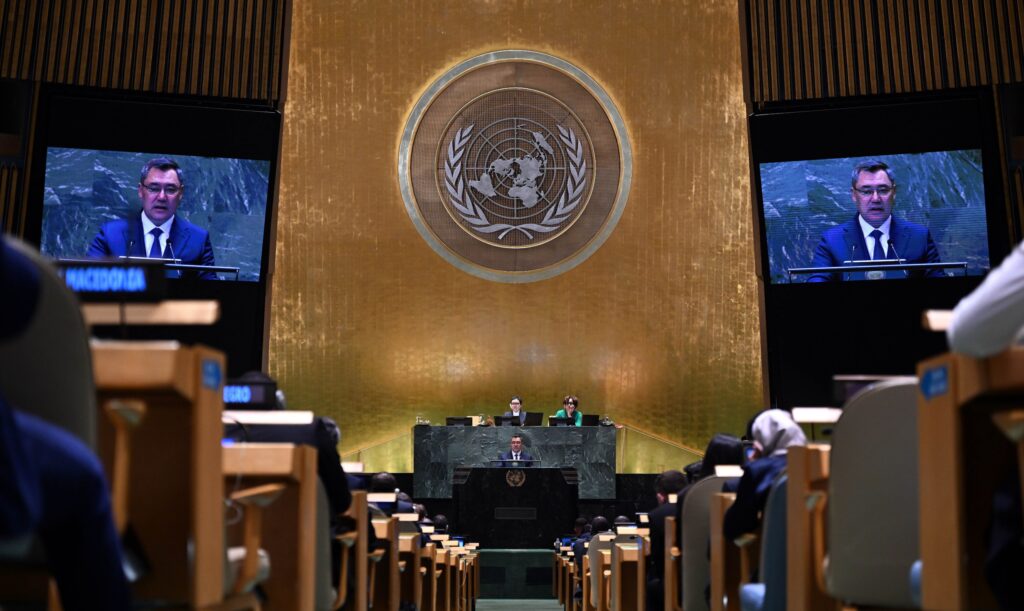
Speaking at the 79th session of the UN General Assembly in New York, Kyrgyz President Sadyr Japarov called on the global community to reduce arms spending and international tensions. During the general debate, Japarov nominated Kyrgyzstan's candidacy for the Security Council, saying the time has come to address historical injustices. “If elected, Kyrgyzstan will work to improve the efficiency and transparency of the Security Council and to expand it with balanced regional representation. It is time to eliminate the historical injustice of 60 member states, including Kyrgyzstan, who have never been elected to the Security Council, and to correct the under-representation of African countries on the Council,” Japarov said. The Kyrgyz leader said the world is becoming increasingly unpredictable and complex. He urged all states to continue to support the UN in its core mission of ensuring peace and preventing modern risks and threats in this “turbulent period.” “Unfortunately, this is happening in a world where many nations and peoples still lack access to basic clean water, healthcare, and education. We need to ensure that the money that goes to wars, destruction, and death goes to creating or solving global challenges for all,” Japarov said. The council has 15 members, including five permanent members. The next elections to the Council will be held in June 2026.