• KGS/USD = 0.01144 0%
  • KZT/USD = 0.00215 0%
  • TJS/USD = 0.10456 0%
  • UZS/USD = 0.00008 0%
  • TMT/USD = 0.28490 0%
  • KGS/USD = 0.01144 0%
  • KZT/USD = 0.00215 0%
  • TJS/USD = 0.10456 0%
  • UZS/USD = 0.00008 0%
  • TMT/USD = 0.28490 0%
  • KGS/USD = 0.01144 0%
  • KZT/USD = 0.00215 0%
  • TJS/USD = 0.10456 0%
  • UZS/USD = 0.00008 0%
  • TMT/USD = 0.28490 0%
  • KGS/USD = 0.01144 0%
  • KZT/USD = 0.00215 0%
  • TJS/USD = 0.10456 0%
  • UZS/USD = 0.00008 0%
  • TMT/USD = 0.28490 0%
  • KGS/USD = 0.01144 0%
  • KZT/USD = 0.00215 0%
  • TJS/USD = 0.10456 0%
  • UZS/USD = 0.00008 0%
  • TMT/USD = 0.28490 0%
  • KGS/USD = 0.01144 0%
  • KZT/USD = 0.00215 0%
  • TJS/USD = 0.10456 0%
  • UZS/USD = 0.00008 0%
  • TMT/USD = 0.28490 0%
  • KGS/USD = 0.01144 0%
  • KZT/USD = 0.00215 0%
  • TJS/USD = 0.10456 0%
  • UZS/USD = 0.00008 0%
  • TMT/USD = 0.28490 0%
  • KGS/USD = 0.01144 0%
  • KZT/USD = 0.00215 0%
  • TJS/USD = 0.10456 0%
  • UZS/USD = 0.00008 0%
  • TMT/USD = 0.28490 0%

Viewing results 1 - 6 of 44

USAID’s Retreat from Kazakhstan: Central Asia Braces for a New Power Struggle

The United States Agency for International Development (USAID) has long been a key player in funding various projects in Kazakhstan and Central Asia, supporting both development initiatives and media organizations. However, under the new administration of U.S. President Donald Trump, the agency's activities have been significantly curtailed. With USAID scaling back its operations, the question arises: Who will step in to fill the gap? USAID’s Departure: A Near Total Withdrawal While USAID is reducing its presence, it is not shutting down entirely. The Trump administration has announced plans to retain a mere 294 of the agency’s more than 10,000 employees worldwide, according to a BBC report. Following these drastic cuts, only twelve staff members will remain in USAID’s Africa bureau and eight in its Asia bureau. USAID’s website states that nearly all of its employees will be furloughed, foreign aid programs have been suspended, and control over the agency has effectively shifted to the U.S. State Department. The agency’s annual budget previously exceeded $50 billion. In Kazakhstan, USAID’s official website is now inaccessible. The platform contained key data, including lists of grant recipients - journalists, media professionals, and non-governmental organizations (NGOs) that received funding for various projects. While some USAID-backed initiatives supported modernization efforts, healthcare, and education, others were seen as promoting U.S. political interests. According to available data, in 2024, USAID allocated $15.2 million to Kazakhstan, distributed as follows: Healthcare - $8.8 million Democracy, human rights, and governance – $3.7 million Support programs - $1.39 million Peace and security - $833,000 Economic development - $438,000 Humanitarian assistance - $23,000 Education and social services - $4,000 Despite these allocations, Kazakhstan does not rank among the top ten recipients of USAID funding. The Trump administration has also disclosed additional details regarding U.S. foreign aid spending. White House Press Secretary Caroline Leavitt stated that under President Joe Biden, $4.5 million was allocated to combat disinformation in Kazakhstan. Leavitt criticized such expenditures, claiming that alongside Kazakhstan’s disinformation initiatives, U.S. taxpayers had also funded projects such as gender reassignment programs in Guatemala ($2 million), tourism promotion in Egypt ($6 million), a new Sesame Street show in Iraq ($20 million). Reactions in Kazakhstan Public opinion in Kazakhstan regarding USAID's role is divided. Many officials and commentators have criticized what they perceive as foreign interference in the country’s internal affairs. Mazhilis Deputy Magerram Magerramov has accused USAID of lobbying for the interests of the LGBT community, citing U.S. officials, including Elon Musk and Donald Trump, who have labeled USAID a “criminal organization.” “Official White House statements claim that USAID has been unaccountable to U.S. taxpayers and has funneled huge sums into ‘absurd’ and ‘harmful’ projects. For example, between 2022 and 2025, USAID allocated $2 million to ‘strengthen human rights and equality’ in Central Asia. However, the program’s executor is the European International Lesbian, Gay, Bisexual, Transgender and Intersex Association. We need full transparency regarding which funds are allocated, by whom, for what purposes, and who benefits from them. This must end in Kazakhstan,” Magerramov stated. The...

USAID Freeze Leaves Central Asian NGOs in Limbo

On January 20, U.S. President Donald Trump signed an executive order suspending funding for most foreign aid programs for 90 days. The move has raised concerns among non-governmental organizations (NGOs) in Central Asia, particularly in Kazakhstan, which has long benefited from U.S. assistance. The order reads: “All heads of departments and agencies responsible for United States foreign development assistance programs shall immediately suspend new commitments and disbursements of development assistance funds to foreign countries and non-governmental implementing organizations, international organizations, and contractors pending a review of such programs for effectiveness and consistency with United States foreign policy to be conducted within 90 days of this order.” Following this directive, U.S. Secretary of State Marco Rubio instructed all diplomatic and consular agencies to issue “stop-work orders” for nearly all active foreign assistance programs. Impact on Kazakhstan and Central Asia According to reports, the funding freeze is expected to affect university grant programs, entrepreneurial initiatives, gender diversity projects, and environmental efforts. The Trump administration has justified the decision by citing the need to reassess spending priorities. Kazakhstan and other Central Asian countries have received U.S. aid for decades. USAID, in particular, has played a significant role in regional development. The agency’s website states: “In Kazakhstan, USAID promotes the U.S. government's Central Asia Strategy, which supports and strengthens the sovereignty and independence of Central Asian countries, both individually and collectively. It also promotes regional connectivity between Central Asia and Afghanistan, advances the rule of law and respect for human rights, and improves the climate for U.S. investment to foster greater regional stability and prosperity.” Since 1992, USAID has funded projects in Kazakhstan focusing on economic diversification, energy, environmental protection, healthcare, and support for media and NGOs. In addition to funding NGOs, USAID collaborates with KazAID, Kazakhstan’s foreign aid agency operating under the Ministry of Foreign Affairs. Reactions from NGO Leaders Denis Dzhivaga, director of the Kazakhstan International Bureau for Human Rights and Rule of Law (KIBHR), told The Times of Central Asia that the aid suspension had been anticipated. “Such a measure was expected," said Dzhivaga. "Even during the election campaign and Trump’s previous presidency, it was clear that he prioritized domestic policy over foreign influence. All NGOs working with USAID and receiving State Department assistance have received letters to halt projects.” However, Dzhivaga noted that KIBHR has limited cooperation with U.S. agencies, so the impact on his organization will be minimal. “In any case, this will negatively affect the NGO sector. The suspension is for three months pending an audit, but even USAID does not seem to know what will happen afterward. I don’t think U.S. assistance to Kazakhstan and Central Asia will stop entirely, but certain projects may be reconsidered - especially those related to discrimination, gender issues, and LGBT rights, as President Trump has already expressed opposition to such initiatives.” Replacing U.S. funding with alternative grants will be challenging, he added. “European donors are already struggling to finance Ukraine, so they are unlikely to allocate substantial funds elsewhere. Many U.S.-backed...

Kyrgyzstan Boosts Exports of National Dairy Products

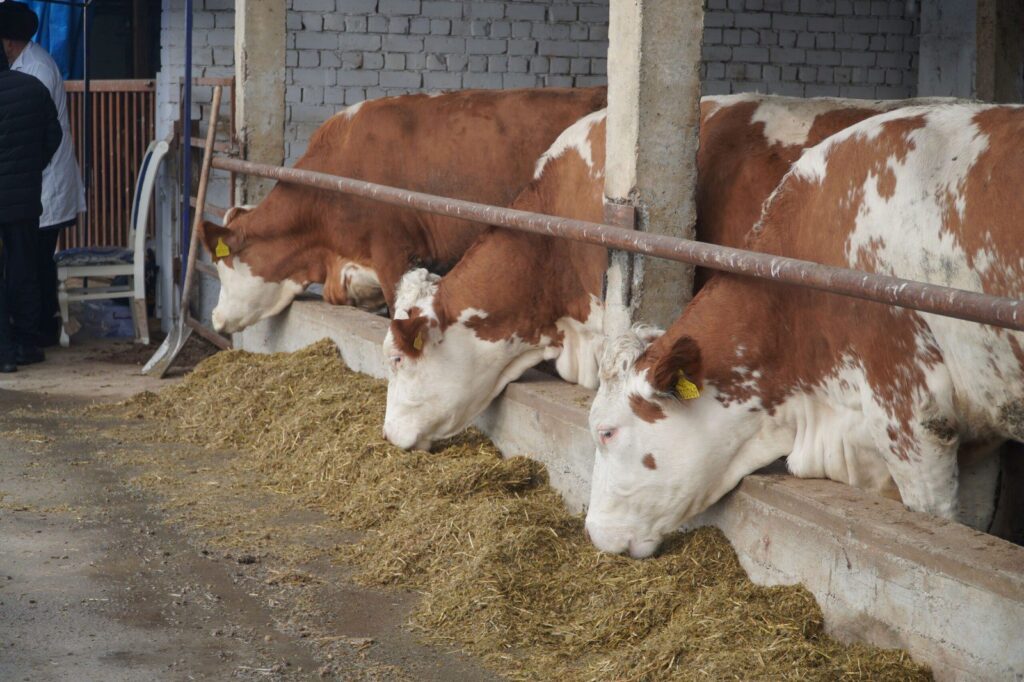
Exports of Kyrgyzstan's dairy products have seen significant growth, with member states of the Eurasian Economic Union (EAEU) increasing their imports from the republic. Just six months ago, Kyrgyzstan lagged behind its EAEU counterparts in dairy production and exports. Impressive Growth in Exports According to the Ministry of Agriculture, milk sales by Kyrgyz farms rose by 124% in 2024, while dairy exports increased by as much as 167%. By the end of 2024, Kyrgyzstan had exported more than 33,000 tons of milk and dairy products, compared to just under 30,000 tons in 2023. The growth was driven not only by traditional products - such as cheese, butter, ice cream, cream, milk powder, and pasteurized milk - but also by national dairy specialties made from cow's milk. Notably, Kyrgyzstan exported over 120 tons of fermented milk products, such as the national beverages chalap and bozo, to Russia, Kazakhstan, and Uzbekistan in 2024. Additionally, exports of kurut, a traditional Kyrgyz snack made from dried curd balls, exceeded 3.3 tons last year, reflecting the growing demand for unique national products abroad. Context Within the EAEU This progress comes in the wake of criticism from the Eurasian Economic Commission (EEC) last summer, which ranked Kyrgyzstan among the lowest milk producers in the Union. According to EEC data, Armenia was at the bottom with an annual production of 123,000 tons of milk, while Kyrgyzstan was second-to-last with 620,000 tons. For comparison, neighboring Kazakhstan produces over 2 million tons annually, while Russia leads the EAEU with 13.5 million tons of milk produced per year. International Support Spurs Growth The Kyrgyz Ministry of Agriculture attributed the surge in dairy production and exports in part to foreign assistance programs, particularly a USAID initiative. This project has funded the construction of new dairy processing facilities for dozens of farmers in southern Kyrgyzstan. Additionally, more than 100 farmers continue to receive training and counseling on modern cow husbandry practices, which have improved productivity and product quality.

U.S. Government Supports Kyrgyzstan’s Dairy Sector

The United States government, through the United States Agency for International Development (USAID), is advancing Kyrgyzstan’s dairy industry by supporting cattle management, fodder cultivation, and artificial insemination initiatives. These programs will benefit over 500 people in the southern regions of Kyrgyzstan, according to a report from the U.S. Embassy in Bishkek. USAID’s Agro Trade Activity has provided dairy processing equipment valued at 4.6 million KGS ($33,786) to PE Begalieva, a local producer in the Jalal-Abad region specializing in kurut (dried yogurt balls), butter, and kefir (fermented milk drink). This investment has increased the company’s processing capacity from 1,000 to 4,000 liters per day and expanded its product range from seven to 12 varieties. The partnership will also facilitate exports to Uzbekistan and train over 300 households on modern cattle management and milking technologies. In Osh, USAID has equipped TES Center, a local advisory service provider, with milking and extruder equipment worth 1.1 million KGS ($12,650). This will enhance their training programs for over 100 farmers on fodder cultivation and dairy cow husbandry. Additionally, Public Foundation Tybyt Kashmir received artificial insemination equipment valued at over 1 million KGS ($11,500), including cryogenic storage, a microscope, an ovulation detector, and a veterinary ultrasound machine. These tools will be used to train 54 livestock graders and 65 veterinarians in the Osh, Jalal-Abad, and Batken regions to master artificial insemination techniques. Over the past four years, USAID has supported 17 dairy companies in southern Kyrgyzstan, benefiting over 4,200 households and creating more than 3,500 jobs. This has led to increased sales and exports of dairy products. Kyrgyzstan produces more than 1.7 million tons of milk annually but processes only 2.5% of its production. The cost of raw milk is lower in Kyrgyzstan compared to neighboring Kazakhstan, providing an opportunity for cost-efficient production. While foreign ownership of Kyrgyz farmland is prohibited, joint ventures with local landowners could help reduce production costs and ensure a stable supply of raw milk. Local inefficiencies have historically resulted in Kyrgyz consumers relying on dairy products from more expensive producers in Russia and Kazakhstan. However, Kyrgyz producers are closing the gap. In 2020, dairy exports nearly doubled compared to 2016 levels. Exports to Uzbekistan surged in 2022, reaching 746 tons, contributing to a total of 31,000 tons of dairy products exported for $49 million that year. Kazakhstan remains the largest export market, followed by Russia, Uzbekistan, and Tajikistan. Additionally, 13 Kyrgyz companies received certifications in 2022 to export dairy products to China, marking a significant step in expanding the sector’s international reach.

Strategic Partnership Dialogue: U.S. Allocates $500,000 for Registan Square Preservation

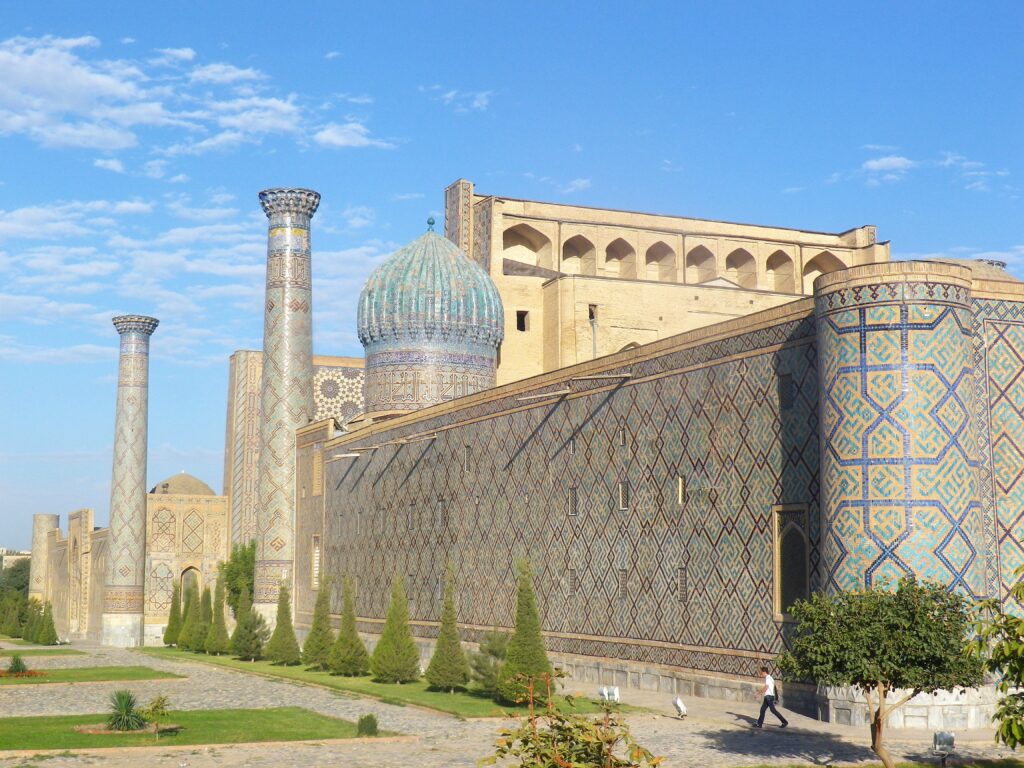
On November 13, the latest meeting of the U.S.-Uzbekistan Strategic Partnership Dialogue took place in Washington, D.C. Key participants included U.S. Assistant Secretary of State for South and Central Asia, Donald Lu, Uzbekistan's Deputy Foreign Minister, Muzaffar Madrahimov, and the ambassadors of both countries. The delegations discussed the expanding partnership between Uzbekistan and the United States, focusing on economic development, human rights, security, and cultural ties. The United States reaffirmed its steadfast support for Uzbekistan’s independence, sovereignty, and territorial integrity. At the meeting, both sides emphasized the importance of maintaining close consultations and celebrated new areas of collaboration. Notable progress was highlighted in critical minerals production and efforts to modernize Uzbekistan’s natural gas infrastructure. This follows the signing of a Critical Minerals Memorandum of Understanding (MOU) in September and Uzbekistan’s entry into the Minerals Security Partnership. The delegations also underscored their commitment to diversifying trade and investment, advancing agricultural reforms in Uzbekistan, empowering women economically, addressing the climate crisis, and supporting the transition to clean energy. The United States commended Uzbekistan for adopting USAID-supported English language textbooks and teachers' manuals for public schools. Efforts to expand sustainable economic opportunities for women in Uzbekistan were similarly praised. Both nations highlighted the strength of their cultural ties, with the U.S. expressing gratitude for Uzbekistan’s leadership in archaeology and cultural preservation. As part of these efforts, the U.S. State Department announced a $500,000 allocation from the U.S. Ambassador's Fund for the Preservation of Cultural Heritage. The funding will support conservation efforts at Registan Square, a UNESCO World Heritage site in Samarkand.

Updated Entrepreneurship Education Program Introduced in Turkmenistan with Assistance from USAID

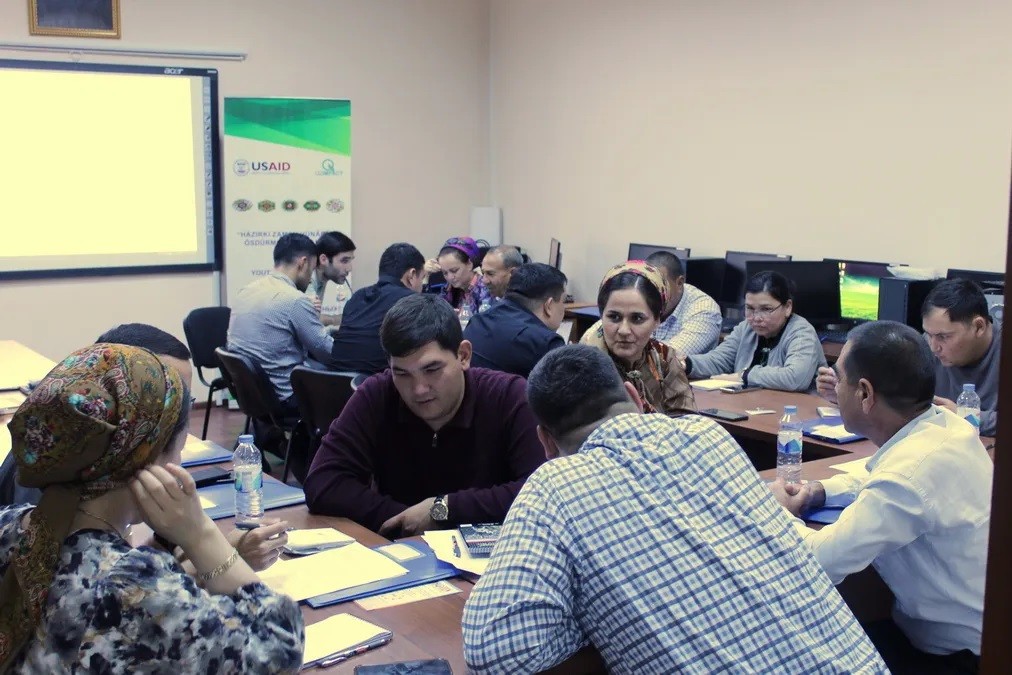
Turkmenistan has modernized its entrepreneurial education program. This was made possible through a partnership between the United States Agency for International Development's (USAID) Modern Skills Development Project (YDA) and the School of Entrepreneurs of the Union of Industrialists and Entrepreneurs of Turkmenistan. The updated program integrates modern teaching methods for practical learning and developing creative thinking and problem-solving skills - critical competencies for future entrepreneurs. From September 30 to October 4, 2024, the program held a training session for teachers, including representatives of regional branches. Participants learned new approaches to teaching through case studies, group work, and interactive methods. These innovations are expected to be introduced into the teaching process. The program aims to support young people with innovative business ideas by providing an opportunity to develop projects based on the Entrepreneurs' School branches. The final stage will be a business project competition, the winners of which will receive mentoring and access to investment to realize their ideas. This project is designed to foster a new generation of entrepreneurs and strengthen Turkmenistan's economy. USAID actively promotes youth development in Turkmenistan through various educational programs and initiatives. One of the main projects is the Youth Development Activity, a program to improve youth entrepreneurial competencies and professions. USAID also conducts training, seminars, and competitions for young people with promising business ideas, supporting their aspirations to become part of the country's economy.