• KGS/USD = 0.01144 0%
  • KZT/USD = 0.00203 0%
  • TJS/USD = 0.10731 0%
  • UZS/USD = 0.00008 0%
  • TMT/USD = 0.28490 0%
  • KGS/USD = 0.01144 0%
  • KZT/USD = 0.00203 0%
  • TJS/USD = 0.10731 0%
  • UZS/USD = 0.00008 0%
  • TMT/USD = 0.28490 0%
  • KGS/USD = 0.01144 0%
  • KZT/USD = 0.00203 0%
  • TJS/USD = 0.10731 0%
  • UZS/USD = 0.00008 0%
  • TMT/USD = 0.28490 0%
  • KGS/USD = 0.01144 0%
  • KZT/USD = 0.00203 0%
  • TJS/USD = 0.10731 0%
  • UZS/USD = 0.00008 0%
  • TMT/USD = 0.28490 0%
  • KGS/USD = 0.01144 0%
  • KZT/USD = 0.00203 0%
  • TJS/USD = 0.10731 0%
  • UZS/USD = 0.00008 0%
  • TMT/USD = 0.28490 0%
  • KGS/USD = 0.01144 0%
  • KZT/USD = 0.00203 0%
  • TJS/USD = 0.10731 0%
  • UZS/USD = 0.00008 0%
  • TMT/USD = 0.28490 0%
  • KGS/USD = 0.01144 0%
  • KZT/USD = 0.00203 0%
  • TJS/USD = 0.10731 0%
  • UZS/USD = 0.00008 0%
  • TMT/USD = 0.28490 0%
  • KGS/USD = 0.01144 0%
  • KZT/USD = 0.00203 0%
  • TJS/USD = 0.10731 0%
  • UZS/USD = 0.00008 0%
  • TMT/USD = 0.28490 0%

Viewing results 1 - 6 of 36

Kazakhstan’s Kapchagay Reservoir Fills Up For First Time In A Decade

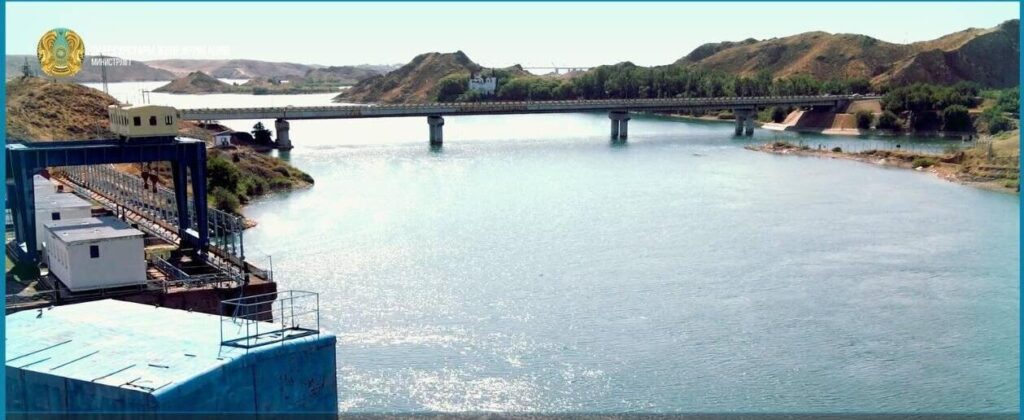
Kazakhstan’s Ministry of Water Resources and Irrigation announced on August 26 that the Kapchagay reservoir outside Almaty was completely full for the first time in ten years. Created in 1970 as an artificial lake, 100km long and up to 25km wide in places, the reservoir can hold more than 18 billion cubic meters of water. The reservoir collects water from the Ili River, which originates in China. This spring, the ministry said up to 900 cubic meters of water per second flowed into the reservoir, attributing the increased inflow to the melting of the Tien Shan mountain glaciers and higher than usual rainfall. The reservoir was initially meant to regulate the flow of the Ili River on its way to Kazakhstan’s largest lake, Balkhash. Today, it is used for irrigation, fish farming, and recreation. Located a one-hour drive from Almaty, its beaches are popular with holidaymakers. According to Medet Kerimzhanov, deputy head of the Balkhash-Alakol basin inspectorate, the last time the Kapchagay reservoir was 100% full was in 2014. Today, 750 cubic meters of water per second are released from the reservoir to irrigate fields. Kerimzhanov added that the irrigation season in the region will continue until the end of September. Earlier this month, the Ministry of Water Resources said it was drafting an intergovernmental agreement between Kazakhstan and China on distributing water from transboundary rivers — the Ertis, the Ili, and the Emel. To date, the parties have reached a consensus on several provisions of the future agreement, the ministry said.

Kazakhstan and China in Talks on Feeding Lake Balkhash

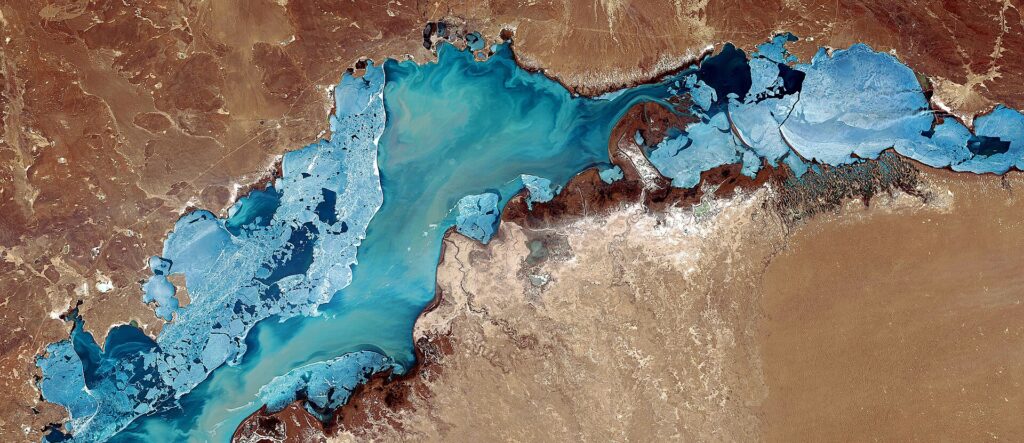
The Kazakh Ministry of Water Resources and Irrigation announced on August 19 that Kazakhstan and China are drafting an agreement on dividing trans-boundary river waters between the two countries. The main objective of the agreement is to ensure that the water in Kazakhstan’s Lake Balkhash remains at an optimal level. Located 280km northwest of the country’s largest city, Almaty, Lake Balkhash is the fifteenth largest lake in the world. It is fed by several trans-boundary rivers flowing from China, the largest of which is the Ili River, which provides about 80% of the lake's water. [caption id="attachment_21931" align="aligncenter" width="1056"] Image: Wikimapia[/caption] Environmentalists in Kazakhstan have been concerned about Lake Balkhash's shallowing. Balkhash has been gradually drying up in recent years, including due to the decline in water volumes in the Ili River. Upstream China has extensively diverted the river over the past half century to produce hydroelectric power and agricultural crops on irrigated land. According to research, as of 2021 China was blocking 40% of the river’s inflow. Moldir Abdualieva, a spokesperson of the Kazakh Ministry of Water Resources and Irrigation, said that the ministry has been paying great attention to providing Lake Balkhash with the necessary volume of water. “Since the beginning of this year, more than 12 billion cubic meters of water have been sent to the lake," she said. In May, it was reported that the water level in Balkhash had risen by 23cm since the beginning of the year due to increased rainfall and floods caused by snow melt this past spring.

By 2025, All of Kazakhstan Will Have Access to Clean Drinking Water

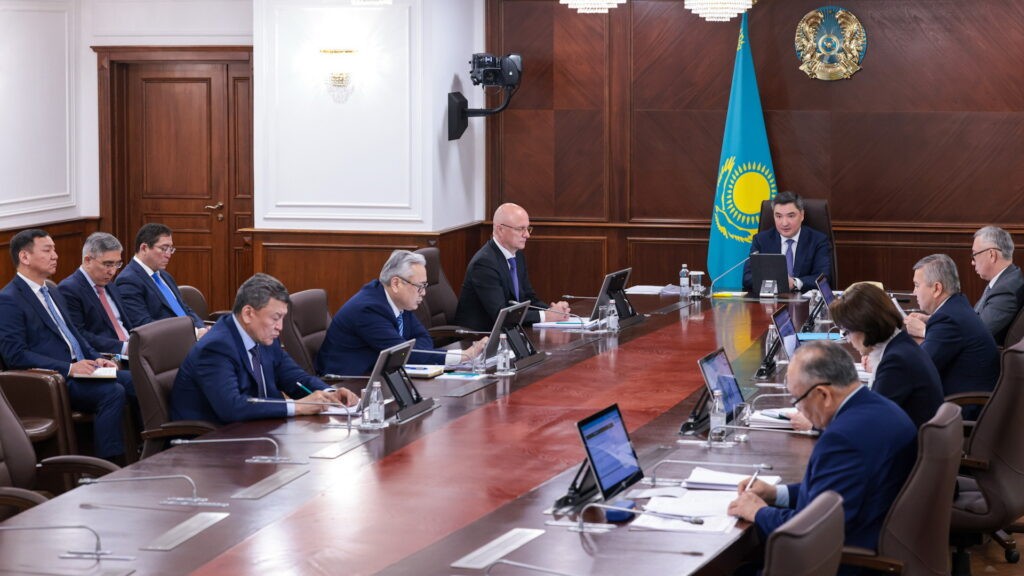
The Prime Minister of Kazakhstan, Olzhas Bektenov, has said at a government meeting where issues of water supply services to urban and rural settlements were addressed that the entire population will have access to clean drinking water within eighteen months. At the end of last year, access to water supply services in Kazakhstan's cities amounted to 98.9%, and in rural settlements, 96.6%. Full coverage of the urban population has been achieved in nine regions, with the lowest level of provision noted in the Abai and Pavlodar regions. To improve the situation in the regions with low indicators, funds are being allocated on a priority basis. Twenty-nine projects to construct and reconstruct pipelines in nine oblasts are being implemented, with plans to reconstruct and develop 2,000 kilometers of water pipelines, providing water supply to 437 settlements. A connection to a centralized water supply will be made in 44 of these, with a total population of 92,000 people. Five projects are under development and will be implemented after receiving state expertise; their implementation will improve the water supply in 200 settlements. In 2024, 218 billion tenge was bookmarked from the republican budget to fund the construction and reconstruction of water supply and sewage systems. The Prime Minister emphasized that by the end of 2025, 100% of the population must have access to quality drinking water. "This is one of the most socially important tasks. Only one-and-a-half-years are left for its fulfillment. Despite the high percentage of fulfillment, akimats (local authorities) should intensify work to achieve the plans to bring the relevant infrastructure to villages and towns. All works on the water supply should be prioritized. The implementation of water supply networks within settlements should be synchronized with the plans to bring the infrastructure of group water conduits to the borders of villages", said Bektenov.

Dushanbe: Water for Sustainable Development

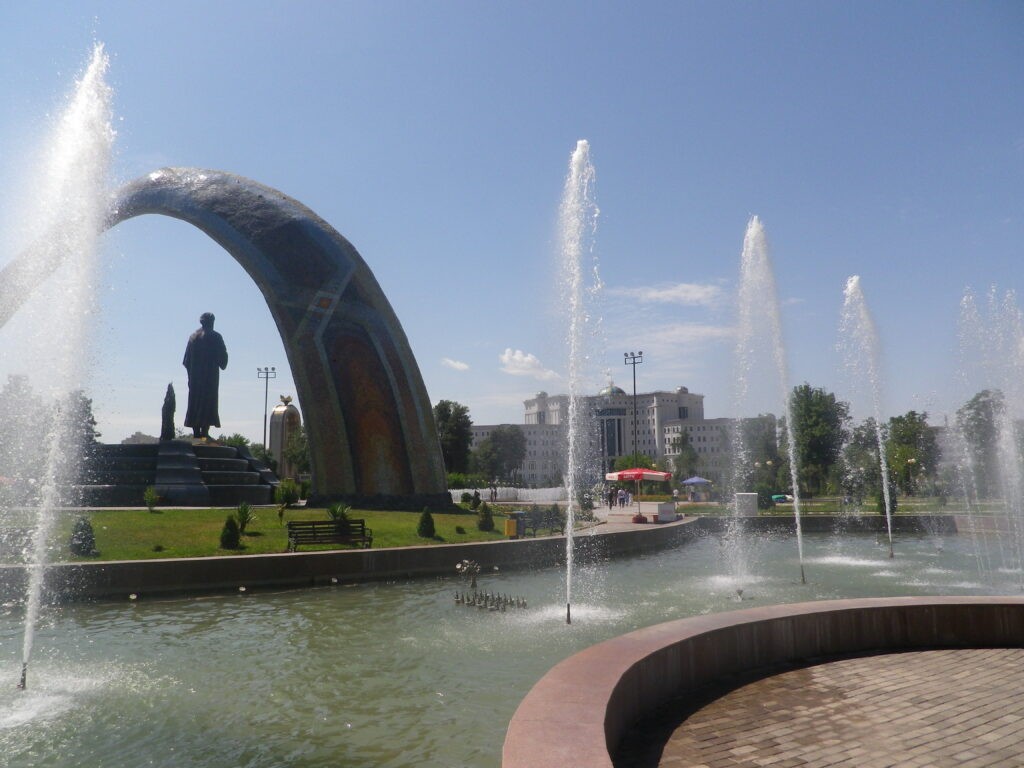
Tajikistan is collaborating with the United Nations to host an international meeting next month about water, an increasingly scarce resource in Central Asia. The June 10-13 conference will promote the role of water in sustainable development, building on two similar gatherings in Dushanbe in 2018 and 2022. It follows a climate change conference currently underway in Almaty, Kazakhstan. Delegates to the Tajikistan meeting will talk about safe drinking water and sanitation, cross-border cooperation on water resources and the impact of climate change. Academic researchers, government officials, representatives of financial institutions and civil society members are expected to attend.

Kazakhstan Engages Hydrogeology to Address Water Issues

On 30 April, a government resolution was signed by the Prime Minister of Kazakhstan Olzhas Bektenov for the establishment of a national hydrogeological service under the name of Kazhydrogeology. Increasingly used worldwide, hydrogeology records movement and storage of water in the crust of the Earth, maps and quantifies water stored in underground 'acquifiers', identifies pathways of flow and discharge, and assesses the chemical composition of underground water. Kazhydrogeology  is tasked with making a full inventory of the country's  groundwater deposits and water intake wells  to create an extensive database of 4,300 explored groundwater areas and in addition, provide comprehensive digitalization of the hydrogeological industry through the introduction of an automated groundwater monitoring system. Prospecting and exploration work will be undertaken to increase the volume of available underground water resources in regions where water is scarce,  to optimize provision for the general population, the economic sector, and irrigation. The new agency also plans to explore the use of geothermal groundwater, as an alternative  source of energy, to meet the needs of thermal power engineering, greenhouses, and fish farms.  

Kyrgyzstan Takes Issue With Uzbekistan’s Hydropower Plans

Uzbekistan's grandiose hydropower development plans are irking neighboring Kyrgyzstan, which is experiencing a shortage of water resources. These shortages have in part been caused by Kyrgyzstan swapping its water with Uzbekistan and Kazakhstan in exchange for electricity. Uzbekistan's construction of six hydroelectric power plants (HPPs), with a total capacity of 228 megawatts, has begun on the Naryn River in the Namangan region. The Uzbekhydroenergo project is estimated at $434 million and will generate up to 1 billion kilowatt-hours of electricity per year, enough to provide energy for 430,000 households. This will allow the country to save up to 310 million cubic meters of gas annually, to help alleviate shortages which has seen Uzbekistan turn to Russia. The launch of the hydro project will provide the Namangan region with 7.8 billion kWh per year, which far exceeds local demand. This surplus energy will be transferred to neighboring regions in the Fergana Valley, and will guarantee energy supply during periods of peak consumption. These plans contrast greatly with Kyrgyzstan's situation, as the republic imports 3 billion kWh of electricity from neighboring states during the fall and winter seasons. Uzbekistan and Kazakhstan supply Kyrgyzstan with electricity in winter, and in return Kyrgyzstan provides them with water in summer, measuring the volume of water using a generator, and thus paying back the debt for the electricity. According to official data, the Toktogul Reservoir in Kyrgyzstan is designed to hold 19.2-19.6 billion cubic meters of water. Kyrgyz Deputy Energy Minister, Talaibek Baigaziyev noted at a March 4 press conference in Bishkek that with electricity consumption on the increase and water levels falling, people urgently needed to curtail their usage. Water levels had already stopped at 7.7 billion cubic meters, versus a normal level of 17.3 billion cubic meters, leading to a risk of possible blackouts. If the level reaches anything below 6.5 billion cubic meters, the Toktogul HPP will stop. In 2024, the Kyrgyz authorities plan to launch 11 HPPs, five large and six small. According to the Eurasian Development Bank, Kyrgyzstan's energy sector will be operating under a state of emergency from now until the end of 2026. Kazakhstani experts have also expressed concern about their neighbors' energy development plans. They say water shortages could worsen in the region, with water already scarce in Kazakhstan. Bulat Yesekin, an expert on environmental policy and institutional frameworks for environmental protection, notes that "large hydropower plants further aggravate the problem of water supply and disrupt environmental sustainability. All over the world today there are campaigns to demolish hydroelectric dams and restore the natural regime of rivers. Only the preservation of natural river regimes can reduce water scarcity and create a more reliable basis for water supply for agriculture and industry." The construction of HPPs in border areas continues to create transnational problems. Altering river courses can destroy or alter ecosystems, change biodiversity, affect fisheries and agriculture, erode coastlines, and increase the risk of flooding in certain areas; yet access to electricity is a key issue across Central...