• KZT/USD = 0.00218
  • TJS/USD = 0.10820
  • UZS/USD = 0.00009
  • TMT/USD = 0.29760
  • KZT/USD = 0.00218
  • TJS/USD = 0.10820
  • UZS/USD = 0.00009
  • TMT/USD = 0.29760
  • KZT/USD = 0.00218
  • TJS/USD = 0.10820
  • UZS/USD = 0.00009
  • TMT/USD = 0.29760
  • KZT/USD = 0.00218
  • TJS/USD = 0.10820
  • UZS/USD = 0.00009
  • TMT/USD = 0.29760
  • KZT/USD = 0.00218
  • TJS/USD = 0.10820
  • UZS/USD = 0.00009
  • TMT/USD = 0.29760
  • KZT/USD = 0.00218
  • TJS/USD = 0.10820
  • UZS/USD = 0.00009
  • TMT/USD = 0.29760
  • KZT/USD = 0.00218
  • TJS/USD = 0.10820
  • UZS/USD = 0.00009
  • TMT/USD = 0.29760
  • KZT/USD = 0.00218
  • TJS/USD = 0.10820
  • UZS/USD = 0.00009
  • TMT/USD = 0.29760
24 August 2026

Viewing results 1 - 6 of 46

Regional Ecological Summit to Open in Astana Amid Pressure on Water, Trade, and Regional Cooperation

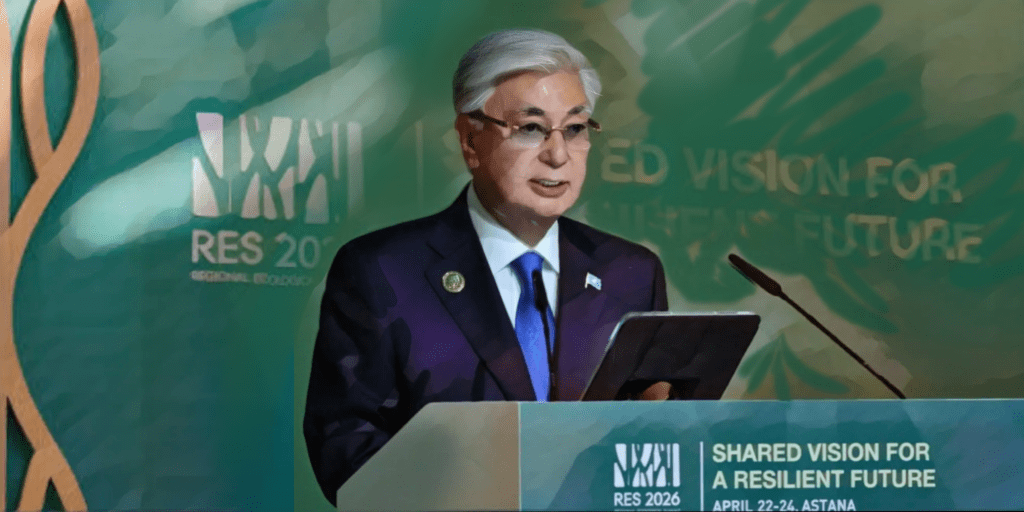
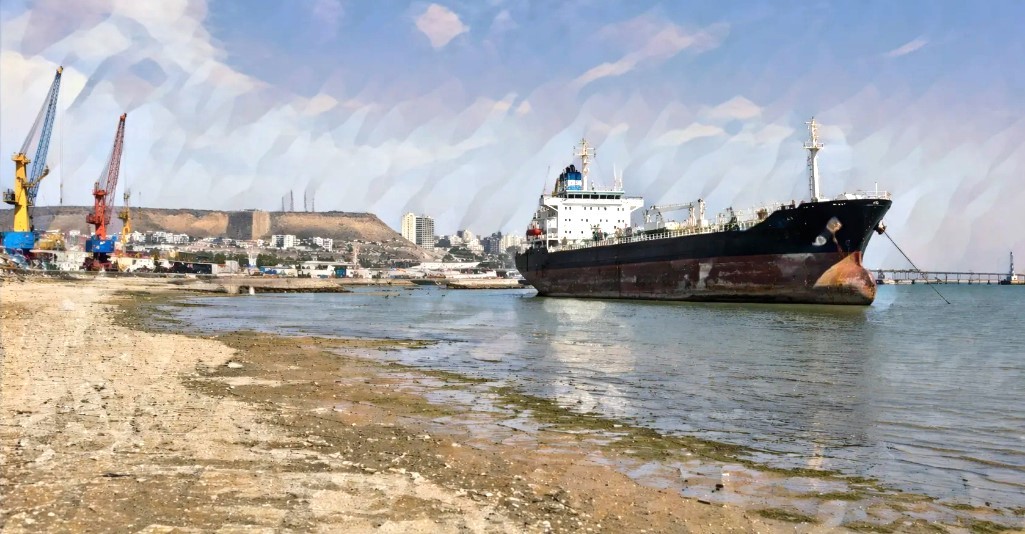
When the Regional Ecological Summit (RES 2026) opens in Astana this Wednesday, the official framing will center on Shared Vision for a Resilient Future, combining practical regional solutions with diplomatic ambitions that include a Joint Declaration and a 2026-2030 Program of Action. Behind that language sits a harder reality. Water and energy officials in Tashkent, Bishkek, and Astana are dealing with a region which is drying out faster than its infrastructure and politics are adapting. That gives the summit a sharper edge than earlier environmental gatherings. Two issues stand out: the management of winter water-sharing arrangements ahead of the irrigation season, and the way the shrinking Caspian could constrain the Middle Corridor. The Toktogul Equation: A Fragile "Winter-for-Summer" Swap The most immediate point of pressure is the Toktogul Reservoir in Kyrgyzstan. In late 2025, an agreement was reached under which Kyrgyzstan would limit winter hydropower generation, preserving water for downstream Kazakh and Uzbek farmers, in exchange for electricity supplies from its neighbors. The arrangement remains in place, but its durability will be tested as summer demand rises. One question hanging over the summit is whether Kazakhstan and Uzbekistan will provide enough power support to help Kyrgyzstan conserve water without reopening old upstream-downstream tensions. For downstream states, that is not only a water issue but an agricultural and political one. The Caspian Emergency: Depth as a Trade Barrier For years, the shallowing of the Caspian was treated as a long-term problem. In 2026, it is becoming an operational one. According to recent reporting, Aktau port is operating at an average depth of 4.5 meters, far below the 6.5 to 7 meters needed for full operations. The summit will also highlight the Integrated Management of Seascapes project. The UNDP-linked initiative is intended to balance the need for dredging and port access with protection of the northern Caspian’s fragile ecosystem. That tension is no longer theoretical. It now touches trade, shipping capacity, and the future of the corridor itself. The Digital Transition One of the summit’s more concrete strands is the National Water Resources Information System. According to the Kazakh government, the system is to enter industrial operation by the end of 2026. The plan is to automate 103 irrigation canals in southern Kazakhstan using $1.15 billion in financing from the Islamic Development Bank. The broader regional test is whether neighboring states will share enough data to support a cross-border water monitoring system, giving officials a clearer view of how shared resources are being managed. The Green Energy Corridor Alongside the water agenda, the Green Energy Corridor remains one of the projects that clearly aligns Kazakhstan, Azerbaijan, and Uzbekistan. The plan is to transmit green electricity to Europe via a subsea cable across the Caspian. CESI is finalizing the feasibility study, pointing to an export model that leans less on hydrocarbons and more on regional infrastructure. It also shows how environmental pressure and economic strategy are starting to overlap. For Central Asian governments, climate policy is no longer only about adaptation. It is...

Kazakhstan’s Regional Ecological Summit 2026: What It Is and Why It Matters

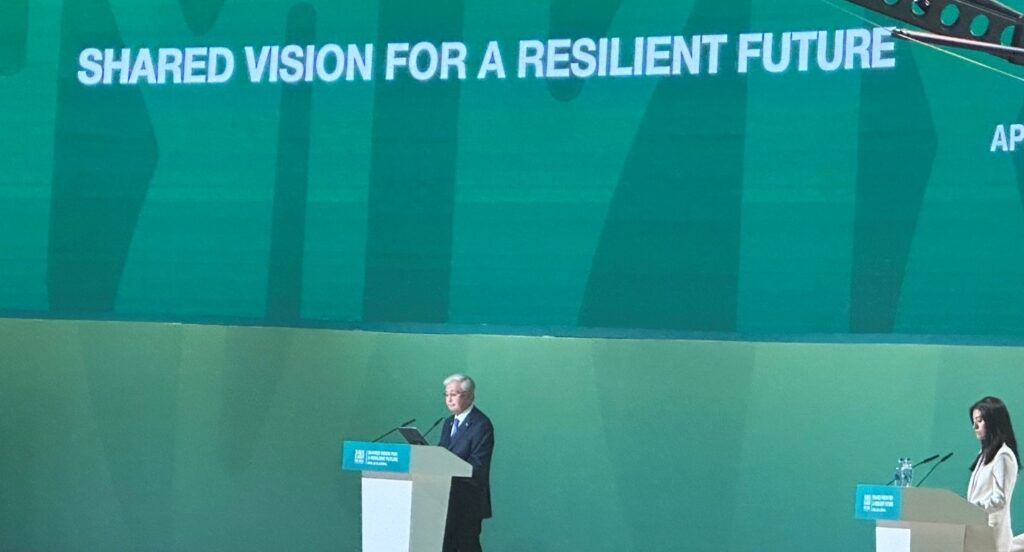
Kazakhstan’s Regional Ecological Summit 2026 in Astana on April 22-24 is aiming to turn Central Asia’s environmental strain into a regional political agenda. Organized in partnership with the United Nations, the summit is built around the theme, “Shared Vision for a Resilient Future.” Its stated purpose is to bring together governments, international organizations, lenders, businesses, researchers, and civil society to push for joint and practical responses to climate and ecological pressures across the region. President Kassym-Jomart Tokayev first proposed hosting a regional climate summit in Kazakhstan under UN auspices during his 2023 speech at the 78th session of the UN General Assembly. By 2026, that idea had broadened into a wider environmental summit covering climate transition, adaptation, food security, natural resource management, air pollution, waste, finance, and environmental skills. The official key thematic directions show that this is no longer a narrowly framed climate conference. It is being presented as a broader Central Asian platform for ecological cooperation. In Central Asia, ecological stress now shapes core state concerns, from farming and energy to public health and cross-border cooperation. That gives the Astana summit a broader role than a standard environment conference. That shift reflects real regional pressures. Central Asia faces chronic water stress, glacier retreat, desertification, air pollution, and growing strain on ecosystems. The summit’s organizers say the meeting is meant to produce joint solutions rather than another round of abstract pledges. The UN in Kazakhstan says the summit is expected to advance shared regional responses and identify green financing needs, while a second UN page states that one planned outcome is a Joint Declaration by the heads of state of Central Asia, alongside a 2026-2030 Programme of Action developed with the United Nations. Tokayev’s own language explains the summit’s pitch. On August 5, 2025, speaking at the Third United Nations Conference on Landlocked Developing Countries in Awaza, Turkmenistan, he said, “Many developing countries without access to the sea are facing water scarcity, glacier melt, desertification, and other extreme weather events. Addressing these challenges requires coordinated regional efforts and strong international support. At the same time, I believe that measures to combat climate change must remain balanced and inclusive, and respond to the legitimate development needs of countries. To strengthen our joint efforts in addressing climate change, I invite you to the Regional Ecological Summit, which will be held in Astana in partnership with the United Nations.” The wording shows how Kazakhstan wants to frame the event. Central Asia’s environmental problems cross borders, but the response, in Tokayev’s view, must also accommodate growth, infrastructure, and development. That is why the summit is being presented not just as a climate gathering, but as a forum linking ecological policy, investment, technology, and state planning. The EXPO component is part of that design. Government and investment-promotion pages say the parallel exhibition will focus on green technologies, ESG tools, and practical climate solutions, linking diplomacy to project finance and implementation. The summit’s speaker list underlines its international reach. The official RES 2026 page includes...

Astana Accelerates Northern Aral Sea Recovery Plan

The Kazakh government plans to accelerate the second phase of the project to restore the Northern Aral Sea. Prime Minister Olzhas Bektenov has instructed the Ministry of Water Resources and Irrigation to secure financing for the second phase of the project by the end of 2026. The goal is to increase the volume of water in the Northern Aral Sea by around 10–11 billion cubic meters over the next four to five years. History of Degradation and Early Restoration Results The Aral Sea, which straddles the border between Kazakhstan and Uzbekistan, began to shrink rapidly in the 1960s due to large-scale irrigation projects that diverted water from the Amu Darya and Syr Darya rivers for cotton cultivation and other agricultural needs. As a result of the sea’s degradation, the Northern Aral Sea separated in 1987 and has since been sustained largely through the construction of the Kokaral Dam. In 2012, the sea and the Syr Darya delta were added to the Ramsar List of Wetlands of International Importance. Since then, Kazakhstan has undertaken systematic efforts to restore the northern part of the former Aral Sea. Unlike earlier efforts to save the Aral Sea as a whole, Kazakhstan’s approach since the mid-2000s has been shaped by a narrower and more pragmatic premise: that partial restoration is environmentally and politically achievable, while attempts to revive the entire basin are not. The construction of the Kokaral Dam marked a turning point, demonstrating that targeted hydraulic interventions could stabilise water levels, reduce salinity, and revive fisheries in the northern basin, provided expectations were kept within achievable limits. The recovery has already enabled the return of small-scale fishing, improved local livelihoods, and reduced dust storms from the exposed seabed around Aralsk. This strategy reflected a deliberate acceptance that restoring the Northern Aral would come at the expense of the southern basin, prioritising long-term ecological viability over symbolic ambitions. Over the past several years, roughly 5 billion cubic meters of water have been redirected into the Northern Aral Sea basin, increasing its total volume to more than 23 billion cubic meters. This exceeds the targets set out in Kazakhstan's Water Resources Management Concept, which had forecast reaching 20.6 billion cubic meters by 2025, with that volume previously expected only by 2029. [caption id="attachment_24691" align="aligncenter" width="2560"] Tastubek Bay, Northern Aral Sea; image: TCA, Stephen M. Bland[/caption] Infrastructure Plans and International Support With the support of the World Bank, Kazakhstan is considering raising the height of the Kokaral Dam by up to two meters and constructing a new hydraulic facility. These upgrades aim to increase both the volume and quality of water in the Northern Aral Sea, rehabilitate the Syr Darya delta, and reduce salt dispersion from the exposed seabed. The second phase of the initiative targets increasing the sea’s volume to 34 billion cubic meters. Bektenov has directed the Ministry of Water Resources and Irrigation to finalize technical preparations by mid-2026 and secure financing by the end of the year, including through international partnerships. The second phase...

Glacier Melt Threatens Central Asia’s Water Security, Experts Warn at Regional Forum

The accelerating retreat of glaciers poses a serious risk to water security across Central and West Asia, scientists and journalists warned during an online media forum jointly hosted by the Asian Development Bank (ADB) and the International Centre for Integrated Mountain Development (ICIMOD) on December 10, according to Asia-Plus. The forum focused on the growing impact of glacial melt in mountain regions, including the Pamirs, Tien Shan, Hindu Kush, and Himalayas, where shrinking ice reserves are increasingly disrupting water supplies for agriculture, energy, and drinking water. A key highlight was the ADB’s Glacier to Farms (G2F) program, presented by senior climate adaptation specialist Chris Dickinson. The initiative, spanning nine countries including Tajikistan, Uzbekistan, Armenia, and Georgia, aims to link glacier monitoring with practical, climate-resilient policy measures. Unlike past approaches that primarily diagnosed the problem, G2F offers technical and financial solutions designed to support communities in adapting to climate change. The $3.5 billion initiative, backed in part by $250 million from the Green Climate Fund, leverages a co-financing model that aims to attract $10 in additional investment for every dollar committed. The program envisions a full climate adaptation chain from satellite-based glacier monitoring and mountain observation stations to downstream interventions such as crop insurance, farmer support, and modernization of water infrastructure. “Glaciers are the origin of the entire food and water system,” Dickinson said. “Their rapid retreat threatens lives and livelihoods far beyond mountain regions.” Tajikistan serves as a pilot site for the program due to its heavy reliance on hydropower and its largely mountainous terrain. One of the project's key goals is to enhance the country’s hydrometeorological services and strengthen monitoring of snow cover, glacier movement, landslides, and related hazards. A modern early warning system is being developed for the Panj River basin, combining data on glacial lakes, mudflows, precipitation, and seismic activity. The alerts will be sent to vulnerable communities via mobile networks, complemented by local training programs to ensure proper responses. Forum participants noted that the effects of glacial retreat are already evident. Glaciers in the Tien Shan and Pamir ranges feed the Amu Darya and Syr Darya rivers, vital water sources for Central Asia’s agriculture, energy, and drinking needs. An estimated 74% of the Amu Darya’s flow comes from snow and glacier melt. In the Indus basin, the figure is about 40%. Yet only a small number of the region’s more than 54,000 glaciers are regularly monitored, leaving gaps in early warning systems and long-term planning. Experts from ICIMOD and ADB described glacier melt as a “cascading crisis.” Rising temperatures are fueling more frequent landslides, floods, and mudflows, while droughts reduce crop yields and damage pastures. Glacial lake outburst floods, sudden and destructive releases of water, pose grave risks to nearby settlements. Since the 19th century, the region has recorded around 500 such incidents, and their frequency could triple by the end of this century. Heatwaves and water quality issues further compound the risks. Recent glacial activity in Tajikistan underscored the forum’s urgency. In October, a massive...

Central Asian Leaders Welcome Azerbaijan’s Accession at Tashkent Summit

The leaders of Central Asia convened in Tashkent on November 16 for a high-level Consultative Meeting, marking a significant step toward deeper regional integration. The summit welcomed Azerbaijan as a full participant and endorsed a roadmap to formalize cooperation in trade, infrastructure, security, and water management. Hosted by Uzbekistan’s President Shavkat Mirziyoyev, the summit brought together the presidents of Kazakhstan, Kyrgyzstan, Tajikistan, Turkmenistan, and Azerbaijan, alongside a United Nations representative. Ahead of the meeting, Tashkent’s central streets were adorned with national flags and floral installations, underscoring the political and symbolic significance the Uzbek government placed on the event. Mirziyoyev hailed Azerbaijan’s accession as “a truly historic day,” as the country became a full member of the Consultative Meeting of the Heads of State of Central Asia. He proposed forming a “Community of Central Asia,” establishing a rotating Secretariat, appointing special presidential envoys for coordination, and creating a Council of Elders to promote cultural and humanitarian dialogue. [caption id="attachment_39410" align="aligncenter" width="1280"] Image: president.uz[/caption] Regional Economic and Connectivity Agenda Economic cooperation dominated the multilateral agenda. Leaders agreed to develop a Comprehensive Regional Program for Trade and Economic Cooperation through 2035 and to draft a Declaration on a Common Investment Space. “In essence, we will build a strong bridge between Central Asia and the South Caucasus and pave the way for the formation of a single space of cooperation, which will undoubtedly strengthen the strategic interconnectedness and stability of both regions,” said Mirziyoyev. Kazakhstan’s President Kassym-Jomart Tokayev also highlighted deepening bilateral ties with Uzbekistan. Trade between the two countries has reached $4 billion in 2025, with plans to increase it to $10 billion through expanded industrial cooperation and import substitution. Over 6,500 joint enterprises now operate between the two countries, with new projects worth more than $8 billion under development. Several initiatives, such as the Silkway Central Asia logistics center, new industrial facilities, and cultural programs, were launched in Tashkent during the visit. [caption id="attachment_39411" align="aligncenter" width="1280"] Image: president.uz[/caption] Tajikistan’s President Emomali Rahmon met with Mirziyoyev on the sidelines of the summit. The two leaders noted the steady growth in political dialogue and agreed to expand cooperation in energy, industry, agriculture, and innovation. Bilateral trade surpassed $440 million in the first nine months of 2025. They also discussed regional security, including collaboration against terrorism, extremism, cybercrime, and drug trafficking. Security, Water, and Cultural Cooperation To advance regional integration, Tashkent also hosted the first meeting of the Council of Ministers of Trade and Investment of Central Asian countries and Azerbaijan on November 13. Ministers discussed boosting trade, investment, and industrial cooperation, with the goal of increasing regional trade turnover to $20 billion. Plans were also made to develop joint production platforms under a “Made in Central Asia” label. Uzbekistan’s trade with Central Asian partners rose from $3.2 billion in 2017 to $6.9 billion in 2024, while trade with Azerbaijan has grown by 13% this year. Connectivity remained a focal point. Participants reaffirmed their commitment to the China-Kyrgyzstan-Uzbekistan railway and the Trans-Afghan corridor. Azerbaijan’s President...

Afghanistan’s Qosh Tepa Canal Raises Water Security Fears

Water has long been one of Central Asia’s most contested resources, shaping agriculture, energy policy, and diplomacy across the region. Recently, Afghanistan’s Qosh Tepa Canal project has emerged as a central point in this debate. Promoted by the Taliban as a vital step toward achieving food security and economic growth, the canal also raises alarm bells among downstream neighbors who heavily depend on the Amu Darya River. Now, according to Islamic Emirate spokesman Zabihullah Mujahid, the second phase of the project is expected to be completed within five months, raising further concerns among downstream countries about its potential impact on regional water security. Progress on the Ground In August, the Afghan authorities stated that 93% of the second phase had been completed. Videos show the canal lined with concrete and stone in some sections, alongside the construction of large and medium-sized bridges to link surrounding settlements. The project spans 128 kilometers from Dawlatabad district in Balkh province to Andkhoy district in Faryab province and involves over 60 contractors, making it one of Afghanistan’s largest infrastructure projects. Origins and International Support The canal’s roots trace back to earlier international efforts. While some sources attribute its conceptual origins to Soviet or British engineers in the 1960s, significant development began in 2018 under President Ashraf Ghani. The project was supported by the U.S. Agency for International Development (USAID) and Indian engineering firms. According to the Scientific-Information Center of the Interstate Commission for Water Coordination (SIC ICWC), a $3.6 million feasibility study was launched in Kabul in December 2018, funded by USAID and conducted by AACS Consulting and BETS Consulting Services Ltd. The study was coordinated with several Afghan ministries, but has not been published. Following the Taliban’s takeover, the Islamic Emirate held an official inauguration ceremony on March 30, 2022. The full canal is designed to stretch 285 kilometers, measuring 100 meters wide and 8.5 meters deep, and is expected to divert an estimated six to ten cubic kilometers of water annually from the Amu Darya. Afghan media have quoted water management expert Najibullah Sadid, who projected the canal could generate between $470 million and $550 million in annual revenue. Regional Concerns and Environmental Risks The project has raised alarm in Uzbekistan, Turkmenistan, and Tajikistan, countries that depend heavily on the Amu Darya for irrigation. Experts at SIC ICWC point out that no environmental impact assessment was conducted for downstream states, nor were they formally notified of the construction, as required by international water conventions. In December 2022, Uzbek President Shavkat Mirziyoyev called for practical dialogue with Afghanistan and the international community to strengthen regional water security. Adroit Associates estimates that the canal could eventually divert up to 13 billion cubic meters annually, nearly one-quarter of the Amu Darya’s average flow. Environmental risks are also mounting. Analysts warn that Uzbekistan, which relies heavily on the river for agriculture, could face soil degradation and declining crop yields. Turkmenistan, where agriculture accounts for 12% of GDP, may also suffer severe disruptions. Some studies suggest Uzbekistan and...