• KGS/USD = 0.01144 0%
  • KZT/USD = 0.00212 0%
  • TJS/USD = 0.10699 0%
  • UZS/USD = 0.00008 0%
  • TMT/USD = 0.28571 0%
  • KGS/USD = 0.01144 0%
  • KZT/USD = 0.00212 0%
  • TJS/USD = 0.10699 0%
  • UZS/USD = 0.00008 0%
  • TMT/USD = 0.28571 0%
  • KGS/USD = 0.01144 0%
  • KZT/USD = 0.00212 0%
  • TJS/USD = 0.10699 0%
  • UZS/USD = 0.00008 0%
  • TMT/USD = 0.28571 0%
  • KGS/USD = 0.01144 0%
  • KZT/USD = 0.00212 0%
  • TJS/USD = 0.10699 0%
  • UZS/USD = 0.00008 0%
  • TMT/USD = 0.28571 0%
  • KGS/USD = 0.01144 0%
  • KZT/USD = 0.00212 0%
  • TJS/USD = 0.10699 0%
  • UZS/USD = 0.00008 0%
  • TMT/USD = 0.28571 0%
  • KGS/USD = 0.01144 0%
  • KZT/USD = 0.00212 0%
  • TJS/USD = 0.10699 0%
  • UZS/USD = 0.00008 0%
  • TMT/USD = 0.28571 0%
  • KGS/USD = 0.01144 0%
  • KZT/USD = 0.00212 0%
  • TJS/USD = 0.10699 0%
  • UZS/USD = 0.00008 0%
  • TMT/USD = 0.28571 0%
  • KGS/USD = 0.01144 0%
  • KZT/USD = 0.00212 0%
  • TJS/USD = 0.10699 0%
  • UZS/USD = 0.00008 0%
  • TMT/USD = 0.28571 0%

Viewing results 1 - 6 of 109

World Bank Report Examines Migration Trends in Central Asia

The World Bank has released a report titled The Way Forward: Supporting Successful Migration in the Europe and Central Asia Region, which analyzes migration trends and their impact on countries in the region, including Uzbekistan, Kazakhstan, Kyrgyzstan, and Tajikistan. Migration remains a significant issue in Europe and Central Asia, a region home to 100 million migrants, one-third of the world’s total migrant population. People move across borders in search of better job opportunities, as well as in response to changing demographics, climate change, and conflicts. This trend is expected to continue. According to the report, most migrants from Tajikistan and Kyrgyzstan head to Russia, with over 80% of migration from these countries directed there in 2023. Migration from Uzbekistan is more diverse, with 57% of Uzbek migrants residing in Russia, 15% in Kazakhstan, and 10% in Ukraine. The Economic Role of Labor Migration Labor migration plays a crucial role in the economies of Central Asian nations. In 2024, remittances accounted for: 45% of Tajikistan’s GDP 24% of Kyrgyzstan’s GDP 14% of Uzbekistan’s GDP Many households rely heavily on money sent home by migrants. The report highlights that without remittances, the poverty rate among Kyrgyz households with migrant family members would rise from 10% to 50%, while in Uzbekistan, it would increase from 9.6% to 16.8%. The total volume of remittances sent to Uzbekistan in 2024 reached a record $14.8 billion. Recommendations for Better Migration Management The report underscores the need for improved migration policies, as its full potential remains underutilized. If managed effectively, migration can help address economic and demographic challenges. The World Bank recommends several measures to enhance migration management: Developing tailored strategies for skilled and unskilled workers. Integrating labor migration into national economic planning to support growth. Implementing policies to mitigate "brain drain" and encourage skilled workers to return home. Improving migrant registration and formalizing agreements with destination countries. Providing migrants with accurate job information to ensure safer and more organized migration processes. The report concludes that with the right policies in place, migration has the potential to serve as a powerful tool for economic development in Central Asia.

Kyrgyzstan Economy at Risk of Stagnation, Warns World Bank

The World Bank has released a new report on the economic development of Kyrgyzstan and the broader Central Asian region. While the report acknowledges that Kyrgyzstan’s economy is growing at a steady pace, it warns that this growth is insufficient to propel the country to the next stage of development. The report, prepared in collaboration with the Kyrgyz Ministry of Economy and Commerce, outlines a three-stage approach to advancing the national economy. According to David Knight, a leading economist at the World Bank, Kyrgyzstan should prioritize investment, the adoption of new technologies, and innovation. The World Bank also recommends that the government focus on improving education, strengthening the private sector, and reforming energy policy. "Kyrgyzstan's economy is currently showing strong indicators. However, these are not enough to facilitate a transition to the next level of development. As experience shows, it is only a matter of time before economic growth slows. The key question is whether the authorities can sustain momentum," Knight said. Ivaylo Izvorski, the World Bank’s Chief Economist for Europe and Central Asia, told The Times of Central Asia that Kyrgyzstan needs targeted investments — or "point injections" — in key sectors, particularly industry and energy. "Why is it so difficult to transition from middle-income to high-income status? One reason is that countries cannot simply shift from investment-driven growth to innovation-driven growth overnight. The right technologies must first be introduced into the economy, and only then can innovation take hold," Izvorski explained. The World Bank has also raised concerns about Kyrgyzstan’s energy sector, particularly its pricing policies. Despite recent increases in electricity and heating costs, World Bank experts argue that tariffs remain artificially low and heavily subsidized, which could hinder long-term development. "If electricity costs 10 cents per unit but consumers pay only 3 cents, it leads to waste and inefficiencies. State subsidies, the monopoly of state-owned enterprises, and market distortions continue to obstruct energy sector reforms," Izvorski said. The report also highlighted the need for education reform. The World Bank advises Kyrgyz authorities to raise educational standards, particularly in higher education, to support a more skilled workforce. To achieve this, universities and vocational schools should strengthen partnerships with industrial enterprises, while university funding should be tied to institutional performance.

Central Asian Countries and World Bank Discuss Progress on Kambarata-1 Hydropower Project

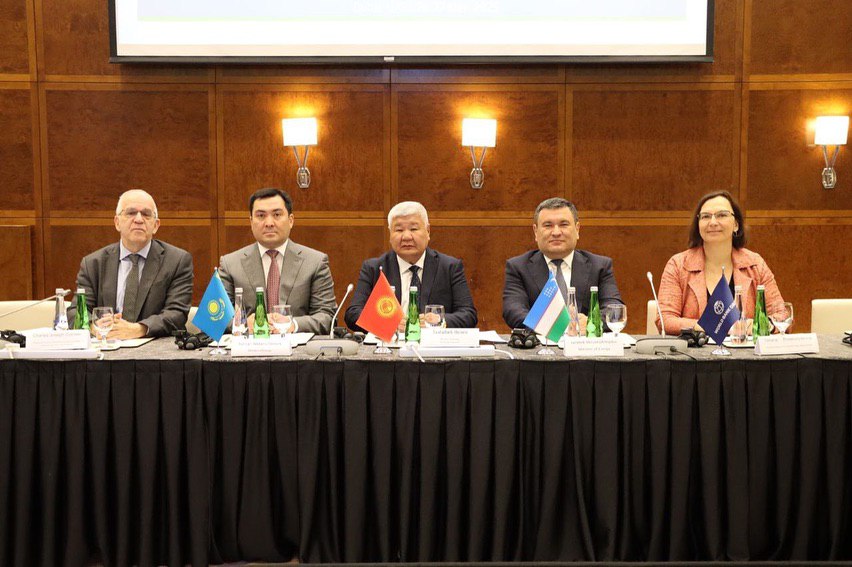
On January 27, Tashkent hosted a roundtable discussion on advancing the construction of the Kambarata-1 Hydropower Plant (HPP), an ambitious regional initiative being jointly undertaken by Kyrgyzstan, Kazakhstan, and Uzbekistan. The project aims to enhance regional cooperation in Central Asia regarding water and energy resource management. The meeting was attended by Kyrgyzstan’s Minister of Energy Taalaibek Ibrayev, Uzbekistan’s Minister of Energy Jurabek Mirzamakhmudov, Kazakhstan’s Deputy Minister of Energy Sungat Yesimkhanov, and the World Bank Regional Director for Central Asia Tatiana Proskuryakova. The Kambarata-1 HPP, with a projected capacity of 1,860 megawatts and an average annual electricity generation of 5.6 billion kilowatt-hours, will be constructed at an estimated cost exceeding $4 billion. It is planned to be located in the upper reaches of the Naryn River in Kyrgyzstan. Upon completion, it will become the largest hydropower plant in Kyrgyzstan and is expected to address the country's chronic electricity shortages. At the meeting, ministers from the three participating countries requested the World Bank’s assistance in preparing and financing the Kambarata-1 HPP construction. Kyrgyzstan's Ibrayev described the project as "the project of the century" for Kyrgyzstan, emphasizing its potential to strengthen regional cooperation and foster long-term development across Central Asia. “Today's roundtable in Tashkent continues a series of meetings that took place in Vienna, Brussels, and Washington in 2024. These events help coordinate and accelerate the project’s implementation, as well as attract the necessary international support,” Ibrayev stated. From Kazakhstan’s side, Yesimkhanov highlighted the meeting as another step forward in strengthening regional cooperation in the water and energy sectors. He expressed confidence that the project would bolster good relations among Central Asian nations. Uzbek representative Mirzamakhmudov reiterated his country’s commitment to the project, underscoring its strategic importance for the region. "The project will bring significant benefits to all Central Asian countries by strengthening regional energy security, accelerating the transition to a green economy, and improving the use of water resources," he said. Currently, Kyrgyzstan, with the World Bank’s technical support, is revising the project’s feasibility study. This includes assessing the technical, economic, financial, environmental, and social dimensions of the Kambarata-1 HPP. World Bank Regional Director Proskuryakova reaffirmed the institution’s readiness to support the three governments in their efforts to ensure a stable energy future for the region. “We will continue to provide technical assistance in the implementation of the Kambarata-1 HPP construction project. Together with other international development partners, we are working to attract the financing necessary to implement the project,” she said. Ibrayev has previously stated that all preparatory stages of the project are scheduled for completion by May 2025. In September 2024, Kyrgyzstan’s Cabinet of Ministers and the World Bank organized a roundtable to discuss dam selection for the Kambarata-1 HPP. The Swiss engineering firm AFRY proposed several options, and Kyrgyzstan’s Ministry of Energy has confirmed that the feasibility study will be finalized based on the chosen dam design by May 2025.

Central Asia’s Economic Growth to Reach 5% in 2025

The World Bank’s Global Economic Prospects report offers projections for economic growth, risks, and challenges across Europe and Central Asia (ECA), highlighting mixed outcomes for the region as a whole. Regional Outlook Economic growth across ECA is projected to slow to 2.5% in 2025, with a modest recovery to 2.7% expected in 2026. This deceleration is largely attributed to weaker economic activity in Russia and Turkey, two key regional economies. Excluding these two countries and Ukraine, growth in the rest of the region is forecasted to average 3.3% in 2025-2026. The recovery in these areas will primarily be driven by private consumption and investment, as inflationary pressures ease and monetary policies gradually become less restrictive. Despite these projections, significant risks remain. Global policy uncertainty and potential changes in trade policies could negatively affect trade flows, capital investments, and economic growth. Geopolitical tensions - particularly stemming from Russia’s invasion of Ukraine - and persistent inflation in the region could also pose serious challenges to stability. Central Asia: A Bright Spot Central Asia is expected to outperform the broader ECA region, with growth projected to accelerate to 5% in 2025 before softening to 4.2% in 2026. This growth will be driven by increased oil production in Kazakhstan, which will serve as a critical engine of recovery for the region. Remittances will also continue to play a key role, particularly for Kyrgyzstan and Tajikistan. These inflows provide vital support to household consumption and help improve current account balances. However, international sanctions on Russia and financial restrictions on cross-border transfers could push some remittance flows into informal channels, potentially limiting their economic impact. Long-Term Challenges While short-term recovery appears promising, the ECA region’s long-term growth potential remains subdued. Between 2022 and 2030, annual growth is projected to average just 3.0%, down from 3.6% in the previous decade. Several factors contribute to this slowdown, including labor shortages caused by low workforce participation rates, aging populations, and significant emigration, particularly from the Western Balkans. Education remains a critical area for improvement. Although ECA boasts relatively strong educational systems, issues such as declining quality in higher education and ongoing brain drain have hindered human capital development. Addressing these issues and improving education systems could help the region move closer to high-income economies in the long term. Conclusion While Central Asia’s projected growth for 2025 presents an optimistic outlook, the region - and ECA as a whole - faces significant headwinds. Structural challenges, geopolitical instability, and demographic pressures will require governments to adopt forward-looking policies to sustain growth and promote resilience. As inflation cools and monetary policies ease, targeted investments in education and workforce development could unlock new opportunities for long-term economic stability.

World Bank Urges Reforms to Unlock Uzbekistan’s Service Sector Potential

The World Bank has published a report analyzing Uzbekistan’s service sector, underscoring its critical role in driving economic growth and creating jobs. In 2023, the service sector accounted for 43.9% of the country’s GDP, solidifying its position as the main pillar of the Uzbek economy, ahead of industry, agriculture, and construction. The sector has also become a key source of employment, compensating for the long-term decline in agricultural jobs since independence. Since 2017, Uzbekistan has implemented market reforms that have spurred sustainable economic growth, averaging 5.5% annually. In 2023, the service sector alone contributed to a 6.3% rise in GDP. However, structural transformation has lagged, with the sector’s share of GDP increasing only modestly - from 41% in 2010 to 44% in 2022. The report highlights challenges such as a concentration of low-skilled jobs in retail, hospitality, and transport, while high-productivity and innovation-driven services, such as ICT and professional services, remain underdeveloped, comprising just 4% of service-sector employment. To unlock the sector’s full potential, the World Bank report identifies three key priorities -connectivity, contestability, and capabilities (3Cs). Improving physical and digital infrastructure is critical, as Uzbekistan ranks 88th globally on logistics performance indicators. While 4G/LTE coverage is expanding, it has yet to achieve universal accessibility. Additionally, market liberalization is essential, as restrictions on cross-border services and state monopolies in sectors like telecommunications hinder competition and innovation. The World Bank recommends a range of reforms, including investing in infrastructure, liberalizing markets, easing data localization requirements, and expanding professional education programs such as One Million Uzbek Coders. These initiatives, combined with Uzbekistan’s anticipated accession to the World Trade Organization (WTO), could significantly boost the economy. The report projects that these reforms could increase GDP by 17%, stimulate growth in the financial, communications, and insurance sectors, and support the development of small and medium-sized industries. Market liberalization, in particular, promises substantial economic benefits, including higher wages and enhanced global competitiveness. By addressing these challenges, Uzbekistan can position its service sector as a key driver of sustainable growth and long-term prosperity.

Uzbekistan to Build New Solar Plant with World Bank Support

The World Bank has approved a $3.5 million payment guarantee to support Uzbekistan’s renewable energy development. The guarantee covers the National Electric Grid of Uzbekistan JSC’s obligation to purchase electricity from a 100-megawatt solar power plant to be built and operated by the French company Voltalia in the Khorezm region. Details of the Solar Plant Project The solar plant, set to be commissioned in November 2025, will span 177 hectares and generate more than 240 gigawatt-hours of renewable energy annually. It is projected to reduce CO₂ emissions by over 230,000 metric tons each year and produce enough clean energy to power approximately 60,000 households. This initiative aligns with Uzbekistan’s commitment to increasing clean energy production and advancing its transition to a green economy. Broader World Bank Support In addition to this project, the World Bank has allocated $800 million to accelerate Uzbekistan’s transformation into an inclusive and stable market economy. This financing supports reforms to: Improve the business environment. Enhance agriculture, railways, and energy efficiency. Strengthen public finance management. Expand social services. Increase preparedness for environmental risks. Favorable Financing Terms The World Bank’s financial support employs highly concessional loans, offering low-cost, long-term repayment options that are more favorable than standard international financial market rates. Uzbekistan’s collaboration with the World Bank underscores its strategic focus on sustainable development and clean energy to meet environmental and economic goals.