• KGS/USD = 0.01144 0%
  • KZT/USD = 0.00210 0%
  • TJS/USD = 0.10523 0%
  • UZS/USD = 0.00008 0%
  • TMT/USD = 0.28571 0%
  • KGS/USD = 0.01144 0%
  • KZT/USD = 0.00210 0%
  • TJS/USD = 0.10523 0%
  • UZS/USD = 0.00008 0%
  • TMT/USD = 0.28571 0%
  • KGS/USD = 0.01144 0%
  • KZT/USD = 0.00210 0%
  • TJS/USD = 0.10523 0%
  • UZS/USD = 0.00008 0%
  • TMT/USD = 0.28571 0%
  • KGS/USD = 0.01144 0%
  • KZT/USD = 0.00210 0%
  • TJS/USD = 0.10523 0%
  • UZS/USD = 0.00008 0%
  • TMT/USD = 0.28571 0%
  • KGS/USD = 0.01144 0%
  • KZT/USD = 0.00210 0%
  • TJS/USD = 0.10523 0%
  • UZS/USD = 0.00008 0%
  • TMT/USD = 0.28571 0%
  • KGS/USD = 0.01144 0%
  • KZT/USD = 0.00210 0%
  • TJS/USD = 0.10523 0%
  • UZS/USD = 0.00008 0%
  • TMT/USD = 0.28571 0%
  • KGS/USD = 0.01144 0%
  • KZT/USD = 0.00210 0%
  • TJS/USD = 0.10523 0%
  • UZS/USD = 0.00008 0%
  • TMT/USD = 0.28571 0%
  • KGS/USD = 0.01144 0%
  • KZT/USD = 0.00210 0%
  • TJS/USD = 0.10523 0%
  • UZS/USD = 0.00008 0%
  • TMT/USD = 0.28571 0%

Viewing results 463 - 468 of 3264

New Kazakh Fish Processing Plant Exports Aral Fish to Europe

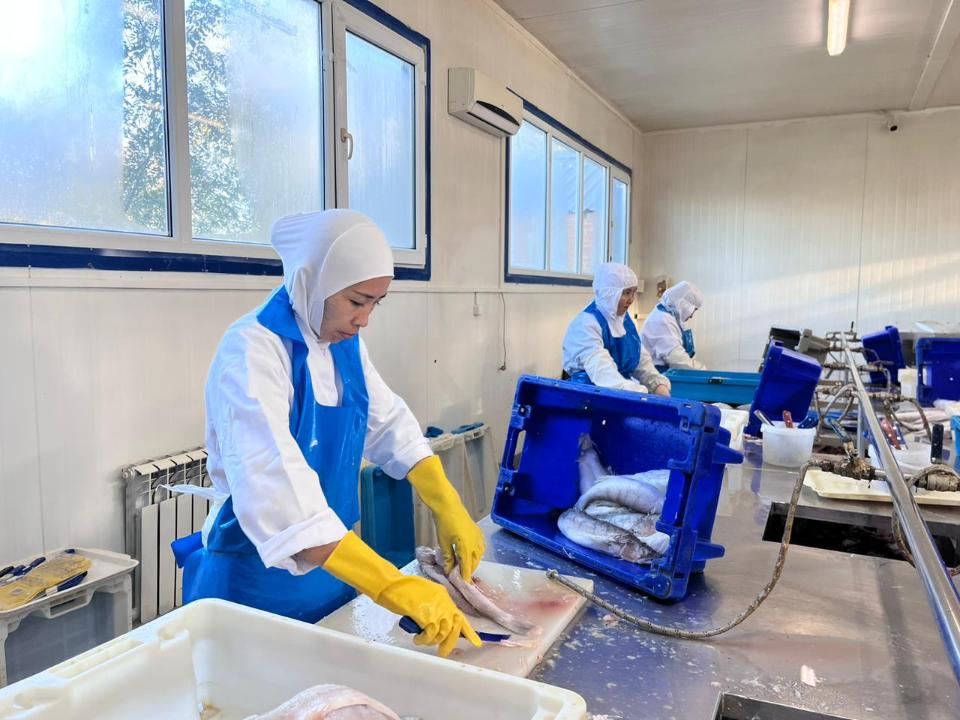
A new fish processing plant has opened in Kazakhstan’s Kyzylorda region, signaling continued progress in efforts to revive the fishing industry in the Aral Sea basin, once the site of one of the world’s most devastating environmental disasters. According to the Ministry of Agriculture, the facility, located in the Aral district, has the capacity to process up to 6,000 tons of fish annually. Outfitted with modern equipment, the plant focuses on producing environmentally sustainable fish products that comply with international quality and safety standards. Its primary export, pike perch fillets, is shipped to markets in Germany, Denmark, and Norway. Kazakhstan currently operates 72 fish processing plants, 20 of which are licensed to export to the European Union. The country’s fishing sector has been buoyed by ongoing efforts to restore the Northern Aral Sea. Formed in 1987 during the large-scale desiccation of the original Aral Sea, the northern section has been preserved and partially replenished following the construction of the Kokaral Dam. Earlier this year, The Times of Central Asia reported a record increase in the sea’s water volume. Rising water levels have expanded the surface area, reduced salinity, and facilitated the return of 22 fish species to the ecosystem. The annual catch in the Northern Aral now reaches approximately 8,000 tons, creating new economic opportunities for local communities. Kazakhstan’s fishing industry continues to show steady growth. In 2024, the country produced 94,600 tons of fish products, a 7% increase compared to 2023. Of this total, 45,200 tons came from natural water bodies, while 18,200 tons were farmed. In the same year, Kazakhstan exported 23,400 tons of fish products worth $74.7 million to 21 countries, reflecting rising global demand for sustainable fish from the Aral region.
Tourism at Kyrgyzstan’s Lake Issyk-Kul Shows Steady Growth

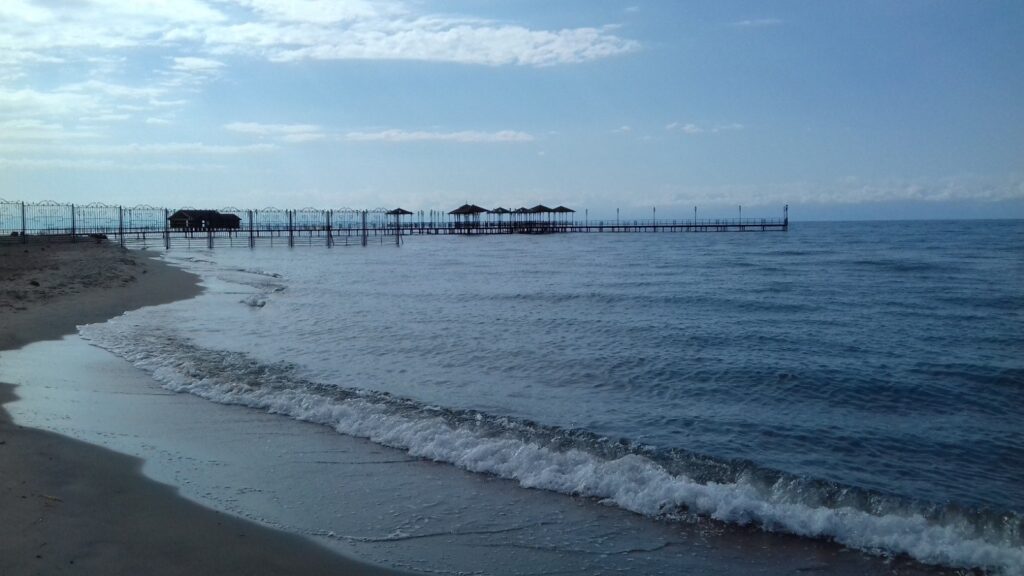
Tourism remains a vital sector of Kyrgyzstan’s economy, contributing significantly to regional development and employment. The Issyk-Kul region continues to serve as the country’s premier tourism hub, anchored by Lake Issyk-Kul, its most popular destination for both domestic and international visitors. According to data from the Ministry of Economy and Commerce and the 2GIS mapping service, tourism activity in the Issyk-Kul region has tripled over the past six years. By the end of August 2025, which marked the close of the summer resort season, the volume of tourist services along the lake’s shores had increased threefold compared to 2019. In 2019, the region hosted 627 hotels and guesthouses. By 2025, that number had grown to 1,833. The highest concentration of accommodations is found in Cholpon-Ata (377), the neighboring village of Bosteri (336), the regional capital Karakol (196), and Balykchy (27). Food service establishments have seen similar growth. The number of cafes and restaurants has nearly tripled from 360 in 2019 to 963 in 2025. Karakol leads with 170 establishments, followed by Cholpon-Ata (157), Bosteri (142), and Balykchy (84). Nationwide, Kyrgyzstan received over 3.7 million tourists in 2024, a 1.3-fold increase compared to 2023, according to the National Statistical Committee. Of these, 2.4 million were served by the organized tourism sector, including hotels and resorts, while 1.3 million stayed in the unorganized sector, such as guesthouses and private homes. The Issyk-Kul region accounted for a substantial share of this total. In 2024, approximately 714,000 visitors were accommodated in the organized sector, and over 1.2 million in the unorganized one. Tourism has become a key driver of small and medium-sized enterprises in the region, generating employment and enhancing the investment climate. In 2024, Kyrgyzstan’s tourism industry attracted more than $11 million in foreign direct investment, with Issyk-Kul playing a central role in that growth.

Kyrgyzstan Begins Construction of Plant to Produce Innovative Canal-Lining Material

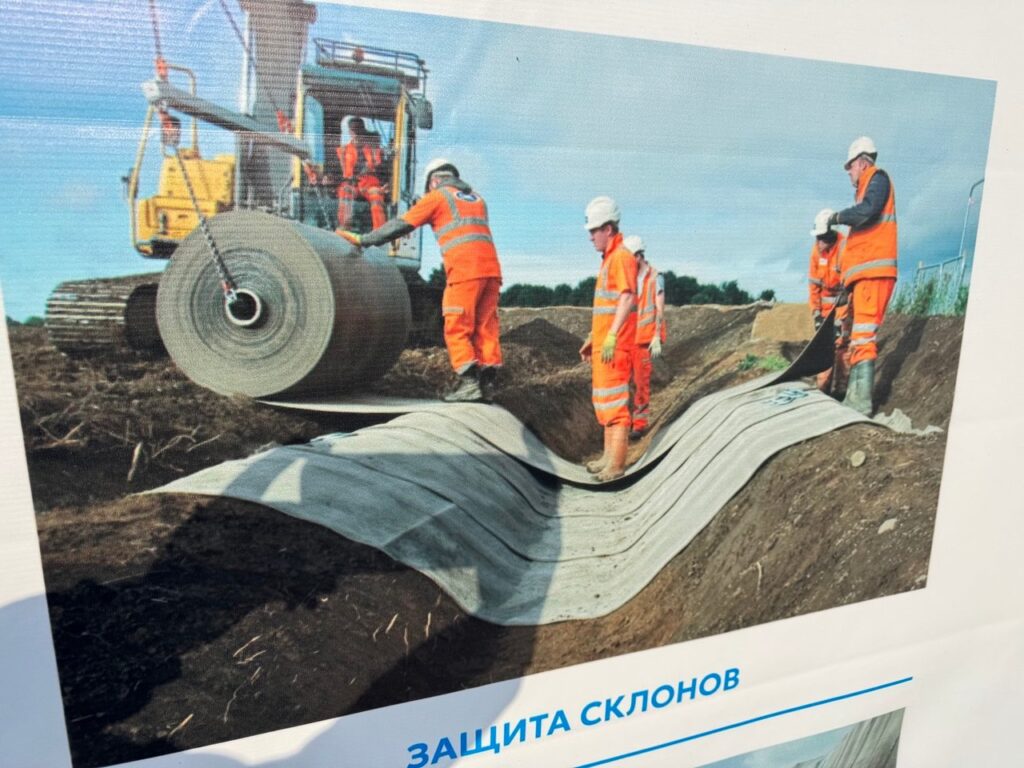
Kyrgyzstan has launched construction of a facility to manufacture concrete canvas, a flexible, cement-based material designed to line irrigation canals, reduce water loss, and prevent erosion. The groundbreaking ceremony was held on October 10. According to the Ministry of Water Resources, Agriculture, and Processing Industry, the €20 million project is a joint initiative between the Kyrgyz government and UK-based Concrete Canvas Ltd. The plant’s first production line, scheduled for commissioning in 2027, will have an annual capacity of 7 million square meters of concrete canvas. A second line with the same capacity is planned to come online five years later. Sixty percent of the output will be allocated for domestic use, with the remaining 40% destined for export. The project is part of a broader national strategy to modernize Kyrgyzstan’s aging irrigation infrastructure amid increasing water shortages. At the launch event, Minister Bakyt Torobayev emphasized the project’s strategic importance. “Thanks to this plant, Kyrgyzstan will reduce its reliance on imports, create jobs, and open new export channels,” he said. “The country has over 30,000 kilometers of irrigation canals, 19,000 km of which are unsurfaced and 11,000 km in need of major repairs. Our goal is to upgrade the irrigation system, reduce water losses, and bring nearly 37,000 hectares of new irrigated land into cultivation.” Torobayev added that the use of concrete canvas could extend the service life of canals to between 50 and 100 years, speed up the construction of new systems, and contribute to greater food security by ensuring stable water access for farmers. By 2030, Kyrgyzstan aims to expand its irrigated farmland by 36,900 hectares. The country currently has approximately 1.023 million hectares of irrigated agricultural land.

Russian Gas Exports to Central Asia Rise 15% Amid Growing Regional Demand

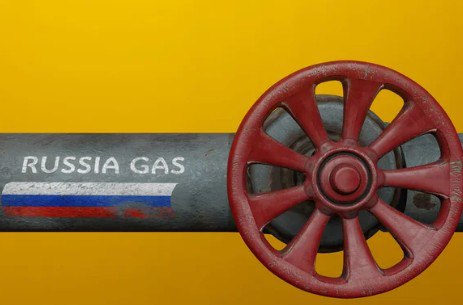
Russian natural gas exports to Central Asia increased by 15% in the first eight months of 2025 compared to the same period in 2024, Gazprom CEO Alexey Miller announced at the St. Petersburg International Gas Forum (PMG Forum 2025), according to TASS. Miller cited rapid economic growth across the region as the key driver of rising energy demand. He projected that Central Asia’s economy could expand by as much as 60% over the next five to six years, with natural gas playing a central role in meeting growing energy needs. “When we compare the first eight months of 2025 with the same period in 2024, the volume of Russian gas supplied to Central Asia, namely Uzbekistan, Kyrgyzstan, and Kazakhstan, rose by 15%. These are substantial volumes,” Miller said. Miller also pointed to the importance of major infrastructure initiatives, including projects under the Power of Siberia-2 megaproject, in expanding gas supply routes to the region. In 2024, Gazprom reported a doubling of gas exports to Central Asia between January and August. At that time, deliveries to Uzbekistan had reached maximum technical capacity through the Central Asia-Center pipeline, meeting peak demand typically seen during the coldest months of winter. The latest increase in exports highlights Central Asia’s growing strategic value to Russia as an energy market, as well as deepening energy cooperation between Moscow and the region.

RC Cola Launches Production Facility in Southern Kazakhstan

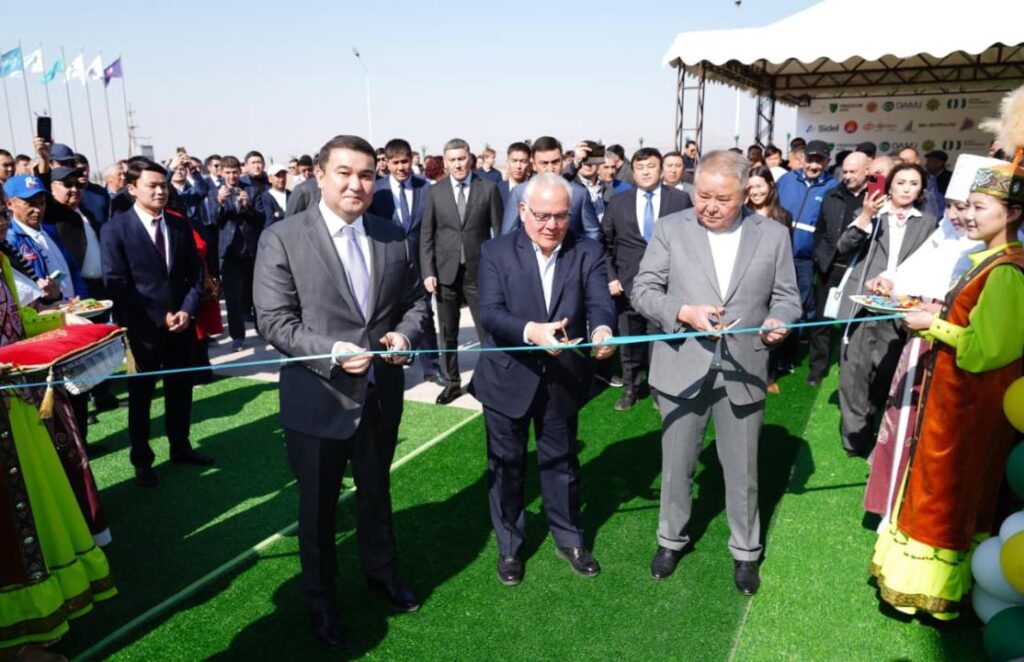
A beverage production plant under the global RC Cola brand has officially opened in the Turkestan region of Kazakhstan. Operated by Beibars Bottlers, the facility is located in the village of Kumisbastau in the Tulkubas district and is designed to produce up to 120,000 tons of beverages annually, according to the regional administration. The product line includes RC Cola carbonated drinks, bottled water, and other non-alcoholic beverages. The project attracted $16.7 million in investment, with plans to supply both the domestic market and neighboring Central Asian countries. “The new plant features production lines based on advanced German and Italian technologies, along with an environmentally friendly, multi-stage water purification system,” the local mayor’s office said. “Water is drawn from wells 170 meters deep and tested in leading laboratories in the US and Italy.” The facility has created 100 new jobs and contributed to local infrastructure development. As part of the project, more than 6 kilometers of 35 kV power lines, a new $1.3 million substation, a gas pipeline, and treatment facilities have been constructed. The opening ceremony was attended by RC Cola International General Manager Francis Lampera and project investor Amangeldy Nurov, founder of Beibars Bottlers LLP. They stated that the launch will boost RC Cola’s presence in Central Asia and solidify its footprint in the Kazakh market. RC Cola (Royal Crown Cola) was founded in 1905 by American pharmacist Claude A. Hatcher. It was the first brand to introduce canned soda and a caffeine-free diet cola. The brand is now owned by Keurig Dr Pepper and distributed internationally through RC Cola International. As previously reported by The Times of Central Asia, RC Cola competitor The Coca-Cola Company recently inaugurated a new production plant in Uzbekistan, which is also part of the company’s expansion strategy in the Turkestan region.

Japan to Build Central Asia’s Largest Airport in Uzbekistan by 2028

Japan’s Sojitz Corporation is set to launch one of Central Asia’s most ambitious infrastructure projects: the construction of a new international airport in Tashkent. According to Express Asia, construction will begin in 2025 and is expected to be completed by 2028, with a total project cost estimated at $1 billion. The airport will be developed through a public-private partnership (PPP) with Saudi Arabia’s Vision Invest. Japan’s investment is projected to reach several hundred million dollars. Once completed, the airport will have a capacity of up to 20 million passengers annually and support more than 40 take-offs and landings per hour, making it the largest aviation hub in Central Asia. Sojitz brings experience in airport development from projects in Japan’s Kumamoto and Okinawa prefectures, as well as on the Pacific island of Palau. In Uzbekistan, its activities extend beyond aviation: in partnership with Turkey’s Rönesans International, the company is planning an 800-bed hospital in Samarkand, a 1 GW wind power plant, and a 1.6 GW thermal power plant. Driven by consistent GDP growth of around 6% per year, Uzbekistan continues to attract Japanese investment, bolstered by favorable tax policies and a 15% corporate tax rate. The number of Japanese companies operating in the country has doubled over the past five years to 54. Among them, Toyota Tsusho, through Eurus Energy Holdings, is developing a 500 MW wind power project, while Marubeni is collaborating with UAE firms on a wastewater treatment facility. In 2024, President Shavkat Mirziyoyev met with a Japanese delegation led by Tadashi Maeda, Chairman of the Japan Bank for International Cooperation (JBIC), and representatives of Sojitz. The parties agreed on a three-year cooperation program with JBIC and a strategic roadmap with Sojitz for future projects in high-tech sectors. JBIC currently supports over $3.7 billion in joint ventures across Uzbekistan’s petrochemical, textile, energy, and infrastructure sectors. Sojitz also reaffirmed its commitment to expanding its footprint in the country, including its role in the Syrdarya II IPP project, one of Uzbekistan’s largest planned power generation facilities.