• KGS/USD = 0.01144 0%
  • KZT/USD = 0.00213 0%
  • TJS/USD = 0.10456 0.19%
  • UZS/USD = 0.00008 0%
  • TMT/USD = 0.28490 0%
  • KGS/USD = 0.01144 0%
  • KZT/USD = 0.00213 0%
  • TJS/USD = 0.10456 0.19%
  • UZS/USD = 0.00008 0%
  • TMT/USD = 0.28490 0%
  • KGS/USD = 0.01144 0%
  • KZT/USD = 0.00213 0%
  • TJS/USD = 0.10456 0.19%
  • UZS/USD = 0.00008 0%
  • TMT/USD = 0.28490 0%
  • KGS/USD = 0.01144 0%
  • KZT/USD = 0.00213 0%
  • TJS/USD = 0.10456 0.19%
  • UZS/USD = 0.00008 0%
  • TMT/USD = 0.28490 0%
  • KGS/USD = 0.01144 0%
  • KZT/USD = 0.00213 0%
  • TJS/USD = 0.10456 0.19%
  • UZS/USD = 0.00008 0%
  • TMT/USD = 0.28490 0%
  • KGS/USD = 0.01144 0%
  • KZT/USD = 0.00213 0%
  • TJS/USD = 0.10456 0.19%
  • UZS/USD = 0.00008 0%
  • TMT/USD = 0.28490 0%
  • KGS/USD = 0.01144 0%
  • KZT/USD = 0.00213 0%
  • TJS/USD = 0.10456 0.19%
  • UZS/USD = 0.00008 0%
  • TMT/USD = 0.28490 0%
  • KGS/USD = 0.01144 0%
  • KZT/USD = 0.00213 0%
  • TJS/USD = 0.10456 0.19%
  • UZS/USD = 0.00008 0%
  • TMT/USD = 0.28490 0%

Viewing results 2347 - 2352 of 5581

Social Researcher: Serious Effort Required for Women’s Representation in Kazakh Politics

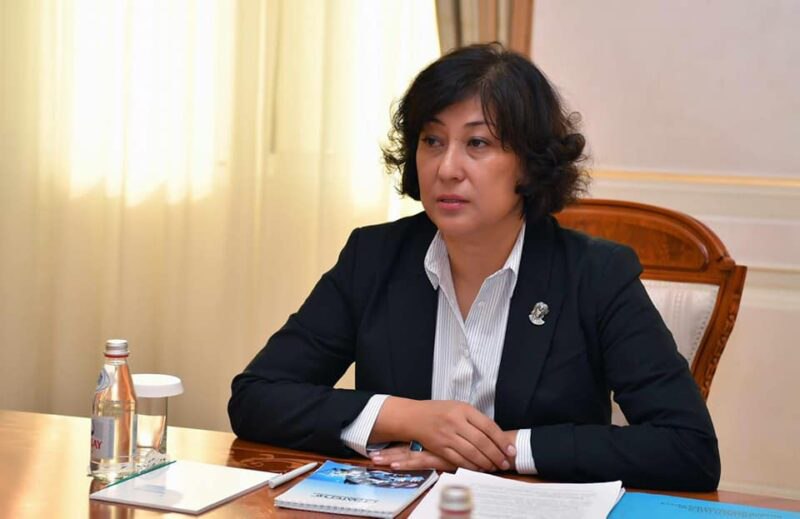
According to Gulmira Ileuova, a sociologist and the head of the Strategy Centre for Social and Political Research, gender equality in Kazakhstan has severely deteriorated. In an interview with TCA, she explains how social regression and a depletion of human resources are making it difficult for women to participate in political parties, social movements, and public services. TCA: Sources illustrate that after the 2023 parliamentary elections, the representation of women deputies in the Mazhilis fell from 27% to 18%. In addition, Kazakhstan's performance in the Global Gender Gap Index (GGGI) has deteriorated. This year, the country fell from 62nd to 76th place. This index, which can be used to judge the economy's stability and legal security, has a serious impact on investors.  What, in your opinion, is the reason for this deterioration? First of all, I would like to point out that until 2021, the Labor Code had restrictions on where women could work based on concerns about their health. Now that the restrictions have been lifted, progress is steadily being made in involving women in areas previously inaccessible to them. Some companies have already published data that women have begun operating heavy machinery, such as big trucks, which was not the case before. As for politics and the civil service, it appears that under the spread of influence from the south, the country is reinstating traditional social relations. Independent Kazakhstan has entered a new period where traditional and non-traditional forms of Islam thrive, and hyper-masculine and patriarchal attitudes are on the rise. I emphasize the patriarchal division of life through reinforced gender roles because it is gaining strength and spreading across all regions of the country. Furthermore, this trend is moving into the sphere of politics and civil services. Let's take a look at what preceded these trends. In many regions, primarily in the south, there is a huge number of women who wishing to undertake the important work of reproduction, were receiving TSA (targeted social assistance). According to statistics in 2019, there were 2 million and 221 thousand recipients of TSA (about 12% of the population). Today, their number has decreased six fold to about 350 thousand. These numbers include women who thought they would bypass employment through state support systems. And now these women are in trouble. The state is revising its social policy, but the paternalistic trend has long been developing and a large number of people have abused it. TCA: Are you saying that women, in receipt of child allowances, prefer to stay at home as opposed to actively entering economic relations or aspiring to participate in civil services or politics? Yes, and I am afraid that this trend cannot be overcome by quick measures or be alleviated by even quotas for women. In a 'strategy' study conducted by the Center for Social and Political Research in the Turkestan region, an official working in gender policy said that at some point, the political representation of women fell to 5%. There were actually no women in senior...

Climate Crisis May Drastically Reduce Production in Central Asia

Central Asia may face serious economic losses due to climate change, which may reach a 6.5% annual decline in production by 2060. These figures were announced by Bo Li, Deputy Managing Director of the International Monetary Fund (IMF), at the “New Economic Challenges for Long-Term Development” forum. According to Bo, the Caucasus and Central Asia region is particularly vulnerable to climate change. Soaring temperatures and increasing frequency of droughts and floods are reducing crops, destroying infrastructure, and lowering living standards. “According to IMF estimates, if no action is taken to slow down climate change, Central Asia will lose up to 6.5% of its output annually by 2060,” Bo said. He noted that possible losses could be reduced with joint actions such as reducing carbon emissions, transitioning to a green economy, and adapting to changing climate conditions. As an example, Bo noted the efforts of Kyrgyzstan, that has already started to increase electricity tariffs and reduce energy subsidies, allowing the country to adapt to climate challenges and create new jobs in the “green” sector. Many Central Asian countries are taking steps to reform the energy sector and introduce “green” technologies. For example, Kazakhstan is actively cooperating with several countries to develop renewable energy and reform the energy sector. One key example is the partnership with the United States under the USAID Power Central Asia program. This initiative supports Kazakhstan and other Central Asian countries in modernizing energy markets, introducing clean energy, and encouraging private investment in renewable energy. Uzbekistan is undergoing a major reform of its energy system to reduce subsidies and promote renewable energy. The country plans to increase the share of renewable energy to 25% by 2030, which includes solar and wind energy projects. These measures will help Uzbekistan improve energy efficiency and reduce carbon dioxide emissions. In Tajikistan, USAID is implementing the Power Central Asia program, which supports energy cooperation in the region and encourages using renewable energy to help reduce dependence on fossil fuels and modernize energy systems.

200th Container Train from China Arrives in Kazakhstan’s Aktau Port on Middle Corridor

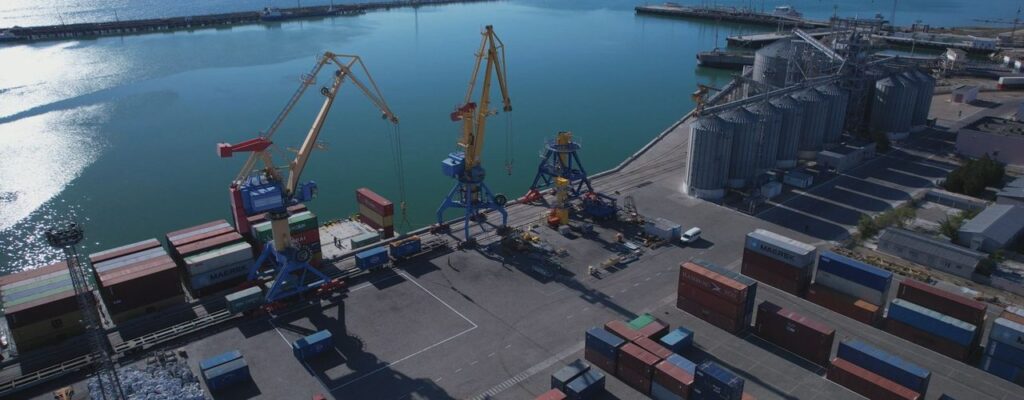
A container train from China arrived last week in the port of Aktau on Kazakhstan’s Caspian coast. Kazakhstan’s national railway company, Kazakhstan Temir Zholy, announced that it was the 200th container train since the beginning of 2024. Last year, 11 container trains went through Aktau Port along the Trans-Caspian International Transport Route (TITR), known as the Middle Corridor. The Middle Corridor is an 11,000-kilometer international multimodal transport corridor that runs from China to Europe via Kazakhstan, the Caspian Sea, Azerbaijan, Georgia, the Black Sea, and Turkey. The container train originally departed from the Kazakhstan terminal in Xi'an (China). From Aktau, it will depart for Azerbaijan on a barge across the Caspian Sea. The Kazakh terminal in Xi'an is an important logistics hub that consolidates cargo from various provinces of China. It has given a new impetus to the development of the TITR. In November 2023, Kazakhstan and China signed a number of agreements to develop the TITR, including a route for China-Europe container trains. Middle Corridor Multimodal Ltd. is a joint venture that was established at the Astana International Financial Center, bringing together the railway administrations of Kazakhstan, Azerbaijan, and Georgia to manage the route on a parity basis. The Kazakhstani terminal in the dry port of Xi'an opened in February 2024. It consolidates 40% of all container trains heading towards Kazakhstan, which has contributed to a significant increase in transit traffic along the TITR. Transportation along the TITR is growing steadily. In 2023, 2.8 million tons of cargo were transported along the route, compared to about 1.7 million tons in 2022. In the first seven months of 2024, the traffic totaled 2.56 million tons. By 2027, the capacity of the TITR is planned to increase to 10 million tons.

Uzbekistan and China to Increase Flights Between Their Cities

Uzbekistan’s Ministry of Transport has agreed with China Southern Airlines to increase the frequency of flights on the Beijing-Tashkent route from four to seven per week, and on the Urumqi (Xinjiang)-Tashkent route from three to four per week. They also agreed to launch three weekly flights on the Guangzhou-Urumqi-Tashkent route in 2025. At the last C5+1 China-Central Asia Civil Aviation Conference, held in Xi'an in June, Uzbekistan and China agreed to increase the number of flights between the two countries and open new air corridors. Four airlines from Uzbekistan were assigned 58 regular flights per week to transport passengers from the international airports of Tashkent and Samarkand to 12 Chinese cities. Currently, the Uzbek airlines Qanot Sharq, Centrum Air, and Air Samarkand are working to meet the certification requirements of the Chinese aviation administration so that they can begin regular flights to China. At the moment, nine Uzbek and Chinese airlines operate 63 regular flights per week to 16 destinations in both countries, including 21 flights for passengers and 42 for cargo.

American Educators to Teach English in Uzbekistan

Twenty English language teachers from the United States have arrived in Uzbekistan to begin teaching and professional development programs across the country. The U.S. Embassy in Tashkent reported that they will join local teachers to provide direct classroom instruction to students. The twenty American teachers will support English language teaching within ten different regions of Uzbekistan for the 2024-2025 academic year. According to the Embassy, these teachers are just part of the U.S. Government’s vast commitment to strengthening English language education in Uzbekistan, which includes training more than 18,000 English teachers nationwide. Since 2018, the U.S. Government has invested over $31.2 million in English language teaching and learning in Uzbekistan. The U.S. Embassy has partnered with the Ministry of Preschool and School Education and the Ministry of Higher Education, Science, and Innovations to support Uzbekistan’s education reforms and to ensure that graduates are equipped with the linguistic and professional skills needed to support Uzbekistan’s economy. Since 2019, 98 American English teachers have worked at 21 public schools and more than 30 universities across Uzbekistan.

Central Asian Countries Hold Second Inter-Parliamentary Forum, Adopt Khiva Declaration

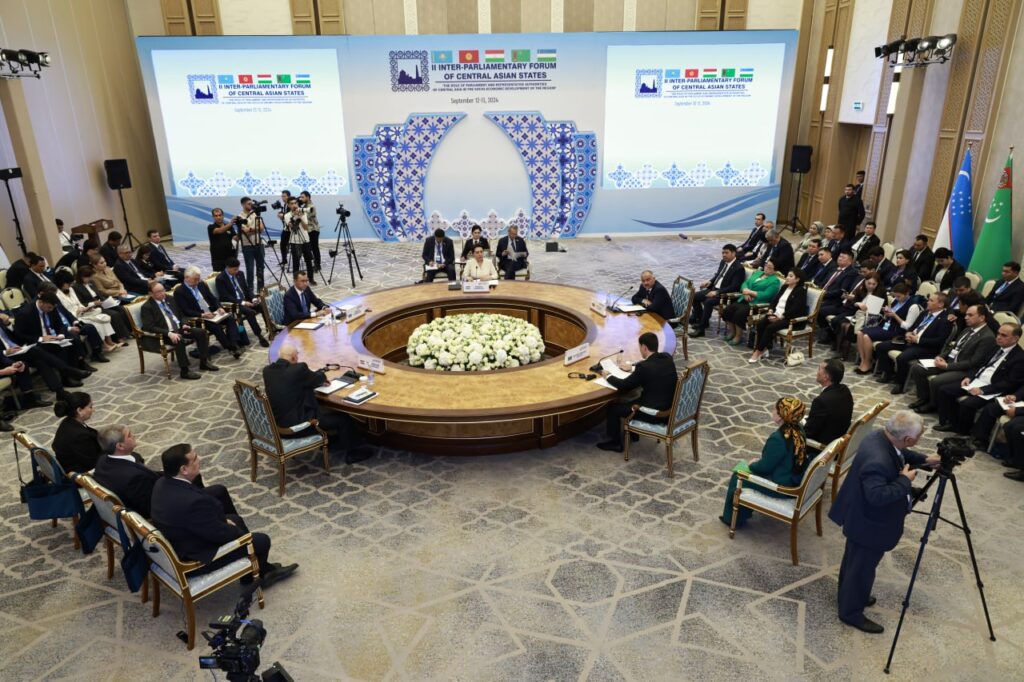
The second inter-parliamentary forum of Central Asian countries was held in Khiva, Uzbekistan on 12 September. It was attended by political representatives from Kazakhstan, Kyrgyzstan, Tajikistan, Turkmenistan, and Uzbekistan, members of youth parliaments, and local and international mass media. Topics addressed at the forum included new forms of interparliamentary cooperation between Central Asian countries, and recommendations for increasing the role of women and young people in the region's socio-economic development. The Special Representative of the United Nations Secretary-General for Central Asia, Kaha Imnadze, commented: “This forum once again confirms Uzbekistan's important role in strengthening regional cooperation, as well as in ensuring peace and security.” Imnadze added that the UN is ready to strengthen cooperation with Central Asia in areas such as the use of transboundary waters, the melting of glaciers, gender equality, and youth activism. The forum's results resulted in the adoption of the Khiva Declaration, which will serve as the basis for the future cooperation of Central Asian countries within the framework of inter-parliamentary initiatives. The first inter-parliamentary forum of Central Asian countries was held last year in Turkestan, Kazakhstan. The event led to the adoption of the Turkestan Declaration.